
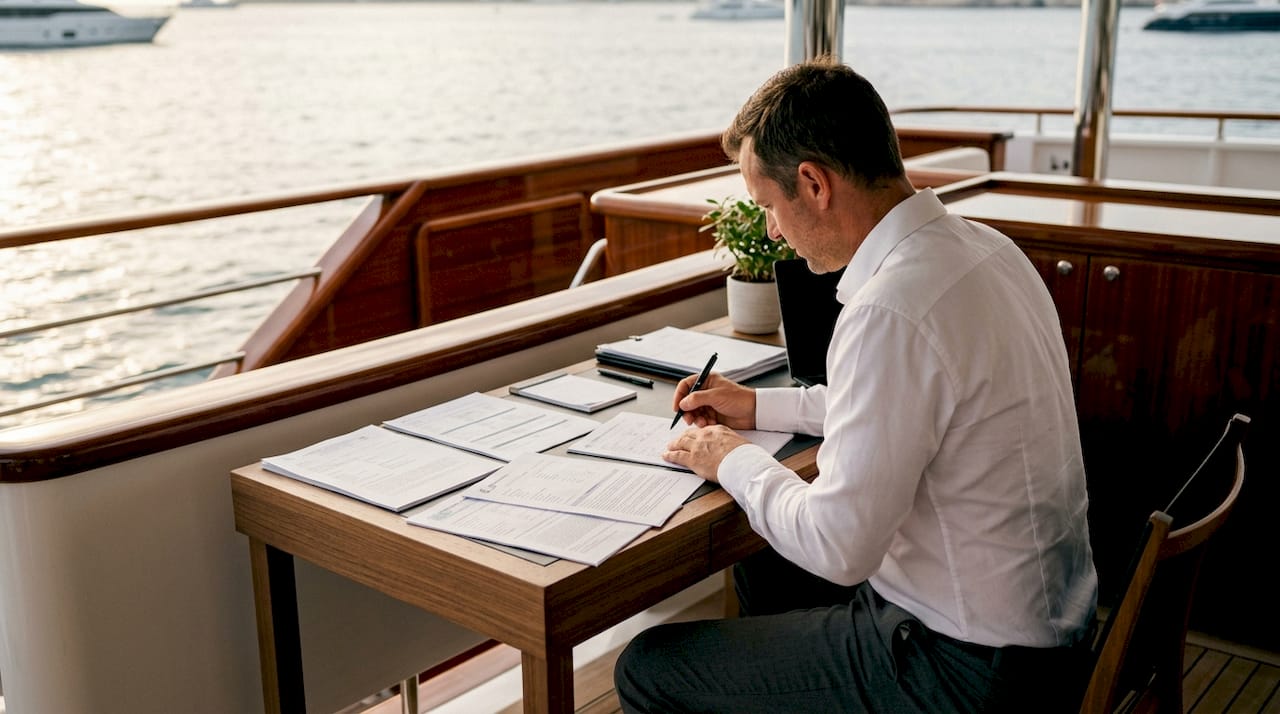
A custom yacht inspection is a formal condition survey conducted by a certified marine surveyor to assess your vessel’s structural integrity, mechanical systems, safety equipment, and regulatory compliance. Knowing how to prepare for custom yacht inspections is the difference between a clean report and a list of costly findings that delay insurance approval or kill a sale. The process covers three core outcomes: confirming vessel quality, validating compliance, and protecting resale value. Preparation is not optional. It is the work that determines what the surveyor writes.
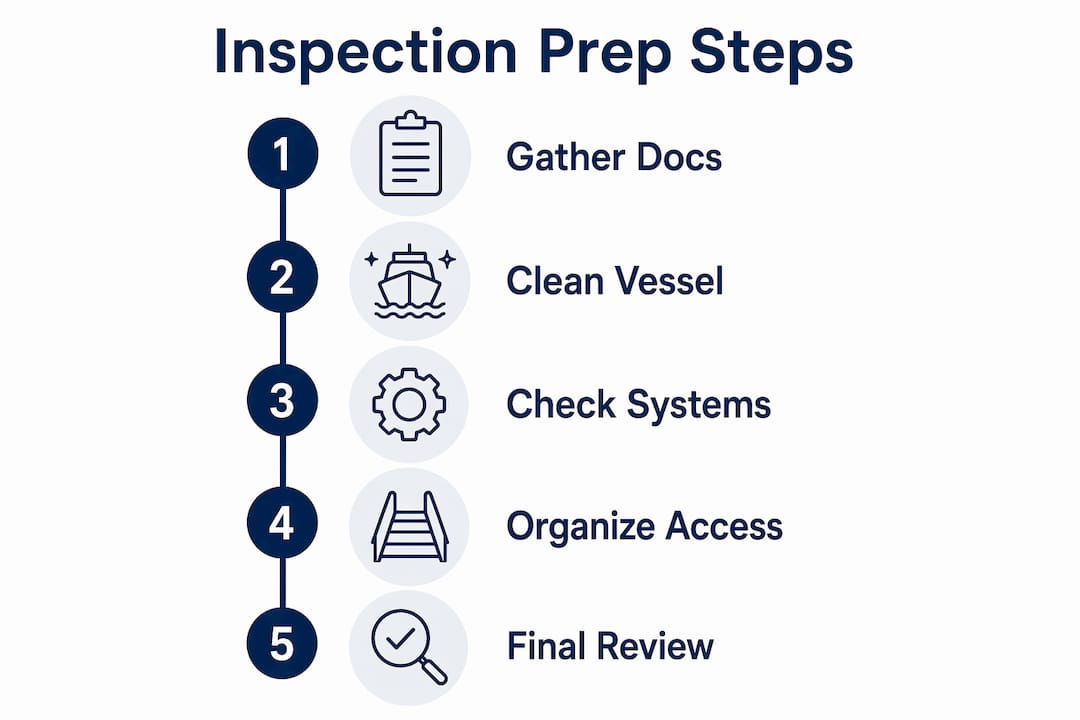
How to prepare for custom yacht inspections: documents and prerequisites
The first step in any step by step yacht inspection is assembling your paperwork. Surveyors review registration certificates, prior survey reports, service records, and safety certifications as part of their formal report. Missing or incomplete records create doubt, and doubt produces negative findings.
Gather the following documents before the surveyor arrives:
- Vessel registration and title documents
- Previous condition survey reports (within the last 3–5 years)
- Engine service logs and maintenance records
- Safety equipment certifications (fire extinguishers, life rafts, EPIRBs)
- Electrical and systems upgrade records
- Builder’s specifications for custom builds or major modifications
Beyond paperwork, your vessel must meet basic physical prerequisites. Bilges must be clean and dry. Seacocks must be accessible and operable. All access panels must be unlocked and free of obstruction. A thorough pre-purchase survey covers three distinct phases: a haul-out inspection, an in-water systems check, and a sea trial under real load. Each phase reveals different categories of defects. If you skip preparation for any one phase, you risk missing critical issues before the surveyor does.
| Prerequisite Area | What to Prepare |
|---|---|
| Documentation | Registration, prior surveys, service logs, certifications |
| Physical access | Unlock all panels, clear bilges, free seacocks |
| Systems readiness | Confirm engine starts, bilge pumps cycle, electronics power on |
| Safety gear | Verify all items are within service dates |
Pro Tip: Create a single folder, physical or digital, with every document organized by category. Surveyors move quickly. A well-organized file saves time and signals that you maintain your vessel with the same care.
Step by step cleaning and organizing your yacht before the survey
Physical preparation is where most owners either win or lose their inspection. A clean, organized vessel tells the surveyor that the owner takes maintenance seriously. A cluttered, dirty vessel triggers more scrutiny at every turn.
Follow this sequence in the days before your survey:
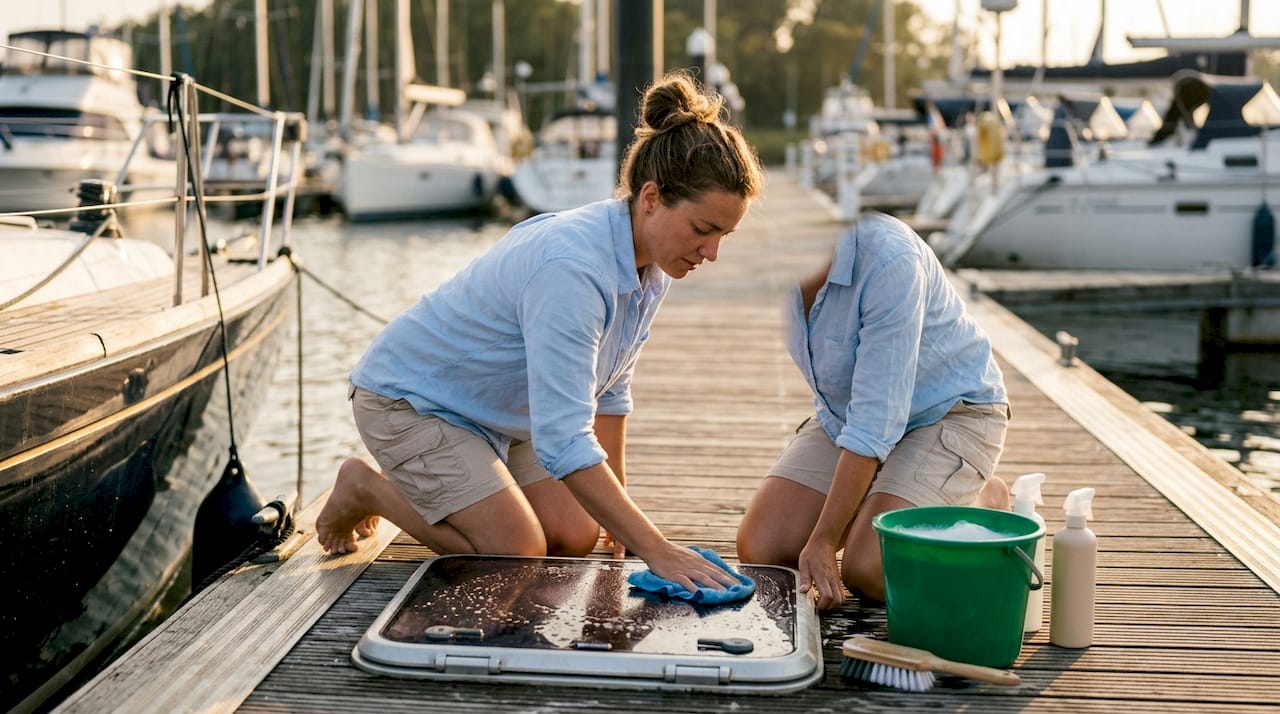
- Clean the bilge thoroughly. A filthy bilge raises immediate concerns and leads to more exhaustive scrutiny. Use a bilge cleaner, remove standing water, and wipe surfaces dry.
- Wash the hull and topsides. Remove algae, barnacles, and staining. The surveyor needs to see the gelcoat or paint condition clearly.
- Clear all interior spaces. Remove personal gear, loose equipment, and anything stored in front of access panels or mechanical spaces.
- Unlock every hatch, panel, and storage compartment. The surveyor needs unobstructed access to the engine room, electrical panels, fuel tanks, and structural frames.
- Clean the engine room. Wipe down the engine block, check for oil or coolant leaks, and label any recent repairs clearly.
- Pre-test all key systems. Start the engine, cycle the bilge pumps, power on navigation electronics, and test the windlass. Functional demonstrations carry far more weight than verbal assurances.
- Organize the deck and cockpit. Stow lines neatly, secure loose gear, and clear the anchor locker for inspection.
Pro Tip: Walk through your vessel as if you are the surveyor. Open every panel, crouch into every compartment, and look for anything that would make you write a negative note. Fix what you can. Document what you cannot.
For owners of custom builds, this step is especially important. Bespoke systems and non-standard layouts require extra labeling so the surveyor understands what they are looking at. A well-labeled custom installation reads as professional. An unlabeled one reads as a risk.
What safety equipment and mechanical systems need to pass inspection?
Compliance checks are the technical core of any custom yacht inspection checklist. Expired safety equipment or unclear maintenance history often triggers repair demands or outright inspection failures. Address these items at least two weeks before the survey date.
Safety equipment to verify:
- Fire extinguishers: check service tags and pressure gauges; replace any unit past its service date
- Flares: confirm all are within their printed expiration date; SOLAS flares have strict replacement schedules
- Life jackets: inspect for inflation mechanism integrity and service certification
- EPIRBs: verify registration is current with NOAA and battery replacement date has not passed
- Life raft: confirm hydrostatic release and service certification are current
- Smoke and carbon monoxide detectors: test all units and replace batteries
Mechanical systems to check:
- Engine oil level, color, and condition; change if overdue
- Cooling system hoses for cracking, swelling, or corrosion at clamps
- Battery bank voltage and terminal condition; load-test if batteries are more than three years old
- Fuel system for leaks at connections and filter condition
- Navigation electronics: GPS, VHF, AIS, and chartplotter must power on and function correctly
- Steering system: check hydraulic fluid level and test full lock-to-lock movement
Experts recommend hiring separate engine specialists for internal diagnostics that fall outside a general surveyor’s scope. A marine surveyor assesses condition and compliance. A certified marine mechanic diagnoses performance and internal wear. Both reports together give you and any buyer or insurer a complete picture.
Pro Tip: Run the engine to full operating temperature the morning of the survey. A cold engine that smokes on startup creates concern. A warm, stable engine demonstrates reliability.
Common inspection challenges and how to avoid them
Even well-prepared owners encounter obstacles. Knowing the most common pitfalls lets you preempt them before the surveyor arrives.
-
“Inspection limited” findings. Blocked or locked access areas cause surveyors to mark components as “inspection limited.” These notations reduce vessel value and complicate insurance approval. Insurers assume undisclosed faults when access is denied. The fix is simple: unlock everything and remove all obstructions before the surveyor steps aboard.
-
Expired or missing documentation. If a prior survey is missing, order a replacement copy from the surveying firm or your insurer’s records. If safety certifications have lapsed, schedule service appointments immediately. Do not wait until survey day to discover a gap.
-
Known quirks and minor defects. Every vessel has them. Disclose known issues to the surveyor upfront rather than hoping they go unnoticed. Surveyors respect transparency. Undisclosed defects discovered during inspection damage credibility and raise questions about what else may be hidden.
-
Scheduling and weather timing. A sea trial in rough conditions limits what the surveyor can safely assess. Schedule your inspection during a weather window with calm seas and good visibility. For how to schedule yacht inspections, private yachts generally require condition surveys every 3–5 years. Vessels over 15–20 years old may require annual checks for insurance eligibility. Build that cadence into your maintenance calendar.
-
Last-minute repairs. A fresh repair with wet paint or uncured sealant signals a rushed fix. Complete any repairs at least one week before the survey so work can be inspected as finished, not in progress.
Reviewing your yacht aftercare practices year-round reduces the volume of issues that surface at inspection time. Consistent maintenance is the best inspection preparation strategy available.
Key Takeaways
Thorough preparation for a custom yacht inspection requires complete documentation, clean and accessible vessel spaces, verified safety equipment, and pre-tested mechanical systems working together.
| Point | Details |
|---|---|
| Compile all documentation | Gather registration, prior surveys, service logs, and certifications before the surveyor arrives. |
| Clear every access point | Unlock all panels and remove clutter to prevent costly “inspection limited” findings. |
| Verify safety equipment dates | Replace expired flares, fire extinguishers, and EPIRB batteries at least two weeks before the survey. |
| Pre-test all systems | Run the engine, cycle bilge pumps, and power on electronics so surveyors witness live operation. |
| Hire specialists for complex systems | Engage a certified marine mechanic alongside your general surveyor for engine diagnostics. |
What I’ve learned from watching owners prepare for inspections
The owners who walk away with the cleanest reports share one habit: they treat the inspection as a presentation, not a test. They are not hoping the surveyor misses something. They have already found everything themselves and either fixed it or documented it.
The single most damaging mistake I see is last-minute preparation. An owner who cleans the bilge the night before and unlocks panels the morning of the survey is reacting. An owner who spends three weeks methodically working through a custom yacht inspection checklist is presenting. The surveyor notices the difference immediately.
Transparency with the surveyor is not a weakness. Disclosing a known quirk in the steering system, or noting that a battery was replaced six months ago, builds credibility. It tells the surveyor that you know your vessel. That confidence transfers directly into the report’s tone.
For complex custom builds, the conductor’s eye approach matters most. You need a general surveyor for the overall condition report, a marine mechanic for engine and drivetrain diagnostics, and potentially a specialist for electronics or custom subsystems. Treating these as separate, coordinated roles produces a far more thorough result than asking one person to cover everything. The yacht resale value you protect through proper inspection prep is real and measurable.
— Jason
Baranofyachts supports your inspection readiness
Preparing a custom vessel for survey requires the same level of care that went into building it. Baranofyachts works directly with owners to ensure their vessels are presented at their best, from documentation organization to systems verification.

Our yacht management services cover the full scope of inspection preparation, including maintenance scheduling, compliance tracking, and coordination with certified marine surveyors. For owners planning a sale or refinancing, our brokerage team guides you through every step of the survey process with the precision your vessel deserves. Contact Baranofyachts to schedule a consultation and put your inspection preparation on a clear, confident path.
FAQ
What documents are needed for a yacht inspection?
Surveyors require vessel registration, prior condition survey reports, engine service logs, and safety equipment certifications. Organizing these in advance prevents delays and strengthens your inspection outcome.
How often should a private yacht be surveyed?
Private yachts require condition surveys every 3–5 years for insurance purposes. Vessels over 15–20 years old may need annual inspections to maintain coverage.
What causes an “inspection limited” finding?
Locked panels, clutter blocking access, or stored gear covering structural components cause surveyors to mark areas as “inspection limited,” which reduces vessel value and can delay insurance approval.
Should I hire a marine mechanic separately from the surveyor?
Yes. General surveyors assess overall condition and compliance. Separate engine specialists perform internal diagnostics that fall outside a surveyor’s scope, producing a more complete picture of vessel health.
How far in advance should I start preparing for a yacht survey?
Start your step by step yacht maintenance checklist at least three to four weeks before the survey date. This gives you time to complete repairs, replace expired safety gear, and gather all documentation without rushing.
Recommended
Sold Listings


Design Your Yacht
"*" indicates required fields
Maximus III - PNW
As you step aboard MAXIMUS III, the first impression is her scale.
At 120 feet with an 8-meter beam and 294 GT of interior volume, this 2025 Crescent Custom tri-deck immediately feels open, balanced, and estate-like. A timeless look while still feeling fresh from the shipyard.
Currently Available


Get your yacht value Estimate
"*" indicates required fields