

Boat brokerage is defined as a professional intermediary service where licensed marine sales agents connect qualified buyers and sellers to facilitate yacht transactions through expert valuation, marketing, negotiation, and legal documentation. For anyone buying or selling a vessel valued above $100,000, working with professional boat brokers is not a stylistic preference. It is a structural advantage. Platforms like YachtWorld and Boat Trader give brokers access to qualified buyer pools that private sellers simply cannot replicate, and firms like MarineMax have demonstrated how dedicated brokerage networks consistently outperform informal sales channels on both price and transaction speed.
How does boat brokerage work in the luxury yacht market?
Boat brokerage follows a structured sequence that protects both parties and maximizes the probability of a clean, well-priced transaction. The process begins with a professional valuation, where the broker assesses the vessel’s condition, comparable market listings, and recent sales data to establish a defensible asking price. From there, the broker manages marketing, buyer screening, survey coordination, sea trials, and final negotiations before handling the title transfer and closing paperwork.
The value of this orchestration becomes clear when you compare brokerage to the alternatives:
| Sale method | Typical price achieved | Typical timeline |
|---|---|---|
| Private sale | ~100% of market value | 2 to 4 months |
| Broker-assisted sale | 90 to 95% of market value | 3 to 12 months |
| Dealer trade-in | 75 to 85% of market value | Same day |
That 5 to 10% discount versus a private sale is the cost of professional management, qualified buyer access, and significantly reduced personal effort. For a $500,000 yacht, that trade-off is often worth every dollar.
Brokers leverage specialized listing platforms including YachtWorld, Boat Trader, regional marina networks, and direct outreach to their existing buyer databases. This multi-channel exposure is the single largest structural advantage brokers hold over private sellers, particularly for yachts in the luxury segment where the buyer pool is narrow and geographically dispersed.
Key services a qualified broker provides throughout the transaction include:
- Comparative market analysis to set a price that attracts serious buyers without leaving money on the table
- Professional photography and listing copy optimized for high-traffic boat listing websites
- Buyer qualification and screening to filter out unserious inquiries before they consume your time
- Survey and sea trial coordination to keep the inspection process organized and legally sound
- Negotiation management to protect your net return while keeping the deal moving forward
Pro Tip: Ask any broker candidate to show you three recent closed transactions in your vessel’s price range. A broker who cannot produce comparable sales data quickly is not operating at the level your yacht demands.
What are typical costs and commissions in a boat brokerage sale?
The standard commission in yacht brokerage services is 10% of the final selling price, paid by the seller at closing. This figure is well-established across the industry and applies to the vast majority of transactions handled by professional boat brokers in the United States.
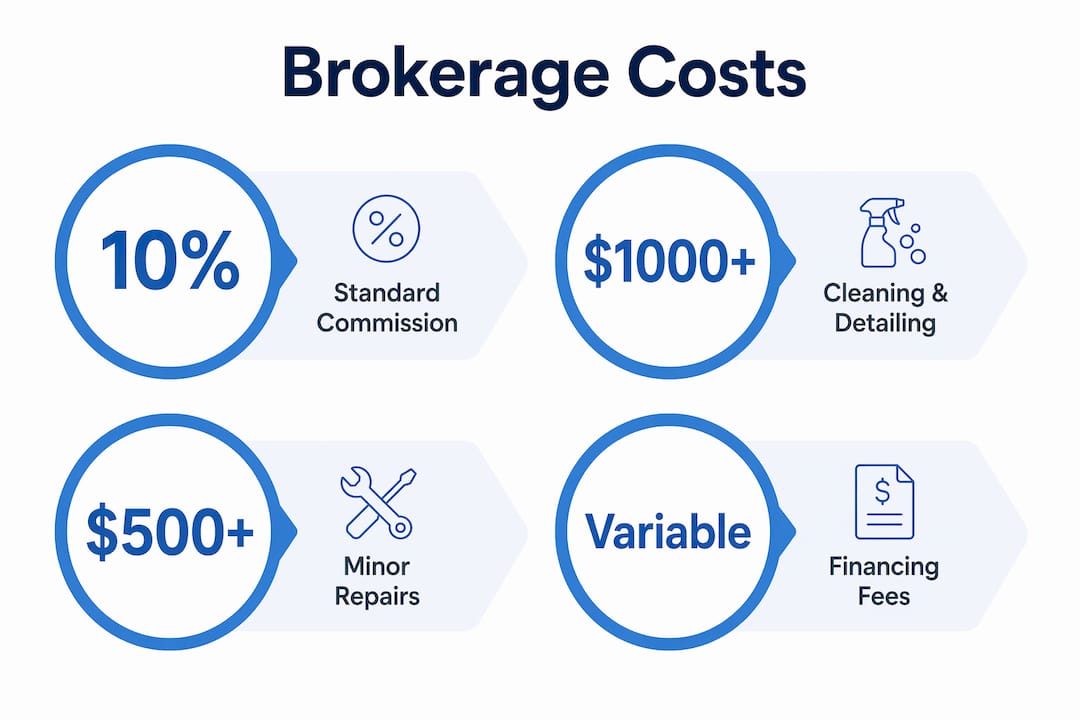
The practical implication of this structure is straightforward: your listing price must account for the commission if you want to protect your net return. Sellers targeting $250,000 net should list at $275,000 to absorb the 10% commission without eroding their target. Failing to build this math into the initial listing price is one of the most common and costly mistakes sellers make.
Here is a step-by-step approach to calculating your listing price correctly:
- Determine your net target. Decide the minimum amount you need to walk away with after all costs.
- Divide by 0.90. This gives you the listing price required to net your target after a 10% commission. A $180,000 net target requires a $200,000 listing price.
- Add survey and repair contingencies. Buyers frequently request price reductions after a marine survey reveals deferred maintenance. Budget 2 to 3% of listing price for this negotiation buffer.
- Verify against comparable listings. Cross-reference your calculated price against active listings on YachtWorld and Boat Trader to confirm market alignment.
- Discuss commission flexibility with your broker. On transactions above $500,000, some brokers will negotiate their rate modestly. This conversation is worth having before signing a listing agreement.
Beyond commission, sellers should anticipate costs for professional cleaning and detailing, minor repairs to address obvious maintenance issues, and potentially a pre-listing survey to identify problems before buyers do. Buyers, meanwhile, should factor in the cost of an independent marine survey, typically $20 to $25 per foot of vessel length, and any applicable state sales or use taxes on the purchase.
Understanding yacht financing options is equally relevant here. Brokers who maintain relationships with marine lenders can accelerate buyer qualification and reduce the risk of a deal collapsing due to financing delays.
How long does it take to sell a boat through a broker?
Sales timelines in yacht brokerage vary considerably based on pricing accuracy, vessel condition, and market conditions. The baseline expectation for a correctly priced vessel is 8 to 12 weeks to close. In active market conditions, peak sales can close in 3 to 4 weeks through platforms with high buyer reach. That speed differential is almost entirely a function of listing quality and pricing discipline.
The table below outlines realistic timeline expectations across different market conditions:
| Market condition | Expected time to close | Primary driver |
|---|---|---|
| Hot market, accurate pricing | 3 to 4 weeks | High buyer demand, competitive listings |
| Neutral market, accurate pricing | 8 to 12 weeks | Standard buyer activity |
| Overpriced or poor listing quality | 6 to 18 months | Buyer skepticism, low inquiry volume |
| Dealer trade-in | Same day | Instant liquidity at reduced price |
Seasonal patterns matter significantly in the luxury segment. Spring and early summer represent peak buying activity in most North American markets, with inventory moving faster and at stronger prices. Listing a yacht in October or November typically extends the timeline into the following spring unless the vessel is priced aggressively to attract off-season buyers.
Brokers accelerate timelines by maintaining pre-qualified buyer lists, coordinating showings efficiently, and managing sea trial logistics without requiring the seller’s constant involvement. A broker with an active network on platforms like luxury marina digital channels can generate qualified showing requests within days of a listing going live.
Pro Tip: Have the vessel clean, fueled, and sea-trial-ready before your first showing. Buyers who must wait for a sea trial lose momentum, and lost momentum kills deals.
What are best practices to maximize yacht resale value with a broker?
Maximizing resale value through yacht brokerage services requires preparation that begins well before the listing goes live. The vessel you present to the market tells a story, and buyers in the luxury segment are experienced enough to read that story accurately.
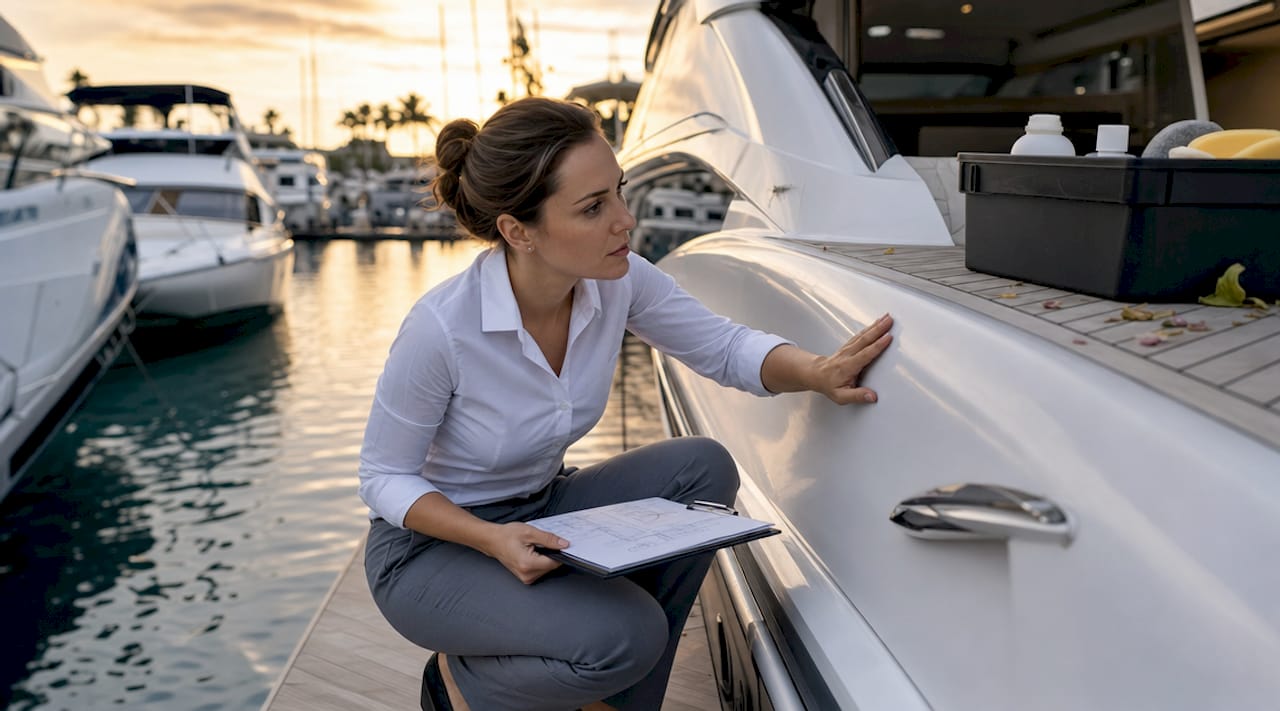
Inaccurate technical details are the fastest way to destroy buyer confidence. When a listing’s specifications do not match the physical vessel, buyers assume the discrepancy is intentional concealment. At that point, they shift from evaluating the yacht to hunting for problems, and the deal rarely recovers. Accurate engine hours, honest condition descriptions, and complete service records are non-negotiable for maintaining buyer trust through the survey process.
Visible maintenance issues carry equal weight. Rust, oil in the bilge, deteriorating upholstery, and non-functional electronics signal deferred maintenance to any experienced buyer. These issues do not just reduce the offer price. They create anxiety that can cause a buyer to walk away entirely, even when the underlying vessel is mechanically sound.
Buyer screening is a practice that protects both the seller and the transaction timeline. Sensitive details like the Hull Identification Number should only be shared after a buyer has provided identity verification and proof of funds. Professional brokers manage this screening as a standard part of their process, filtering out unqualified or fraudulent inquiries before they reach the seller.
“The brokers who consistently achieve the strongest prices are the ones who treat preparation as a non-negotiable phase, not an optional step. A well-presented, accurately documented vessel with a clean survey history commands a premium that no amount of negotiation skill can manufacture after the fact.”
For sellers seeking a structured approach to optimizing resale value, the preparation phase typically includes professional detailing, a pre-listing mechanical inspection, updated photography, and a complete documentation package covering service records, warranties, and equipment inventories. Brokers who guide sellers through this process consistently achieve stronger outcomes than those who list vessels as-is.
The marketing strategy your broker deploys also directly affects final price. Brokers with access to yacht sales platforms and international buyer networks generate competitive offer environments that support asking price. A single motivated buyer negotiating alone will always extract more concessions than two competing buyers who both want the same vessel.
Key takeaways
Professional boat brokerage delivers the strongest combination of net return, transaction security, and time efficiency for luxury yacht sales above $100,000, making it the preferred method for serious buyers and sellers in the maritime market.
| Point | Details |
|---|---|
| Standard commission rate | Brokers charge 10% of the final sale price; list at 111% of your net target to protect your return. |
| Brokerage vs. private sale | Brokers achieve 90 to 95% of market value with significantly less seller effort than a private transaction. |
| Realistic sales timeline | Correctly priced vessels close in 8 to 12 weeks; peak market conditions can compress this to 3 to 4 weeks. |
| Preparation drives price | Accurate specs, clean maintenance records, and a well-presented vessel are the primary drivers of strong offers. |
| Buyer screening protects sellers | Hull IDs and sensitive details should only be shared after identity and proof of funds are verified. |
Why I trust the process more than the price tag
I have watched sellers walk away from qualified brokers because they believed they could achieve a higher price independently. In most cases, they were right about the price and wrong about everything else. The private sale took longer, required more personal involvement, attracted unqualified buyers, and in several instances collapsed at the survey stage because the seller had not prepared the documentation a serious buyer expects.
The value of a skilled yacht broker is not just the commission you pay. It is the mistakes you do not make. Sellers who attempt to manage luxury yacht transactions without professional support routinely underestimate the complexity of marine surveys, title transfers, lien searches, and escrow management. One error in any of these areas can unwind a transaction that took months to build.
The brokers I respect most are the ones who push back on unrealistic pricing expectations. More boats are listed for sale than there are qualified buyers in most market conditions, which means overpriced listings do not just sit. They actively damage the vessel’s perceived value as days on market accumulate. A broker who tells you the truth about pricing early is worth more than one who accepts your number and lets the listing stagnate.
My practical advice: choose a broker with verifiable closed transactions in your vessel’s price range, agree on a pricing strategy grounded in comparable sales data, and commit to the preparation process before the listing goes live. The sellers who follow this sequence consistently outperform those who treat brokerage as a passive service.
— Jason
How Baranofyachts supports your yacht sale from listing to closing
At Baranofyachts, we bring the same meticulous attention to yacht sales that we apply to custom builds and project management. Our brokerage approach combines professional market analysis, targeted marketing across premium platforms, and direct access to a qualified network of luxury yacht buyers.
Whether you are selling a current vessel or acquiring your next, our team manages every phase of the transaction with the precision and foresight the luxury maritime market demands. We help sellers prepare accurate, compelling listings and guide buyers through survey, financing, and closing with confidence. Explore the advantages of professional brokerage or begin configuring your ideal next yacht with our team today.
FAQ
What does a boat broker do exactly?
A boat broker acts as a licensed intermediary who manages valuation, marketing, buyer screening, survey coordination, negotiation, and closing paperwork on behalf of the seller or buyer. Their primary function is to protect both parties while maximizing the seller’s net return and the buyer’s confidence in the transaction.
How much commission does a boat broker charge?
The standard boat broker commission is 10% of the final selling price, paid by the seller at closing. Sellers should factor this into their listing price by dividing their net target by 0.90 to arrive at the correct asking price.
Is it faster to sell a boat privately or through a broker?
Private sales can close in 2 to 4 months, while broker-assisted sales typically take 3 to 12 months depending on pricing and market conditions. However, correctly priced broker listings on high-traffic platforms can close in as little as 3 to 4 weeks in active markets.
What should I do to prepare my yacht for brokerage listing?
Professional detailing, a pre-listing mechanical inspection, accurate specification documentation, and a complete service history are the four preparation steps that most directly affect buyer confidence and final sale price. Visible maintenance issues like rust or oil in the bilge create buyer skepticism that is difficult to overcome even with price reductions.
Can buyers use a boat broker too?
Yes. Buyers working with a broker gain access to off-market listings, professional negotiation support, and guidance through the survey and financing process. In most transactions, the seller pays the commission, meaning buyers receive broker representation at no direct cost to them.
Recommended
Sold Listings
Design Your Yacht
"*" indicates required fields
Maximus III - PNW
As you step aboard MAXIMUS III, the first impression is her scale.
At 120 feet with an 8-meter beam and 294 GT of interior volume, this 2025 Crescent Custom tri-deck immediately feels open, balanced, and estate-like. A timeless look while still feeling fresh from the shipyard.
Currently Available


Get your yacht value Estimate
"*" indicates required fields