

Purchasing a luxury yacht feels like the ultimate expression of freedom on the water, but beneath the gleaming fiberglass and polished teak lies a transaction of staggering complexity. Unlike buying a vacation property or a prestige automobile, a yacht acquisition stretches across international maritime law, flag-state registration, vessel surveys, escrow management, sea trials, and a cascading series of ownership costs that most buyers simply never anticipate. The stakes are high, the variables are numerous, and the margin for error is narrow. A seasoned yacht broker is not a convenience; the right broker is the single most important decision you will make before you ever step aboard.
Table of Contents
- Understanding the luxury yacht acquisition process
- How brokers add value at each stage
- Financial transparency and cost management
- Brokers as lifelong advisors and partners
- The truth luxury buyers overlook: It’s not just about finding a yacht
- Start your brokerage journey with Baranof Yachts
- Frequently asked questions
Key Takeaways
| Point | Details |
|---|---|
| Expert guidance matters | A seasoned broker ensures smarter yacht decisions, reduced risks, and better outcomes. |
| Visibility on ownership costs | Brokers help you see the true all-in costs of yacht ownership, saving you from unexpected expenses. |
| Negotiation and ROI | Broker-led transactions often yield lower purchase prices and higher future resale value. |
| Lifelong support | A good broker stays involved, supporting you through upgrades, resale, and fleet management. |
Understanding the luxury yacht acquisition process
The moment a buyer begins seriously considering a luxury yacht, they enter a world that operates by its own rules. Market knowledge alone requires years of immersion. Vessel valuations shift with hull age, service history, refit quality, builder reputation, and flag registration. Prices published in listings rarely reflect the true negotiated value of a comparable vessel, and what looks like a straightforward purchase often conceals significant structural, mechanical, or legal complications.
The core stages of a professional yacht acquisition follow a clear sequence, but each step demands specialist input:
- Market research and needs assessment: Defining the right vessel type, size, range, and specification to match your intended use profile and lifestyle
- Shortlisting and inventory access: Accessing off-market listings and verified broker networks that simply are not visible to the public
- Due diligence: Reviewing vessel documentation, title history, flag state registration, outstanding liens, and compliance with maritime regulations
- Pre-purchase survey and sea trial: Commissioning an independent marine surveyor and conducting a full operational sea trial to uncover mechanical, structural, or systems deficiencies
- Contract and escrow management: Navigating purchase agreements, deposit protection, and delivery conditions under the applicable maritime legal framework
- Delivery and flag registration: Arranging delivery logistics, crew briefings, flag state registration, and VAT or import duty compliance
- Post-sale and ongoing ownership: Managing the ongoing operational, financial, and regulatory requirements of yacht ownership
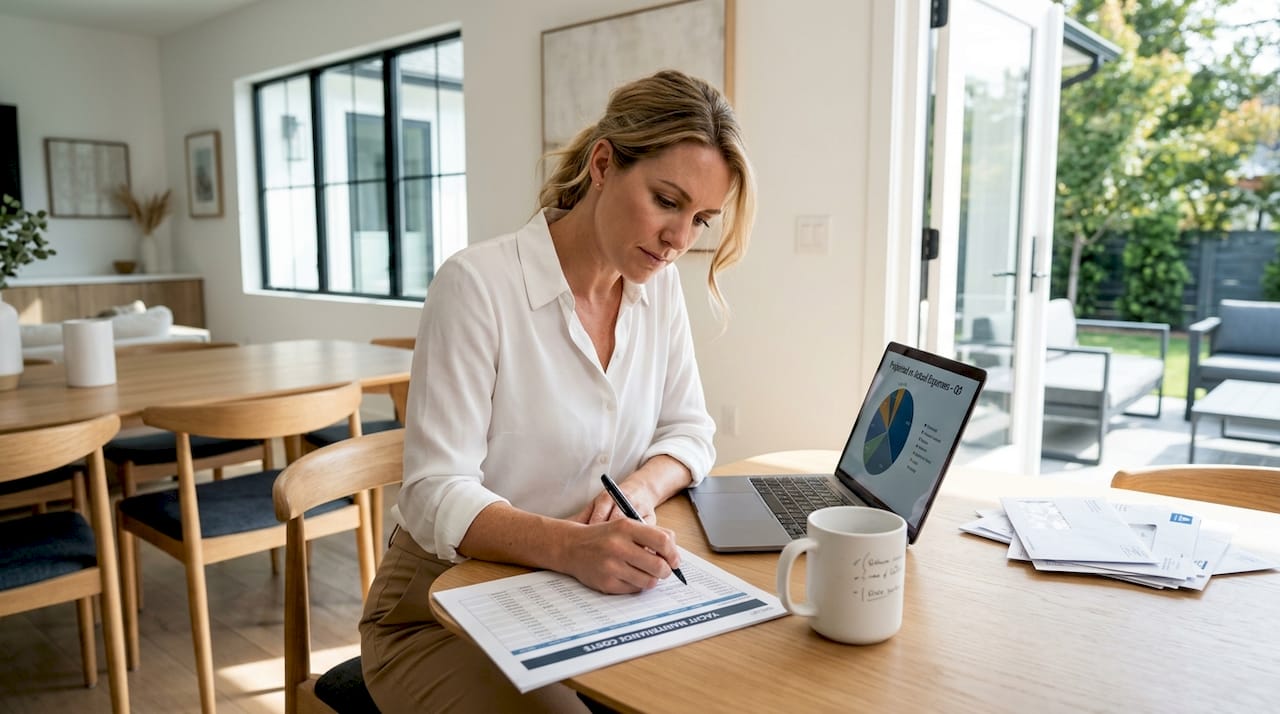
Independent buyers who attempt to handle even three or four of these stages alone routinely discover that what they saved in broker fees was consumed twice over by overlooked costs, poor negotiations, or deferred structural issues. According to annual ownership cost data, annual maintenance alone runs 5 to 10 percent of a yacht’s value, and that figure excludes crew salaries, fuel, dockage, and insurance. Buyers who do not have a broker to model these figures from the start often experience genuine financial shock within the first twelve months of ownership.
“Annual maintenance costs 5-10% of yacht value, and experienced brokers help buyers budget for the full cost of ownership, including crew, fuel, insurance, and dockage fees.” Yachtpedia Yacht Prices and Ownership Costs Guide
Pro Tip: Before you commit to any vessel, build a complete five-year cost of ownership model, not just an acquisition budget. We encourage every client to study before building your yacht alongside their brokerage search, because ownership planning and vessel planning are inseparable. A full picture of yacht ownership options and costs is the foundation of a sound acquisition decision.
How brokers add value at each stage
A skilled broker does not simply find you a yacht. Think of them as the conductor of a complex, multi-movement performance, coordinating surveyors, lawyers, flag agents, finance providers, and delivery captains, all while keeping your interests at the center of every decision. Each stage of the acquisition process carries specific risks, and experienced brokers are trained to manage every one of them.
Here is how professional broker support translates into measurable value at each step:
- Needs definition and specification: A broker draws out your actual usage patterns, seasonal cruising plans, crew requirements, and technical preferences to define a specification that eliminates unsuitable vessels before you invest time or emotional energy in viewing them.
- Market access and inventory sourcing: Brokers operate within established networks that surface both listed and unlisted inventory. Access to off-market vessels frequently translates into better pricing and less competition.
- Vessel vetting and quality assessment: Before you travel to inspect a vessel, a reputable broker will conduct preliminary due diligence on documentation, service history, and market valuation. Learning to properly evaluate evaluating yacht craftsmanship is a skill brokers bring to every shortlisting decision.
- Survey coordination and interpretation: Marine surveys are technical documents. A broker interprets survey findings in commercial terms, separating deal-breakers from negotiating leverage, so you are never guessing at what a deficiency actually means for your purchase price.
- Negotiation: This is where experienced brokers earn their fee back many times over. The art of negotiating yacht price involves knowing comparable sales, understanding seller motivation, and timing offers strategically. A broker who has closed hundreds of transactions brings pattern recognition that a first-time buyer simply cannot replicate.
- Transaction management: From purchase agreement drafting to escrow instructions and flag-state documentation, brokers ensure that the legal and financial mechanics of the deal are executed correctly and that your deposit is protected throughout.
- Post-sale integration: The broker’s role does not end at delivery. They introduce you to qualified crew, management companies, and maintenance contractors, smoothing the transition into ownership.
| Stage | Without a broker | With a broker |
|---|---|---|
| Market search | Public listings only | Private network and unlisted inventory |
| Valuation | Asking price as reference | Verified comparable sales data |
| Survey interpretation | Technical document, context unclear | Commercial impact clearly framed |
| Negotiation | Seller controls the dynamic | Buyer protected by experience |
| Contract | Generic forms or no review | Maritime-specific legal protection |
| Post-sale | Self-managed, reactive | Proactive, coordinated support |
Pro Tip: Experienced brokers often save buyers more than the entire brokerage commission during negotiation alone. When survey deficiencies surface, a skilled broker converts every finding into a structured price reduction or seller-funded repair, returning measurable value before you even take delivery.
Financial transparency and cost management
One of the most consistent patterns we observe at Baranof Yachts is this: buyers arrive with a clear acquisition budget and a genuinely incomplete picture of what it costs to operate the vessel they intend to buy. It is not a failure of intelligence. It is a failure of information. The luxury yacht market does not come with a standardized disclosure checklist, and sellers are not incentivized to volunteer information about your future operating costs.
The full ownership cost breakdown for a superyacht or large motor yacht routinely includes costs that first-time buyers underestimate or overlook entirely:
- Crew salaries and benefits: For a crewed vessel above 24 meters, annual crew costs routinely exceed the annual maintenance budget
- Dockage and marina fees: Premium berths in the Mediterranean or Caribbean can cost hundreds of thousands of dollars per season
- Fuel: A displacement motor yacht burning 200 liters per hour at cruising speed accumulates fuel costs that dwarf typical land-based transportation budgets
- Insurance: Agreed-value hull and machinery insurance, liability coverage, and crew liability represent a significant annual line item
- Flag state fees and compliance: Periodic flag state inspections, safety equipment certification renewals, and class society surveys carry direct costs and scheduling demands
- Refit and maintenance: Per ownership cost benchmarks, annual maintenance runs 5 to 10 percent of vessel value. On a $5 million yacht, that is $250,000 to $500,000 per year before any unplanned repairs
| Cost category | Buyer without a broker | Buyer with a broker |
|---|---|---|
| Maintenance planning | Reactive, often underbudgeted | Proactive, modeled from day one |
| Crew cost awareness | Frequently overlooked pre-purchase | Fully scoped before offer stage |
| Dockage costs | Discovered after commitment | Factored into ownership affordability |
| Insurance structure | Generic coverage, potential gaps | Tailored policy, adequate limits |
| Resale impact of deferred maintenance | Unknown risk | Managed and minimized |
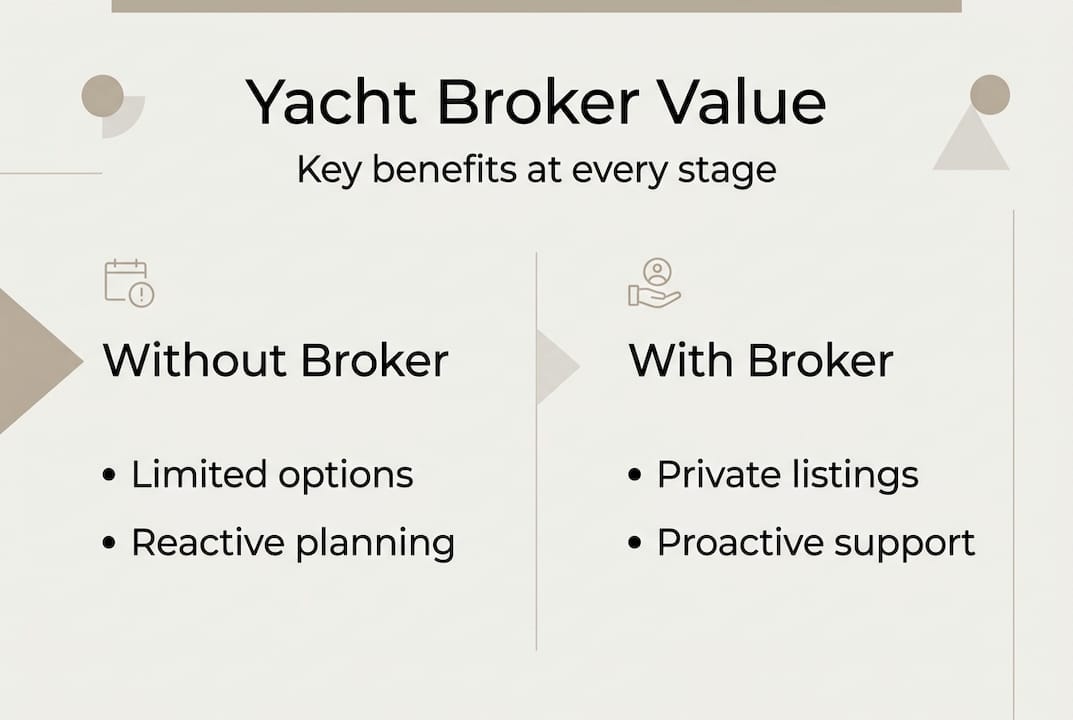
A broker who operates with genuine transparency will present all of this information before you sign a purchase agreement, not after. That transparency is not just good service. It is the foundation of a sound investment decision. Many buyers who feel they overpaid did not actually pay too much for the vessel. They simply were not told what they were signing up to manage, fund, and maintain for the years ahead.
Brokers as lifelong advisors and partners
The most valuable professional relationships in luxury asset ownership are not transactional. They are ongoing. The brokers who deliver the greatest long-term value to their clients are those who remain actively engaged through every phase of ownership, from the first viewing to the eventual resale or new build commission.
After the purchase closes, a skilled broker continues to serve in a range of advisory capacities:
- Coordinating major refit projects and managing shipyard relationships
- Advising on specification upgrades that enhance both enjoyment and resale value
- Monitoring the market to time resale at the optimal moment
- Introducing clients to qualified charter management operators when the vessel is income-generating
- Maintaining regulatory compliance awareness as flag state or class society requirements evolve
- Providing candid counsel on new build opportunities when a client is ready to move beyond the pre-owned market
The resale preparation process is a particularly instructive example. Owners who have maintained a broker relationship throughout ownership typically achieve stronger resale prices, because their broker has guided maintenance decisions with an eye toward future marketability. Vessels with complete service records, current certifications, and well-documented refit histories command a measurable premium at resale.
For clients whose ambitions extend to commissioning a purpose-built vessel, that same broker relationship becomes even more valuable. The nuances of bespoke yacht building require someone who can represent your interests throughout the construction process, from initial yard selection and contract review to outfitting supervision and delivery acceptance. An ongoing broker relationship means that when that moment arrives, you already have a trusted partner who knows your preferences, your operational style, and your priorities. The transition from pre-owned buyer to new build client is seamless rather than disorienting.
Annual ownership costs also evolve as a vessel ages and as a client’s cruising patterns mature. A good broker revisits those numbers with you regularly, ensuring that your financial planning keeps pace with your yachting ambitions. This kind of proactive engagement is what distinguishes a lifelong advisor from a one-time transaction facilitator.
The truth luxury buyers overlook: It’s not just about finding a yacht
Here is what we have observed after years of working with high-net-worth buyers at every experience level: the clients who approach yacht acquisition as purely a search-and-purchase exercise consistently encounter the most friction, the most financial surprises, and the most post-delivery disappointment.
The assumption is understandable. If you have successfully navigated the purchase of a $20 million property or a significant private equity transaction, you trust your own judgment. And in most markets, that confidence is warranted. But the yacht market operates with less standardization, less regulation, and less public pricing information than almost any other major asset class. The information asymmetry is real, and it reliably favors sellers over buyers who lack specialist representation.
We have seen experienced, sophisticated investors commit to vessels without adequate surveys because they were in a competitive situation. We have seen buyers accept verbal representations about mechanical condition that had no basis in documented service history. We have seen ownership cost projections built on optimistic assumptions that bore no relationship to operational reality. In each case, the cost of those blind spots ran well into six figures, far exceeding what a professional broker would have charged.
The true cost of ownership, at 5 to 10 percent of vessel value annually, is the number that reframes every brokerage fee conversation. On a $3 million yacht, you are committing to $150,000 to $300,000 in operating costs every single year. A broker’s commission is a fraction of one year’s running costs, and it buys you the expertise to avoid decisions that could cost you multiples of that in deferred maintenance, poor negotiation outcomes, or regulatory penalties.
The most experienced yacht owners we work with are also our most consistent clients for ongoing advisory services, because they understand that the value of expert guidance compounds over time. The right broker does not just protect your first purchase. They elevate every aspect of your yachting experience across every vessel you own.
Start your brokerage journey with Baranof Yachts
At Baranof Yachts, we bring that conductor’s eye to every client relationship, whether you are acquiring your first yacht, commissioning a custom build, or preparing to sell and upgrade to something entirely new.
Our team provides complete acquisition support, from initial specification and market search through survey management, negotiation, and post-delivery ownership planning. If you are exploring a purpose-built vessel, you can configure your new yacht directly with our team and discover how a bespoke build compares to the pre-owned market on value, customization, and long-term cost. We also offer detailed guidance on yacht ownership options for clients at every stage of the decision process. For those ready to explore bespoke yacht building, we bring years of new build project management experience to protect your investment from keel to delivery. Connect with us today for an unbiased, personalized consultation.
Frequently asked questions
What does a yacht broker actually do?
A yacht broker manages every aspect of finding, vetting, negotiating, purchasing, and eventually reselling a vessel, including the full ownership cost picture such as maintenance, crew, fuel, insurance, and dockage. Their role spans both the transaction and the long-term relationship that follows it.
How do yacht brokers save buyers money?
Brokers prevent costly mistakes during due diligence, use comparable market data to negotiate better purchase prices, and surface the full operational costs that most buyers systematically underestimate before committing. The savings on a single negotiation routinely exceed the total broker fee.
Are brokers only for first-time buyers?
No. Experienced owners rely on brokers for refit management, market timing for resale, legal compliance guidance, and new build commissioning, making the relationship increasingly valuable as your yachting portfolio grows and your ambitions evolve.
What are common costs new owners underestimate?
Crew salaries, marina and dockage fees, hull insurance, fuel, flag-state compliance, and annual maintenance are the categories that most frequently surprise first-time buyers, with annual maintenance alone running 5 to 10 percent of the vessel’s total value.
How are brokers compensated?
Brokers typically receive a commission calculated as a percentage of the vessel’s sale price, which is conventionally paid by the seller or structured into the transaction fees. Buyer-side representation arrangements vary, and we are always transparent about how our compensation is structured before we begin work together.
Recommended
Sold Listings
Design Your Yacht
"*" indicates required fields
Maximus III - PNW
As you step aboard MAXIMUS III, the first impression is her scale.
At 120 feet with an 8-meter beam and 294 GT of interior volume, this 2025 Crescent Custom tri-deck immediately feels open, balanced, and estate-like. A timeless look while still feeling fresh from the shipyard.
Currently Available


Get your yacht value Estimate
"*" indicates required fields