

Selling a luxury yacht without a structured preparation plan is one of the most reliable ways to leave significant money on the table. Buyers in this market are represented by experienced brokers and surveyors who will identify every deferred maintenance item, every documentation gap, and every staging misstep, then use each one to negotiate your price downward. The difference between a yacht that sells quickly at asking price and one that stagnates for months often has nothing to do with the vessel itself. It comes down entirely to how well the owner prepared. This guide walks you through every critical phase, from market positioning through final handoff, so you can approach the process with confidence and precision.
Table of Contents
- Define your yacht’s market position and value
- Essential maintenance checks and upgrades
- Staging, documentation, and presentation for buyers
- Partner selection and finalizing the process
- Why overlooked details derail yacht resales—and our hard-won fixes
- Ready for your next chapter? Partner with Baranof Yachts
- Frequently asked questions
Key Takeaways
| Point | Details |
|---|---|
| Start with valuation | Accurately assess your yacht’s market value before investing in upgrades or marketing. |
| Prioritize crucial maintenance | Focus repairs on survey-essential systems and high-ROI updates to secure buyer interest. |
| Stage and document thoroughly | Present your yacht with professional staging and organize all records for buyer confidence. |
| Partner with experts | Engage an experienced broker to streamline negotiation, closing, and maximize your return. |
Define your yacht’s market position and value
Before you invest a single dollar in upgrades or repairs, you need an honest picture of where your yacht sits in the current market. This means going beyond your own attachment to the vessel and looking at recent comparable sales, often called “comps,” which are actual closed transactions for similar yachts in terms of length, brand, age, and specification. A professional appraisal combines these comps with a condition assessment to arrive at a defensible baseline value. Understanding this number early prevents over-investment in improvements that the market will not reward.
Several factors drive the competitive standing of any luxury yacht. A well-documented refit within the past three years can add meaningful value, while deferred maintenance quietly erodes it. Brand pedigree matters considerably: a vessel from a builder with a strong reputation for engineering and quality finishes commands a premium that a lesser-known yard simply cannot match. Age is a factor, but it is rarely the dominant one when systems are current and the vessel presents well. Reviewing yacht resale value strategies before you begin can sharpen your thinking on which attributes to emphasize.
Here is a quick reference for the factors that most influence resale value:
| Factor | Impact on value | Notes |
|---|---|---|
| Builder/brand pedigree | High | Affects buyer confidence and financing options |
| Age and refit history | High | Recent major refit can offset older build year |
| Engine hours and service records | High | Buyers and surveyors scrutinize this closely |
| Navigation and tech systems | Medium | Modern electronics add perceived value |
| Interior condition and layout | Medium | Neutral, well-maintained interiors sell faster |
| Custom features and add-ons | Variable | Only adds value if broadly desirable |
Setting your initial asking price realistically is equally important. Overpricing a yacht triggers a market perception problem: listings that sit too long accumulate what brokers call “days on market” stigma, and buyers begin to wonder what is wrong with the vessel. Understanding negotiating yacht price dynamics helps you structure an asking price that leaves room for negotiation without undermining perceived value. A well-priced yacht generates competing interest, which is the most powerful negotiating position a seller can occupy.
Key competitive differentiators to assess include:
- Builder reputation and hull provenance
- Documented refit scope and receipts
- Current certification status (safety, classification)
- Technology and navigation system generation
- Consistent maintenance log with no unexplained gaps
Pro Tip: Engage a luxury yacht selling guide specialist or independent surveyor for a formal valuation before committing to any upgrade spend. The report will tell you exactly which investments are justified by the market and which are not.
Essential maintenance checks and upgrades
With a clear sense of market value, next comes preparing your yacht physically for inspection. Buyers conducting due diligence will hire a qualified marine surveyor to assess every system, from the main engines and generators to through-hull fittings, bilge pumps, electrical panels, and safety equipment. The surveyor’s report becomes the buyer’s primary negotiation tool, so every item flagged is a line item they will use to reduce the price. Your goal is to present a vessel where that report is as clean as possible.
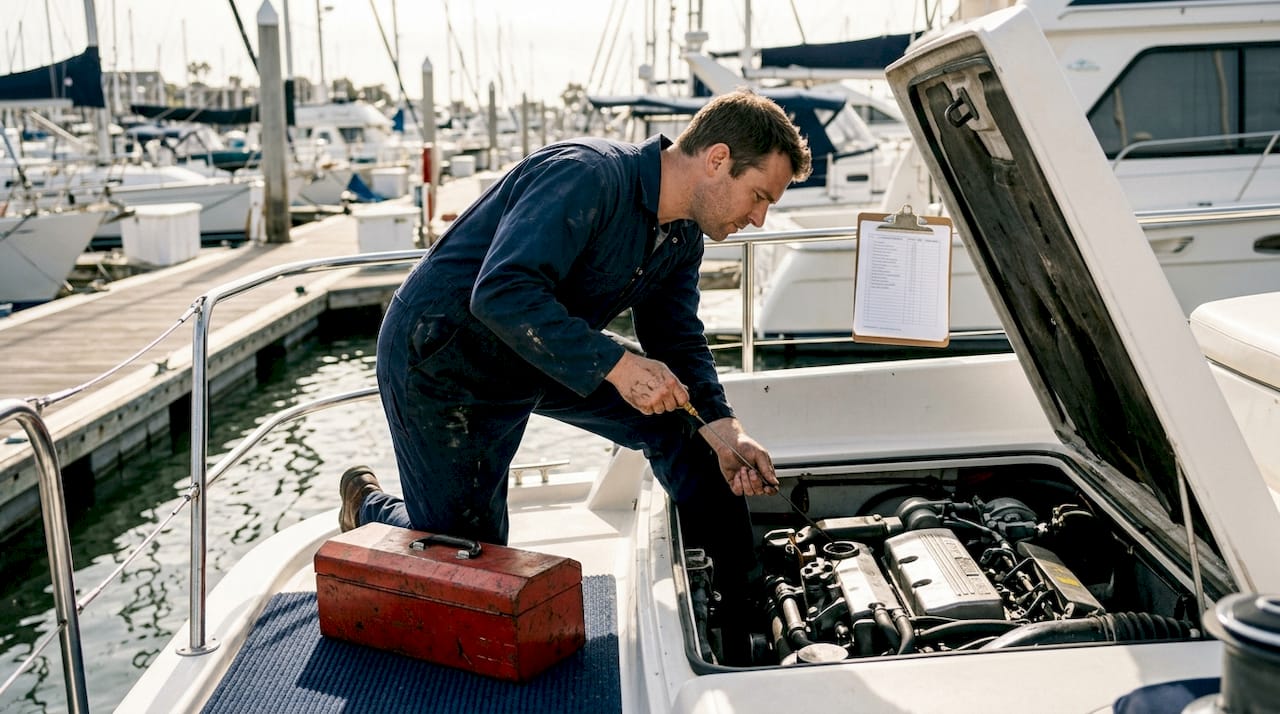
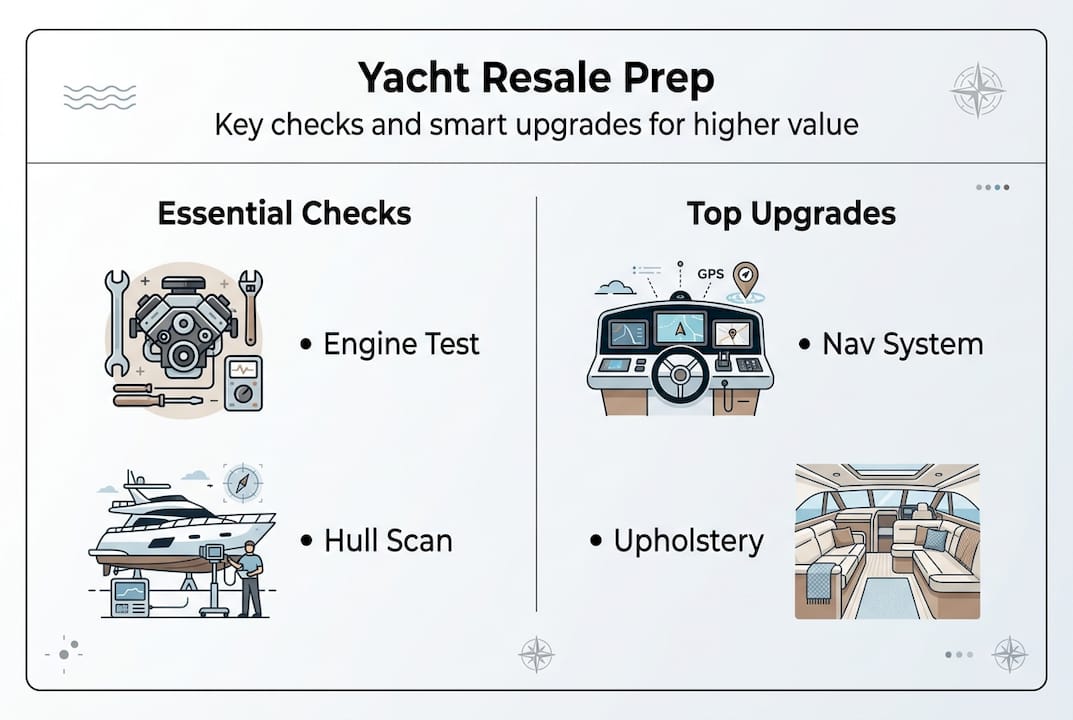
Not every repair or upgrade carries equal weight. We categorize pre-sale work into three tiers:
| Priority tier | Examples | Purpose |
|---|---|---|
| Mandatory (fix before listing) | Engine service overdue, corroded wiring, expired safety gear | Prevents survey failures and survey credits |
| High ROI upgrades | Navigation system update, exterior repaint, upholstery refresh | Directly increases perceived and appraised value |
| Nice to have | Custom artwork, specialty lighting, entertainment upgrades | Low market return unless already installed |
Following a clear sequence reduces wasted effort. Here is the pre-survey preparation order we recommend:
- Commission a pre-sale survey from an independent surveyor to identify issues before buyers do.
- Address all structural, mechanical, and safety items flagged in that preliminary survey.
- Service main engines and generators with documentation proving the work was completed.
- Inspect and test all through-hulls, seacocks, and bilge systems.
- Replace expired flares, life rafts, and EPIRB equipment as required.
- Complete cosmetic repairs: gelcoat polishing, teak cleaning, and interior deep-cleaning.
Deferred maintenance does not disappear when a yacht hits the market. It reappears as survey credits, price reductions, and broken deals. Every dollar of postponed upkeep typically costs two to three dollars at the negotiating table.
Systems reliability is a topic we feel strongly about. As we explore in our coverage of maintenance reliability tips, the knock-on effects of neglected subsystems reach far beyond the immediate repair. A bilge pump that fails during a sea trial, for example, can shake buyer confidence even after it is fixed, because it suggests a pattern of deferred care. The yacht resale success factors most cited by brokers are mechanical reliability and documentation completeness, not cosmetic perfection.
Pro Tip: Prioritize fixes that will affect the sea trial and survey outcome over cabin cosmetics. A buyer can visualize new soft furnishings; they cannot easily dismiss a flagged engine mount or questionable fuel system.
Staging, documentation, and presentation for buyers
Physical condition checked, turn now to how your yacht is presented and documented. Staging a luxury yacht for sale follows a principle familiar from high-end real estate: neutral, clutter-free environments allow buyers to project their own vision onto the space. Remove personal items, excess gear, and anything that makes the vessel feel like someone else’s home rather than the buyer’s future acquisition.
Documentation is equally powerful. Buyers and their legal teams will request a complete paper trail, and gaps in that trail raise concern. Compile the following before any showing:
- Current registration and certificate of title
- Complete maintenance logs with dates, service providers, and parts records
- Engine and generator service invoices for at least the past five years
- Safety equipment certifications and inspection dates
- Warranty documentation for any recently installed equipment
- Customs clearance and importation records if applicable
For the physical presentation and photo shoot, sequence matters. Follow these steps for every buyer walkthrough:
- Deep-clean the entire vessel 24 to 48 hours before showing, including bilges and engine room.
- Remove all personal gear, clothing, and decorative items that are not part of the sale.
- Set up neutral, tasteful staging elements in saloon and cabin areas.
- Ensure all electronics are powered and functional before buyers board.
- Have the full documentation package organized and available for immediate review.
Professional photography is non-negotiable for a luxury listing. Yacht seller presentation tips from experienced brokers consistently show that high-quality images and video walkthroughs increase qualified inquiry rates substantially. Our project management for staging approach treats the presentation phase with the same rigor we apply to a new build: every detail is planned, sequenced, and verified.
Best practices for hosting viewings:
- Schedule viewings during optimal light conditions, typically mid-morning
- Have a crew member or captain present to answer technical questions accurately
- Keep the vessel at dock and ready for an impromptu short sea trial if requested
- Provide printed spec sheets with key features and recent upgrade summaries
- Follow up within 24 hours after each viewing with any documentation requested
Partner selection and finalizing the process
Impression made, successful yacht resale now depends on the partners and procedures you choose. Selecting the right brokerage firm is not simply a matter of finding the lowest commission rate. Top-tier firms bring a qualified buyer network, established relationships with survey companies and maritime attorneys, and the negotiation experience to protect your interests through a complex closing process.
When evaluating potential sales partners, ask these questions:
- What is your recent track record with vessels of similar size and specification?
- How do you qualify buyers before scheduling viewings?
- What marketing channels and platforms does your listing appear on?
- How do you handle survey negotiations and repair credits?
- What does your post-sale transition support include?
The negotiation phase has several critical leverage points. Serious offers should be accompanied by proof of funds or a financing letter before you grant survey access. Survey results will typically generate a request for either repairs or price adjustments; knowing in advance which items are non-negotiable and which you are willing to address keeps the process moving. You can explore the full scope of what we manage at choosing a yacht broker, where our approach to representing sellers is outlined in detail.
As yacht selling advice from experienced maritime professionals confirms, clear communication protocols between seller, broker, surveyor, and maritime attorney prevent the majority of late-stage deal failures. The final steps before closing include:
- Confirming the title is free of liens and encumbrances
- Coordinating the escrow account and fund transfer sequence
- Completing all regulatory documentation for flag state transfer
- Scheduling a formal handoff walkthrough with the buyer’s captain
- Providing full operational briefings and manuals to the new owner
Why overlooked details derail yacht resales—and our hard-won fixes
After years of working through yacht transactions across multiple market cycles, we have seen a consistent pattern: deals that collapse after due diligence almost never fail because of the yacht itself. They fail because of trust. A buyer who uncovers a single undisclosed issue during survey begins to question everything else. That psychological shift is nearly impossible to recover from, and no price reduction will fully compensate for it.
The yachts we have seen perform best at resale share a specific quality: their sellers treated full transparency as a competitive advantage rather than a liability. When you proactively disclose a known issue and present the documentation showing it was professionally resolved, you actually build more buyer confidence than if the issue had never existed. It signals that the vessel has been genuinely cared for and honestly represented.
We also observe that emotional resonance during a viewing carries surprising weight. Buyers at this level are making a lifestyle decision as much as a financial one. A vessel that feels like a curated, well-loved home generates offers that a sterile, transactional presentation simply does not. Our yacht resale case studies show that well-prepared yachts with complete documentation and thoughtful staging frequently outsell vessels with superior specifications that were presented carelessly. Preparation, not specification, is the final differentiator.
Ready for your next chapter? Partner with Baranof Yachts
Maximizing your yacht’s resale return is not something you need to figure out alone. At Baranof Yachts, we bring the same meticulous, conductor’s-eye approach to resale preparation that we apply to every custom build and project management engagement we undertake.
Whether you are preparing to sell your current vessel, configure your ideal yacht as your next acquisition, or want expert project management services to guide the entire process from preparation through closing, our team is ready to support every step. Visit Baranof Yachts to start a conversation about how we can help you move forward with clarity and confidence, and make sure your next chapter on the water begins exactly as it should.
Frequently asked questions
What documents are essential for selling a yacht?
Essential documents include maintenance logs, registration, title, service records, and any active warranties. As required for yacht resale, title clarity and complete service logs are the items buyers and their attorneys scrutinize most closely.
Which yacht upgrades offer the best return before resale?
Navigation system updates, fresh exterior paint or gelcoat restoration, and upholstery refreshes consistently deliver the strongest returns. Modern tech upgrades and cosmetic improvements signal active stewardship to buyers and reduce survey negotiation leverage.
How long does the yacht resale preparation process typically take?
The complete process usually takes 4 to 8 weeks depending on the scope of maintenance and upgrades required. Yacht resale prep can extend beyond a month when major mechanical work is needed before listing.
Is a broker necessary when selling a luxury yacht?
A broker is strongly recommended for accessing the qualified buyer network and managing negotiation complexity at this level. Professional brokerage significantly improves the probability of a clean, full-value closing in the luxury segment.
Recommended
Sold Listings
Design Your Yacht
"*" indicates required fields
Maximus III - PNW
As you step aboard MAXIMUS III, the first impression is her scale.
At 120 feet with an 8-meter beam and 294 GT of interior volume, this 2025 Crescent Custom tri-deck immediately feels open, balanced, and estate-like. A timeless look while still feeling fresh from the shipyard.
Currently Available


Get your yacht value Estimate
"*" indicates required fields