
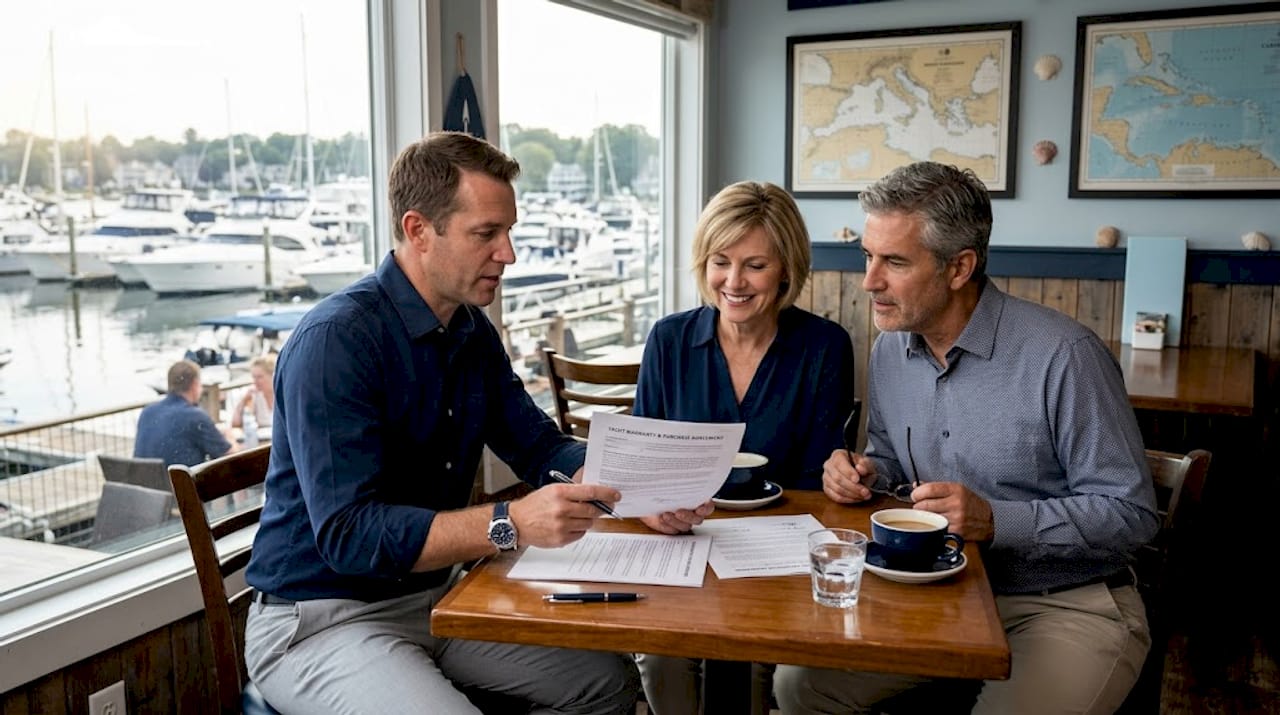
Buying a yacht is one of the most significant financial commitments you will make, and the role of warranty in yacht sales is far more consequential than most buyers realize at the point of signing. Warranties are not optional extras or marketing language. They are the contractual backbone of your investment protection, and misunderstanding them costs yacht owners real money every year. This guide covers what yacht warranties actually include, how legal frameworks reinforce or limit your rights, and how to leverage warranty provisions to protect both your purchase and your resale value.
Table of Contents
- Key takeaways
- The role of warranty in yacht sales: foundations and legal rights
- Warranty options and their impact on your purchase decision
- Legal considerations for used yacht buyers
- Maintaining your warranty: the practices that keep coverage valid
- How warranty status shapes resale value and buyer confidence
- My take on warranties: what buyers get wrong most often
- Let Baranofyachts help you configure coverage with confidence
- FAQ
Key takeaways
| Point | Details |
|---|---|
| Warranty vs. insurance | Warranties cover defects and workmanship; insurance covers accidents. You need both. |
| Legal minimums apply | Buyers purchasing from professional dealers have enforceable rights beyond any optional warranty. |
| Used yacht protections differ | Dealers must honor at least a one-year warranty on pre-owned yachts; private sellers carry no such obligation. |
| Maintenance records are critical | Unauthorized repairs or missed service schedules are the most common reasons warranty claims get denied. |
| Warranty transfers increase resale value | Documented, transferable coverage gives sellers measurable leverage and buyers greater confidence. |
The role of warranty in yacht sales: foundations and legal rights
A yacht warranty is a formal commitment from either the manufacturer or the selling dealer to repair or replace components that fail due to defects in materials or workmanship. That sounds straightforward, but the details matter enormously. Coverage scope, duration, and legal enforceability all vary depending on where you buy, who you buy from, and what kind of vessel you are acquiring.
Most buyers encounter two distinct layers of protection: the manufacturer’s warranty and the legal consumer guarantee. These are not the same thing. The manufacturer’s warranty is a voluntary commercial offer with its own terms and exclusions. The legal guarantee, particularly within the EU, is a statutory right that cannot be waived or negotiated away. EU buyers purchasing from a professional seller are entitled to a minimum two-year legal guarantee by law, regardless of what the manufacturer’s documentation states.
Here is where it gets practically useful. In the first 12 months of ownership, any defect discovered is legally presumed to have existed at the time of delivery. The burden of disproving that presumption falls on the seller, not on you. After month 12, that burden typically shifts back to the buyer. Some EU member states extend the presumption period further, so knowing your specific jurisdiction before you sign is worth the effort.
Standard warranty coverage across both manufacturer and statutory guarantees typically includes:
- Hull integrity and structural workmanship
- Engine and drivetrain components
- Onboard electrical systems and wiring
- Plumbing and hydraulic subsystems
- Factory-installed fixtures and hardware
One distinction that confuses many buyers involves warranties versus insurance. Warranties address mechanical failures and defects arising from the build itself. Insurance addresses external events such as collisions, weather damage, and theft. Relying on one without the other leaves significant exposure. You need both, and they serve entirely different purposes in your ownership structure.
Warranty options and their impact on your purchase decision
Not all warranty coverage is created equal, and the range of warranty options for yachts has expanded considerably as manufacturers have begun competing on after-sale confidence rather than just specification sheets. Understanding what each type covers, and what it excludes, directly shapes how you should evaluate competing purchase options.
Manufacturer warranties are included with new yacht purchases and typically run one to three years from delivery. The specific duration has been a genuine differentiator in recent years. Fairline extended its new yacht warranty from one year to three years starting in 2025 for all new stock boats and future orders. That decision was deliberately positioned as a statement of confidence in their build quality, and it had a measurable effect on buyer perception in the premium segment.
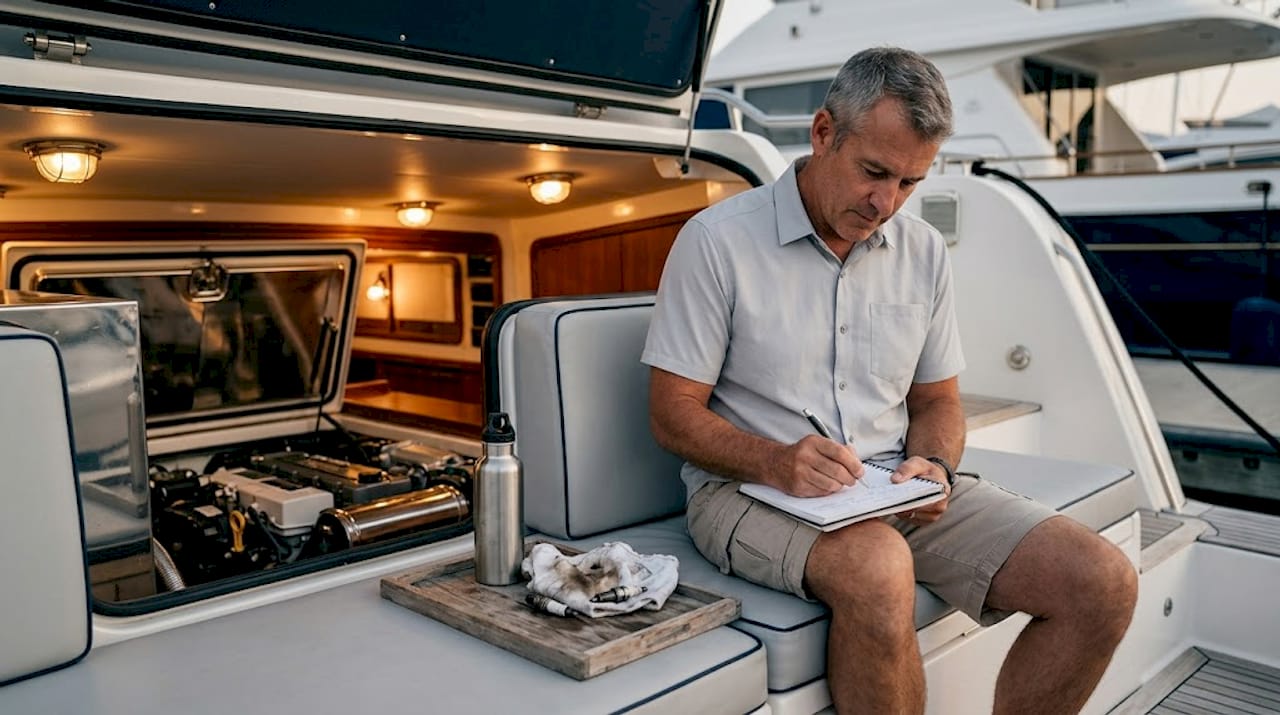
Extended service contracts are purchased separately and activate when the manufacturer warranty expires. They typically cover mechanical failures and electrical issues across both new and pre-owned vessels, and they function very differently from insurance. Think of an extended service contract as a maintenance safety net for the systems most likely to require attention as the vessel ages. For financially careful owners, this coverage can prevent a single drive failure or navigation electronics failure from becoming a five-figure surprise.
Third-party warranty programs are offered through independent marine service providers and tend to be more flexible on which vessels they will cover, including older pre-owned yachts that manufacturers no longer support. Coverage terms are more variable, so scrutiny of exclusions is especially important here.
The presence or absence of warranty coverage affects purchase negotiations in concrete ways:
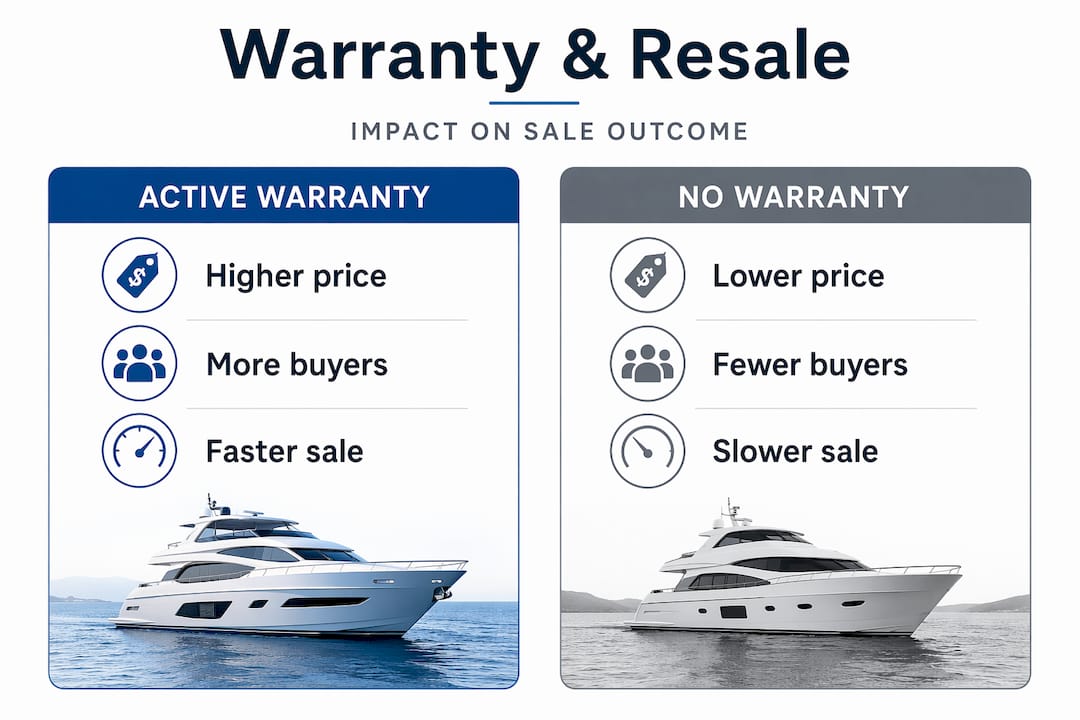
- A yacht with active transferable manufacturer coverage commands a measurably stronger asking price
- Buyers use missing or expired warranty as negotiation leverage to reduce the purchase price
- Vessels with documented extended service contracts sell faster because they reduce the buyer’s perceived risk
- First-time buyers in particular place disproportionate weight on warranty status when choosing between comparable listings
Pro Tip: When comparing two similarly priced yachts, calculate the cost of purchasing equivalent extended coverage for the yacht without warranty. That number often reveals which vessel is actually the better value.
Legal considerations for used yacht buyers
Buying a pre-owned yacht introduces a different set of warranty dynamics, and this is where buyers are most frequently caught unprepared. The legal protections that apply depend heavily on whether you are buying from a professional dealer or a private seller.
When purchasing from a dealer, used yacht warranty periods can be shortened to one year, but they cannot be excluded entirely. The dealer remains obligated to remedy any defects that emerge. If the dealer fails to remedy those defects within a reasonable timeframe, typically 14 to 30 days under EU frameworks, you are entitled to escalating remedies:
- Request a price reduction proportional to the defect
- Demand repair or replacement of the defective component
- Pursue partial or full contract cancellation with a refund
- Seek damages for consequential losses in jurisdictions that permit it
Private sales operate under an entirely different set of rules. A private seller has no statutory warranty obligation in most jurisdictions. Once you take delivery, the vessel is legally yours with its defects. This is why independent marine surveys before purchase are not optional on pre-owned transactions. They are the foundational due-diligence step that no warranty clause can replace.
Contracts on used yachts frequently contain “as-is” clauses or age-related liability limitations. These sound alarming, but their enforceability has clear limits. Sellers who conceal defects knowingly cannot hide behind standard “as-is” language. Courts in multiple jurisdictions have repeatedly invalidated liability limitations where willful concealment was demonstrated. Thorough pre-purchase documentation of vessel condition, completed before you take ownership, is your most effective protection against a seller attempting to exploit these clauses after the fact.
“Buyers should document vessel condition thoroughly before purchase. Legal remedies include repair, damages, price reduction, or contract dissolution when sellers fail to disclose known defects.” — Legal rights guidance under Dutch maritime contract law
Maintaining your warranty: the practices that keep coverage valid
Owning a warranty and actually being able to use it are two different things. This is one of the most misunderstood aspects of yacht ownership, and it has real financial consequences. Manufacturers deny coverage when owners fail to follow prescribed maintenance schedules or use unauthorized repair facilities, even when the failure itself appears unrelated to the maintenance lapse.
The logic behind this is defensible from the manufacturer’s perspective. A diesel engine that misses its service interval at 200 hours may develop a bearing failure at 400 hours. The connection between those two events is difficult to disprove, and manufacturers are not required to fund repairs where the maintenance record is incomplete.
Authorized and regular maintenance is the single most important practice to preserve your warranty and make claims successful. Beyond that, these behaviors protect your coverage:
- Keep dated, signed service records from every maintenance appointment
- Use only manufacturer-approved components for any replacement part
- Record any repairs alongside the name and certification of the technician who performed the work
- Notify the dealer or manufacturer promptly when a defect appears, rather than attempting a temporary fix first
- Review your warranty documentation annually to confirm what scheduled services are due and when
Understanding how design and maintenance interact on complex vessels helps owners see the knock-on effects that poor upkeep can have across connected subsystems. A water intrusion issue that seems minor at the hull seal level can compromise the bilge pump system, the flooring substrate, and then the cabin electrical routing in sequence.
Pro Tip: Create a physical warranty folder that holds your purchase contract, original warranty documentation, all service records, and any correspondence with the manufacturer or dealer. This folder is worth real money if you ever need to make a claim or sell the vessel.
How warranty status shapes resale value and buyer confidence
The advantages of yacht warranties extend well beyond the ownership period. When it comes time to sell, warranty documentation functions as objective evidence of how the vessel was cared for. Buyers cannot physically inspect every system in a complex yacht during a short viewing. A clean warranty record and active coverage tell a story that a survey alone cannot fully communicate.
The impact of warranty on yacht purchase decisions shifts dramatically at the point of resale. Here is how coverage status affects a transaction:
- Active transferable coverage allows sellers to hold or increase asking price relative to comparable listings without coverage
- Detailed service records that validate warranty compliance function as a condition audit without requiring additional inspection fees
- Gap-free documentation reduces negotiation friction, because buyers have fewer unknowns to price in
- Extended coverage that transfers to the new owner adds tangible value that buyers can quantify
| Warranty status | Effect on resale negotiation | Buyer confidence impact |
|---|---|---|
| Active manufacturer warranty, transferable | Seller holds price; faster transaction | High |
| Expired warranty, full service records | Moderate price; buyer may request extended service contract | Medium-high |
| Expired warranty, incomplete records | Significant price reduction expected | Low |
| No warranty, no records, private sale | Maximum buyer risk; lowest buyer confidence | Minimal |
Sellers who invest in resale preparation strategies consistently outperform market averages, and warranty documentation is one of the factors that distinguishes a well-presented listing from one that stalls. Transferability is the specific term worth checking in your original warranty documents. Many manufacturer warranties require a formal transfer notification and a small administrative fee. Completing that process before listing your vessel costs almost nothing and strengthens your negotiating position considerably.
My take on warranties: what buyers get wrong most often
I’ve watched buyers spend weeks agonizing over engine specifications, interior upholstery choices, and beam dimensions while spending almost no time reading their warranty documents. That imbalance is expensive. In my experience, the buyers who understand warranty provisions before they sign are the ones who avoid the costly surprises that arrive six to eighteen months into ownership.
What I’ve found consistently true is that buyers underestimate how conditional warranty coverage actually is. The coverage looks unconditional in the brochure. Read the maintenance schedule requirements and the authorized-service provisions, and a very different picture emerges. I’ve seen manufacturers decline legitimate-seeming claims on technical grounds that were completely defensible within the warranty terms, because the owner simply hadn’t read those terms carefully.
My advice is direct: before you finalize any yacht purchase, ask two specific questions. First, what maintenance events are required to keep this warranty valid, and who is authorized to perform them? Second, is this warranty transferable, and what is the transfer process? Those two questions will tell you more about the real value of the coverage than any amount of brochure language.
I also want to be clear that warranty is not a substitute for insurance. They are complementary instruments, and marine insurance professionals consistently warn that relying on one without the other leaves you exposed. Budget for both from day one of ownership.
— Jason
Let Baranofyachts help you configure coverage with confidence
At Baranofyachts, we guide buyers through every dimension of a yacht purchase, and warranty structure is one of the areas where our experience has the most direct impact on buyer outcomes. Understanding which warranty options align with your intended use, your maintenance habits, and your long-term ownership plans requires the same precision we apply to every other aspect of a build or acquisition.

Whether you are configuring a new build where warranty terms can be negotiated directly with the manufacturer, or evaluating a pre-owned vessel where legal protections and documentation gaps need careful review, our team provides the context you need to make decisions with full clarity. We also work with buyers to understand why brokerage expertise matters when warranty advisory is part of the equation. If you are preparing a vessel for resale, our yacht resale preparation guidance addresses warranty documentation as a core element of maximizing your sale price. Contact Baranofyachts to begin a conversation about your specific situation.
FAQ
What does a yacht warranty typically cover?
A standard manufacturer warranty covers defects in materials and workmanship, including the hull, engine, electrical systems, and factory-installed components. It does not cover damage from accidents, weather, or misuse, which fall under marine insurance.
How long does a yacht warranty last?
Manufacturer warranties on new yachts generally run one to three years. Buyers in the EU are entitled to a minimum two-year statutory guarantee when purchasing from a professional dealer, regardless of the manufacturer’s voluntary terms.
Can a used yacht warranty be excluded by a dealer?
No. When buying a pre-owned yacht from a professional dealer, the warranty period may be reduced to one year but cannot be eliminated entirely. Only private sales carry no statutory warranty obligation.
What voids a yacht warranty?
Missed maintenance intervals, use of unauthorized repair facilities, and installation of non-approved components are the most common reasons manufacturers deny claims. Keeping dated service records from certified technicians is your primary defense.
Does warranty coverage affect yacht resale value?
Yes, directly. Active transferable warranty coverage supports higher asking prices and reduces buyer negotiation pressure. Incomplete service records and expired coverage with no documentation typically result in meaningful price reductions during resale negotiations.
Recommended
Sold Listings


Design Your Yacht
"*" indicates required fields
Maximus III - PNW
As you step aboard MAXIMUS III, the first impression is her scale.
At 120 feet with an 8-meter beam and 294 GT of interior volume, this 2025 Crescent Custom tri-deck immediately feels open, balanced, and estate-like. A timeless look while still feeling fresh from the shipyard.
Currently Available


Get your yacht value Estimate
"*" indicates required fields