
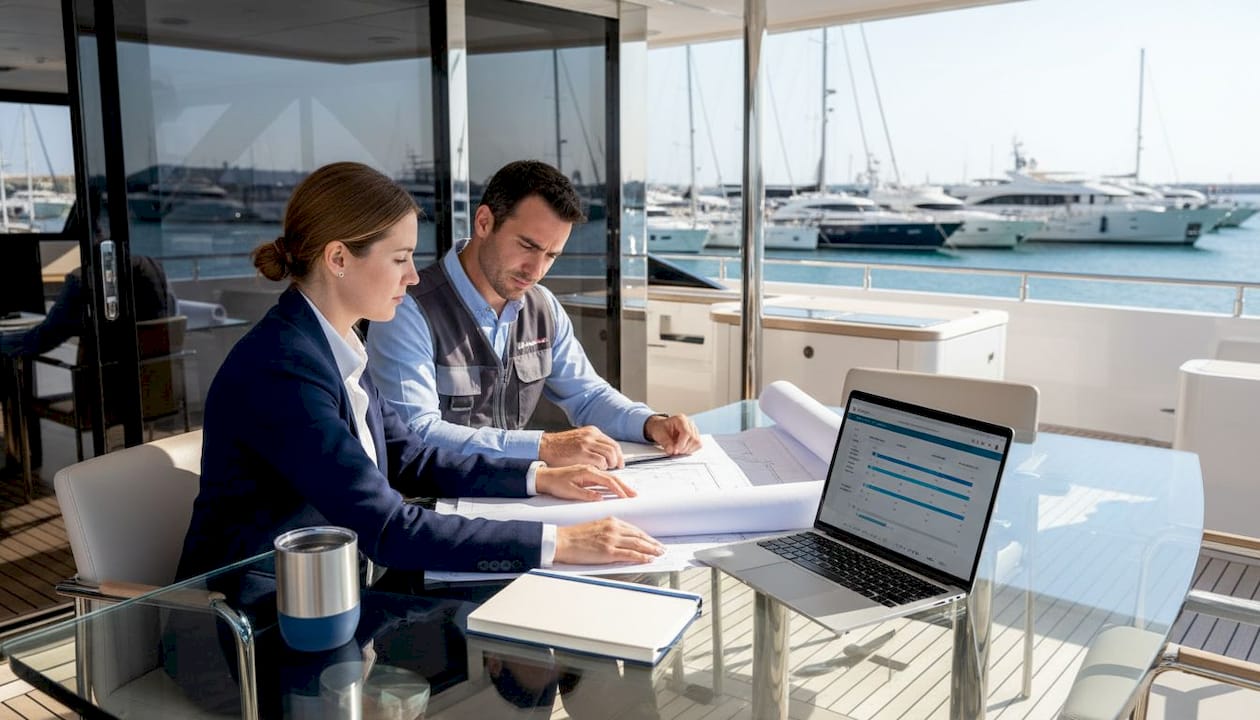
A custom yacht build or major refit is one of the most capital-intensive undertakings a high-net-worth individual or corporate entity will ever commission. Yet the assumption persists that buying quality materials and hiring a reputable shipyard is enough. It is not. Without dedicated project oversight, the gap between your vision and the finished vessel grows quietly, expensively, and often irreversibly. Understanding why yacht project oversight matters is what separates owners who receive the yacht they imagined from those who spend years resolving disputes, managing cost overruns, and questioning the value of what they built.
Table of Contents
- The complexity of luxury yacht projects and why oversight is essential
- The owner’s representative: your single point of accountability and value protector
- Professional project management protecting owners’ rights and ensuring quality
- Understanding classification society surveys: lifecycle oversight for safety and value
- Applying effective oversight: best practices for managing your yacht project
- Why conventional yacht project wisdom is backwards and how disciplined oversight protects your investment
- Partner with Baranof Yachts for expert project oversight and exceptional yacht delivery
- Frequently asked questions
Key Takeaways
| Point | Details |
|---|---|
| Yacht projects are complex | Luxury yacht builds and refits involve technical, contractual, and regulatory complexities requiring expert oversight. |
| Owner’s representative is essential | A single, empowered owner’s representative ensures clarity, accountability, and preserves budget and quality. |
| Professional managers protect rights | Project managers coordinate contracts and teams, ensuring standards exceed regulations and timelines are met. |
| Classification surveys maintain value | Scheduled surveys verify safety and condition, preventing costly lapses and protecting insurance validity. |
| Early, continuous oversight saves millions | Engaging qualified oversight before contract signing avoids budget overruns and aligns ambitions with reality. |
The complexity of luxury yacht projects and why oversight is essential
A luxury yacht is not a product you order and receive. It is a technically complex, multi-year undertaking that merges naval architecture, interior design, marine engineering, international regulatory compliance, and supply chain logistics into a single vessel. A 40-meter custom build can involve hundreds of subcontractors, thousands of line-item specifications, and upwards of three to five years from contract to delivery. The importance of yacht project management becomes apparent the moment you realize how many things have to go right simultaneously.
The risks of fragmented governance are real and measurable. Yacht projects are complex depreciating assets with multi-year capital expenditure cycles and high operational risk that require structured governance. Without a single authoritative voice coordinating decisions, accountability diffuses across the yard, the designer, the captain, and the broker. Each party protects their own interests. That is not a criticism. It is simply what happens when clear governance structures are absent.
Key risks that structured oversight addresses include:
- Scope drift: Small change requests accumulate into significant cost and schedule impacts when no one is tracking their knock-on effects across subsystems.
- Regulatory gaps: Flag state requirements, classification society rules, and MCA/USCG standards evolve during a multi-year build. Missing an update can halt delivery.
- Quality erosion: Suppliers substitute materials when budgets tighten. Without active project management in yacht builds, those substitutions go unchallenged.
- Post-delivery disputes: Warranty claims become complicated when no contemporaneous record of approvals and decisions exists.
Pro Tip: Before you sign a single contract, map every party involved in your project and define who has decision authority for each category of change. That simple exercise will reveal governance gaps immediately.
The owner’s representative: your single point of accountability and value protector
The owner’s representative is perhaps the most misunderstood and underutilized role in luxury yacht projects. Think of this person as the conductor of an orchestra: every musician is skilled individually, but without a conductor’s eye on the whole performance, the result is noise, not music. The owner’s representative carries clear decision authority, speaks with one voice on your behalf, and ensures the project moves forward without the delays that arise when multiple stakeholders interpret the brief differently.
The appointment timing matters enormously. Appointing a qualified owner’s representative before contract signing can save tens of millions through early contractual clarity and disciplined decision-making. Once contracts are signed and yards begin procurement, renegotiating terms becomes expensive and adversarial.
The four phases where an owner’s representative adds the most value are:
- Pre-contract: Reviewing specifications, negotiating payment milestones, and ensuring the contract protects your rights in the event of delay, insolvency, or material substitution.
- Build monitoring: Conducting yard visits, attending trials, reviewing quality assurance reports, and maintaining a daily log of decisions and approvals.
- Change management: Evaluating every variation order for cost, schedule impact, and technical feasibility before you commit.
- Delivery and handover: Verifying that every contracted item is delivered, tested, and documented before you transfer final payment.
“A common surprise is that without a single owner’s representative with clear decision authority, the project slows and warranty claims get complicated.”
This role is not optional for projects above a certain scale. It is the mechanism through which preparing for yacht building translates from aspiration to disciplined execution. The benefits of yacht brokers are well documented, but a broker’s mandate ends at the sale. The owner’s representative carries that responsibility forward through every phase.
Pro Tip: Request a written decision authority matrix from any candidate owner’s representative before hiring. It tells you immediately whether they understand governance or are simply offering general project support.
Professional project management protecting owners’ rights and ensuring quality
Professional project managers do something most owners cannot do themselves: they translate dense contractual language into daily operational accountability. A 200-page build contract contains hundreds of technical specifications, approval milestones, payment triggers, and warranty provisions. A skilled project manager converts those provisions into a living action plan, tracking every obligation on both sides and flagging deviations the moment they occur.
“Professional project managers protect owner rights by anticipating issues and ensuring standards exceed regulatory basics through expert coordination.”
The yacht project success factors that professional managers control include:
- Cohesive technical coordination: Naval architects, interior designers, systems engineers, and yard managers often use different project management tools and languages. A skilled manager aligns them within a single reporting structure.
- Milestone discipline: Payment milestones tied to build progress only pay out when verified deliverables are confirmed, preventing cash flow advantages to yards at the owner’s expense.
- Acceptance testing: Professional managers enforce acceptance criteria that go beyond minimum flag state requirements, evaluating yacht craftsmanship against world-class benchmarks, not just regulatory baselines.
- Supplier qualification: Material and equipment substitutions are evaluated technically and commercially before approval, not after installation.
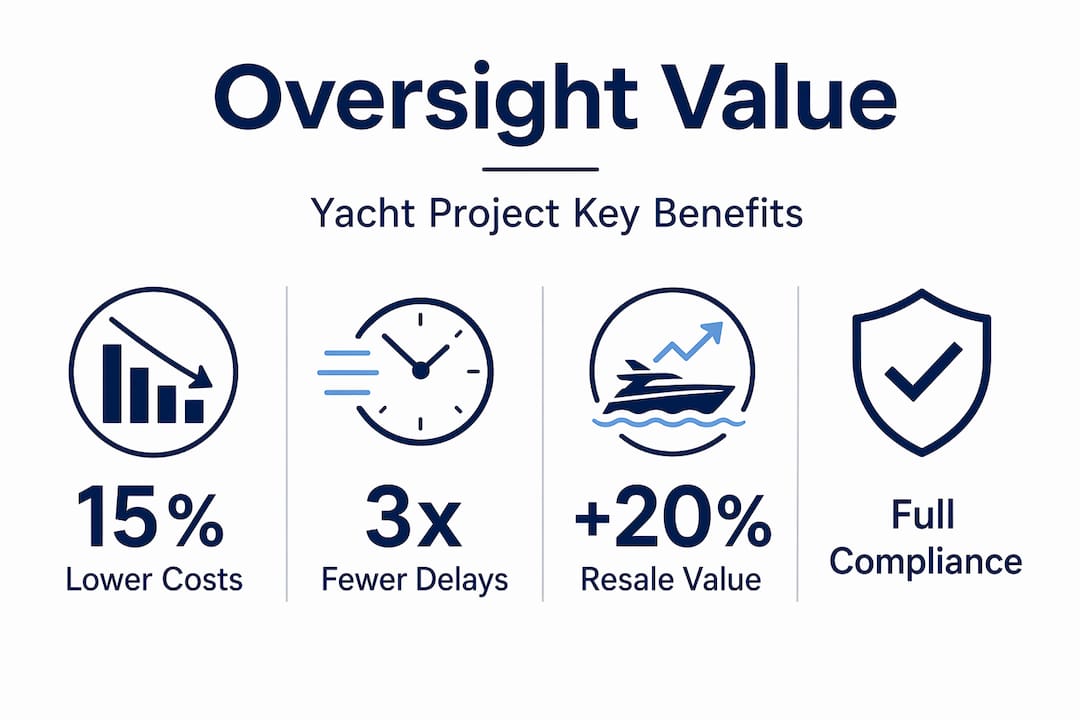
The benefits of yacht oversight at this level are cumulative. Each decision made with rigor and documentation builds a project record that protects you not only during build but also during eventual resale. A well-documented provenance increases asset value. An undocumented build raises buyer concerns that reduce it.
Understanding classification society surveys: lifecycle oversight for safety and value
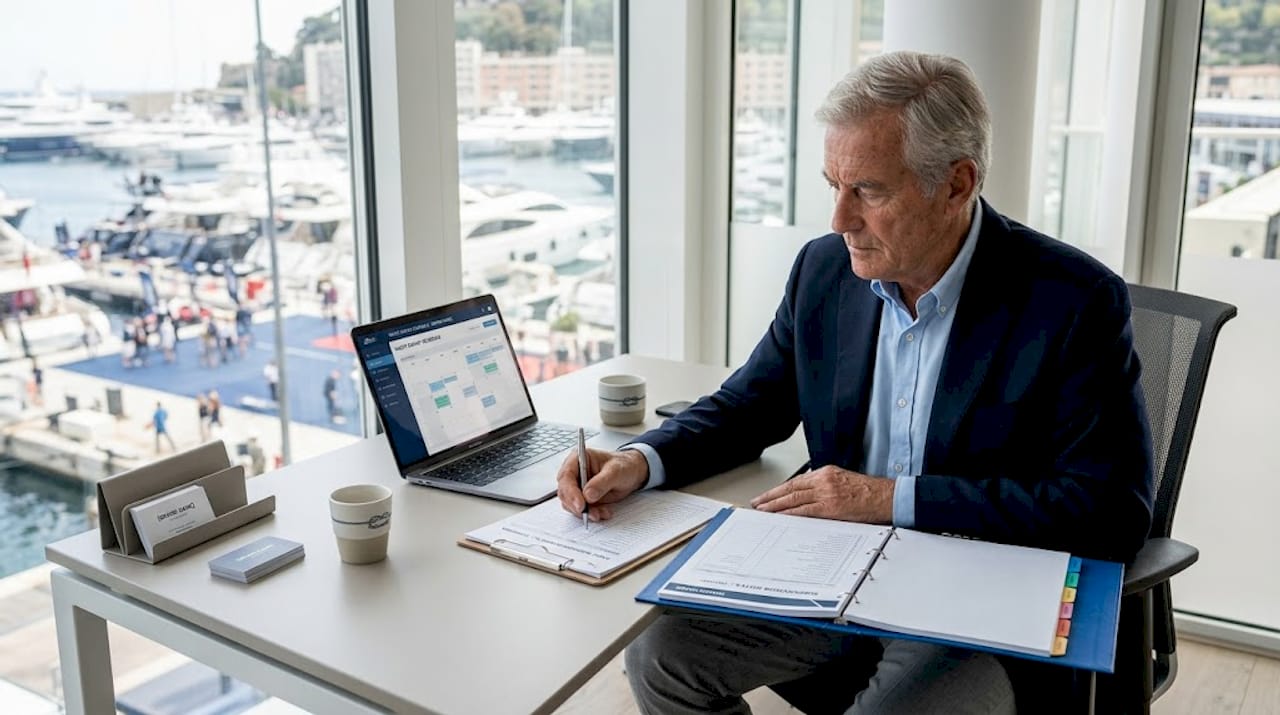
Classification societies, such as Lloyd’s Register, Bureau Veritas, and Det Norske Veritas (DNV), provide the formal technical framework that governs a yacht’s structural and mechanical integrity across its entire operating life. Think of their survey cycle as the scheduled health checks your vessel cannot afford to miss. Classification surveys run on a five-year cycle with annual, intermediate, and special surveys ensuring ongoing compliance and safety.
Here is how the three survey types differ in scope and intensity:
| Survey type | Frequency | Primary focus | Typical scope |
|---|---|---|---|
| Annual survey | Every 12 months | General condition check | Hull exterior, safety equipment, fire systems, navigation gear |
| Intermediate survey | Year 2.5 of cycle | Systems and structural detail | Bilge systems, anchoring gear, machinery spaces, propulsion alignment |
| Special survey | Every 5 years | Full structural and mechanical | Hull plating thickness measurement, dry-docking, boiler/pressure vessel inspection |
Missing a survey window is not a minor administrative oversight. It results in class suspension that invalidates certificates required for legal trading and insurance coverage. For commercially operated yachts, that means immediate revenue loss. For private yachts, it means potentially stranded in a port that requires valid class documentation.
The benefits of yacht oversight connected to classification surveys extend financially as well. Continuous survey programs, available through most major societies, allow individual items to be surveyed on a rolling basis rather than all at once, spreading dry-dock costs and reducing the downtime concentration of a full five-year special. A comprehensive yacht classification overview and understanding yacht surveys are foundational knowledge for any serious owner.
Pro Tip: When commissioning a new build, ask your project manager to map all classification survey milestones into the five-year operational forecast from day one. The cost certainty this creates is worth more than the planning time it requires.
Applying effective oversight: best practices for managing your yacht project
Why yacht supervision is crucial becomes most concrete when you look at what disciplined owners actually do differently from those who regret their projects. The gap is rarely about budget or intentions. It is almost always about governance structure and the quality of the people executing it.
Before project start:
- Appoint an owner’s representative certified through recognized programs such as YORP (Yacht Owner’s Representative Professional) before any contract is signed.
- Define a written decision authority matrix covering budget changes, design variations, schedule adjustments, and supplier substitutions.
- Commission an independent technical specification review to confirm yard proposals meet your expectations, not just minimum class requirements.
During the build:
- Require weekly written progress reports from your project manager, not verbal updates.
- Schedule yard visits at every major milestone: keel laying, structural completion, machinery installation, systems commissioning, and sea trials.
- Maintain the same oversight team throughout the project. Changing representatives mid-build loses institutional knowledge and creates continuity gaps that yards can exploit.
For quality assurance:
A dedicated refit or build professional with broad technical knowledge and contract experience brings leadership, control, and synergy to yacht projects in ways that generalist advisors simply cannot replicate. Their value is not in their presence at a single inspection. It is in the continuous thread of accountability they maintain from specification through delivery.
Understanding bespoke yacht building insights and the specific choosing yacht materials decisions your oversight team will face prepares you to ask the right questions and recognize when answers fall short.
Pro Tip: Build a simple project dashboard that tracks six items weekly: milestone completion percentage, open variation orders and their cost impact, outstanding approvals, critical path items at risk, survey and regulatory compliance status, and budget consumed versus forecast. Six numbers, one page, every week.
Why conventional yacht project wisdom is backwards and how disciplined oversight protects your investment
Here is the uncomfortable reality we have observed across years of project management in this industry: most yacht owners approach governance in exactly the wrong sequence. They invest months selecting the right designer, weeks choosing timber veneers and stone finishes, and then appoint someone to “keep an eye on things” at the yard almost as an afterthought.
That inversion is where value leaks. The megayacht industry historically lacked enterprise-style asset management, resulting in value erosion despite high capital deployment. A 50-meter yacht is not a consumer product with a warranty card. It is a capital asset operating with the complexity of a mid-sized company. It requires governance to match.
What frustrates us most is that the solution is not complicated. It requires deciding early, committing resources, and treating enterprise asset management in yachting with the same discipline you would apply to any major corporate investment. The owners who do this are not the ones calling us three years into a build with problems. They are the ones calling us before contracts are signed.
Passion for yachting is a wonderful thing. It is why we do this work. But passion without process is a very expensive way to learn that a 60-meter vessel with unresolved change orders, a suspended class certificate, and an undocumented finish specification is worth considerably less than what it cost to build.
Partner with Baranof Yachts for expert project oversight and exceptional yacht delivery
At Baranof Yachts, we believe every owner deserves a build process that is as rewarding as the vessel itself. Our expert yacht project management team brings structured governance, technical depth, and contractual discipline to every new build and refit we oversee. We function as your owner’s representative, your technical reviewer, and your advocate from the first specification discussion through to delivery and sea trials.

Whether you are ready to configure your new yacht with our team, or you are still exploring which vessel best fits your lifestyle and investment goals, our brokerage professionals are here to guide the process. Working with an experienced yacht broker partner adds a layer of market intelligence and negotiating expertise that protects both your capital and your time. Reach out to our team today to discuss your project and discover what disciplined oversight looks like in practice.
Frequently asked questions
What is the main role of a yacht owner’s representative?
An owner’s representative acts as the single accountable decision-maker on behalf of the yacht owner, ensuring project scope, budget, and quality are managed according to the owner’s priorities throughout the build or refit. The owner’s representative carries decision authority within agreed limits and keeps the owner’s brief consistent across all project phases.
How do classification society surveys affect my yacht ownership?
Classification surveys verify your yacht meets safety and technical standards on a scheduled cycle, and missing these can void insurance and lead to costly delays or restrictions in operating your yacht. Missing a survey window results in class suspension that invalidates certificates required for legal trading and insurance coverage.
Why can’t my yacht crew handle the refit project oversight alone?
While crew know daily operations well, dedicated project oversight requires technical expertise, contract management experience, and continuous involvement from specification through handover to manage risks and maintain quality. Technical management fees typically do not cover the time needed for complex refit projects, which require specialized project managers with broad technical and contractual knowledge.
When should I appoint a yacht owner’s representative?
Appoint a qualified owner’s representative before signing contracts to ensure early clarity, disciplined decision-making, and integration of lifecycle costs into the project from the outset. Appointing a representative before contract signing can save tens of millions through early contractual clarity and technical compliance.
Recommended
Sold Listings


Design Your Yacht
"*" indicates required fields
Maximus III - PNW
As you step aboard MAXIMUS III, the first impression is her scale.
At 120 feet with an 8-meter beam and 294 GT of interior volume, this 2025 Crescent Custom tri-deck immediately feels open, balanced, and estate-like. A timeless look while still feeling fresh from the shipyard.
Currently Available


Get your yacht value Estimate
"*" indicates required fields