
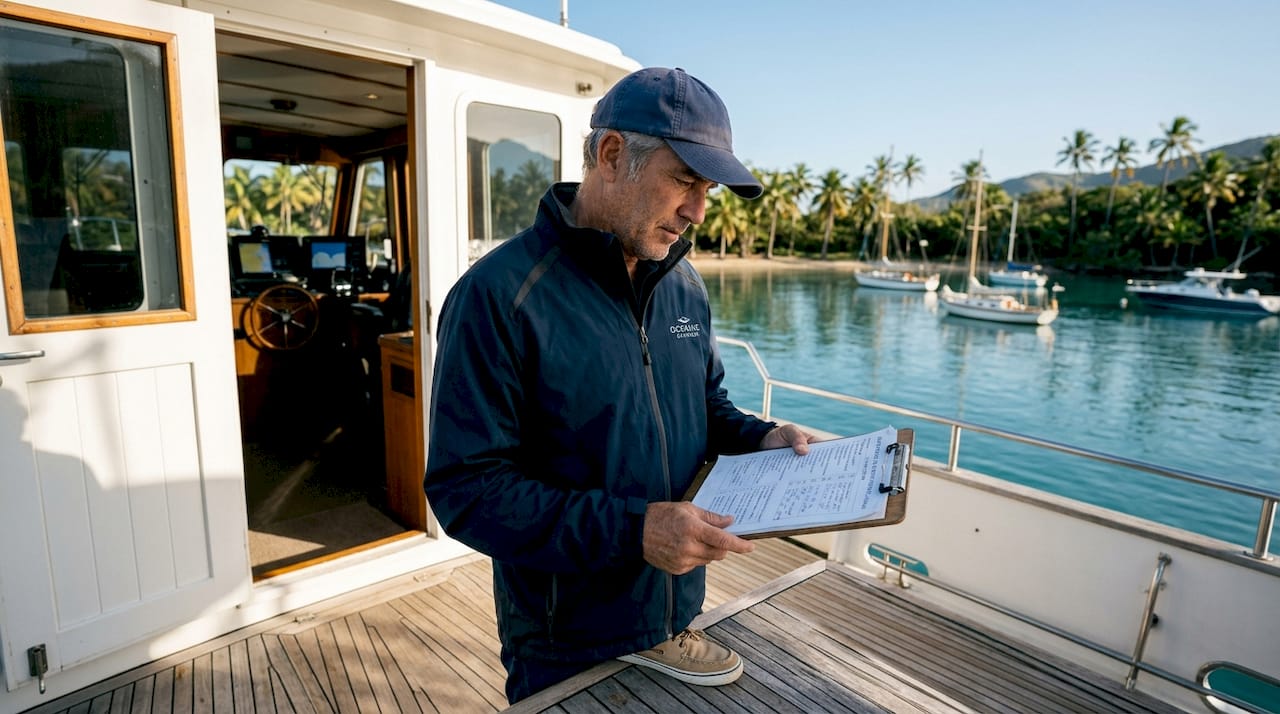
Most people assume a yacht sea trial is just a pleasant test ride before signing paperwork. That assumption has cost buyers significant money. A yacht sea trial is a formal, systematic performance test conducted with the vessel underway, designed to reveal how every critical system performs under real operating conditions. It tells you what no dock inspection ever could. From engine response and steering behavior to electronics and structural feel, the sea trial is where a yacht either earns your trust or exposes its weaknesses. Understanding what happens during one, and how to prepare for it, is one of the smartest things you can do before committing to a purchase.
Table of Contents
- Key takeaways
- What a yacht sea trial actually means
- The yacht sea trial process, step by step
- Technical and safety standards during a sea trial
- When a sea trial is essential and why surveys alone fall short
- How to plan and organize your yacht sea trial
- My take on sea trials after years in yacht sales
- How Baranofyachts supports buyers through every trial and evaluation
- FAQ
Key takeaways
| Point | Details |
|---|---|
| Sea trials go beyond surveys | Static inspections reveal paperwork and cosmetics; sea trials expose how systems actually perform underway. |
| Buyers typically fund the trial | In most transactions, the buyer covers sea trial costs to maintain an objective, unbiased evaluation. |
| Every major system gets tested | Engine performance, steering response, electronics, vibration, and ride quality are all evaluated during a proper trial. |
| Findings create negotiating leverage | Issues uncovered during a sea trial give buyers factual grounds to renegotiate price or request repairs before closing. |
| Planning determines trial quality | A well-organized agenda, the right professionals on board, and clear test criteria produce far more useful results. |
What a yacht sea trial actually means
At its core, a yacht sea trial is a controlled performance test conducted with the vessel moving through water under its own power. It gives you a firsthand look at how the yacht handles and whether its systems operate correctly before any money changes hands. That definition sounds straightforward, but the depth of what gets evaluated is considerable.
The objectives of a sea trial fall into three categories:
- Mechanical verification: Confirming that the engine, transmission, cooling system, and fuel system all perform within normal parameters at various throttle settings.
- Handling assessment: Evaluating how the yacht responds to steering input, how she holds course, and how she behaves in turns and at speed.
- Systems integration: Testing electronics, navigation instruments, bilge pumps, alarms, and onboard controls while the vessel is actually loaded and moving.
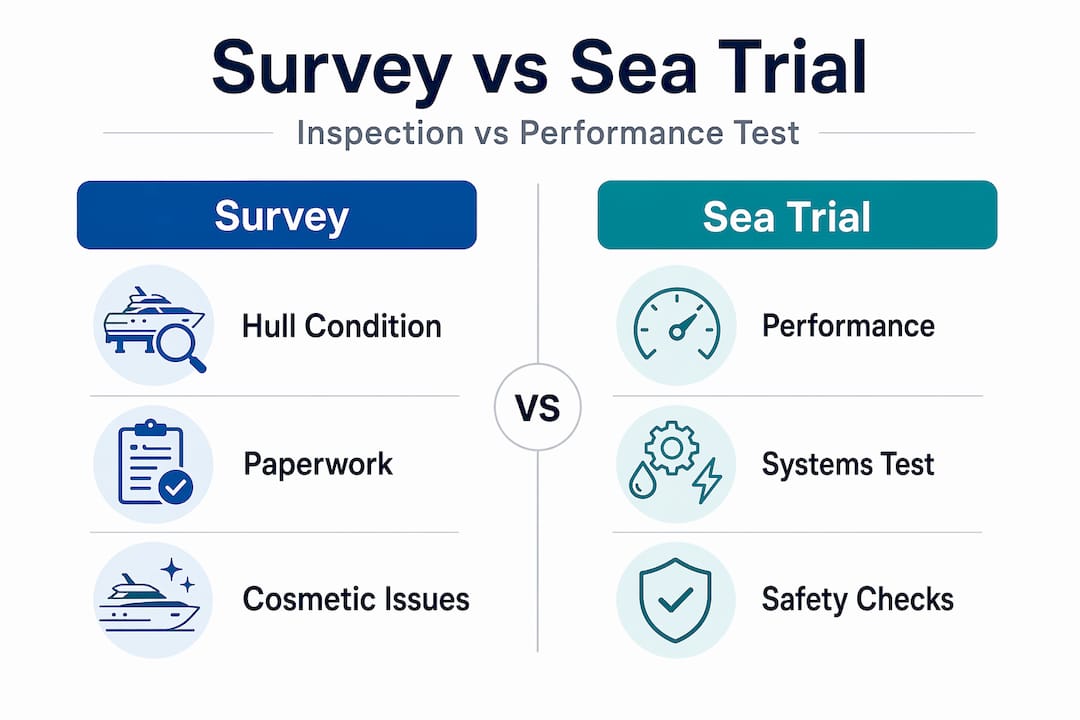
A sea trial is fundamentally different from a yacht survey. A survey focuses on static inspection: hull condition, osmotic blistering, structural integrity out of the water, and historical documentation. The sea trial takes over where the survey leaves off, testing what only movement and load can reveal. Both are necessary, and neither fully replaces the other.
Pro Tip: Schedule your sea trial after the survey is complete, so any structural concerns the surveyor flags can be monitored specifically during the underway phase.
The yacht sea trial process, step by step
Knowing what happens during a sea trial removes the guesswork and helps you focus your attention in the right places at the right times. The typical sequence of activities covers mechanical checks, performance runs, and systems verification in a logical order.
-
Pre-departure checks. Before leaving the dock, the captain or engineer performs a cold start of the engines and observes smoke color, idle quality, and warm-up behavior. Unusual smoke or rough idle at this stage are early warning signs worth noting.
-
Slow departure and initial maneuvering. The vessel leaves the slip at low speed, giving everyone a chance to observe how the transmission engages, how the bow and stern thrusters respond, and whether any unusual sounds emerge from the drivetrain.
-
Acceleration runs. The throttle is advanced progressively from idle to cruising speed and then to wide-open throttle. At each stage, you are listening for knocking or excessive vibration, watching the gauges for coolant temperature and oil pressure, and noting how quickly the vessel reaches target speed.
-
Cruising speed evaluation. The yacht holds a sustained cruising speed for a defined period. This is where fuel burn rates become observable, where the ride quality at typical operating conditions is felt, and where electronics and navigation systems are checked under load.
-
Maneuvering tests. Tight turns, figure eights, and simulated docking approaches test steering response and low-speed handling. How a yacht responds at close quarters matters enormously for practical day-to-day use.
-
Systems check underway. While the vessel is running, all major onboard systems are cycled: bilge pumps, alarms, freshwater pressure, generator function, and electronic controls. Real system integration performance, vibration signatures, and alarm responses only become visible under these live conditions.
-
Return and dockside observation. After the run, you observe how the engines cool down, check for leaks, and note any issues that only appeared during operation. The return docking is itself another maneuvering test.
Pro Tip: Bring a notepad or use your phone to log observations at each stage. Memory fades quickly, and having a timestamped record strengthens your post-trial discussions with your surveyor or broker.
Technical and safety standards during a sea trial
A rigorous sea trial does not just assess comfort and convenience. It verifies that critical safety systems meet the performance thresholds expected of a seaworthy vessel. This is where the evaluation moves from subjective impressions to measurable outcomes.
Steering gear is one of the most critical systems evaluated. SOLAS standards require that main steering gear moves the rudder from 35 degrees on one side to 30 degrees on the other in no more than 28 seconds at full sea speed. Auxiliary steering must move from 15 degrees to 15 degrees within 60 seconds at 7 knots or half maximum speed, whichever is greater. These are not soft guidelines. They define the difference between a vessel that can respond to an emergency and one that cannot.
| System | What gets checked | Why it matters |
|---|---|---|
| Propulsion | RPM, coolant temp, oil pressure, exhaust | Reveals wear, overheating, or fuel delivery problems |
| Steering | Response time, play, feedback | Confirms safety-critical control under real conditions |
| Vibration | Hull, shafts, mounts | Indicates misalignment, cavitation, or structural issues |
| Electronics | GPS, chartplotter, radar, AIS | Verifies integration and reliability when underway |
| Alarms | Bilge, high water, engine warnings | Confirms monitoring systems function under live load |
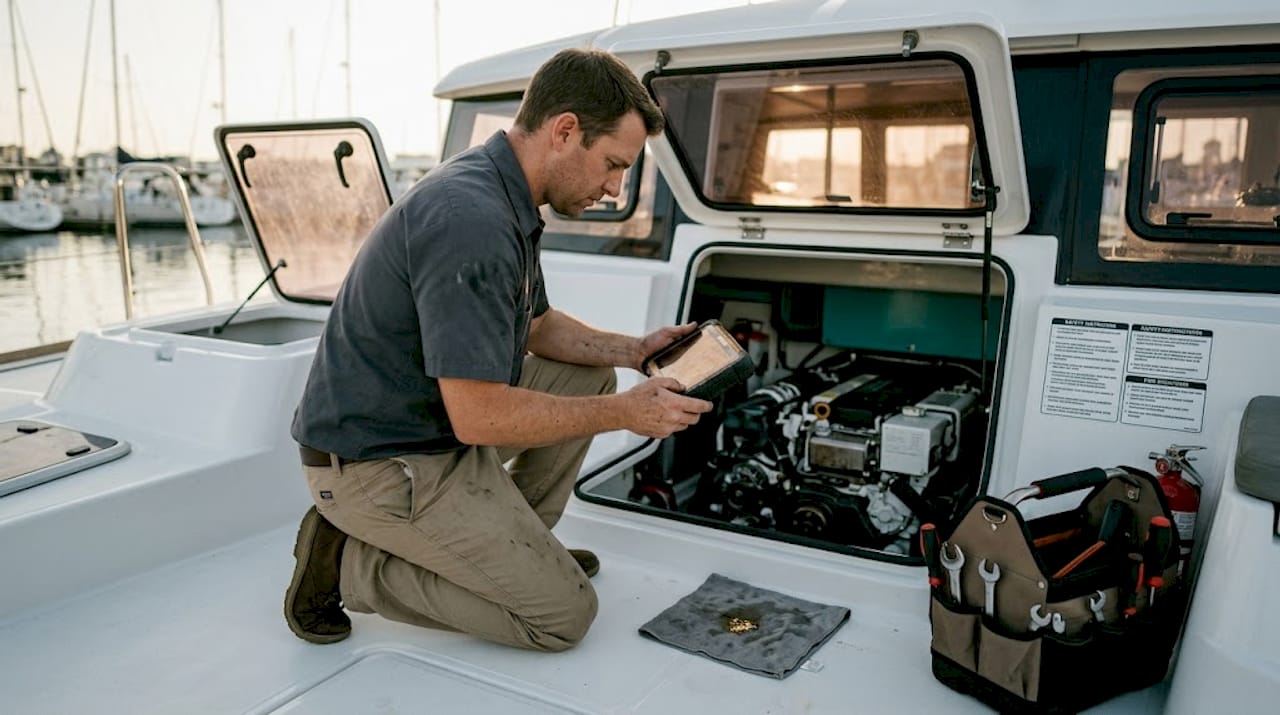
Propulsion system checks go beyond noting whether the engine runs. Coolant temperatures, oil pressures, and exhaust appearance at sustained load reveal far more than a dockside idle ever could. A motor that runs clean at the dock but overheats at cruising speed has a very different value profile than one that performs consistently across all conditions.
“Only live operations testing can uncover complex system interactions under load and detect remaining acceptance issues before delivery.” Sea Trial: What It Proves After a Yacht Refit
Vibration analysis during the trial is another area buyers often underestimate. Excessive vibration through the hull or helm can indicate shaft misalignment, propeller damage, or loose engine mounts. Each of those conditions carries a repair cost, and identifying them before purchase gives you factual grounds for renegotiation.
When a sea trial is essential and why surveys alone fall short
A sea trial is non-negotiable in three specific situations: purchasing a used yacht, verifying performance after a refit, and confirming readiness before final handover on a new build. In each case, static dockside checks simply cannot replicate what underway operations reveal.
The comparison between a survey-only inspection and a full sea trial is worth understanding clearly:
| Inspection type | What it reveals | What it misses |
|---|---|---|
| Survey only | Hull condition, osmosis, documented history | Engine performance, handling behavior, system integration |
| Dockside test | Basic engine start, visual systems check | Load-dependent faults, vibration under way, actual speed |
| Sea trial | Real-world performance, handling, systems under load | Internal structural defects below waterline |
Buyers who skip the sea trial in favor of a survey alone are, in effect, buying a yacht based on its appearance and paperwork rather than its actual performance. A yacht can look immaculate at the dock while carrying a cooling system on the edge of failure or a steering system with dangerous play at speed.
Beyond pure protection, sea trial findings give you negotiating leverage. A detailed post-trial report, which often includes engine scans and vibration analysis alongside clear explanations of any issues, is a document you can bring to the negotiating table with confidence. Sellers are far more responsive to documented, quantified deficiencies than to general impressions.
How to plan and organize your yacht sea trial
Knowing how to plan a yacht sea trial is just as important as understanding what happens during one. A poorly organized trial wastes time and can miss critical issues. Here is what we recommend every buyer address before the trial begins.
- Assemble the right team. Your surveyor, an independent marine engineer, and your broker should all be present. A captain experienced with the vessel type adds significant value during handling evaluations.
- Define your agenda in advance. Specify which systems you want tested, in what sequence, and at what performance thresholds. Leaving the agenda open-ended often results in a shortened or incomplete evaluation.
- Confirm legal and safety requirements. Verify that the vessel’s insurance covers sea trials, that the appropriate safety equipment is aboard, and that the trial route has been agreed upon in advance.
- Know what to observe and what questions to ask. Focus your attention on the gauges during acceleration runs, listen actively during maneuvering, and ask the captain or engineer to explain anything that looks or sounds unusual in real time.
- Plan your post-trial evaluation carefully. Review the surveyor’s report against your own observations, prioritize any flagged issues by cost and safety impact, and use the findings to structure your next conversation with the seller.
Understanding how to evaluate craftsmanship before the sea trial helps you arrive with a sharper eye for quality markers and gives your surveyor a clearer picture of what to probe during the underway phase. Preparation is not optional. It is the difference between a trial that protects you and one that simply ticks a box.
Pro Tip: Ask the seller or broker to provide engine hour logs and recent service records before the trial. If the numbers on the hour meter do not align with the condition of the motors during the run, that discrepancy is itself a finding worth investigating.
My take on sea trials after years in yacht sales
I’ve seen buyers treat sea trials as a formality, something they feel obligated to do before signing. That mindset almost always costs them later. In my experience, the sea trial is not a box-checking exercise. It is the single most decisive moment in the entire purchase process.
What I’ve found time and again is that first-time buyers focus almost entirely on comfort during the trial. They notice the ride quality, the noise level, the way the helm feels. All of that matters. But the mechanical story being told by the gauges and the exhaust tells you whether you are buying a sound vessel or an expensive problem waiting to surface.
The buyers I’ve seen make the best decisions are the ones who arrive at the sea trial with a defined list of questions and a willingness to be disappointed. They are not emotionally committed to the outcome. They let the yacht prove itself rather than hoping it will.
My strongest recommendation: never skip the post-trial debrief with your surveyor. That conversation, while the observations are still fresh, is where the real analysis happens. The trial itself is data collection. The debrief is where you turn that data into a decision.
— Jason
How Baranofyachts supports buyers through every trial and evaluation

At Baranofyachts, we work alongside buyers at every stage of the evaluation process, from understanding what to look for during a sea trial to coordinating the right professionals and interpreting what the findings mean for your purchase. Our team brings years of experience in high-end yacht sales, custom builds, and project management, which means we can read a sea trial report with the same attention a builder brings to a delivery inspection.
Whether you are purchasing a pre-owned vessel or working toward a bespoke new build, understanding the financial picture matters just as much as the technical one. Our guide on yacht financing options walks buyers through costs, structures, and smart strategies so you can approach the purchase with full clarity. And if the sea trial leads to a successful handover, our guidance on yacht aftercare helps you protect that investment from day one. Reach out to our team to discuss how we can support your next acquisition from evaluation through to delivery.
FAQ
What is a yacht sea trial?
A yacht sea trial is a formal performance test conducted with the vessel underway, assessing engine performance, steering, handling, and onboard systems under real operating conditions before purchase is finalized.
Who pays for a sea trial on a yacht?
In most yacht transactions, the buyer covers the cost of the sea trial to maintain an independent, objective assessment that serves their interests rather than the seller’s.
How long does a typical yacht sea trial take?
Most sea trials run between two and four hours, depending on vessel size and the number of systems being tested, with larger or more complex yachts requiring additional time.
Can a survey replace a yacht sea trial?
No. A survey provides a static inspection of hull condition, structure, and documentation, while a sea trial reveals performance issues, handling behavior, and system faults that only emerge when the vessel is underway.
What happens after a sea trial on a yacht?
After the trial, the surveyor produces a detailed report covering engine scans, vibration findings, and any flagged issues, which buyers use to finalize the purchase decision or renegotiate terms with the seller.
Recommended
Sold Listings


Design Your Yacht
"*" indicates required fields
Maximus III - PNW
As you step aboard MAXIMUS III, the first impression is her scale.
At 120 feet with an 8-meter beam and 294 GT of interior volume, this 2025 Crescent Custom tri-deck immediately feels open, balanced, and estate-like. A timeless look while still feeling fresh from the shipyard.
Currently Available


Get your yacht value Estimate
"*" indicates required fields