
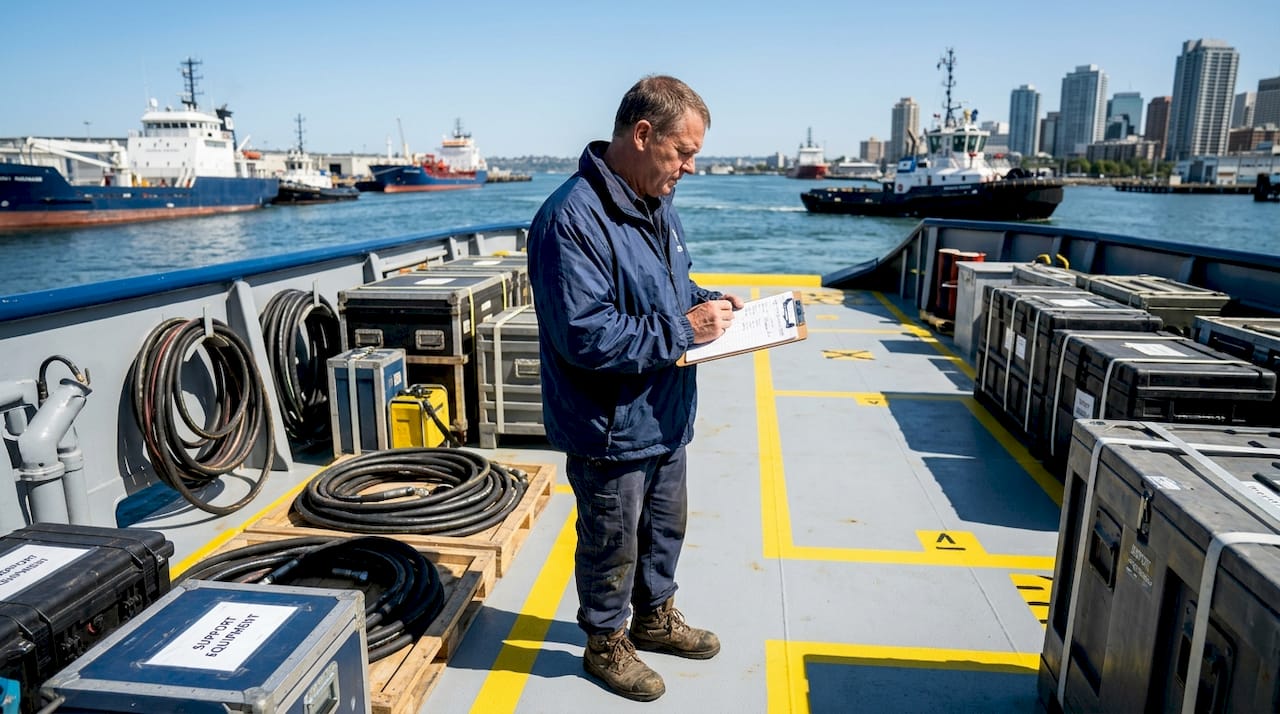
When people ask what is a support vessel, they often expect a simple answer. The reality is far more layered. A support vessel is any auxiliary ship designed to serve, sustain, or extend the capabilities of a primary vessel or offshore operation. These ships operate across superyacht fleets, offshore energy fields, and naval carrier groups, each with distinct specifications, crew requirements, and onboard equipment. Whether you are a yacht owner weighing your options or a maritime professional evaluating offshore logistics, understanding how these vessels work gives you a decisive operational advantage.
Table of Contents
- Key Takeaways
- What is a support vessel, and how is it classified?
- Types of support vessels across maritime sectors
- Support vessel functions across different operations
- Why support vessels matter for maritime operations
- How to choose and work with support vessels effectively
- My take on where support vessels are heading
- How Baranofyachts can help you build or acquire the right vessel
- FAQ
Key Takeaways
| Point | Details |
|---|---|
| Support vessels serve multiple sectors | They operate in luxury yachting, offshore energy, naval, and subsea environments with distinct roles in each. |
| Mission profile drives vessel design | Classification depends on the vessel’s operational purpose, not just its hull shape or size. |
| Superyacht support vessels extend capability | They carry toys, helicopters, and extra crew, freeing the main yacht for comfort and performance. |
| Offshore vessels are logistical lifelines | Platform Supply Vessels and Anchor Handling Tugs keep offshore platforms stocked and anchored. |
| Choosing the right vessel requires planning | Matching your mission profile to vessel type and specifications prevents costly mismatches in operations. |
What is a support vessel, and how is it classified?
The term “support vessel” is widely used but rarely defined with precision. In formal maritime industry language, these ships are often called auxiliary vessels or, in the offshore sector, Offshore Support Vessels (OSVs). The broader category covers any ship whose primary purpose is to serve another vessel, platform, or underwater operation rather than operating independently for commercial cargo or passenger transport.
What makes classification genuinely interesting is that mission profile, not hull design, determines how these vessels are categorized. Two ships of identical dimensions can serve completely different functions depending on the equipment onboard, the crew’s specialization, and the operational context. A vessel fitted with dynamic positioning, a moonpool, and an ROV hangar is a completely different instrument than a flat-decked supply ship, even if they share similar length and tonnage figures.
Support vessels also exist across a spectrum of size and technical sophistication. Some operate as modest crew transfer boats servicing wind farms a few miles offshore. Others are 150-meter engineering platforms capable of supporting deepwater construction at 3,000 meters below the surface. Understanding where a vessel sits on that spectrum tells you everything about what it can and cannot do for your operation.
Types of support vessels across maritime sectors
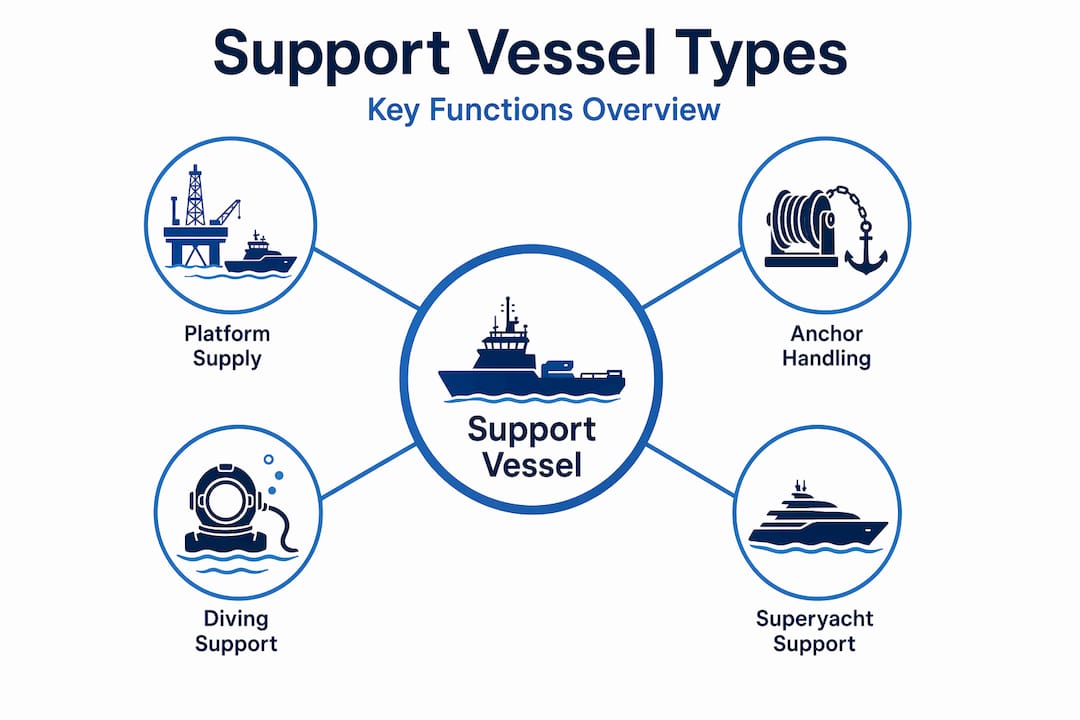
The range of vessel types within this category is broad. Here is a breakdown of the major classifications and what distinguishes each one.
| Vessel Type | Primary Function | Key Equipment | Typical Size |
|---|---|---|---|
| Platform Supply Vessel (PSV) | Transport bulk supplies to offshore platforms | Cargo tanks, large open deck | 60–100 m |
| Anchor Handling Tug Supply (AHTS) | Tow rigs, set anchors, supply operations | Winches, towing gear, deck cargo | 60–90 m |
| Diving Support Vessel (DSV) | Underwater inspection and saturation diving | Diving bells, hyperbaric chambers | 80–120 m |
| ROV Support Vessel (RSV) | Deploy and operate ROVs for deepwater tasks | ROV hangar, moonpool, DP system | 70–110 m |
| Multipurpose Support Vessel (MPSV) | Offshore construction and subsea maintenance | Cranes, workshops, DP | 90–140 m |
| Superyacht Support Vessel | Carry toys, crew, and specialty amenities | Helicopter pad, tender garage | 40–80 m |
| Naval Support Ship | Replenish carrier groups at sea | Fuel, ammunition, provisions transfer rigs | 150–250 m |
Platform Supply Vessels (PSVs) are the workhorse of the offshore oil and gas sector. They transport bulk goods and personnel to drilling platforms, carrying drilling mud, fuel, water, and chemicals in segregated cargo tanks alongside dry deck cargo. The discipline of cargo planning aboard a PSV is not a minor administrative task. Successful offshore operations depend on effective cargo segregation to maintain operational responsiveness when platforms need specific supplies on a tight schedule.
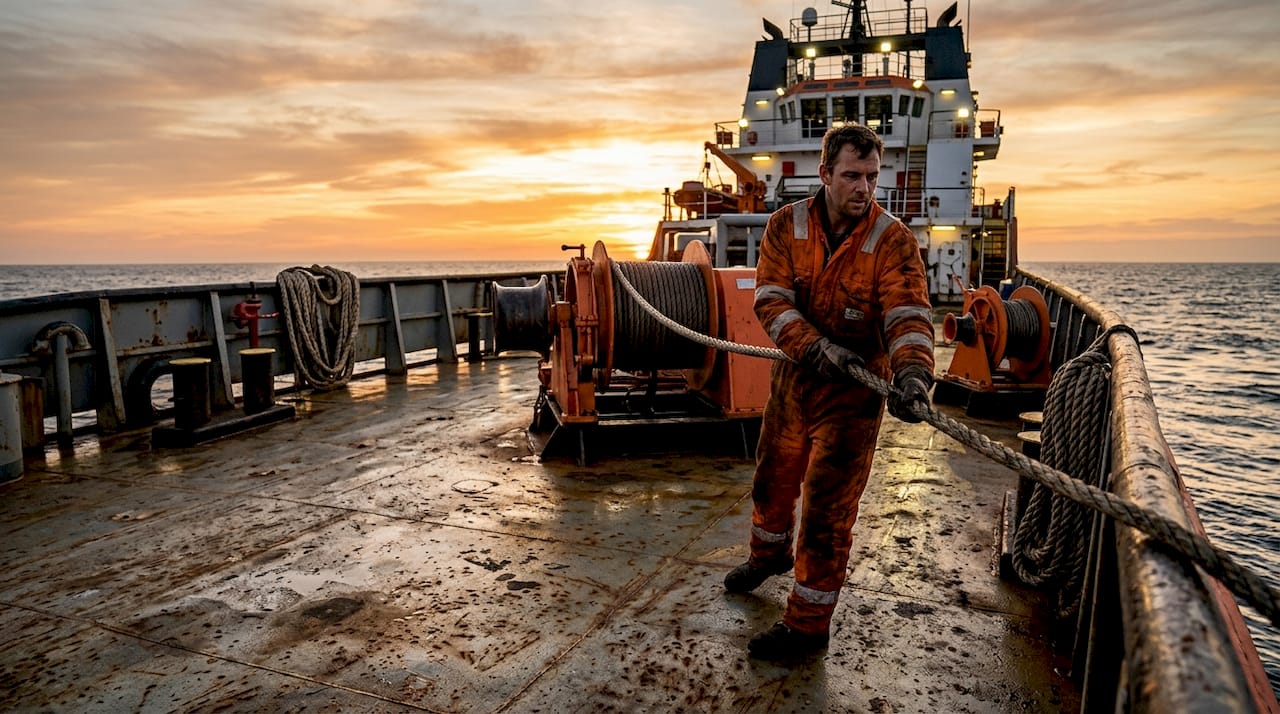
Anchor Handling Tug Supply Vessels (AHTS) combine raw towing power with supply capability, making them indispensable for relocating rigs and setting mooring systems. Diving Support Vessels (DSVs) provide a stable platform equipped with diving bells and hyperbaric chambers for prolonged saturation diving missions. ROV Support Vessels are specifically configured for deepwater ROV operations up to 4,000 meters in depth, with the vessel’s entire layout built around launch, recovery, and remote piloting systems.
On the luxury end, superyacht support vessels act as secondary yachts carrying toys, helicopters, and medical facilities, extending the operational reach of the primary yacht without compromising its interior or deck space.
Support vessel functions across different operations
The specific functions these vessels perform reveal just how embedded they are in modern maritime infrastructure. Rather than treating them as afterthoughts, experienced operators treat support vessels as precision instruments, each matched carefully to its mission.
In the superyacht sector, support vessel functions center on offloading bulk from the mothership. A large superyacht’s operational flexibility depends on removing heavy, space-consuming items from the main vessel: jet skis, submarines, helicopters, dive equipment, extra provisions, and staff accommodation. When the support vessel carries all of that, the primary yacht retains its performance profile and its guests retain their space and comfort. Understanding the difference between a support vessel and a yacht tender is important here. Tenders are primarily used for short transfers between ship and shore. Support vessels carry an entire parallel operation.
In the offshore energy sector, support vessel functions span a much wider operational envelope:
- Transporting personnel, equipment, and provisions to and from offshore platforms
- Handling anchor deployment and retrieval for mobile drilling units
- Supporting subsea construction, pipeline installation, and cable laying
- Deploying divers and ROVs for inspection, maintenance, and repair tasks
- Providing emergency response and oil spill recovery capabilities
In the naval context, support vessels allow carrier strike groups to remain at sea for extended periods. China’s Type 901 Fuyu-class fast combat support ships demonstrate how critical this capability is at a strategic level, replenishing carrier groups with fuel, ammunition, and provisions far from any port.
Pro Tip: When evaluating what do support vessels do for your specific operation, map out the primary vessel’s limitations first. The gaps you identify will tell you exactly what support vessel functions you need to fill.
Why support vessels matter for maritime operations
The importance of support vessels becomes clear the moment you remove them from the equation. Offshore platforms run out of critical supplies. Superyachts sacrifice comfort for storage. Naval fleets are forced back to port after days rather than weeks. Support vessels are not supplementary. They are the infrastructure that makes complex maritime operations possible.
Here is how they deliver measurable operational value:
- Extend operational range. A superyacht accompanied by a support vessel can cruise for months without needing a major port call, because the support vessel carries provisions, spare parts, and crew relief.
- Concentrate specialization. Rather than loading a single vessel with every possible tool and capability, operators can dedicate one hull to each function, achieving greater depth in each role.
- Improve safety margins. Vessels equipped with dynamic positioning, cranes, and specialized workshops provide safer working conditions for complex subsea tasks than a general-purpose ship ever could.
- Protect the main asset. Removing equipment and crew from the mothership preserves the primary vessel’s condition, performance, and resale value.
- Enable projects that simply could not happen otherwise. Deepwater well interventions, saturation diving campaigns at 300 meters, and prolonged naval deployments all depend on vessels purpose-built for those exact conditions.
Pro Tip: If you own a superyacht above 60 meters and carry more than two personal watercraft, a helicopter, or a submarine, the economics of a dedicated support vessel almost always favor acquisition over compromising your primary yacht’s configuration.
For yacht owners thinking about how this fits into a broader upgrade strategy, exploring luxury yacht enhancements that complement a support vessel arrangement is a worthwhile exercise.
How to choose and work with support vessels effectively
Selecting the right support vessel is a process of matching operational requirements to vessel specifications with precision. Getting it wrong is expensive. Getting it right changes what your entire fleet can accomplish.
Start with these practical considerations:
- Define your mission profile first. Are you supporting a luxury yacht, an offshore drilling campaign, or a subsea construction project? Each demands an entirely different vessel type, crew qualification, and equipment suite.
- Assess cargo and deck requirements. For offshore PSV operations, efficient deck planning and cargo compatibility are foundational. Know your cargo types, weights, and loading sequences before specifying the vessel.
- Evaluate coordination protocols. The support vessel and the primary vessel must operate as a choreographed system. Communication, positioning, and timing protocols need to be established before the first deployment.
- Scrutinize the crew’s specialization. A DSV crew includes saturation diving supervisors and life support technicians. An MPSV crew includes crane operators and subsea engineers. The vessel’s value is inseparable from the expertise operating it.
- Consider support vessel specifications carefully. Deck area, crane capacity, moonpool dimensions, dynamic positioning class, accommodation numbers, and fuel range are not interchangeable metrics. Each one constrains or enables specific operations.
If you are new to the concept of superyachts and want foundational context before evaluating support vessel options, the superyacht definition and market overview at Baranofyachts is a solid place to start.
Pro Tip: For custom support vessel builds, specify your operational theater before any hull design begins. The waters you operate in, whether Arctic, tropical, or deepwater offshore, shape every structural and mechanical decision that follows.
My take on where support vessels are heading
I’ve spent years watching clients and maritime operators underestimate the support vessel category, treating it as a secondary consideration rather than a strategic asset. That mindset is changing, and changing fast.
What I find most compelling right now is the shift toward multi-role vessels. The industry used to build specialized single-purpose ships and accept the utilization gaps when their narrow mission wasn’t active. Today, the most forward-thinking operators want vessels that can serve three or four functions across different phases of a project. MPSVs that transition from construction support to well intervention to accommodation duty are no longer niche. They are becoming the standard expectation for complex offshore campaigns.
In luxury yachting, I’ve seen support vessels evolve from oversized storage barges into fully designed secondary yachts with their own aesthetics, crew, and amenities. Owners no longer want a support vessel that looks industrial alongside a beautiful primary yacht. They want a vessel that enhances the overall fleet’s visual and operational statement.
The automation trend is real but slower than the headlines suggest. Dynamic positioning systems have been reliable for decades, but autonomous crew transfer and ROV deployment without human supervision are still proving themselves in controlled environments. My honest assessment is that the next decade will produce support vessels with dramatically reduced crew requirements for routine tasks, while complex operations will still demand experienced specialists on deck.
What I keep coming back to is this: the operators who understand support vessel roles deeply are the ones who execute the most ambitious maritime projects. That knowledge gap is the real opportunity right now.
— Jason
How Baranofyachts can help you build or acquire the right vessel
At Baranofyachts, we work with clients who understand that exceptional yachting experiences rarely come from a single vessel alone. A well-conceived fleet, including a purpose-built or carefully selected support vessel, is often what separates a good ownership experience from a truly extraordinary one.

Whether you are exploring custom yacht building options that incorporate support vessel specifications from the ground up, reviewing yacht financing strategies to structure a multi-vessel acquisition, or preparing a current vessel for resale as part of a fleet transition, our team brings the depth of experience and the partner network to guide every decision. We also help clients think through configuration choices early, before they become costly mid-build corrections. If you want to explore what a support vessel arrangement could look like for your specific operation, we welcome the conversation.
FAQ
What is a support vessel in simple terms?
A support vessel is an auxiliary ship designed to serve, supply, or extend the operational capabilities of a primary vessel or offshore installation, rather than operating independently for commercial transport.
What are the main types of support vessels?
The main types include Platform Supply Vessels (PSVs), Anchor Handling Tug Supply Vessels (AHTS), Diving Support Vessels (DSVs), ROV Support Vessels, Multipurpose Support Vessels (MPSVs), superyacht support vessels, and naval replenishment ships. Each type is configured for a distinct mission profile.
What do support vessels do for superyacht owners?
Superyacht support vessels carry toys, helicopters, extra crew accommodation, and specialty equipment, freeing the primary yacht to maintain its performance profile, comfort levels, and clean deck space for guests.
How do support vessel specifications affect operations?
Specifications such as dynamic positioning class, deck area, crane capacity, and fuel range directly determine what tasks a vessel can perform and in what conditions, making precise specification matching to mission requirements critical before acquisition or charter.
Are support vessels only used in offshore oil and gas?
No. Support vessels operate across luxury yachting, naval fleets, offshore wind construction, subsea cable laying, and scientific research programs, with vessel design and equipment tailored to each sector’s specific demands.
Recommended
Sold Listings


Design Your Yacht
"*" indicates required fields
Maximus III - PNW
As you step aboard MAXIMUS III, the first impression is her scale.
At 120 feet with an 8-meter beam and 294 GT of interior volume, this 2025 Crescent Custom tri-deck immediately feels open, balanced, and estate-like. A timeless look while still feeling fresh from the shipyard.
Currently Available


Get your yacht value Estimate
"*" indicates required fields