
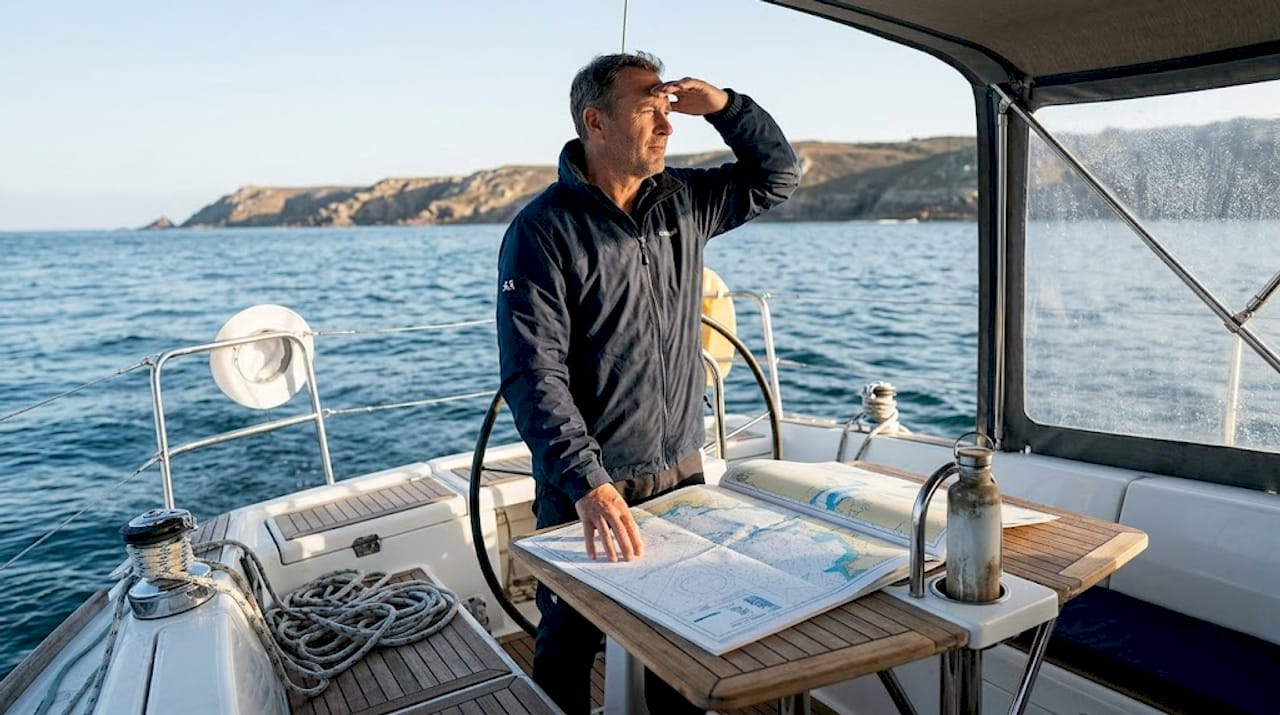
Offshore yacht delivery is one of the most misunderstood services in the maritime world. Most people assume it simply means sailing a yacht from Point A to Point B. What it actually involves is a carefully orchestrated operation covering pre-departure audits, passage planning, weather routing, safety compliance, crew management, and meticulous handover documentation. Whether you’ve just purchased a new build, need to reposition a charter vessel, or are planning an ocean crossing, understanding what offshore yacht delivery truly demands will protect your investment and your peace of mind.
Table of Contents
- Key takeaways
- What offshore yacht delivery actually means
- The offshore yacht delivery process, step by step
- Safety standards every offshore delivery must meet
- How timelines and logistics actually work
- Our perspective on what owners get wrong
- How Baranofyachts supports your yacht before and after delivery
- FAQ
Key takeaways
| Point | Details |
|---|---|
| More than just sailing | Offshore yacht delivery requires logistics expertise, insurance, and safety compliance beyond seamanship alone. |
| Professional crews are standard | Certified skippers with RYA Yachtmaster Ocean credentials manage route planning, weather windows, and onboard emergencies. |
| Safety gear is non-negotiable | Serviced liferafts, flares, and satellite communications are required for every offshore passage. |
| Timelines are weather-dependent | Routes like UK to Mediterranean typically take 2 to 3 weeks, with dynamic adjustments throughout. |
| Preparation prevents costly failures | Pre-departure audits and contingency planning are the most overlooked steps that affect delivery success. |
What offshore yacht delivery actually means
Offshore yacht delivery is the professional relocation of a yacht across open water, either sailed under its own power by a qualified crew or transported aboard a specialized cargo vessel when sailing is impractical. The cargo vessel option, known as ship-on-board transport, suits situations where a yacht has mechanical issues, where seas are too severe for safe passage, or where the delivery window is too tight for a crewed sail. For most scenarios involving a seaworthy yacht, a crewed skipper delivery is the standard choice.
Understanding why owners use professional offshore yacht transport rather than attempting delivery themselves comes down to risk and experience. A delivery is not a leisure cruise. Fuel consumption, route optimization, watch schedules, port clearances, and emergency protocols all require hands-on offshore experience that most owners simply haven’t accumulated.
Common reasons clients commission an offshore yacht relocation service include:
- New purchase relocation: A yacht bought at a yard in the Netherlands needs to reach her owner in Florida.
- Charter repositioning: A charter company moves its fleet between seasonal bases, such as from the Caribbean to the Mediterranean.
- Ocean crossings: A transatlantic or Pacific passage where the owner cannot crew the boat themselves.
- Post-refit delivery: A vessel completing a refit in a foreign yard needs returning to her home port.
Here’s a quick comparison of the two primary offshore transport methods:
| Method | Best for | Cost factor | Key risk |
|---|---|---|---|
| Crewed skipper delivery | Seaworthy yachts, standard routes | Lower overall cost | Weather delays, crew fatigue |
| Ship-on-board transport | Non-sailing vessels, urgent timelines | Higher due to freight costs | Rigging and deck damage if improperly secured |
Motor yachts and sailing yachts also have distinct logistical profiles. Motor yachts burn significantly more fuel and require careful planning around fuel stops, particularly on blue-water routes where marinas are sparse. Sailing yachts may use favorable wind patterns to reduce engine hours, but they require larger, more experienced crews for extended passages.
The offshore yacht delivery process, step by step
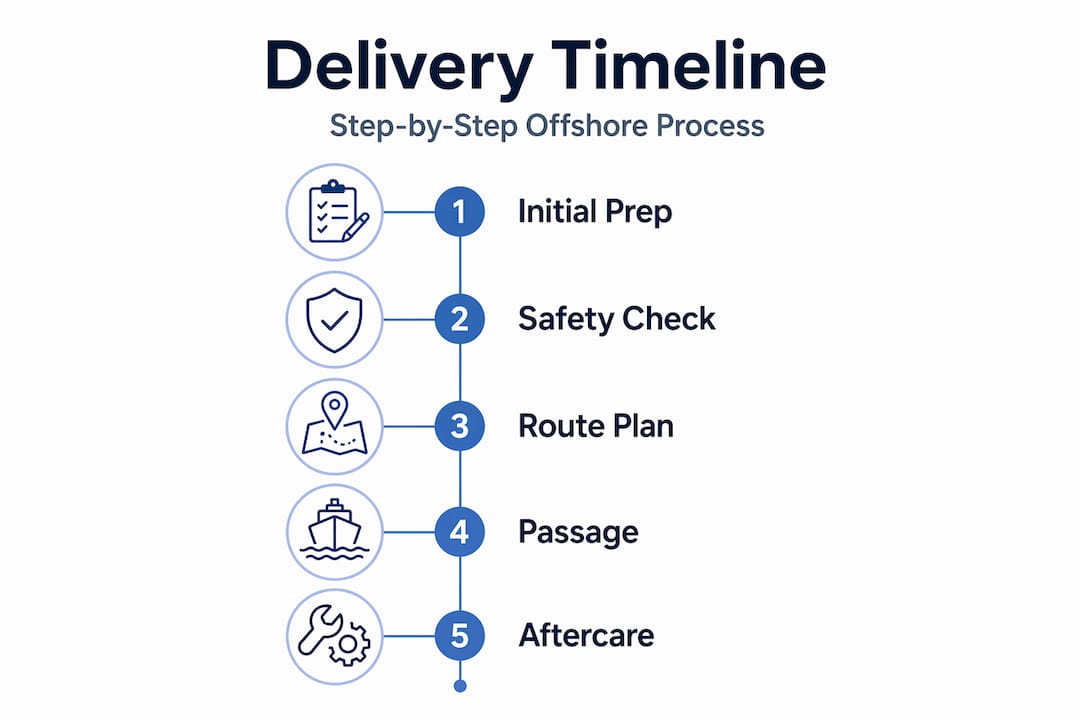
A professional yacht delivery process follows a clear sequence, and every step matters. Skipping any stage creates knock-on effects that can compromise both safety and the condition of your vessel on arrival.
-
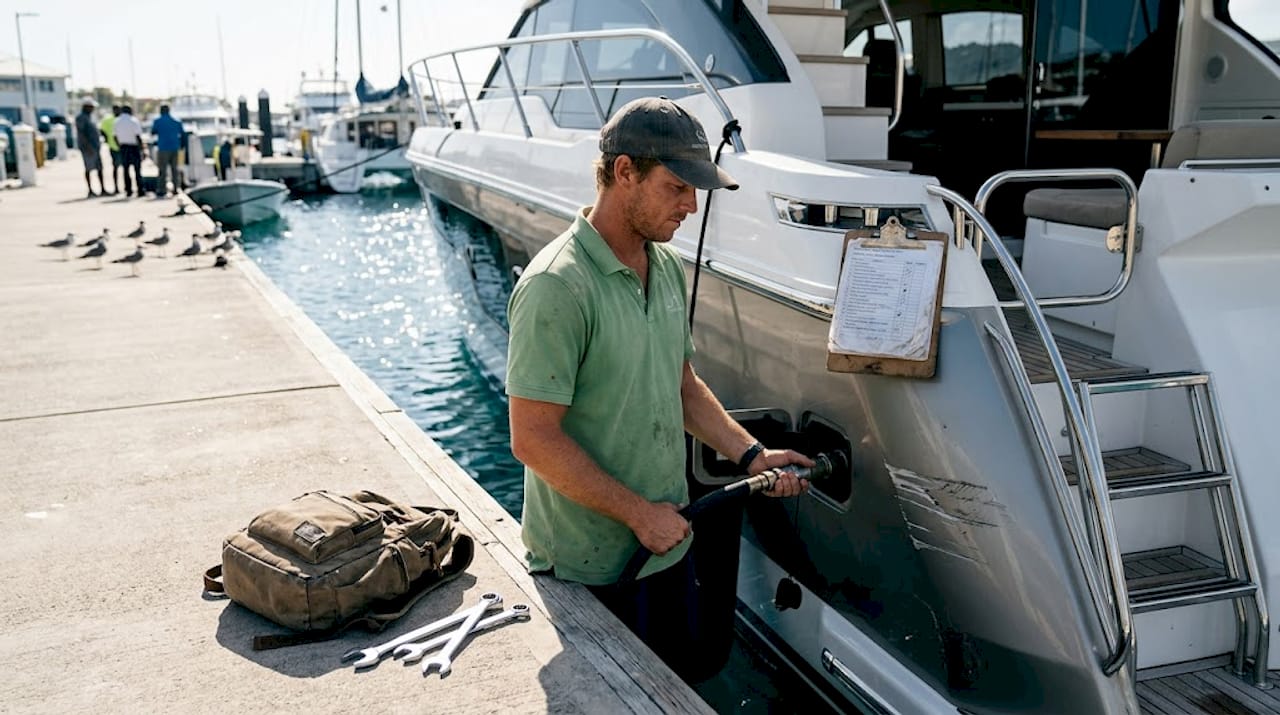
Pre-departure audit. The delivery skipper conducts a thorough inspection of the hull, machinery, safety equipment, navigation systems, and all onboard spares. Any deficiency identified here is resolved before departure, not after.
-
Documentation and authorization. The skipper verifies ownership documents, insurance coverage, port entry requirements for each destination country, and authorization letters. Missing paperwork can strand a yacht in a foreign port for days.
-
Passage planning. The crew maps the primary route, identifies ports of refuge along the way, and analyzes weather patterns for the departure window. A good plan anticipates multiple contingencies rather than committing to a single route.
-
Weather window selection. Departures are timed around favorable forecasts, particularly for offshore passages where conditions change rapidly. Waiting for the right window can add days to the schedule, but it is always the correct call.
-
Daily satellite monitoring. Once underway, professional crews provide daily satellite updates covering GPS coordinates, engine hours, fuel levels, weather encountered, and an updated ETA. This keeps owners informed throughout the passage without them needing to be onboard.
-
Arrival and condition reporting. On arrival, the crew completes a detailed handover report documenting the yacht’s condition, fuel consumption, any wear noted during transit, and any items requiring attention. This report is critical for insurance purposes and for planning any post-delivery work.
Pro Tip: Ask your delivery team whether their post-passage report includes photographic evidence of the yacht’s condition at each port of call. A thorough visual record protects you and the delivery crew if any damage disputes arise.
We always recommend that owners review the yacht aftercare essentials for their vessel type before signing off on a delivery plan. Understanding what your yacht needs after an offshore passage makes the handover conversation far more productive.
Safety standards every offshore delivery must meet
Safety is where many privately organized deliveries fall apart. Professional offshore deliveries require in-date safety equipment as an absolute baseline. No responsible skipper will depart without it, and no owner should allow a departure without confirming it.
The non-negotiable safety requirements for any offshore passage include:
- Liferafts: Fully serviced, certified, and stowed for immediate deployment. Service intervals vary by manufacturer but are typically annual or biannual.
- Flares: Passage-appropriate flares within their expiry date, covering both coastal and offshore signal requirements.
- EPIRB: An Emergency Position Indicating Radio Beacon registered to the vessel, with a current battery and hydrostatic release.
- Satellite communications: Whether via a dedicated satellite phone or an onboard system like Iridium, backup communications are critical for emergencies when cellular coverage is gone.
- AIS transponder: Automatic Identification System keeps the vessel visible to commercial shipping on crowded sea lanes.
- Jacklines and harnesses: For crew safety on deck during night watches or heavy weather.
A delivery team that holds RYA Yachtmaster Ocean certification and carries professional indemnity insurance is the professional standard you should expect. This certification requires demonstrated competence in offshore navigation, meteorology, and passage planning across blue-water distances. Professional indemnity insurance protects both the skipper and the owner if something goes wrong.
“Misalignment between a yacht’s equipment and the actual demands of an offshore passage is a common failure point. Proactive auditing and leasing necessary equipment like liferafts can mitigate that risk before departure.”
Pro Tip: If your yacht is missing any required safety equipment, reputable delivery teams will source and hire it on your behalf rather than depart under-equipped. Confirm this policy before you sign your delivery contract.
A step-by-step boat safety inspection before departure, combined with verifying that all boating electronics meet offshore standards, gives you a clear picture of exactly where your vessel stands before the crew casts off.
How timelines and logistics actually work
The honest answer about offshore yacht delivery timelines is that they are flexible frameworks, not fixed schedules. Delivery timelines are driven by weather windows, safe harbor routing, and crew fatigue management, with delays increasing both duration and total cost.
The table below reflects typical ranges for major offshore delivery routes:
| Route | Typical duration | Key stopping points |
|---|---|---|
| UK to Mediterranean | 2 to 3 weeks | Biscay crossing, Gibraltar |
| Transatlantic (East to West) | 18 to 25 days | Canary Islands, Cape Verde |
| East Coast USA to Caribbean | 7 to 14 days | Bermuda or direct passage |
| Pacific crossing | 25 to 35 days | Hawaii, Marquesas |
Crew fatigue is one of the most underestimated factors in offshore yacht transport. A well-managed watch system, typically three hours on and six hours off for a crew of three, keeps everyone sharp enough to handle unexpected situations. When delivery teams push past safe fatigue limits to meet a deadline, the risk of errors in navigation or equipment handling rises sharply.
Route planning around ports of refuge is equally critical. On a passage from northern Europe to the Mediterranean, Gibraltar serves as a natural waypoint for refueling, crew rotation, and mechanical checks. On a transatlantic run, the Canary Islands perform the same function. Building these stops into the plan, and budgeting time for them, produces a far more realistic cost estimate than assuming a direct passage at average speed.
When it comes to the cost of yacht delivery, owners should budget for crew flights and accommodation at each end, fuel, marina fees, provisioning, safety equipment hire if needed, and the skipper’s daily rate. For a transatlantic delivery, total costs can range widely depending on yacht size, fuel burn, and passage duration.
Our perspective on what owners get wrong
I’ve spent enough time watching offshore deliveries go sideways to know that the problem almost never starts at sea. It starts weeks before departure, when someone decides to cut a corner on preparation because the schedule is tight or the budget is stretched.
What I’ve found is that owners consistently underestimate two things. The first is how much their yacht’s specific systems matter to the delivery skipper. A delivery team that doesn’t know your generator quirks, your watermaker service history, or which seacock is stiff will discover those things at the worst possible moment. Sharing detailed vessel documentation before departure isn’t bureaucracy. It’s how you protect your boat.
The second thing owners get wrong is treating the delivery timeline as a promise rather than a projection. I’ve seen owners book travel to meet their yacht at the destination port a week before a realistic arrival is possible. Weather doesn’t negotiate. The North Atlantic in October does not care about your connecting flight. Build buffer into your expectations, communicate openly with your delivery skipper throughout the passage, and you’ll arrive at the handover in a far better state of mind.
My honest take is that offshore yacht delivery is one of the highest-stakes operations a yacht owner will ever authorize. When done with the right crew, the right preparation, and the right communication, it works beautifully. When shortcuts are taken, the costs compound quickly, and the damage isn’t always visible at first glance.
— Jason
How Baranofyachts supports your yacht before and after delivery
Whether you’re preparing a new build for its first offshore passage or optimizing an existing vessel for a major relocation, the decisions you make before delivery day shape everything that follows. At Baranofyachts, we work with owners from concept through to the water, which means we understand the technical and logistical demands that offshore delivery places on a yacht and its systems.

Our team helps clients think through configuration choices, upgrade priorities, and resale readiness in ways that directly affect how a yacht performs during and after a long offshore passage. If you’re preparing a vessel for delivery, our yacht resale preparation guide covers the condition standards and documentation your vessel should meet. For those still in the planning phase, configuring your ideal yacht from the ground up means building delivery readiness into the vessel from day one. Reach out to the Baranofyachts team to discuss how we can support your offshore delivery planning with the kind of meticulous, project-managed approach your investment deserves.
FAQ
What is offshore yacht delivery in simple terms?
Offshore yacht delivery is the professional relocation of a yacht across open water using a qualified skipper and crew, covering everything from pre-departure safety checks to post-arrival handover reports.
How long does an offshore yacht delivery typically take?
Timelines vary by route. A UK to Mediterranean delivery takes roughly 2 to 3 weeks, while a transatlantic passage typically runs 18 to 25 days depending on weather and stopovers.
What safety equipment is required for offshore delivery?
At minimum, every offshore delivery requires a serviced liferaft, in-date flares, a registered EPIRB, satellite communications, an AIS transponder, and appropriate personal safety gear for each crew member.
How much does offshore yacht delivery cost?
Costs vary significantly based on yacht size, route length, fuel burn, crew size, and marina fees. Owners should budget for the skipper’s daily rate, crew travel, provisioning, safety equipment, and all port costs along the route.
Can I sail my own yacht offshore instead of hiring a delivery crew?
Technically yes, but doing so without offshore certification, proper safety gear, and experience in passage planning creates substantial risk to both the vessel and crew. Professional delivery teams carry the credentials and insurance to manage the full range of offshore conditions safely.
Recommended
Sold Listings


Design Your Yacht
"*" indicates required fields
Maximus III - PNW
As you step aboard MAXIMUS III, the first impression is her scale.
At 120 feet with an 8-meter beam and 294 GT of interior volume, this 2025 Crescent Custom tri-deck immediately feels open, balanced, and estate-like. A timeless look while still feeling fresh from the shipyard.
Currently Available


Get your yacht value Estimate
"*" indicates required fields