
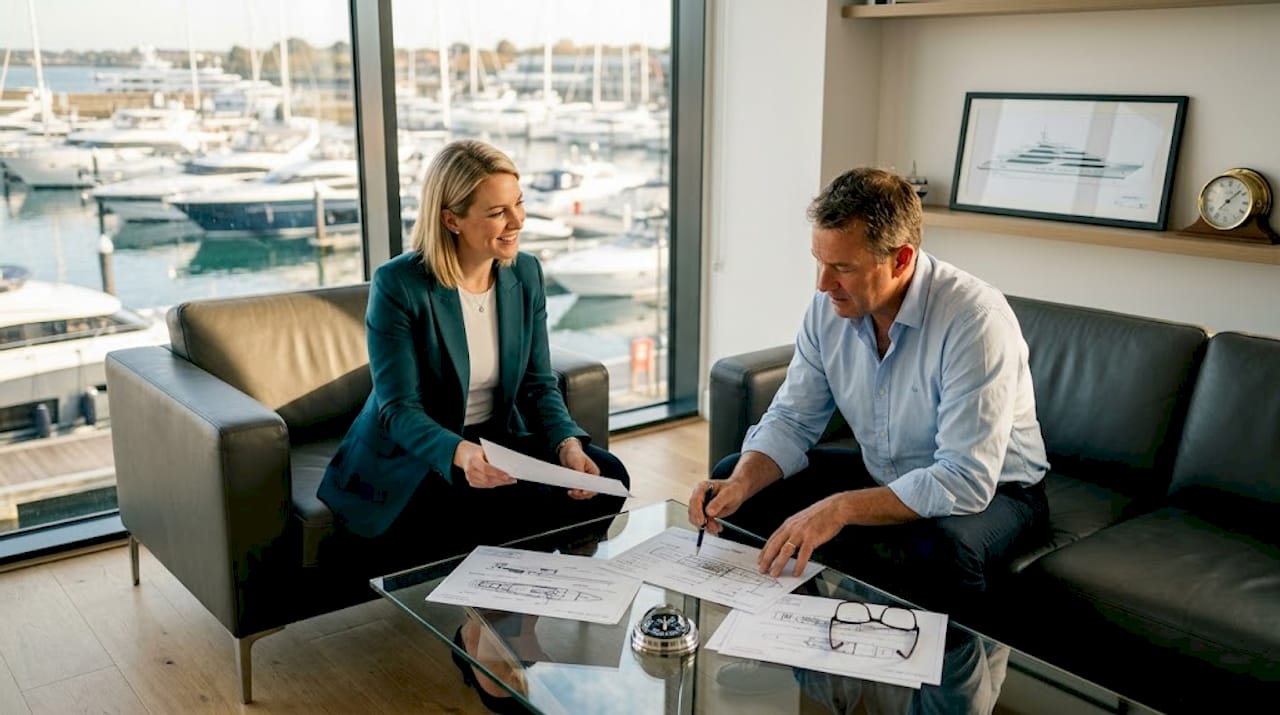
When most people imagine owning a yacht, they picture the vessel itself. The hull lines, the engine specs, the interior finishes. What is a client-centric yacht approach, then, if not just a fancier way of saying “good service”? It’s actually a foundational philosophy that flips the traditional model entirely. Instead of building or managing a yacht around what the shipyard does best, a client-centric approach starts with your lifestyle, your preferences, and your vision, then engineers everything else around that. For yacht owners and buyers, understanding this distinction is the difference between a boat that fits your life and one you end up adapting your life to fit.
Table of Contents
- Key Takeaways
- What a client-centric yacht approach actually means
- How client focus transforms customization and building
- Ownership experience through client-focused technology and services
- Brokers, central agents, and owner’s representatives compared
- Practical steps for applying client-centric principles
- My honest view on where this industry still falls short
- How Baranofyachts brings this approach to life
- FAQ
Key Takeaways
| Point | Details |
|---|---|
| Client-centric means lifestyle-first | The approach centers your habits, preferences, and usage patterns before any technical specification begins. |
| Customization goes beyond aesthetics | True client focus shapes functional systems, operational workflows, and lifecycle cost planning, not just interior finishes. |
| Roles matter enormously | Knowing the difference between a broker, central agent, and owner’s representative directly affects how well your interests are protected. |
| Technology drives personalized service | CRM systems and digital tools help operators anticipate your needs rather than simply respond to them. |
| Choose partners, not vendors | Align with professionals who treat client outcomes as their primary metric, not transaction volume. |
What a client-centric yacht approach actually means
The phrase gets used loosely in the industry, so precision matters. A client-centric yacht approach is a service and project management philosophy where every decision, from hull configuration to post-delivery support, is made with the client’s specific lifestyle as the governing criterion. It is not simply attentiveness or politeness. It is structural.
In traditional broker or shipyard models, the starting point is typically inventory, or capability. A yard shows you what it builds. A broker shows you what’s listed. The client then selects from what’s available and customizes within the yard’s tolerances. The yachting industry has historically struggled to move beyond this product-first orientation, even in marketing and brand experience.
A genuinely client-focused model works differently. Before any specification is written, the team conducts a thorough intake around how you actually use the water. Do you prefer extended offshore passages or week-long Mediterranean circuits? Will you have a permanent crew or charter occasionally? Do you host large groups or travel as a family of four? The answers to those questions shape the tender garage size, the galley layout, the fuel range, and the communication systems far more accurately than a standard spec sheet ever could.
The core principles that define this approach include:
- Lifestyle mapping before technical specification, treating your usage patterns as the primary design input
- Anticipatory service, where the management team identifies needs before you voice them
- Fiduciary alignment, meaning your service provider’s financial interests align with your outcomes, not with commission structures or yard relationships
- Continuous feedback loops throughout the build or ownership cycle, not just at delivery
- Proactive lifecycle planning, including resale positioning, refit scheduling, and operational cost modeling from day one
These principles separate a client-centric yacht service approach from what is, in practice, a product-centric model dressed up with hospitality language.
How client focus transforms customization and building
The most visible place where a client-centric approach pays dividends is during the design and construction phase. When your input genuinely governs the process, the result is a yacht that performs the way your ownership actually looks, not the way a brochure imagined it might.
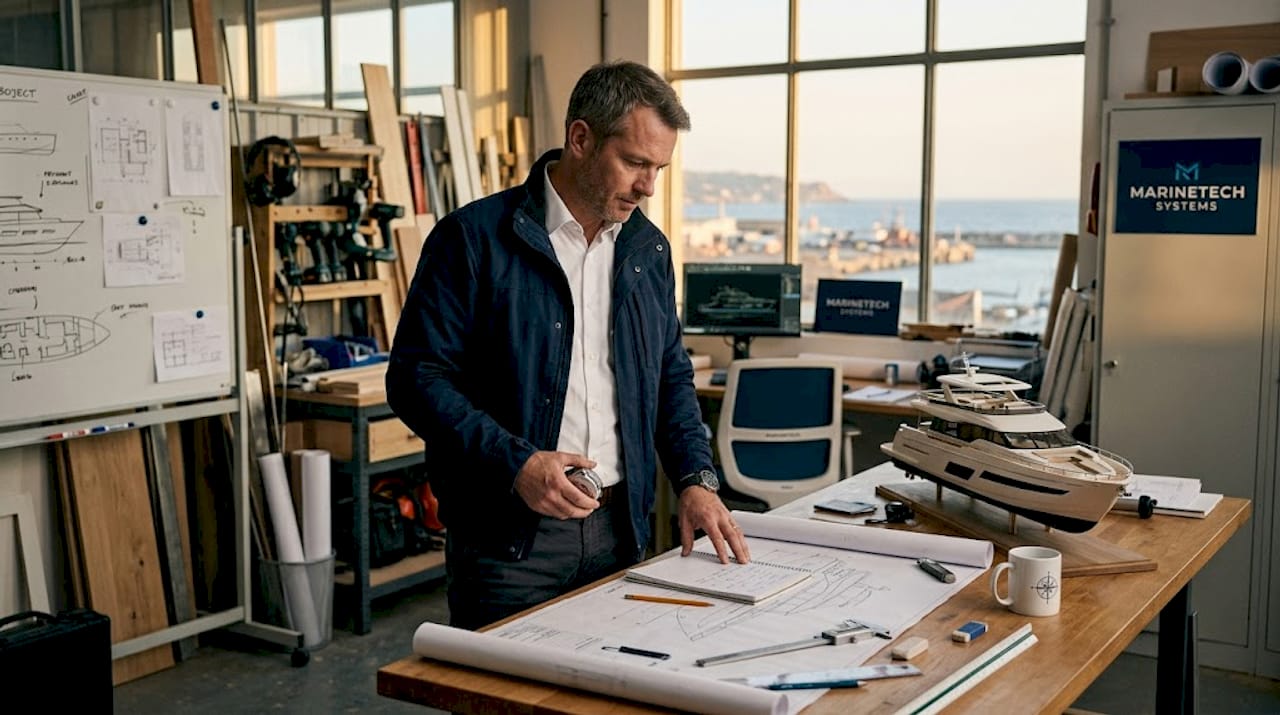
Consider two approaches to the same request: a client wants a 25-meter motor yacht with ample outdoor entertaining space.
| Approach | Starting point | Process | Outcome |
|---|---|---|---|
| Traditional model | Yard’s existing platform | Client selects from available layouts | Deck modified within structural limits |
| Client-centric model | Client’s entertaining style and guest count | Team designs deck flow, shading, and service routes around actual use | Custom layout with galley access, bar positioning, and seating optimized for the client’s events |
The difference in outcome is not just cosmetic. A client-centric build considers subsystem knock-on effects. If you entertain twelve guests regularly, the watermaker, generator load, and air conditioning capacity need to be sized accordingly. These are functional consequences of a lifestyle choice, and bespoke yacht building addresses them from the outset rather than discovering them at sea.
One model that executes this particularly well is the family office advisory structure. A boutique fiduciary firm will act entirely in the owner’s interest, managing contracts, conducting technical oversight, and coordinating shipyard relationships without the conflict of interest that comes with commission-based brokerage. This family office model reduces brokerage conflicts and has demonstrably saved clients millions in misaligned specification and contract errors.
Pro Tip: Engage your owner’s representative or advisory team before you sign any build contract. The owner’s representative program shows that early expert oversight profoundly improves contract outcomes and balances ambition against operational feasibility. Waiting until after signing dramatically narrows your options.
Beyond the build, lifestyle-driven customization also shapes functional features that standard yards rarely propose without being asked. Integrated dive equipment storage with wash-down drainage, jet ski deployment systems aligned with your tender handling preferences, cabin configurations that reflect how your family actually sleeps aboard. These are the details that client-focused yacht services consistently surface when the intake process is thorough.
Ownership experience through client-focused technology and services
The client-centric philosophy does not stop at delivery. In fact, some of the clearest differences between a client-focused operation and a traditional one become apparent during the ownership phase, particularly in how service is delivered between voyages.
CRM systems in yachting can increase customer retention by up to 27% through personalized engagement and anticipatory service. That number is not achieved by being friendly. It is achieved by building operational systems that track client preferences, automate service reminders, and flag maintenance windows before they become problems. When your captain receives an automated alert that your stabilizer service interval is approaching two weeks before your scheduled departure, that is a client-centric system working correctly.
Marina operations represent another dimension of this experience. Modern marina operators are integrating digital tools and hospitality programs to match the expectations clients carry from luxury hotels and private aviation. That means digital check-in, concierge-level provisioning coordination, and real-time berth management. When these systems work in concert, your arrival at a marina feels like checking into a well-run property rather than docking at a fuel stop.
Key service elements that define a client-focused ownership experience include:
- Automated maintenance scheduling tied to your usage patterns and voyage calendar
- Digital provisioning coordination that remembers dietary preferences and stock preferences from previous trips
- Crew management support that matches crew profiles to your hospitality style and voyage type
- Compliance monitoring integrated with your flag state requirements, so regulatory deadlines never surprise you
- Post-voyage reporting that captures operational data and translates it into plain-language summaries for your review
It is worth noting that operational systems, not staff personality, largely drive whether client service delivers consistently. A warm crew cannot compensate for a management structure that lacks clear, repeatable workflows. Yacht aftercare, when approached this way, becomes a genuine ownership asset rather than a recurring administrative burden.
Brokers, central agents, and owner’s representatives compared
One of the most consequential misunderstandings in yacht ownership is assuming that all advisory professionals serve the same function. They do not, and selecting the wrong one for your situation can undermine even the most well-intended client-centric approach.
| Role | Who they represent | How they are compensated | Primary function |
|---|---|---|---|
| Yacht broker | The buyer | Commission from seller | Searches market to find best match for client |
| Central agent | The seller or owner | Commission from charter revenue | Markets and manages owner’s vessel |
| Owner’s representative | The owner exclusively | Retainer or fixed fee | Technical and contractual oversight throughout build or purchase |
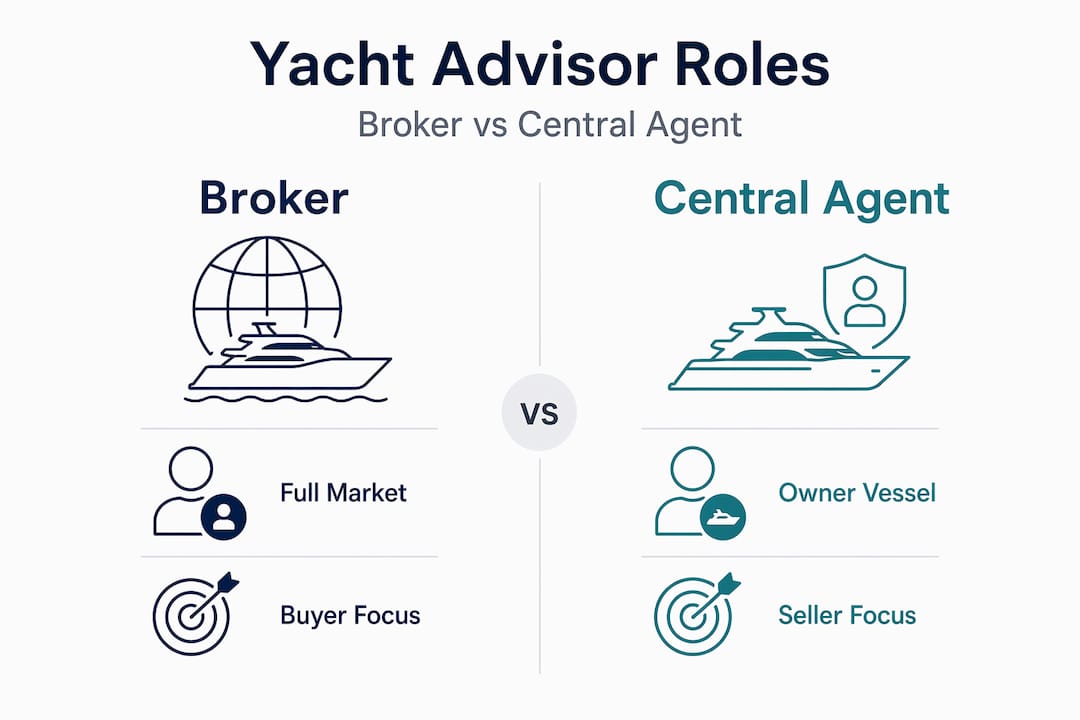
Yacht brokers work for the buyer and search the full market, while central agents represent the owner’s vessel and offer limited options by definition. Understanding this distinction is not a technicality. It determines whose financial interests drive the advice you receive. A broker recommending a specific yacht may be doing so because it is the best match for your needs, or because the commission structure favors it. Only a fee-based, fiduciary arrangement removes that ambiguity entirely.
The owner’s representative role sits in a different category altogether. This professional manages the technical and contractual dimensions of your build or purchase, reviewing construction tolerances, scrutinizing delivery checklists, and ensuring the yard’s obligations are actually met before you take possession. If you are commissioning a new build, working with a qualified yacht broker alongside an owner’s representative gives you market access combined with independent technical accountability.
Practical steps for applying client-centric principles
You do not need to wait for a service provider to hand you a client-centric experience. You can actively shape it from the first conversation with any advisor or yard.
-
Document your usage patterns in detail. Before any consultation, write down how many days per year you plan to be aboard, your typical voyage length, your preferred cruising region, and who regularly travels with you. This becomes the filter through which every specification decision should pass.
-
Ask potential partners how they handle conflicting priorities. If a yard’s standard build sequence conflicts with your preferred delivery timeline, how does the team navigate that? The answer tells you whether you are dealing with a client-centric organization or a production-focused one.
-
Request a fiduciary disclosure. Any advisor recommending a specific yacht, yard, or service provider should be able to tell you clearly how they are compensated and whether that compensation creates any preference in their advice. If the answer is vague, treat it as a signal.
-
Insist on lifecycle cost modeling upfront. A client-focused team will present the five-year operational cost picture alongside the purchase price. Fuel consumption, crew costs, refit cycles, and insurance should be part of the initial conversation, not a surprise after delivery.
-
Verify that feedback loops exist throughout the process. Client-centric yacht management is not a one-time consultation. It is an ongoing relationship with structured check-ins, progress reviews, and documented decision records.
Pro Tip: When evaluating any yacht professional, ask specifically what happens when something goes wrong mid-build or mid-season. A client-focused partner will have a clear escalation process. A transaction-oriented one will deflect responsibility. The answer to that single question is one of the clearest indicators of genuine yacht ownership exclusivity commitment you will encounter.
My honest view on where this industry still falls short
I’ve worked alongside yacht owners, yards, and management teams long enough to say this plainly: the gap between claiming to be client-centric and actually being client-centric is still wide in most of this industry.
What I’ve seen repeatedly is that the product-first reflex runs deep. Yards default to what they build efficiently. Brokers default to what’s listed. And clients, particularly first-time buyers, don’t always know enough to push back. The problem isn’t bad intentions. It’s structural. When compensation is tied to transactions rather than outcomes, the advice that follows reflects that reality no matter how sincerely the professional believes they’re serving you.
What I’ve learned is that the shift toward genuine client centricity is happening, but it’s being led by boutique operators and fiduciary advisory firms rather than large brokerage houses. The clients who benefit most are the ones who arrive at the process informed, ask the right questions, and treat their advisor selection with the same diligence they bring to any major financial decision.
The yacht industry is capable of delivering extraordinary, fully personalized experiences. When the structure supports it, the outcome speaks for itself.
— Jason
How Baranofyachts brings this approach to life

At Baranofyachts, the client-centric philosophy is not a tagline. It is the organizing principle behind every project we manage, from initial consultation through delivery and beyond. Our team acts with a conductor’s eye across the full build and acquisition process, coordinating yards, technical oversight, and contract review so that your vision remains the reference point throughout, not the yard’s production schedule.
Whether you are exploring a custom build or ready to configure your yacht from the ground up, our process begins with understanding how you use the water and who you bring with you. From there, every specification, every system, and every service arrangement is built around that picture. We invite you to connect with our team and experience what genuinely personalized yacht management looks and feels like in practice.
FAQ
What is a client-centric yacht approach in simple terms?
A client-centric yacht approach means every decision about design, construction, and service is made around the client’s lifestyle and preferences, not the yard’s standard capabilities or a broker’s available inventory. It is the difference between selecting a yacht and building an experience around how you actually live at sea.
How does a client-centric approach affect the yacht customization process?
It moves customization beyond cosmetic choices to functional and operational decisions, shaping everything from fuel range and crew quarters to galley throughput and tender deployment systems based on how the owner actually uses the vessel.
What role does technology play in personalized yacht management?
CRM systems and digital tools allow management teams to track client preferences, automate maintenance reminders, and coordinate services proactively, creating ownership experiences that anticipate needs rather than simply respond to them.
How is a yacht broker different from a central agent?
A yacht broker works exclusively for the buyer and searches the full market to find the best match, while a central agent represents the seller and is limited to marketing that owner’s specific vessel. Knowing this distinction is critical to understanding whose interests are being served.
When should I engage an owner’s representative?
Engage an owner’s representative before signing any build or purchase contract. Early involvement in technical and contractual oversight profoundly improves outcomes and reduces the risk of costly misalignments between specification and delivery.
Recommended
Sold Listings


Design Your Yacht
"*" indicates required fields
Maximus III - PNW
As you step aboard MAXIMUS III, the first impression is her scale.
At 120 feet with an 8-meter beam and 294 GT of interior volume, this 2025 Crescent Custom tri-deck immediately feels open, balanced, and estate-like. A timeless look while still feeling fresh from the shipyard.
Currently Available


Get your yacht value Estimate
"*" indicates required fields