

A yacht refit timeline is the planned sequence of phases, milestones, and durations that governs every maintenance or upgrade project from initial assessment through sea trials. Understanding refit timelines is the single most effective way to protect your vessel’s operational readiness, control costs, and avoid the compounding delays that turn a six-week project into a six-month ordeal. Whether you are planning annual antifouling, a mid-life engineering overhaul, or a full interior transformation, the timeline you build before the boat enters the yard determines whether the project succeeds or unravels. Refit project duration ranges from one week to six months depending on scope, vessel size, and how thoroughly you prepare.
What factors determine the duration of a yacht refit project?
Refit project duration is governed by four primary variables: scope of work, vessel size and complexity, procurement lead times, and the quality of pre-yard planning. A minor service visit covering antifouling and engine checks runs one to two weeks. A mid-life engineering refit addressing propulsion, electrical systems, and deck hardware typically takes four to eight weeks. A full repaint and interior transformation can extend to three to six months, and that range assumes no structural surprises.
Vessel size multiplies every variable. A 50-foot sailing yacht and a 150-foot superyacht may share the same scope description on paper, but the superyacht carries more subsystems, more subcontractors, and more interdependencies between trades. Each additional layer of complexity creates knock-on effects when one trade falls behind schedule.
Common challenges that extend timelines include:
- Structural discoveries: Hidden osmotic blistering, corroded frames, or delaminated decks found during haul-out add weeks of remediation before scheduled trades can begin.
- Parts availability: Proprietary components from European manufacturers often carry eight to sixteen week lead times, and ordering after haul-out is already too late.
- Technology integration: Compatibility with new technology and unexpected structural changes during the refit are among the most cited causes of scope growth.
- Subcontractor scheduling: Specialist painters, composite technicians, and electronics integrators book months in advance, particularly during peak yard season.
| Project type | Typical duration |
|---|---|
| Annual maintenance and antifouling | 1 to 2 weeks |
| Mid-life engineering refit | 4 to 8 weeks |
| Full repaint and topsides restoration | 6 to 12 weeks |
| Full interior and exterior transformation | 3 to 6 months |
Pro Tip: Build a scope document before contacting any shipyard. A written scope locks in your expectations, gives yards an accurate basis for quotation, and prevents the gradual scope growth that silently extends timelines and inflates budgets.
How do you manage refit timelines effectively?
Effective refit timeline management begins not at haul-out but up to 12 months prior for larger projects. That lead time is not conservative caution. It reflects the real-world demands of supply chain management, class and flag documentation, subcontractor bookings, and survey scheduling. Owners who treat the yard period as the project’s start point consistently face delays that pre-planning would have prevented entirely.
A structured refit schedule follows this sequence:
- Define scope and budget (12 months out for major refits, 3 months for minor work). Engage a project manager or naval architect to produce a written scope with itemized costs. This document becomes the contract baseline.
- Select the shipyard and secure a berth (9 to 10 months out). Premium yards in Fort Lauderdale, Palma de Mallorca, and the Gold Coast fill their schedules early. Waiting until four months out limits your options significantly.
- Order long-lead items (8 to 9 months out). Generators, stabilizer components, custom joinery, and proprietary electronics all carry extended lead times. Procurement delays are the single most preventable cause of timeline overruns.
- Confirm subcontractors and align schedules (6 months out). Painters, electricians, composite specialists, and upholsterers each have their own calendars. Aligning their sequences before yard entry prevents idle time between trades.
- Conduct a pre-yard survey (4 to 6 weeks before haul-out). A condition survey at this stage surfaces structural issues while you still have time to adjust scope and budget without disrupting the yard schedule.
- Set milestones with completion dates and monitor weekly. A well-managed refit schedule includes start and completion dates for each trade, delivery deadlines for materials, and a clear process for addressing delays immediately rather than absorbing them silently.
Poor communication and unclear expectations among stakeholders are the primary drivers of cost overruns and schedule failures. This means a weekly status meeting with the yard manager, a shared project log, and a single point of accountability are not administrative overhead. They are the mechanism that keeps the project on track.
Pro Tip: Align your shoreside logistics with the shipyard’s internal schedule before the boat arrives. Confirm that all ordered parts will clear customs and reach the yard before the relevant trade is scheduled to begin. One missing component can idle an entire crew for days.

What are the typical stages in a yacht refit timeline?
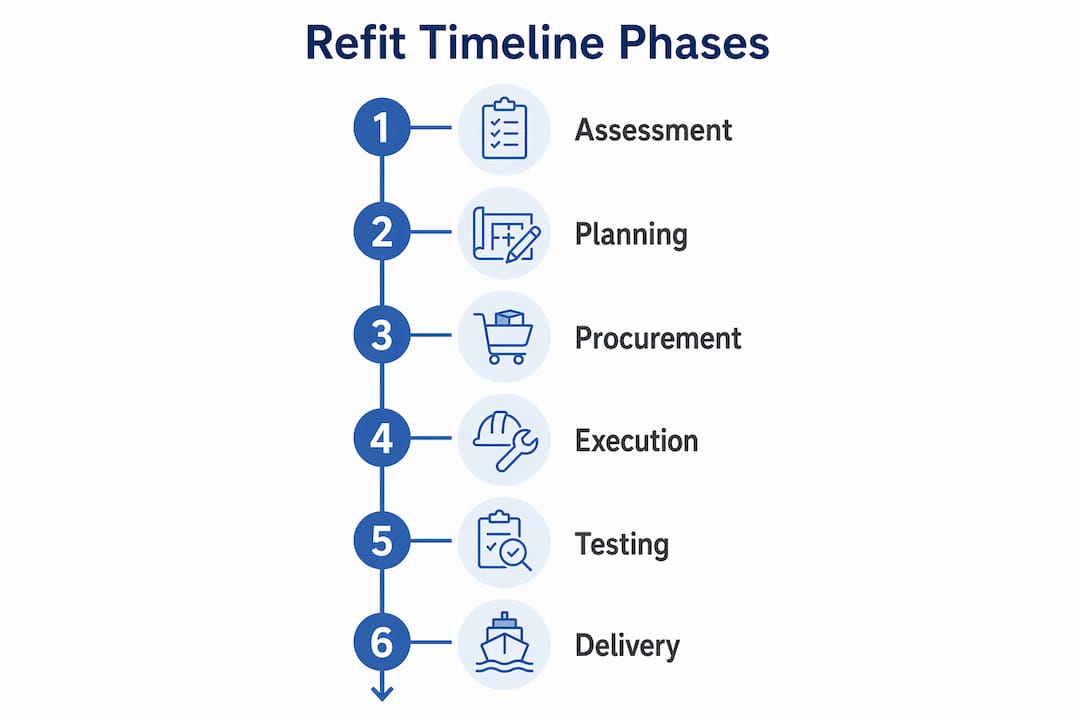
Every refit, regardless of scope, moves through six recognizable phases. Understanding these phases gives you a realistic picture of where time is spent and where delays most commonly originate.
| Phase | Description | Typical duration |
|---|---|---|
| Initial assessment and scope definition | Condition survey, scope document, budget approval | 1 to 4 weeks |
| Quotation and contract finalization | Yard selection, subcontractor agreements, procurement orders | 2 to 6 weeks |
| Haul-out and preparation | Blocking, pressure wash, initial inspections, surface preparation | 3 to 7 days |
| Trade execution | Structural repairs, engineering, painting, interior works, systems upgrades | 60 to 80% of total project time |
| Quality assurance and commissioning | Systems testing, snag resolution, owner walkthrough | 1 to 2 weeks |
| Launch and sea trials | Wet commissioning, performance verification, delivery | 3 to 7 days |
Trade execution consumes the majority of calendar time, and it is also where scope growth does the most damage. A structural discovery during haul-out preparation, for example, can push every subsequent trade back by two to four weeks while remediation work is completed. This is precisely why the pre-yard survey in the planning phase carries such disproportionate value. Catching a delaminated deck section before haul-out means you arrive at the yard with a revised scope and a realistic schedule. Discovering it after haul-out means you are renegotiating costs and timelines under pressure.
For yacht hull restoration specifically, surface preparation and fairing alone can account for 30 to 40 percent of the total painting phase duration. Owners who underestimate this stage routinely find that their “two-week paint job” extends to five or six weeks once proper preparation is factored in.
How do seasonal and weather conditions affect refit scheduling?
Seasonal timing is one of the most underestimated variables in refit schedule planning. October to March is the recognized ideal window for performing a yacht refit, and the reasoning goes beyond simply avoiding peak sailing season.
The practical advantages of scheduling within this window include:
- Temperature stability for coatings: Two-part polyurethane topcoats, epoxy primers, and adhesive compounds all require consistent temperatures and humidity levels to cure correctly. Winter months in most major refit centers provide more predictable conditions than the heat and humidity spikes of summer.
- Yard availability: Shipyards in Fort Lauderdale, Palma, and the Gold Coast operate at lower capacity between October and March, which means better berth availability, more attentive yard crews, and faster turnaround on subcontractor scheduling.
- Operational alignment: Completing the refit before the spring sailing season means the vessel is ready when you want to use it, rather than still in the yard when your charter season opens.
- Crew management: Scheduling the refit during the off-season reduces the operational disruption to your crew’s schedule and avoids the fatigue that builds when a refit extends into active cruising months.
Regional geography matters as well. Mediterranean-based vessels benefit from the October to March window in Palma or La Ciotat. Caribbean-based yachts often use the Atlantic hurricane season, June through November, as a natural refit window, with yards in Fort Lauderdale and Antigua absorbing much of that demand. Pacific vessels working the Australian coast align well with the Gold Coast’s winter dry season. Matching your refit window to your vessel’s home region reduces weather-related delays and takes advantage of local yard expertise.
Key takeaways
Refit timelines succeed or fail based on pre-yard preparation, not on what happens inside the yard itself.
| Point | Details |
|---|---|
| Start planning early | Major refits require pre-planning up to 12 months before haul-out to secure yards, subcontractors, and long-lead parts. |
| Scope defines duration | Project type drives timeline length, from one to two weeks for annual maintenance to six months for full transformations. |
| Seasonal timing matters | October to March delivers better yard availability, stable curing conditions, and alignment with sailing season. |
| Milestones prevent overruns | A schedule with defined trade deadlines and weekly reviews catches delays before they compound across the entire project. |
| Time multiplies costs | Delays increase not just labor and material costs but also indirect losses like charter revenue and crew productivity. |
What I’ve learned about refit planning that most owners find out too late
The most consistent pattern we see at Baranofyachts is owners arriving at the yard with a clear vision of the finished product and almost no structured plan for getting there. The yard period becomes the planning period, and that inversion is where projects fall apart.
Project failures result from poor pre-planning and miscommunication, not from technical execution inside the yard. I have watched technically excellent yards produce frustrating outcomes because the owner’s scope was undefined, the subcontractors were booked reactively, and nobody had accountability for the overall schedule. The yard does its job. The project still fails.
The insight that changes how owners approach refits is this: time is a cost multiplier, not just a calendar variable. Every additional week in the yard carries direct costs in labor and materials, but it also carries indirect costs in lost charter revenue, crew fatigue, and delayed operational readiness. A two-week overrun on a charter yacht in peak season can erase the entire budget margin for the refit. That reality makes pre-planning a financial decision, not just a logistical one.
The owners who execute the best refits treat the project the way a conductor approaches a performance. Every instrument, every entry point, every tempo change is mapped before the first note is played. The yard period is the performance. The planning period is the rehearsal. You cannot rehearse during the performance and expect a good result.
My honest recommendation: engage a project manager before you contact a yard. Not after you have a quote, not after you have selected a berth. Before. The coordination of procurement, surveys, and subcontractors before yard entry is where the timeline is either protected or compromised.
— Jason
Plan your refit with Baranofyachts
At Baranofyachts, we manage refit projects the way they deserve to be managed: as structured, accountable processes with clear milestones, transparent communication, and procurement discipline that starts months before haul-out. Our project management approach covers scope definition, subcontractor coordination, quality assurance, and schedule oversight from the first planning call through sea trials.

If you are planning an upgrade or a full refit and want to build a timeline that actually holds, we are ready to work through the details with you. You can also explore our yacht configuration tool to define your upgrade priorities before our first conversation. Contact Baranofyachts to schedule a consultation and give your next refit the structured foundation it needs.
FAQ
How long does a typical yacht refit take?
Refit project duration ranges from one to two weeks for annual maintenance and antifouling up to three to six months for a full repaint and interior transformation. The scope of work is the primary driver of total duration.
When is the best time of year to schedule a refit?
October to March is the recognized ideal window for most refit centers, offering stable temperatures for curing coatings, better yard availability, and alignment with the spring sailing season.
Why do refit timelines so often run over schedule?
Poor pre-planning, unclear scope, and miscommunication among stakeholders are the leading causes of timeline overruns, not technical failures inside the yard. Structural discoveries during haul-out and parts procurement delays are the most common practical triggers.
How far in advance should I start planning a major refit?
Larger refit projects require pre-planning starting at least 12 months before the yard period to secure berths, book subcontractors, and order long-lead components without creating schedule conflicts.
What is the most expensive mistake owners make with refit timelines?
Treating the yard period as the start of planning rather than the execution of a plan already in place. Every week of avoidable delay carries direct and indirect costs, including lost charter revenue and crew disruption, that far exceed the cost of early professional planning.
Recommended
Sold Listings


Design Your Yacht
"*" indicates required fields
Maximus III - PNW
As you step aboard MAXIMUS III, the first impression is her scale.
At 120 feet with an 8-meter beam and 294 GT of interior volume, this 2025 Crescent Custom tri-deck immediately feels open, balanced, and estate-like. A timeless look while still feeling fresh from the shipyard.
Currently Available


Get your yacht value Estimate
"*" indicates required fields