
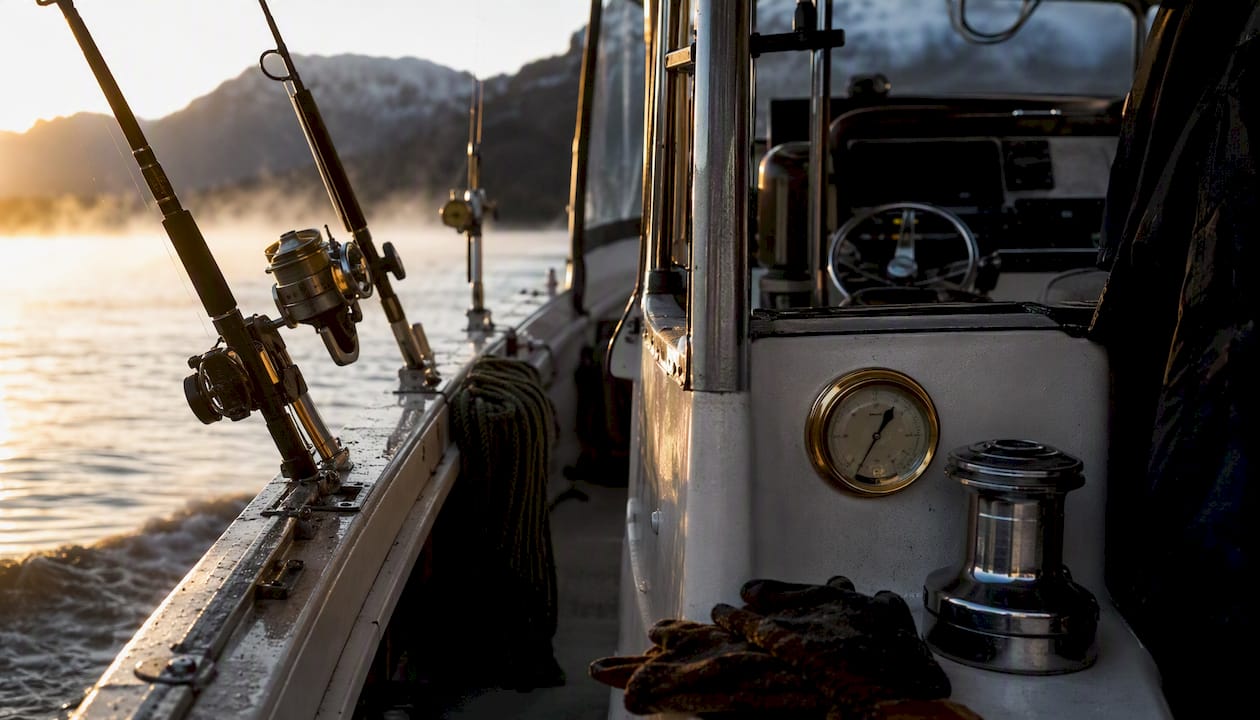
For most owners pursuing sport fishing in Alaska aboard a purpose-built vessel, a managed new-build or full refit delivered under a dedicated project management engagement is the most reliable path to expedition-grade capability. The reasoning is straightforward: Alaska’s waters demand systems redundancy, cold-weather engineering, and fish-handling infrastructure that no production yacht delivers off the shelf. Contact Baranofyachts to open a consultation and define your mandate before committing to any yard or acquisition.
- Recommended path: managed new-build or full refit with dedicated project oversight
- Core reason: Alaska’s conditions require bespoke cold-weather systems, extended range, and purpose-built fish-handling that production yachts cannot match
- First step: schedule a consultation with Baranofyachts to scope your project and receive a preliminary mandate proposal
Table of Contents
- What does an ‘Alaska-ready’ sportfishing yacht actually require?
- New build vs. refit vs. brokerage: which path suits your timeline?
- Which specifications and layout choices must you lock early?
- What do timelines and budgets look like for Alaska sportfishing builds?
- How does a dedicated project manager deliver your Alaska sportfishing build?
- What crew and provisioning does an Alaska sportfishing voyage demand?
- What do representative project outcomes look like?
- Why we believe dedicated project management defines Alaska sportfishing project success
- Baranofyachts delivers bespoke Alaska sportfishing projects from mandate to departure
- Key Takeaways managed new-build or full refit under dedicated project oversight is the most reliable delivery path for owners seeking a bespoke, Alaska-ready sportfishing yacht.
- Sources
What does an ‘Alaska-ready’ sportfishing yacht actually require?
Alaska is not a forgiving proving ground. Unpredictable weather, remote anchorages, near-freezing water temperatures, and the sheer scale of the fishing grounds mean that a vessel configured for the Bahamas will be underpowered, underprotected, and potentially unsafe in Southeast Alaska or the Kodiak archipelago.
The non-negotiable capability areas for any bespoke sportfishing yacht targeting Alaskan waters:
- Hull construction and corrosion resistance: Aluminum or high-grade marine steel with full epoxy barrier coating. Aluminum is preferred for weight savings and corrosion immunity in cold saltwater.
- Heating and HVAC redundancy: Dual-source heating systems (diesel hydronic plus electric backup) for crew quarters, engine room, and bait/fish storage. A single-point HVAC failure in Alaska is a crew welfare and safety event.
- Fuel range and tankage: Minimum A sufficient fuel range at cruising speed appropriate for target grounds to avoid refueling in remote Alaskan waters. Remote Alaskan waters offer limited fuel resupply.
- Seakeeping and stabilization: Active fin stabilizers or gyroscopic stabilization to manage the Gulf of Alaska’s notorious beam seas. Modern active stabilization systems can significantly reduce roll in beam seas, enhancing crew safety and comfort.
- Ice and cold-weather proofing: Insulated piping, heat-traced waterlines, winterized through-hulls, and ice-class bow reinforcement for vessels transiting glacial areas.
- Fish-handling systems: Dedicated cockpit with wash-down drainage, pressurized live wells, refrigerated fish rooms (target: 32–34°F holding), fight chairs, outrigger mounts, and rod/rigging storage.
- Propulsion and electrical redundancy: Twin-engine configuration with independent fuel systems, a dedicated generator set, and shore-power capability. Redundant propulsion systems are critical to safely manage remote offshore operation risks in Alaska.
- Safety and medical equipment: EPIRB, life rafts rated for cold water, immersion suits for all crew, and a stocked medical kit with defibrillator.
Royal Huisman’s Project 406, a 52-meter sportfishing superyacht designed by Vripack, illustrates how the category has scaled: full luxury accommodation alongside tournament-grade fishing systems, proving that neither comfort nor capability needs to be sacrificed.
| Capability | Operational Purpose | Mission Impact |
|---|---|---|
| Aluminum hull | Corrosion resistance, weight reduction | Lower fuel burn, longer service life |
| Active fin stabilizers | Roll reduction in beam seas | Crew safety, fish-fighting comfort |
| A fuel capacity sized to provide adequate range for accessing remote fishing grounds. | Access to remote grounds without resupply | Full itinerary flexibility |
| Refrigerated fish room | Preserve catch quality at 32–34°F | Commercial-grade fish quality |
| Dual heating systems | Crew welfare, bait storage | Operational continuity in cold weather |
| Twin-engine redundancy | Propulsion backup offshore | Safety in remote waters |
New build vs. refit vs. brokerage: which path suits your timeline?
The right delivery path depends on three variables: how much performance you need, how quickly you need it, and how much budget variance you can absorb.
New build delivers the highest specification ceiling. Every system, layout, and structural choice is designed from the ground up for Alaska. Builders like Bayliss Boatworks operate as high-skill, low-volume custom yards where offshore performance and bespoke fishing capability are the primary design drivers. The tradeoff is time: a bespoke new-build typically runs 24–48 months from contract to delivery, and budget overruns are common without disciplined project management.
Full refit of a proven hull offers a faster route to Alaska capability, particularly when the donor vessel has the right displacement, range, and structural envelope. FARO 3D scanning and modular off-site fabrication have materially reduced refit timelines by improving fit accuracy for pilothouse conversions and structural modifications before any steel is cut aboard.
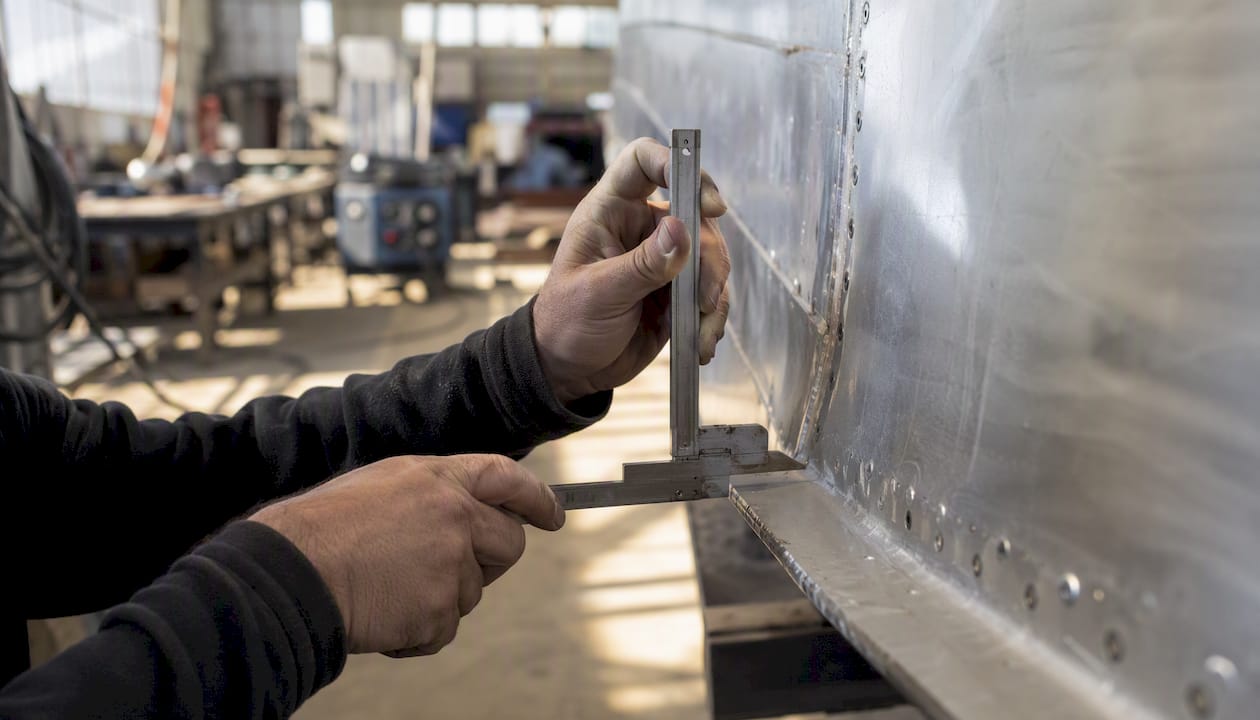
Brokerage acquisition with targeted upgrades is the fastest path to water, often 6–12 months from mandate to departure. The risk is that a brokered vessel may require more remediation than a pre-purchase survey reveals, particularly for cold-weather systems and fish-handling infrastructure that previous owners never needed.
| Path | Typical Timeline | Budget Shape | Alaska Capability Ceiling | Best For |
|---|---|---|---|---|
| New build | 24–48 months | Highest, most variable | Maximum | Owners with no timeline pressure, seeking full specification control |
| Full refit | 12–24 months | Moderate, scope-risk high | High, hull-limited | Owners with a proven donor hull and defined upgrade scope |
| Brokerage + upgrades | 6–12 months | Lowest upfront, hidden risk | Moderate | Owners needing speed to water with budget discipline |
Pro Tip: The most common under-budget item across all three paths is cold-weather systems integration. Owners consistently underestimate the cost of heat-tracing, insulated piping, and HVAC redundancy when these are retrofitted rather than designed in from the start. Lock these specifications before engineering sign-off.
Which specifications and layout choices must you lock early?
Deck and cockpit decisions made late in a project cost two to three times more to change than those locked at schematic design. The Vripack naval architecture behind Project 406 demonstrates how integrated design, from cockpit flow to stabilizer placement, produces a vessel where fishing systems and luxury accommodation reinforce rather than compromise each other.
Priority specifications to confirm before engineering sign-off:
- Cockpit dimensions and clear deck flow (fight chair placement, rod locker access, live-well scupper drainage)
- Fish room location relative to cockpit (minimize carry distance; target 10–15 feet maximum)
- Outrigger mount reinforcement integrated into hull structure, not bolted post-build
- Engine room layout sized for twin-engine redundancy and accessible service clearances
- Fuel and ballast tank placement for trim optimization at fishing speeds (typically 6–10 knots)
| Specification | Recommended Range | Notes |
|---|---|---|
| Hull material | Marine aluminum alloy | Preferred for Alaska: corrosion-immune, lighter than steel |
| Stabilization type | Active fin or gyroscopic | A stabilization system designed to substantially reduce roll to improve vessel safety and fishing comfort. |
| Fuel capacity | A fuel capacity sized to provide adequate range for accessing remote fishing grounds at cruise | Size to target grounds; err larger |
| Fish room capacity | Refrigerated fish room capacity | Scale to target species and trip duration |
| Generator capacity | 2× independent sets | Never single-point electrical dependency offshore |
Artisan-level craftsmanship in joinery and systems integration also affects resale: vessels with documented, bespoke build quality command a measurable premium in the brokerage market.
What do timelines and budgets look like for Alaska sportfishing builds?
Realistic phase durations and cost bands allow you to evaluate yard proposals on a consistent basis. Variance is wide, driven by scope, shipyard location, materials sourcing, and the logistical complexity of remote Alaskan operations.
| Phase | New Build | Full Refit |
|---|---|---|
| Design and naval architecture | 3–6 months | 1–3 months |
| Engineering and procurement | 3–6 months | 2–4 months |
| Build or structural refit | 12–24 months | 6 months |
| Outfitting and systems | 3–6 months | 2–4 months |
| Sea trials and delivery | 1–3 months | 1–2 months |
| Total | 24–48 months | 12–24 months |
Broad cost bands: bespoke new-builds in the 60–90-foot range typically run from $3M to $12M+ depending on specification depth and yard. Full refits on comparable hulls range from $800K to $5M+. Sitka Custom Marine, with its 150-ton travel lift and in-house aluminum fabrication, represents the kind of local Alaskan yard capacity that can reduce transit costs for owners already operating in the region.
Before accepting any proposal, request from bidders: a line-item cost breakdown by phase, a schedule with defined milestones and float allowances, a change-order governance protocol, and a list of subcontractors and their lead times.
How does a dedicated project manager deliver your Alaska sportfishing build?
Think of a project manager as the conductor’s eye over a complex score: every subcontractor, shipyard, and supplier plays their part, but without coordinated oversight, the timing falls apart and costs compound. The governance model we recommend at Baranofyachts follows a structured milestone sequence:
- Contract and mandate execution — scope, budget envelope, and authority matrix confirmed in writing
- Schematic design sign-off — owner approval of layout, key specifications, and systems philosophy
- Engineering sign-off — naval architect and structural engineer sign off before procurement opens
- Procurement windows — long-lead items (engines, stabilizers, refrigeration systems) ordered with confirmed lead times
- Staged inspections — on-site visits at structural completion, systems rough-in, and outfitting milestones; FARO 3D scans used for pilothouse and structural conversions to verify fit before fabrication
- Sea trials — owner-attended, with a defined acceptance checklist covering all Alaska-critical systems
- Delivery acceptance — punch list closed, documentation package transferred, crew training completed
Refit oversight and consulting from specialists like Tad Roberts Yacht Design demonstrates the value of independent technical drawings and schedule/cost estimates at each gate, keeping the yard accountable and the owner informed.
Pro Tip: Schedule a minimum of three owner-attended or representative-attended site visits: at structural completion, at systems rough-in, and at pre-sea-trial outfitting. Owners who rely solely on photo reports consistently discover scope deviations late, when correction costs are highest.
What crew and provisioning does an Alaska sportfishing voyage demand?
Alaska’s remoteness means crew composition and provisioning are not afterthoughts. A vessel operating 100+ miles from the nearest port needs people and supplies that can handle emergencies without outside assistance.
Recommended crew profile for a bespoke Alaska sportfishing yacht:
- Captain: expedition-certified, with documented Alaska or high-latitude experience and current USCG credentials
- Engineer: dedicated, not a dual-role deckhand; capable of diagnosing and repairing propulsion, electrical, and refrigeration systems underway
- Fishing master or first mate: experienced in target species handling, rigging, and fish-room management
- Deckhands (1–2): trained in fish-handling, safety drills, and cold-weather PPE protocols
Crew management best practices and crew training workflows are areas where owners consistently underinvest relative to the hardware. A vessel with $5M in systems and an undertrained crew is a liability, not an asset.
For operational planning and itinerary optimization specific to Alaska routes, crewed Alaska charter models offer useful reference points on crew composition and provisioning standards for extended expeditions.
What do representative project outcomes look like?
Three anonymized profiles illustrate the range of outcomes owners can expect:
-
New-build, 72-foot aluminum sportfisher: Owner commissioned a bespoke build through a Pacific Northwest yard with Baranofyachts managing design coordination and procurement. Key specs: A fuel range sufficient to cover extensive fishing grounds without frequent refueling, active fin stabilizers, a fish room sized to accommodate a significant catch for commercial-grade quality preservation, twin diesel engines. A realistic timeline spanning multiple years from contract to vessel delivery. Outcome: vessel completed two full Alaska seasons within 18 months of delivery with no major systems failures.
-
Full refit, 65-foot converted expedition vessel: Donor hull had the right displacement and structural envelope but lacked cold-weather systems and fish-handling infrastructure entirely. FARO 3D scanning of the pilothouse enabled off-site fabrication of a new helm station, reducing yard time by approximately six weeks. Refit scope included dual heating systems, live wells, refrigerated fish room, and outrigger reinforcement. A refit timeline lasting over a year, reflecting the complexity of upgrades and modifications. Capability gain: range extended from 900 nm to 1,600 nm; fish-handling capacity added from zero to 800 lbs refrigerated.
-
Brokerage acquisition with targeted upgrades, 58-foot sportfisher: Pre-purchase survey identified deficiencies in HVAC, electrical redundancy, and fish-room insulation. Baranofyachts coordinated a targeted upgrade package post-acquisition. A delivery timeline under a year, reflecting expedited upgrades and preparations. The vessel reached Sitka on its first season, with local fabrication support available for minor structural work on arrival.
Why we believe dedicated project management defines Alaska sportfishing project success
The conventional view is that the right yacht is primarily a hardware decision: choose the right hull, the right engines, the right stabilizers. We disagree. The hardware matters, but the single largest driver of whether a bespoke Alaska sportfishing project delivers on its promise is the quality of oversight between contract and delivery.
We have seen owners with generous budgets and excellent yard relationships end up with vessels that missed Alaska-critical specifications because no one was holding the full picture simultaneously. Cold-weather systems were value-engineered late. Fish-room placement was compromised by an interior change that cascaded through the deck layout. Generator capacity was undersized because the electrical load study was done before the fishing electronics package was finalized.
At Baranofyachts, our differentiators are:
- Vetted shipyard and naval-architect partnerships with documented Alaska project experience
- FARO 3D scanning and staged off-site fabrication capabilities through our yard network
- On-site inspections at every critical milestone, not photo-report governance
- Transparent technical specifications and listings through our client engagement portal
- Post-delivery support and crew training coordination
The owners who arrive in Alaskan waters with full confidence in their vessel are, without exception, the ones who treated project management as a core investment, not an overhead line item.
Baranofyachts delivers bespoke Alaska sportfishing projects from mandate to departure
Owning an Alaska-capable sportfishing yacht is a specific, demanding objective. Baranofyachts offers the clearest path from that objective to a vessel in the water: brokerage services for sourcing proven hulls, new-build oversight from schematic design through sea trials, and full refit management with on-site inspection and change-control governance. Our project management approach coordinates naval architects, shipyards, and systems specialists under a single mandate, so you have one accountable point of contact from day one.

Client onboarding follows five steps: initial consultation to define your Alaska objectives and budget envelope, vessel survey or new-build feasibility assessment, formal proposal with phase timelines and cost bands, mandate execution, and project kickoff with milestone calendar. Access to our client portal and project case studies is available from the first consultation. Contact Baranofyachts to schedule your initial consultation and receive a preliminary project scope.
Key Takeaways managed new-build or full refit under dedicated project oversight is the most reliable delivery path for owners seeking a bespoke, Alaska-ready sportfishing yacht.
| Point | Details |
|---|---|
| Recommended delivery path | Managed new-build or full refit with dedicated project management delivers the highest Alaska capability. |
| Lock specs before engineering | Cold-weather systems, fish-room placement, and stabilization type must be confirmed before engineering sign-off to avoid costly changes. |
| Realistic timelines | New builds run 24–48 months; full refits run 12–24 months; brokerage with upgrades can reach Alaska in 6–12 months. |
| Project management is the differentiator | Staged inspections, FARO 3D scanning, and change-control governance are what separate on-spec deliveries from costly remediations. |
| Baranofyachts as your partner | Baranofyachts manages brokerage, new-build oversight, and refit coordination with vetted shipyards and a transparent client portal. |
Sources
- A 52‑Meter Sportfishing Yacht That Is Also A Luxury Superyacht | Forbes
- Re-design, Rebuild, Refit, and Repair Management and Consulting Services Tad Roberts Yacht Design
- Bayliss Boatworks | Custom Sportfishing Yacht Builder
- Our Services – Sitka Custom Marine
Recommended
Sold Listings


Design Your Yacht
"*" indicates required fields
Maximus III - PNW
As you step aboard MAXIMUS III, the first impression is her scale.
At 120 feet with an 8-meter beam and 294 GT of interior volume, this 2025 Crescent Custom tri-deck immediately feels open, balanced, and estate-like. A timeless look while still feeling fresh from the shipyard.
Currently Available


Get your yacht value Estimate
"*" indicates required fields