

Yacht ownership occupies a unique space in high-net-worth financial thinking, sitting somewhere between pure luxury, aspirational lifestyle, and strategic asset management. Most conversations default to two extremes: either it’s an extravagant expense with no return, or a glamorous investment that prints charter income effortlessly. Neither framing is accurate. The real picture is more nuanced, shaped by depreciation curves, governance structures, customization decisions, and something that balance sheets simply cannot measure: the price of absolute freedom and privacy at sea.
Table of Contents
- Understanding the realities of yacht ownership returns
- Asset value, depreciation, and brand prestige
- Lifestyle, exclusivity, and investment frameworks
- Applying smart strategies: Governance, customization, and value retention
- The uncomfortable truth most yacht experts won’t tell you
- Take the next step in yacht ownership
- Frequently asked questions
Key Takeaways
| Point | Details |
|---|---|
| Charter returns are limited | Chartering can offset costs but rarely delivers strong net financial returns for owners. |
| Brand and maintenance matter | Premium brands and diligent upkeep greatly boost long-term value and reduce depreciation. |
| Lifestyle drives ownership value | Privacy, exclusivity, and bespoke experiences are often more valuable than investment returns. |
| Smart customization maximizes resale | Avoiding over-customization and focusing on balanced design helps retain asset value. |
| Governance protects your investment | Strong governance and asset management are essential for affluent buyers and family offices. |
Understanding the realities of yacht ownership returns
Having set the stage, it’s important to confront the first question: do yachts deliver financial value, or is the picture more complex?
The honest answer is that charter revenue can meaningfully reduce operating costs, but it rarely transforms a yacht into a profit-generating asset on its own. According to data on chartering vs. owning a yacht, charter revenue can offset 20-60% of costs in hybrid models, generating $300K to $1M annually for well-positioned yachts. Gross yields of 5-10% of asset value sound appealing, but net yields after management fees, crew wages, maintenance, and insurance typically land between 2-4%. That’s a meaningful cost reduction, not a profit engine.
Understanding this distinction is critical before making any ownership decision. The variables that determine where your yacht lands on that 20-60% offset spectrum include:
- Market location: Mediterranean and Caribbean routes command significantly higher charter rates than less-traveled waters.
- Vessel size and specification: Yachts between 30-50 meters with premium interiors attract corporate clients and extended charter groups who pay premium weekly rates.
- Management quality: A seasoned charter management company drives occupancy rates, compliance, and repeat bookings in ways that self-managed operations rarely can.
- Seasonality: Most charter markets operate 15-25 peak weeks per year, limiting revenue ceiling regardless of demand.
Beyond straightforward chartering, yacht ownership options like syndicates, fractional models, and co-ownership structures have gained traction among investors who want exposure to the asset class without carrying 100% of operating costs. Syndicates, in particular, allow multiple parties to share access weeks, costs, and eventual resale proceeds, lowering the entry barrier while distributing the financial load intelligently.
| Ownership model | Gross annual yield | Cost offset | Net yield (est.) |
|---|---|---|---|
| Full ownership, pure personal use | 0% | 0% | N/A |
| Full ownership, hybrid charter | 5-10% | 20-60% | 2-4% |
| Fractional/syndicate (charter active) | 4-8% | 30-50% | 2-3% |
| Corporate fleet asset | Variable | 25-55% | 1-3% |
“Charter revenue rarely makes yacht ownership purely profitable in financial terms. The value equation is richer than yield alone.” We find that clients who approach ownership with clear eyes about cost offsets, rather than profit expectations, make significantly better long-term decisions.
Pro Tip: Before committing to a hybrid charter model, request a five-year operating cost projection from your management company. Comparing gross charter projections to realistic net figures after fees will give you an honest view of what your cost offset truly looks like.
For buyers focused on personal use, the equation shifts entirely. Operating costs become the price of access, not a liability to be minimized. Exploring superyacht costs and market trends helps frame these costs in the context of what ultra-high-net-worth individuals (UHNWIs) actually receive in return: uninterrupted privacy, itinerary control, and an experience that chartered vessels simply cannot replicate.
Asset value, depreciation, and brand prestige
Once the financial realities are clear, buyers should understand how asset value is shaped by brand, maintenance, and customization choices.
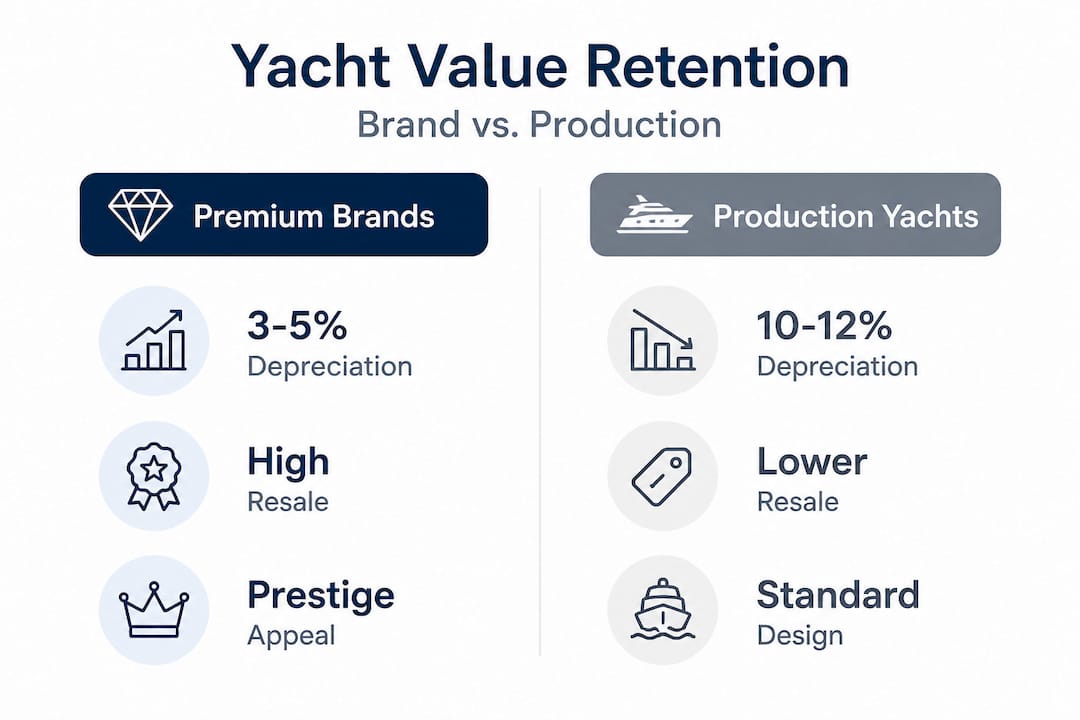
Not all depreciation curves are equal. Production yachts typically depreciate at 10-12% annually, meaning a $5M vessel may be worth roughly $2.8M after five years without significant investment in upkeep or refit. Premium shipyards like Lürssen and Feadship tell a very different story. According to the March 2026 superyacht sales report, yachts from elite builders see only 3-5% annual depreciation, with meticulous maintenance and timely refits flattening those curves further. The global superyacht market sits at approximately $10-11 billion in 2026, reflecting sustained demand for top-tier vessels and ongoing refit activity.

| Yacht category | Annual depreciation | 5-year value retention | Refit impact |
|---|---|---|---|
| Production (entry luxury) | 10-12% | ~55-60% | Low to moderate uplift |
| Semi-custom (mid-tier) | 6-9% | ~65-70% | Moderate uplift |
| Premium shipyard (Lürssen, Feadship) | 3-5% | ~80-85% | Significant uplift |
| Fully bespoke (heritage builder) | 2-5% | ~82-88% | High uplift with correct scope |
Brand prestige functions almost like a quality certificate in the secondary market. When sophisticated buyers evaluate a pre-owned vessel, shipyard provenance is among the first filters they apply, influencing both perceived quality and financing terms from marine lenders. Strategies for optimizing resale value consistently reinforce this point: a well-documented build provenance from a respected yard outweighs almost any cosmetic upgrade during resale negotiations.
Maintenance strategy matters enormously here. Deferred maintenance, however minor it appears during ownership, accumulates into survey-breaking deficiencies that erode negotiating power at resale. Smart owners follow a structured refit cycle, typically on a five-year schedule aligned with class society surveys, and document every intervention meticulously. Reviewing a thorough resale preparation guide before listing ensures nothing critical falls through the gaps.
Customization deserves special attention, because it cuts both ways. Thoughtful, quality-driven personalization that aligns with broad buyer preferences adds genuine value. Idiosyncratic modifications, whether unusual color schemes, highly specialized entertainment systems, or unconventional layout decisions, narrow your buyer pool considerably. As outlined in insights on custom yacht building, 68% of luxury orders are custom to some degree. The art lies in customizing to personal taste while respecting the design language that resonates with future buyers.
- Invest in timeless interior palettes over trend-driven materials
- Prioritize mechanical and systems upgrades (propulsion, stabilization, hybrid power) over purely aesthetic work
- Document every refit, replacement, and upgrade in a comprehensive vessel history file
- Avoid ultra-niche exterior modifications that don’t translate to resale appeal
Pro Tip: When planning yacht upgrades, prioritize systems that improve performance, range, and sustainability ratings. These upgrades increasingly attract serious buyers in the current market, especially those navigating stricter emissions regulations in European waters.
Lifestyle, exclusivity, and investment frameworks
Financial and asset value are just the beginning. The true motivation for yacht investment emerges in lifestyle and exclusivity frameworks that no yield calculation can fully capture.
Privacy is, without question, one of the most compelling ownership incentives for UHNWIs and family offices. On a privately owned yacht, you control the guest list, the itinerary, the crew, the provisioning, and the level of public exposure entirely. There are no charter company schedules, no shared calendars with other fractional owners during peak weeks, and no compromises on how your vessel is configured at any given moment.
That said, pure personal use is not the only valid model for privacy-focused clients. As yacht syndicates gain momentum, discrete multi-party ownership structures have proven capable of delivering meaningful privacy to each participant, typically offering 15-25 charter or personal use weeks per party annually, while sharing the governance load and reducing the financial weight on any single owner.
Family offices considering yacht assets as part of a broader portfolio should treat governance as seriously as they would any illiquid alternative investment. According to superyacht asset management insights for family offices, ownership effectively functions as a “tax on freedom and privacy” at roughly $166,000 per day in all-in costs for UHNWIs at the top end of the market. That framing reframes the investment logic immediately: you are not buying an asset that returns income, you are purchasing access to a category of experience that cannot be rented, chartered, or replicated.
Key lifestyle and exclusivity benefits that drive ownership decisions include:
- Itinerary sovereignty: No booking windows, no availability constraints, no shared schedules
- Crew continuity: Your permanent crew learns your preferences, dietary requirements, and routines over years
- Legacy building: A vessel owned and customized over decades becomes a family asset with genuine emotional and financial heritage
- Corporate entertainment: The confidentiality and exclusivity of a private yacht creates an unmatched environment for high-stakes relationship building
- Health and wellbeing: Extended time at sea, with dedicated fitness and wellness spaces, is increasingly valued by ownership cohorts under sustained professional pressure
“The question is never whether a yacht pays its way on paper. The question is whether the freedom it buys you is worth the price of admission.”
Balancing exclusivity with investment discipline requires clear governance from the outset. Reviewing ownership options before committing to a structure helps align the ownership model with both lifestyle goals and asset protection priorities.
Applying smart strategies: Governance, customization, and value retention
With lifestyle benefits in mind, buyers must now translate those insights into concrete governance, customization, and asset protection strategies that protect long-term value.
The governance layer is where many ownership arrangements succeed or fail. Family offices in particular face the challenge of managing a yacht alongside diverse investment holdings, which means clear operational mandates, defined cost approval thresholds, and scheduled performance reviews are essential. According to superyacht asset management guidance for family offices, governance failures are among the most common drivers of premature asset sales and below-market disposals.
Here are the strategies we recommend to every client entering the ownership space:
- Establish a dedicated management structure early. Whether that means a professional management company, a direct employment contract with a trusted captain, or a hybrid model, clarity of authority prevents costly miscommunications.
- Set a formal annual operating budget with variance controls. Surprises in yacht ownership are expensive. A well-structured budget with contingency reserves prevents reactive decision-making.
- Schedule refit cycles proactively. Aligning major maintenance with five-year class surveys reduces yard time, controls costs, and ensures the vessel stays survey-ready for charter operations or resale at any moment.
- Resist customization that limits buyer appeal. As we address in bespoke yacht building insights, the balance between personal expression and broad market appeal is achievable with the right design guidance.
- Maintain meticulous documentation. Every survey, repair, upgrade, and crew certification should live in a well-organized vessel history file. Buyers and surveyors reward transparency generously.
- Review your charter management agreement annually. Rate schedules, management fee structures, and geographic exclusivity clauses all evolve with market conditions, and failing to renegotiate leaves money on the table.
Understanding how design choices affect maintenance reliability is equally critical. Vessels designed without operational practicality in mind accumulate hidden maintenance costs over time that erode both budget performance and resale positioning. We always advise clients to pressure-test every design decision against its long-term maintenance implications, not just its aesthetic appeal.
Pro Tip: Commission an independent pre-purchase survey even on new-build vessels before delivery acceptance. Catching specification gaps or systems commissioning shortfalls at handover is far less costly than discovering them mid-season in a remote anchorage.
The uncomfortable truth most yacht experts won’t tell you
Stepping back from strategies, here’s what long-experience asset managers and long-term owners really understand about yacht investment, and rarely say out loud.
Most buyers chase the wrong metrics entirely. They ask about charter yield first, depreciation rate second, and resale trajectory third. Those are legitimate concerns, but they consistently crowd out the question that actually determines satisfaction: what does this asset let you do that nothing else can?
We have worked alongside clients who obsessed over maximizing charter occupancy during weeks they would never use anyway, only to find that years of optimization effort produced a vessel that felt like someone else’s. The management team’s preferences had subtly shaped interior upgrades, crew selections, and maintenance priorities. What they owned was technically theirs but felt like a commercial product.
The most satisfied owners we know approached the decision as a considered investment in optimized resale combined with ruthless clarity about personal use priorities. They built governance structures that protected the vessel’s market position while ensuring that personal use weeks were genuinely theirs, configured exactly to their preferences. They also accepted that as the data confirms, at $166,000 per day in all-in costs, yacht ownership is a tax on freedom and privacy, not a financial instrument.
Smart governance beats flashy upgrades every time. A well-maintained, properly documented, modestly customized vessel from a respected yard will consistently outperform a heavily modified, poorly governed counterpart at every stage: charter performance, crew retention, survey outcomes, and eventual sale. Legacy and freedom, anchored by meticulous care, are the real return on a yacht investment.
Take the next step in yacht ownership
Having gained clarity on the true value equation, readers ready to act on their yacht ownership vision deserve solutions designed from the ground up for lasting value, prestige, and personal satisfaction.
At Baranof Yachts, we specialize in guiding affluent individuals and corporate clients through every dimension of ownership, from initial configuration to bespoke build management and ongoing asset protection. Whether you’re ready to configure your ideal yacht from first principles or want to explore bespoke yacht building options that balance personal expression with resale intelligence, our team brings precision and foresight to every decision. Explore your full range of ownership exclusivity options and take the first step toward ownership built around what matters most to you.
Frequently asked questions
How much charter revenue can realistically offset yacht ownership costs?
Charter operations can offset 20-60% of annual ownership costs depending on yacht type and market location, but net yields are typically only 2-4% after fees, management costs, and operating expenses.
Which yacht brands retain value best over time?
Top shipyards like Lürssen and Feadship typically see only 3-5% annual depreciation, compared to 10-12% for standard production yachts, making provenance one of the strongest predictors of long-term value retention.
Is yacht ownership ever a good investment for privacy-focused clients?
Ownership for pure personal use suits privacy-focused UHNWIs and family offices, emphasizing exclusivity, itinerary sovereignty, and freedom over financial returns, which is a legitimately valuable proposition at the highest wealth levels.
How can over-customization affect yacht resale value?
Overly customized yachts risk narrowing their resale market significantly, so balanced design choices combined with meticulous maintenance are the most reliable formula for maximizing future sale value.
What is the current value of the global superyacht market?
The superyacht market is valued at roughly $10-11 billion in 2026, supported by stable demand from top shipyard builds, active refit programs, and sustained interest from UHNWI buyers across global markets.
Recommended
Sold Listings
Design Your Yacht
"*" indicates required fields
Maximus III - PNW
As you step aboard MAXIMUS III, the first impression is her scale.
At 120 feet with an 8-meter beam and 294 GT of interior volume, this 2025 Crescent Custom tri-deck immediately feels open, balanced, and estate-like. A timeless look while still feeling fresh from the shipyard.
Currently Available


Get your yacht value Estimate
"*" indicates required fields