
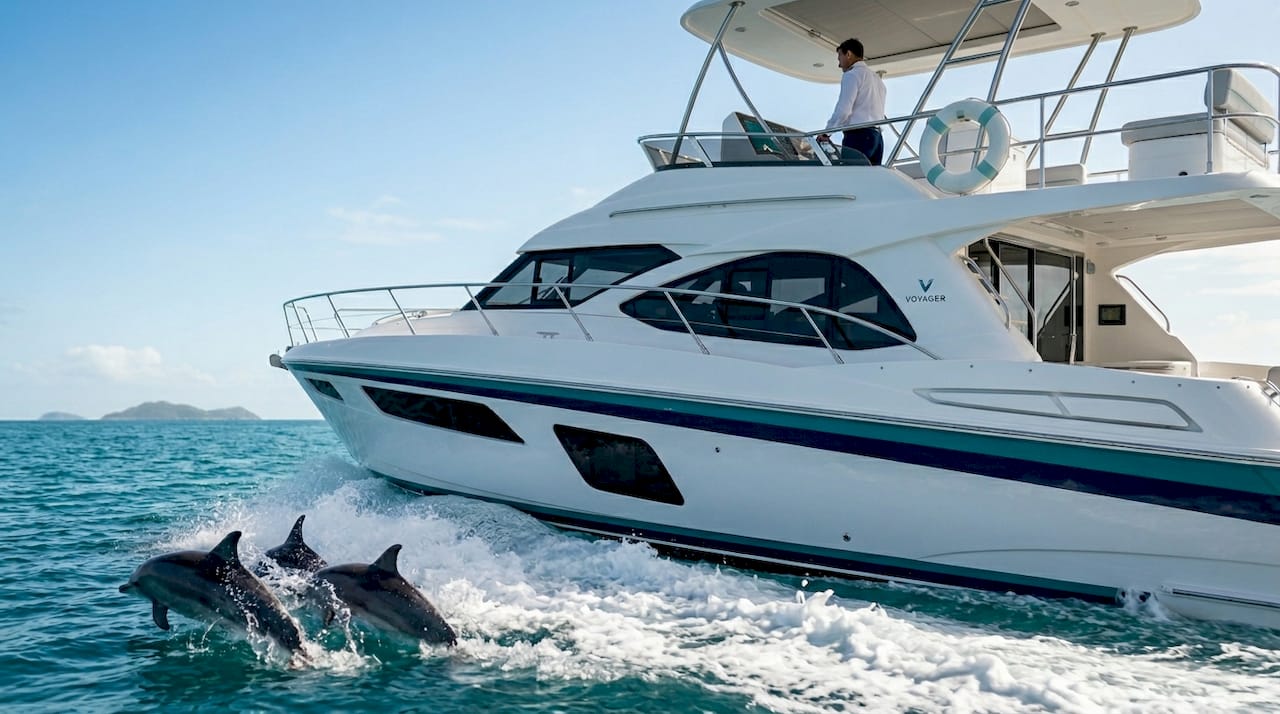
A sea trial is the definitive on-water test that confirms a vessel’s handling, systems, and safety performance before any purchase or commissioning decision is finalized. For yacht buyers and acquisition professionals, no dock inspection or specification sheet replaces the intelligence gathered when a vessel is pushed through real operating conditions at sea. The importance of sea trials extends well beyond checking whether an engine starts. It is the process that separates informed buyers from expensive surprises, and it is the single most reliable method for validating that a vessel performs exactly as represented.
What does a sea trial involve and what gets tested?
A sea trial is the structured, underway evaluation of a vessel’s complete operational capability. Industry-standard trials for new vessels typically run 12 to 24 hours, covering speed, maneuverability, propulsion, and navigation under real load conditions. That duration is not arbitrary. It reflects the time needed to cycle through enough operational states to expose faults that only appear under sustained stress.
For yachts, the scope of a sea trial is organized around several distinct categories of evaluation:
- Propulsion and speed: Full-throttle runs, RPM band verification, and fuel consumption monitoring at cruise and maximum speed
- Maneuverability: Tight turns, emergency stops, and reverse handling to assess responsiveness and control
- Navigation systems: GPS, chartplotter, autopilot, radar, and AIS verification under actual underway conditions
- Safety equipment: Life jackets, fire extinguishers, flares, bilge pumps, and EPIRB functionality checks
- Onboard electronics: NMEA2000 network integrity and sensor data accuracy, which can only be confirmed when the engine is under load
- Comfort and ergonomics: Noise levels, vibration, helm visibility, and livability at sea
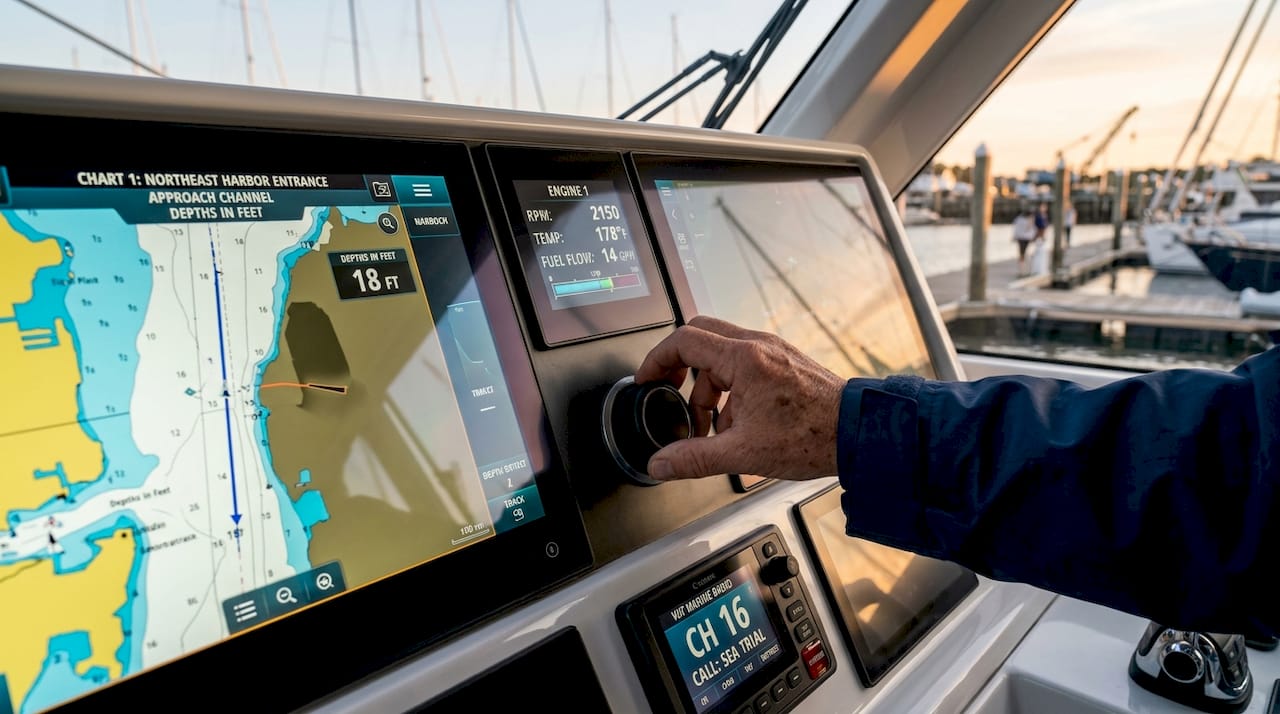
The NMEA2000 network point deserves particular attention. Dock-side electronics checks routinely pass vessels that develop data dropouts, sensor conflicts, or power fluctuations the moment the engine is running at full load. This is a category of fault that only a proper underway trial will surface.
Pro Tip: Bring a printed checklist that includes CE or HIN documentation, engine hours, insurance certificates, and maintenance history. Verifying paperwork before departure prevents wasted time if the trial uncovers a documentation gap that affects the transaction.
The scale of testing required scales with vessel complexity. The Chinese-built cruise ship Adora Flora City completed 149 tests over 12 days in 2026 before its maiden voyage. For a luxury yacht, the test count is smaller, but the principle is identical: every critical system must be validated under conditions that replicate actual use.
Why sea trials matter for reducing buyer risk
Sea trials are the buyer’s most effective tool for isolating risk before money changes hands. Testing at different speeds and operating conditions reveals issues in used boats that are completely invisible during dock inspections. A hull that looks immaculate at the marina may vibrate excessively at 22 knots. A generator that runs quietly at idle may overheat under full electrical load.
The significance of sea trials in a used yacht purchase is even greater than in a new build. Warranty expectations differ substantially between the two contexts. New vessels carry manufacturer warranties that cover discovered defects, while used yacht trials require more thorough inspection to uncover latent issues that the current owner may not have disclosed or even noticed. This is why coordinating the trial with a qualified marine surveyor is standard practice for any serious acquisition.
Here is how sea trial findings translate into concrete buyer protection:
- Documented faults become negotiation leverage. A surveyor’s written report of discovered issues gives the buyer a factual basis to request price reductions, repairs before closing, or warranty provisions.
- Confirmed performance validates seller claims. Speed, range, and fuel efficiency figures quoted in listings are verified against actual measured performance during the trial.
- Safety compliance is independently verified. Inspectors, including the U.S. Coast Guard in regulated contexts, conduct safety reviews to confirm vessels meet maritime regulations before certification.
- Post-purchase surprises are minimized. Issues found during the trial are addressed before ownership transfers, protecting the buyer from inheriting deferred maintenance costs.
“Sea trials are best approached as confirmation, not confrontation. The goal is to isolate issues for remedy before purchase, which aids smooth finalization for both buyer and seller.” — RCR Yachts
This framing matters. Buyers who approach the trial as a collaborative validation process, rather than an adversarial audit, tend to reach better outcomes. Sellers are more cooperative, surveyors work more effectively, and the transaction closes with fewer disputes.
Are sea trials really just about the engine?
The most common misconception about sea trials is that they are primarily mechanical tests. They are not. Sea trials cover navigation procedures, safety compliance, and crew operational readiness as much as they cover engine performance. This distinction matters because buyers who treat the trial as an engine check miss the majority of the value the process delivers.
Several categories of vessel condition are only verifiable underway:
- State-dependent faults: Some failures only appear during acceleration, sharp turns, or high-load cooling periods. A cooling system that manages temperature at idle may fail at sustained high RPM.
- Sensor network health: NMEA2000 data integrity and sensor readings under engine load reveal conflicts and dropouts that dock-side checks cannot detect.
- Electronic data integrity: Chartplotter and autopilot accuracy, AIS transponder output, and radar calibration all require underway verification against real-world reference points.
- Structural behavior: Hull flex, noise transmission, and vibration patterns at speed tell an experienced surveyor a great deal about the vessel’s construction quality and long-term reliability.
Crew readiness is another dimension that formal sea trials address in commercial and charter contexts. Safety reviews verify that vessels meet maritime regulations and that crew are trained and certified for the operational profile of the vessel. For private yacht buyers, this translates to confirming that the vessel’s systems are intuitive and operable by the intended crew, not just by a delivery captain who knows every quirk.
The role of sea trials in confirming yacht craftsmanship quality is also underappreciated. Fit and finish issues that look acceptable at the dock, such as cabinetry that rattles, hatches that leak spray, or helm seating that becomes uncomfortable at speed, only reveal themselves when the vessel is doing what it was built to do.
How to prepare for and conduct an effective sea trial
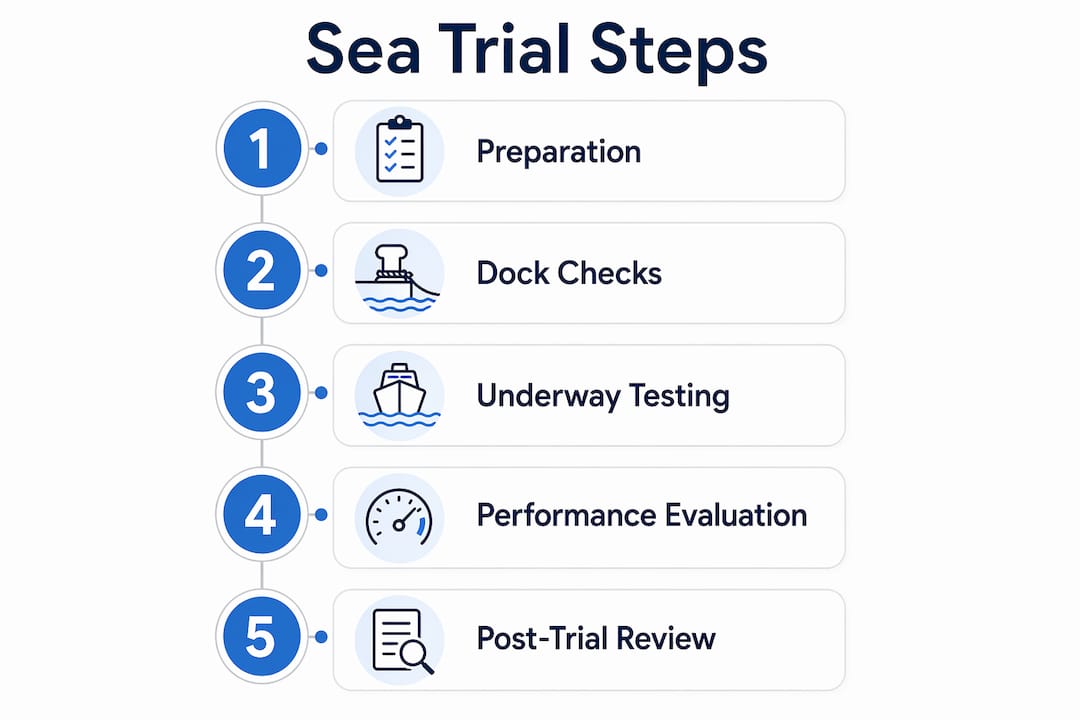
Preparation determines how much value you extract from the trial. A poorly prepared sea trial produces ambiguous results. A well-prepared one produces a clear, documented picture of the vessel’s condition and performance.
Before you leave the dock
Verify the following before the vessel departs:
- Valid insurance certificate covering the trial
- Current registration and HIN or CE documentation
- Maintenance logs and engine hour records
- Life jackets, fire extinguishers, and flares in date and accessible
- Fuel load sufficient for the planned route and test profile
- A boat safety inspection completed by a qualified professional
During the trial
Structure the underway portion to cover distinct operating states in sequence. Start with a slow-speed departure to warm systems, then progress through cruise speed, full throttle, and maneuvering tests. Measure and record:
- RPM bands at cruise and maximum speed against manufacturer specifications
- Fuel burn rate at each speed setting
- Noise and vibration levels at the helm and in the main saloon
- Electronics behavior including chartplotter, autopilot engagement, and NMEA2000 sensor readings
- Safety system function including bilge pump activation and alarm responses
Pro Tip: Ask the seller or broker to run the vessel at full throttle for a sustained period, not just a brief burst. Cooling system failures, fuel delivery issues, and transmission problems often only appear after five or more minutes at maximum load.
After the trial
Document every finding in writing before leaving the vessel. Photographs and video of any anomalies are valuable. A qualified marine surveyor should compile a formal report that categorizes findings by severity, distinguishing between safety-critical defects, deferred maintenance items, and cosmetic issues.
| Preparation area | What to verify |
|---|---|
| Documentation | HIN/CE, registration, insurance, engine logs |
| Safety equipment | Life jackets, extinguishers, flares, EPIRB in date |
| Electronics | NMEA2000 network, chartplotter, AIS, radar |
| Mechanical baseline | Engine hours, recent service records, belt and impeller condition |
| Post-trial follow-up | Written surveyor report, seller response to findings |
The essential boating electronics checklist from Safe Boating America provides a useful reference for verifying that navigation and communication systems meet legal requirements before the trial begins.
Key takeaways
Sea trials are the single most reliable method for validating a vessel’s performance, safety, and condition before purchase or commissioning.
| Point | Details |
|---|---|
| Sea trials confirm real performance | Dock inspections cannot replicate the faults that only appear under engine load and underway conditions. |
| Duration and scope matter | New vessel trials run 12 to 24 hours; used yacht trials require customized, thorough testing across all systems. |
| Electronics need underway verification | NMEA2000 network health and sensor integrity can only be confirmed when the engine is under load. |
| Findings protect the buyer | Documented trial results provide negotiation leverage and prevent inheriting deferred maintenance costs. |
| Professional involvement multiplies value | A qualified marine surveyor transforms trial observations into a formal, actionable report. |
What I’ve learned from watching buyers skip the hard parts
After years of working alongside buyers through yacht acquisitions, the pattern I see most often is not buyers who skip sea trials entirely. It is buyers who conduct abbreviated trials and call it done. They run the vessel for 45 minutes, confirm the engine starts and the GPS works, and sign off. Three months later, they are dealing with a cooling system failure, a chartplotter that drops signal at speed, or a hull vibration that makes the vessel uncomfortable above 18 knots.
The trials that actually protect buyers are the ones that push the vessel into uncomfortable territory. Full throttle for a sustained period. Tight turns at speed. Autopilot engagement in real sea conditions. These are the tests that reveal what the vessel is actually like to own, not what it looks like at the dock.
I have also seen the opposite mistake: buyers who treat the trial as an adversarial audit and approach every finding as grounds to walk away. The best framing is confirmation, not confrontation. Most findings are addressable. The goal is to know what you are buying and to price or condition the transaction accordingly.
Professional involvement is not optional for a transaction of this scale. A qualified surveyor brings pattern recognition that no checklist replaces. They have seen the same fault on twenty different vessels and know whether it is a minor adjustment or a sign of deeper structural compromise. Pairing their expertise with a well-structured sea trial process is the closest thing to certainty you will find in yacht acquisition.
— Jason
How Baranofyachts supports your sea trial and acquisition

At Baranofyachts, we guide buyers through every stage of yacht acquisition, from initial specification to post-trial negotiation. Our team coordinates with qualified marine surveyors, manages trial logistics, and interprets findings in the context of your specific requirements and budget. We know what a thorough trial looks like because we have been part of hundreds of them. If you are ready to define what your ideal vessel looks like before you ever step aboard, configure your ideal yacht with our team. If you want expert representation during the trial and negotiation process, explore why a yacht broker makes a measurable difference in outcomes.
FAQ
What is a sea trial for a yacht?
A sea trial is a structured, underway test of a vessel’s systems, performance, and safety equipment conducted before purchase or commissioning. It covers propulsion, navigation, electronics, and safety compliance under real operating conditions.
How long does a yacht sea trial take?
New vessel trials typically run 12 to 24 hours to validate all critical systems. Used yacht trials are customized based on vessel age and complexity but should cover the same range of operating states.
Do I need a surveyor for a sea trial?
A qualified marine surveyor is strongly recommended for any yacht acquisition sea trial. Surveyors document findings formally, identify safety-critical defects, and provide the written report needed to negotiate repairs or price adjustments.
What faults can only be found during a sea trial?
State-dependent faults, including cooling system failures at sustained high RPM, NMEA2000 sensor dropouts under engine load, and hull vibration at speed, are only detectable when the vessel is operating underway. Dock-side checks routinely miss these issues.
Can sea trial findings affect the purchase price?
Sea trial findings are a standard negotiation tool. Documented defects give buyers factual grounds to request price reductions, pre-closing repairs, or warranty provisions from the seller.
Recommended
Sold Listings


Design Your Yacht
"*" indicates required fields
Maximus III - PNW
As you step aboard MAXIMUS III, the first impression is her scale.
At 120 feet with an 8-meter beam and 294 GT of interior volume, this 2025 Crescent Custom tri-deck immediately feels open, balanced, and estate-like. A timeless look while still feeling fresh from the shipyard.
Currently Available


Get your yacht value Estimate
"*" indicates required fields