

A yacht sale-leaseback arrangement is defined as a transaction where a vessel owner sells their yacht to a buyer and immediately leases it back, retaining full operational use. This structure converts an illiquid asset into working capital without surrendering access to the vessel. It is a recognized yacht financing arrangement used by both private owners and corporate clients to free up capital while maintaining continuity at sea. Baranofyachts works with clients who regularly weigh this option against outright ownership and traditional financing. Understanding how the structure works, what it costs, and where it can go wrong is the foundation of any sound decision.
What is a yacht sale-leaseback arrangement?
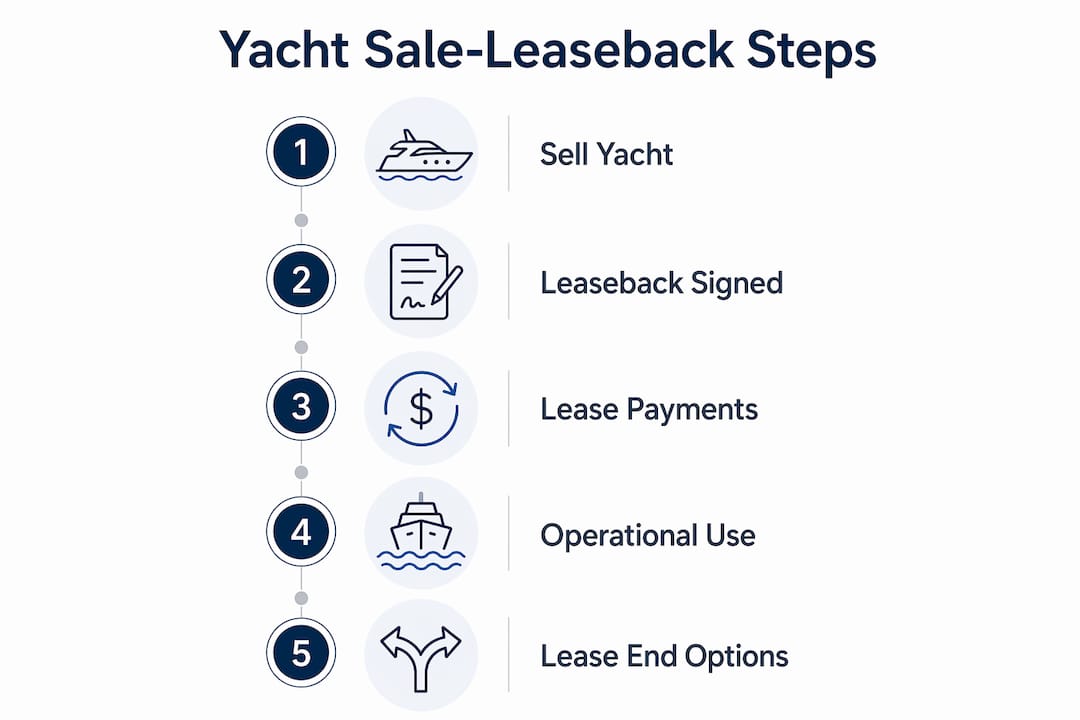
A yacht sale-leaseback is a financial transaction where an owner sells their vessel and immediately leases it back, typically for 5–10 years. The original owner becomes the lessee. The buyer becomes the lessor and holds legal title to the vessel throughout the lease term. The lessee retains operational control, meaning the yacht stays in service exactly as before.
The core purpose is liquidity. Yacht assets are capital-intensive and slow to liquidate on the open market. A sale-leaseback converts that frozen equity into cash quickly, without the disruption of actually giving up the vessel. This is why the structure is used across the broader shipping industry and has migrated into luxury maritime finance.
The industry term for this structure is “sale and leaseback.” You will also see it called leaseback financing in accounting and legal contexts. Both phrases describe the same transaction. The key distinction from a standard charter or rental agreement is that the original owner initiates the sale and retains use through a formal lease, not a short-term hire arrangement.
What does a yacht sale-leaseback contract typically involve?
The contract mechanics follow a predictable pattern, though the details vary by vessel value, jurisdiction, and the parties involved.
Sale-leaseback contracts typically include fixed lease payments structured similarly to mortgage installments over a multi-year term, with options for repurchase at the end. The buyer-lessor owns the asset while the seller-lessee retains operational use. This balance of capital control and operational continuity is the defining feature of the arrangement.
Key contract terms you should expect to negotiate include:
- Lease duration: Most agreements run 5–10 years, aligned with the vessel’s expected depreciation curve.
- Payment structure: Fixed monthly or quarterly payments, often calculated as a percentage of the sale price.
- End-of-term options: Repurchase at a pre-agreed price, lease renewal, or return of the vessel to the lessor.
- Maintenance and insurance: Responsibility typically stays with the lessee, though the lessor may specify minimum standards.
- Usage restrictions: Blackout dates or usage limits may apply, which can restrict cruising freedom and operational control.
- Vessel type: Arrangements range from bareboat to fully crewed turnkey configurations, accommodating different operational needs.
The lessor’s position is secured by legal ownership of the vessel. This means the lessor can repossess the yacht on default, which reduces the financing risk compared to a traditional mortgage structure.
Pro Tip: Before signing, request a full schedule of all payments over the lease term and compare the total against the vessel’s projected market value at lease end. The gap between those two numbers is your true cost of the arrangement.
What are the benefits and financial implications of a yacht sale-leaseback?
The primary benefit is liquidity. Converting a high-value vessel into cash frees capital for other investments, operating expenses, or business needs. For corporate clients, this can mean redirecting funds into core business operations while retaining the yacht for client entertainment and corporate hospitality.

Sale-leasebacks improve liquidity and capital efficiency but may result in losing depreciation tax benefits and potentially higher long-term costs due to cumulative lease payments. That trade-off is the central financial tension in every leaseback decision.
Benefits of a yacht leaseback
- Immediate cash access: The sale generates a lump sum, often at or near market value.
- Operational continuity: The vessel stays in service under the lessee’s management.
- Balance sheet restructuring: The yacht moves off the owner’s balance sheet as a fixed asset, which can improve financial ratios.
- Operational simplicity: Depending on the contract, some compliance and registry duties may shift to the lessor.
- Flexibility: Leaseback options range from bareboat to fully managed arrangements, matching the lessee’s preferred level of involvement.
Drawbacks to weigh carefully
| Factor | Impact |
|---|---|
| Long-term cost | Cumulative lease payments commonly exceed outright ownership costs over time. |
| Depreciation loss | The lessee loses the ability to claim vessel depreciation as a tax deduction. |
| Customization limits | Lease terms may restrict modifications or upgrades to the vessel. |
| Operational restrictions | Usage blackouts and geographic limits can reduce cruising freedom. |
| Repurchase cost | Buying the vessel back at lease end adds a second major expenditure. |
Pro Tip: High-net-worth owners often overestimate the tax benefit of a leaseback. Consult a maritime tax specialist before assuming lease payments are fully deductible. The rules vary significantly by jurisdiction and vessel use classification.
What accounting and legal nuances must be considered?
Accounting treatment determines whether a sale-leaseback qualifies as a genuine sale or is reclassified as a secured loan on your financial statements. The distinction has real consequences for how the transaction appears to lenders, investors, and tax authorities.
FRS 102 requires substantial transfer of risks and rewards to the buyer for a sale-leaseback to qualify as a sale for accounting purposes. Transactions with repurchase options or lease terms spanning the asset’s useful life may not qualify as true sales. This is the “substance over form” principle in practice. The legal structure of the deal must reflect genuine economic transfer of ownership, not just a paper transaction.
“Distinguishing a genuine sale-leaseback from a secured financing arrangement is the central accounting challenge. If the lessor does not genuinely absorb the risks and rewards of ownership, the transaction is reclassified as a loan, and the vessel stays on the lessee’s balance sheet as a liability.” — Menzies LLP, Sale and Leaseback in the Shipping Industry
Common accounting and legal pitfalls include:
- Repurchase options at below-market prices: These signal that ownership has not truly transferred, triggering reclassification.
- Lease terms covering most of the vessel’s useful life: Regulators and auditors treat these as finance leases, not operating leases.
- Lien priority loss: The original owner loses federal lien priority on the vessel once the sale completes. The lessor holds title and all associated rights.
- Insurance and registry alignment: The vessel’s insurance policy and flag registry must reflect the lessor’s ownership. Misalignment creates coverage gaps and legal exposure.
- Lease contract restrictions: Usage limits, geographic restrictions, and maintenance obligations are legally binding. Violating them can trigger default clauses.
Understanding the difference between a finance lease and an operating lease is critical here. A finance lease transfers substantially all risks and rewards to the lessee and appears on the balance sheet. An operating lease does not. The classification affects depreciation, interest expense, and reported debt levels.
How can yacht owners and investors approach sale-leaseback arrangements practically?
A structured evaluation process protects you from committing to a deal that looks attractive on paper but underperforms in practice. Work through these steps before signing anything.
- Compare total costs against alternatives. Calculate the full cost of the leaseback over its term, including all payments and the repurchase price. Compare this against yacht financing options such as traditional marine mortgages or equity release structures.
- Assess your liquidity need. A leaseback makes sense when you need capital now and the vessel is your most accessible asset. If the liquidity need is modest, a secured loan against the vessel may cost less over time.
- Negotiate key contract terms. Push for flexibility on usage restrictions, maintenance standards, and end-of-term repurchase pricing. These terms are negotiable, especially on high-value vessels.
- Align insurance and registry before closing. The lessor will require the vessel to be insured in their name. Coordinate with your insurance broker and flag state registry before the sale completes to avoid a coverage gap.
- Engage specialized advisors. Successful sale-leaseback arrangements require complex legal and tax structuring. A maritime lawyer, a tax advisor with vessel experience, and a qualified yacht broker are all necessary participants, not optional ones.
- Model the tax outcome explicitly. Losing depreciation deductions and gaining lease payment deductions produces a different tax result for every owner. Model your specific situation before assuming the leaseback is tax-neutral.
Pro Tip: Working with a yacht broker experienced in complex transactions gives you a negotiating anchor. Brokers who have structured these deals know which terms lessors routinely concede and which they protect.
Key Takeaways
A yacht sale-leaseback arrangement is a capital efficiency tool, not a profit vehicle. It frees liquidity while preserving operational access, but the total cost and accounting treatment must be evaluated carefully before committing.
| Point | Details |
|---|---|
| Core definition | The owner sells the vessel and leases it back immediately, retaining operational use. |
| Primary benefit | Converts an illiquid asset into cash without losing access to the yacht. |
| Key financial risk | Cumulative lease payments often exceed outright ownership costs over the full term. |
| Accounting requirement | FRS 102 requires genuine transfer of risks and rewards for the deal to qualify as a sale. |
| Expert advice is non-negotiable | Legal, tax, and insurance complexities require specialized advisors to structure the deal correctly. |
My honest view on sale-leaseback as a yacht financing tool
The most common mistake I see is owners entering a leaseback because they heard it “frees up capital and keeps the tax benefits.” That framing is incomplete. Sale-leaseback is a capital efficiency tool, not a profit generator. The liquidity is real. The tax benefits are conditional, jurisdiction-specific, and often smaller than expected once you factor in the loss of depreciation.
The deals that work well share one characteristic: the owner had a clear, specific use for the capital released. They were not just unlocking equity for its own sake. They were funding a business expansion, repositioning a portfolio, or managing a short-term cash need with a defined repayment horizon.
The deals that go wrong tend to involve owners who underestimated the total lease cost, overestimated the tax upside, or signed contracts with usage restrictions that clashed with how they actually use the vessel. A leaseback with blackout dates is a problem if your primary use case is summer Mediterranean cruising and the lessor’s charter program runs exactly those months.
My advice is to treat the leaseback evaluation the same way you would treat a major vessel purchase. Bring in your maritime lawyer, your tax advisor, and a broker who has closed these transactions before. The structure is sound when it is right for your situation. The work is in determining whether your situation actually fits.
— Jason
Baranofyachts and your yacht financing decisions
Yacht financing decisions carry real financial and operational weight. Baranofyachts works with owners and corporate clients at every stage of the ownership cycle, from initial acquisition through complex transactions like sale-leasebacks and custom builds.

Our team brings direct experience in luxury yacht transactions, and we connect clients with the legal, financial, and brokerage expertise these arrangements demand. Whether you are evaluating a leaseback against a traditional marine mortgage, or exploring what yacht ownership means for your corporate profile, we provide the context and connections to make an informed decision. Reach out to Baranofyachts for a consultation tailored to your vessel, your goals, and your timeline.
FAQ
What is a yacht sale-leaseback arrangement?
A yacht sale-leaseback is a transaction where the vessel owner sells the yacht to a buyer and immediately leases it back, retaining operational use while converting the asset into cash.
How does yacht leaseback work in practice?
The seller becomes the lessee and pays fixed lease installments to the new owner over a term of typically 5–10 years, with options to repurchase or renew at the end.
What are the main advantages of a yacht leaseback?
The primary advantages are immediate liquidity, balance sheet restructuring, and operational continuity. The vessel stays in service while the owner accesses the capital tied up in the asset.
What accounting standard governs sale-leaseback qualification?
FRS 102 requires that the transaction substantially transfers risks and rewards of ownership to the buyer. Without that transfer, the deal is reclassified as a secured loan rather than a sale.
Are lease payments tax-deductible in a yacht leaseback?
Lease payment deductibility depends on jurisdiction and how the vessel is classified for tax purposes. Owners also lose depreciation deductions on the vessel, which can offset or eliminate the expected tax benefit.
Recommended
Sold Listings


Design Your Yacht
"*" indicates required fields
Maximus III - PNW
As you step aboard MAXIMUS III, the first impression is her scale.
At 120 feet with an 8-meter beam and 294 GT of interior volume, this 2025 Crescent Custom tri-deck immediately feels open, balanced, and estate-like. A timeless look while still feeling fresh from the shipyard.
Currently Available


Get your yacht value Estimate
"*" indicates required fields