
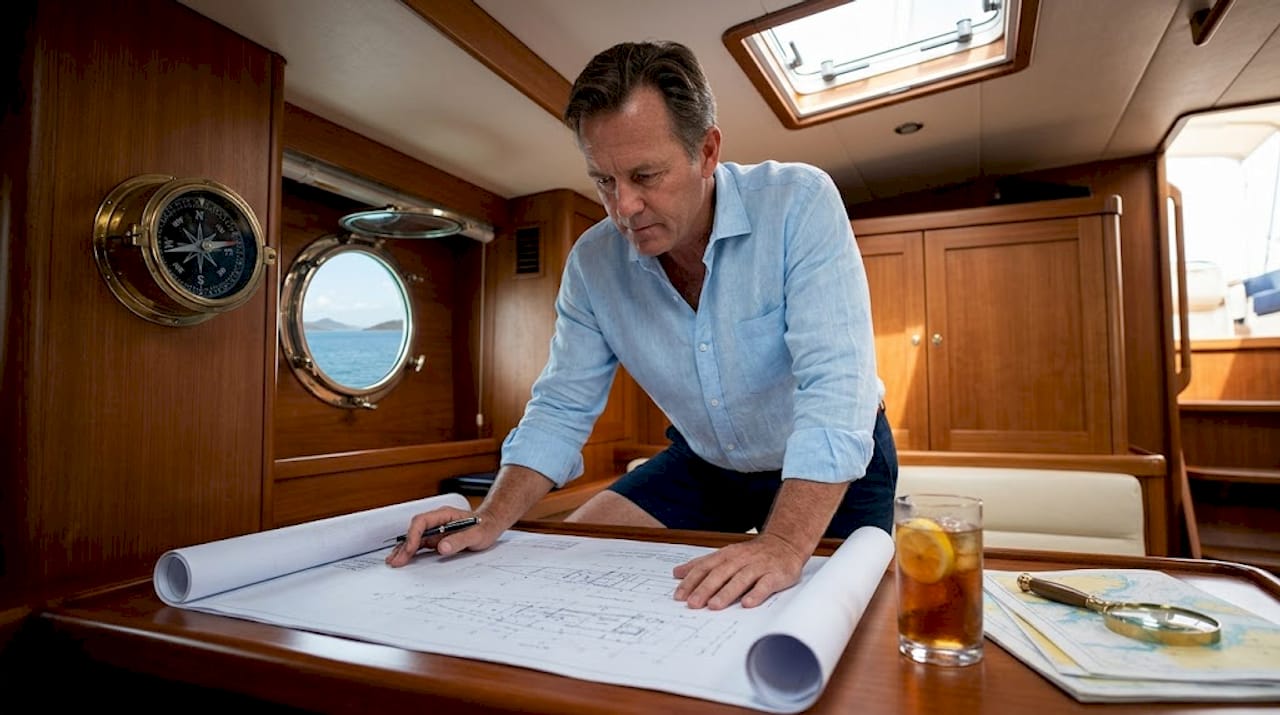
A major yacht renovation can quietly become one of the most financially and logistically punishing projects you will ever manage, and that outcome is almost always the result of one thing: no one is holding the full picture. Knowing how to coordinate yacht renovation from the first survey call through the final sea trial is the difference between a project that runs on budget and one that bleeds six figures in avoidable overruns. We have watched owners with the best intentions hand scope decisions to shipyards, skip the pre-yard design phase, and end up paying for the same work twice. This guide breaks down every critical phase so you do not have to learn those lessons the hard way.
Table of Contents
- Preparing for your yacht renovation project
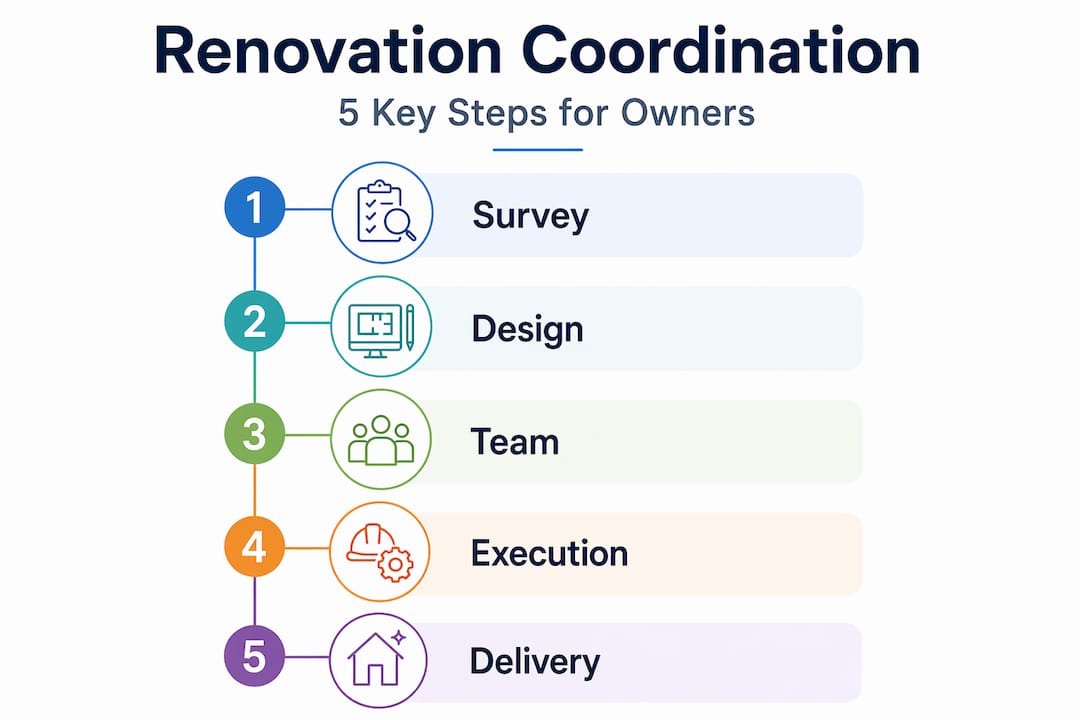
- Step-by-step coordination during the renovation process
- Managing budgets and controlling costs during your refit
- Navigating contracts, legalities, and risk management
- Final delivery, quality assurance, and post-renovation steps
- Why coordinated yacht renovation is the owner’s best investment
- Partner with Baranof Yachts for seamless renovation coordination
- Frequently asked questions
Key Takeaways
| Point | Details |
|---|---|
| Start with a thorough survey | A detailed inspection identifies key repairs and upgrades, setting the stage for accurate planning. |
| Assemble the right team | Early involvement of designers and project managers ensures smooth coordination throughout the renovation. |
| Follow a structured process | Step-by-step management with milestone monitoring keeps the project on schedule and budget. |
| Budget for management fees | Design and project management represent a small but essential investment to control costs effectively. |
| Review contracts carefully | Understanding contractual terms protects owners from unfavorable delays and cost increases. |
Preparing for your yacht renovation project
Before a single bulkhead is opened or a fitting removed, the work that protects your investment happens on paper and in conversations. Thorough preparation is not bureaucracy. It is the foundation that every downstream decision stands on.
Start with a full condition survey. A 10-year survey reveals the vessel’s true condition, helping you plan repairs and upgrades far more accurately than a visual walkthrough ever could. Structural findings, osmotic blistering in the hull laminate, outdated electrical panels, corroded sea cocks: a surveyor will surface all of it. What you discover here directly shapes your yacht refit options list and keeps you from discovering expensive surprises mid-project.
Once you have a condition report, define your renovation goals in writing. Are you targeting comfort and interior aesthetics? Mechanical and systems reliability? Charter compliance or resale readiness? Each goal attracts a different mix of specialists and cost centers. Knowing your priorities up front lets your team allocate budget where it matters most and resist the scope creep that derails timelines.
Core team to assemble before yard entry:
- Naval architect or structural consultant (for any hull or structural work)
- Interior designer with superyacht refit experience
- Marine systems engineer (electrical, HVAC, propulsion integration)
- Independent project manager to represent your interests at the yard
- Legal counsel familiar with refit contracts
The project management benefits of assembling this team before yard entry are significant. Decisions made in sequence rather than in parallel cost you time and money. An experienced project manager functions like a conductor’s eye over the entire production, ensuring no subsystem is designed in isolation and no trade is waiting idle because a decision upstream was not made.
| Renovation type | Typical cost range | Primary cost drivers |
|---|---|---|
| Cosmetic refresh (soft furnishings, paint) | $50K to $250K | Materials, labor, paint prep |
| Systems upgrade (electrical, HVAC, propulsion) | $200K to $1.5M | Equipment, integration, compliance |
| Full interior refit | $500K to $5M+ | Custom joinery, design fees, yard time |
| Structural refit | $1M to $10M+ | Hull work, naval architecture, haul-out |
Pro Tip: Commission a pre-refit design package before signing your yard contract. This single step lets you solicit accurate, comparable bids from multiple yards because everyone is pricing the same defined scope. Owners who skip this step regularly see bid spreads of 30% or more for what they think is the same job.
Well-researched luxury yacht upgrade examples show that owners who invest in proper pre-project documentation consistently see fewer change orders and faster completions.
Step-by-step coordination during the renovation process
With solid preparation in place, effectively managing each renovation phase is key to success. The renovation itself is where coordination either holds together or falls apart, and the difference is almost always visibility.

Newmil Marine outlines a 9-step refit process that emphasizes milestone monitoring as a non-negotiable part of execution. That structure matters because without defined checkpoints, schedule slippage becomes invisible until it has already cost you weeks.
A step-by-step yacht renovation coordination process:
- Complete the vessel assessment and finalize the condition survey findings.
- Lock the design package before yard arrival, not after.
- Execute the yard contract with defined scope, milestones, and escalation procedures.
- Conduct the haul-out and opening survey to confirm any hidden structural findings.
- Manage parallel work streams so trades are never blocking each other unnecessarily.
- Hold weekly progress reviews with the yard project manager and your independent representative.
- Track procurement lead times actively and flag any long-lead items early.
- Conduct staged quality inspections at each system sign-off, not just at the end.
- Coordinate final commissioning and sea trial with all systems aboard and documented.
Managing parallel work streams deserves its own emphasis. Expert hull restoration techniques applied while interior trades are working above decks is a standard efficiency move, but only when someone is managing clearances and access windows. Without a coordinating presence, trades clash, damage each other’s work, and generate claims.
| Coordination approach | Timeline impact | Budget impact |
|---|---|---|
| Uncoordinated, reactive management | 20 to 40% schedule overrun | 15 to 35% budget overrun |
| Owner-managed with no PM | Variable, depends on experience | High risk of scope creep |
| Professional project management | On-target or ahead of schedule | Budget controlled within 5 to 10% |
Pro Tip: Assign a single point of contact on your side for all yard communications. Mixed messages from multiple owner representatives create delays, unauthorized work, and contested invoices. One voice protects both the schedule and the working relationship with the yard.
The project management approach we apply treats every renovation like a well-rehearsed symphony: every instrument enters on cue, and nothing is improvised at the last moment.
Managing budgets and controlling costs during your refit
Alongside process coordination, vigilant budget management safeguards your investment. The single most consistent finding across complex refits is that uncontrolled scope decisions made mid-project cause redo work, and redo work is always more expensive than getting it right the first time.
The largest cost contributors in a major yacht renovation:
- Custom joinery and interior millwork, which is highly labor-intensive and time-sensitive
- Systems integration across electrical, navigation, HVAC, and propulsion, where knock-on effects ripple through multiple subsystems if changes are made late
- Yard location and daily rate, which varies significantly between facilities in Europe, North America, and Asia-Pacific
- Compliance upgrades for MCA (Maritime and Coastguard Agency) or flag state requirements, often non-negotiable and expensive
- Hidden costs: extended yard stays, crew accommodation ashore, and owner representative travel
Design and project management fees typically represent 12 to 18% of total renovation cost, and that figure is the best-value insurance you can buy for a multi-million-dollar project. Owners who cut those fees to save money upfront routinely spend far more correcting errors, re-ordering materials, and managing disputes.
The rule of thumb we apply: Every dollar spent on design and coordination before yard entry saves between three and five dollars in change orders and rework during execution.
Efficient advance procurement is another underused lever. Long-lead items like custom joinery components, specialized electronics, and bespoke hardware should be ordered weeks or months before yard arrival. Waiting until you are in the yard and paying day rates is one of the most avoidable cost errors in the business.
Pro Tip: Set a formal change order threshold at the start of the project. Any scope change above a defined dollar value requires written approval from the owner’s representative before work begins. This one practice eliminates the category of “surprise” invoices entirely.
Pay close attention to how design decisions affect maintenance costs over the long term. Choices that look like savings during the refit often create recurring expenses for years afterward.
Navigating contracts, legalities, and risk management
Effectively managing legal and contractual details complements operational and financial controls. Most owners do not read their refit contracts carefully enough, and standard yard contracts are written to protect the yard, not the owner.
Owners should review ICOMIA and BIMCO contracts carefully because standard terms frequently favor shipyards, with broad delay clauses that limit your recourse and weak remedies for substandard work. ICOMIA (International Council of Marine Industry Associations) and BIMCO (Baltic and International Maritime Council) both publish standard refit agreements that are widely used but rarely ideal for owners as written.
Key contractual protections to negotiate before signing:
- Defined scope of work with enough specificity to make disputes over deliverables unlikely
- Price increase limits, typically expressed as a percentage above the quoted price requiring owner approval before proceeding
- Delay remedy clauses that provide proportional compensation for yard-caused schedule failures
- Liability terms for damage to the vessel caused during yard operations
- Termination rights in the event of material breach, with clear procedures for cost settlement
- Disclosure language confirming the owner’s representations about the existing condition of the vessel are accurately documented
“The gap between what owners expect and what standard refit contracts actually deliver is one of the least-discussed risks in the refit industry.”
Engage legal counsel who specializes in superyacht transactions and refit agreements specifically. General maritime lawyers often lack the refit-specific context needed to negotiate these terms effectively. The cost of that expertise is small relative to the exposure a poorly drafted contract creates.
When evaluating yacht craftsmanship as part of your yard selection process, ask prospective yards how they handle scope changes and delays contractually before you sign. Their answer tells you a great deal about the working relationship you are entering.
Final delivery, quality assurance, and post-renovation steps
Completing the physical work is just the start. The final checks and knowledge transfer that happen at delivery determine whether the investment performs as intended for years to come.
Quality assurance at delivery is not a formality. It is a structured process that should be planned from the start. Every completed system needs to be tested against the specification that was agreed upon before yard entry. Any deviation, however small, should be documented, agreed upon, and either corrected or formally accepted with an appropriate allowance.
Final delivery checklist:
- Full review of all completed work against the original scope document
- Pressure tests for fresh water, sea water, and fuel systems
- Functional testing of all electrical, navigation, and communication systems
- HVAC performance verification in operating conditions
- Visual inspection of all joinery, surfaces, and coatings
- Haul-out inspection of hull, running gear, and underwater fittings
Final delivery documentation, including warranties, system manuals, and compliance certificates, is essential for operational readiness and for protecting resale value. A well-documented vessel commands a stronger position in any future sale negotiation.
Post-delivery steps to protect your investment:
- Brief the captain and crew on all new and modified systems before departure.
- File all warranties, service agreements, and compliance certificates in a single vessel record.
- Schedule the first post-refit maintenance checks at 30, 90, and 180 days.
- Update the vessel’s insurance coverage to reflect the renovation value.
- Record all renovation details to inform future refit planning and support resale positioning.
Following these yacht resale preparation tips from the moment a renovation is complete puts you years ahead of other owners when it comes time to transition the vessel.
Why coordinated yacht renovation is the owner’s best investment
We hear a version of the same concern from owners at the start of almost every project: the design and management fees feel like overhead. Why pay 12 to 18% of your total budget to people who are not physically building anything?
The answer is that uncoordinated refits with unclear design cause costly redo work and budget overruns that dwarf those fees within weeks of yard entry. We have seen interior sections dismantled because the mechanical systems running behind them were not coordinated with the design drawings. We have seen joinery fabricated to the wrong dimensions because a systems change downstream was not communicated upstream. Each of those events costs more than the entire design fee would have.
The deeper point is this: treating a major renovation as a strategic project rather than a repair job changes every outcome. When you arrive at the yard with a locked design package, a defined scope, a contracted timeline, and an experienced team representing your interests, you are not hoping the project goes well. You are structuring it to succeed.
Experienced project management enables parallel work streams, which is where real schedule efficiency comes from. Without that coordination, trades work sequentially, and a four-month project becomes seven. Investing in expert project management protects the millions you are spending on the renovation itself. It is not overhead. It is the mechanism that makes the rest of the investment land where you intended.
The owners who finish renovations on budget and on time are not luckier than the ones who do not. They prepared more thoroughly, hired more carefully, and treated coordination as a core part of the project, not an afterthought.
Partner with Baranof Yachts for seamless renovation coordination
Understanding how to coordinate yacht renovation from survey to sea trial is one thing. Having a trusted team execute it with you is another. At Baranof Yachts, we specialize in exactly this: the planning, management, and delivery of complex yacht renovations for owners who expect precision and accountability at every stage.

Our project management services cover the full spectrum, from pre-yard design coordination and contract negotiation to milestone tracking, quality assurance, and final delivery documentation. We hold the conductor’s role so you stay informed without being buried in daily operational detail. If you are ready to explore luxury yacht upgrade solutions or want to begin shaping a renovation plan that fits your vessel and your vision, we would welcome the conversation. You can also explore custom yacht configuration options to see how far a well-coordinated project can take your yacht.
Frequently asked questions
What is the typical timeline for a full superyacht renovation?
A comprehensive interior refit typically takes 6 to 12 months from design sign-off to re-launch, with larger structural refits often extending toward the upper end of that range depending on yard schedules and scope.
How much should I budget for project management during a yacht renovation?
Design and project management fees usually account for 12 to 18% of the total renovation cost and are the most effective investment in keeping the budget under control and preventing costly redo work.
What are key contract considerations when renovating a yacht?
Owners should carefully review ICOMIA and BIMCO contracts before signing, focusing on delay clauses, liability terms, price increase limits, and termination rights, all of which standard forms tend to weight in favor of the yard.
How can I avoid delays during a yacht renovation?
Regular milestone reviews, advance procurement of long-lead components, and a single owner-side point of contact for all yard communications are the three practices that most consistently keep renovation timelines on track.
Recommended
Sold Listings


Design Your Yacht
"*" indicates required fields
Maximus III - PNW
As you step aboard MAXIMUS III, the first impression is her scale.
At 120 feet with an 8-meter beam and 294 GT of interior volume, this 2025 Crescent Custom tri-deck immediately feels open, balanced, and estate-like. A timeless look while still feeling fresh from the shipyard.
Currently Available


Get your yacht value Estimate
"*" indicates required fields