
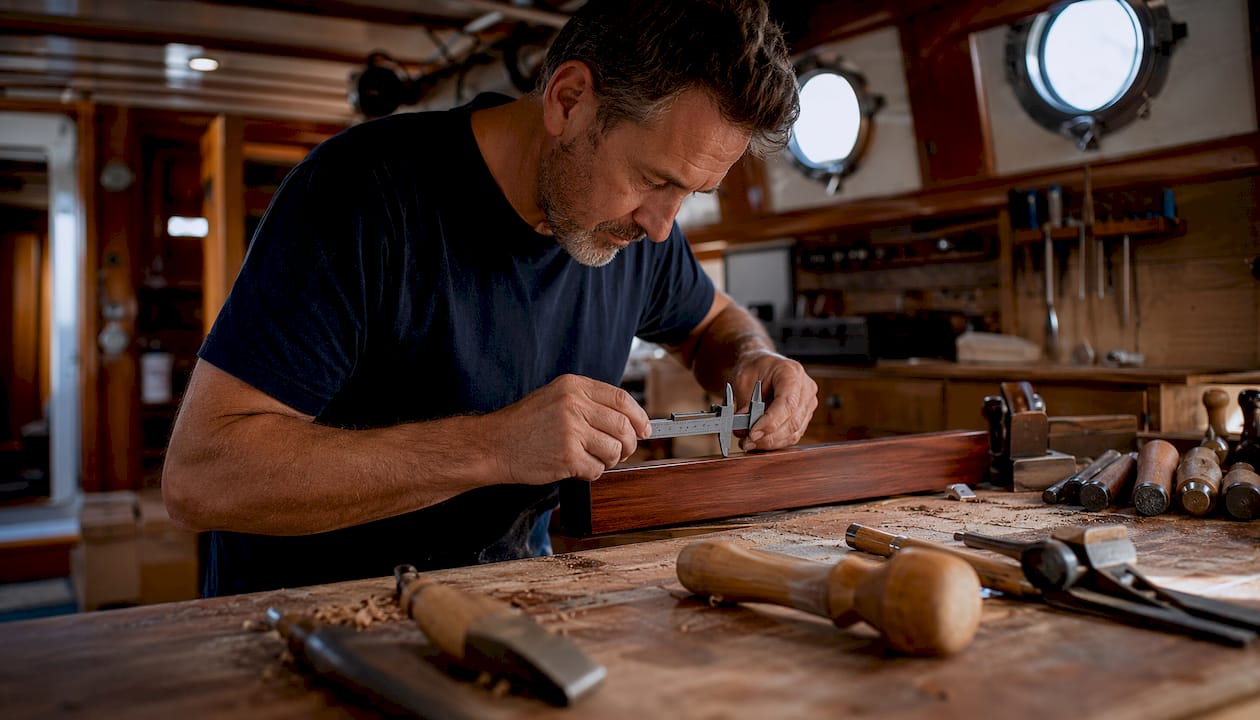
What separates the right craftsman from the rest?
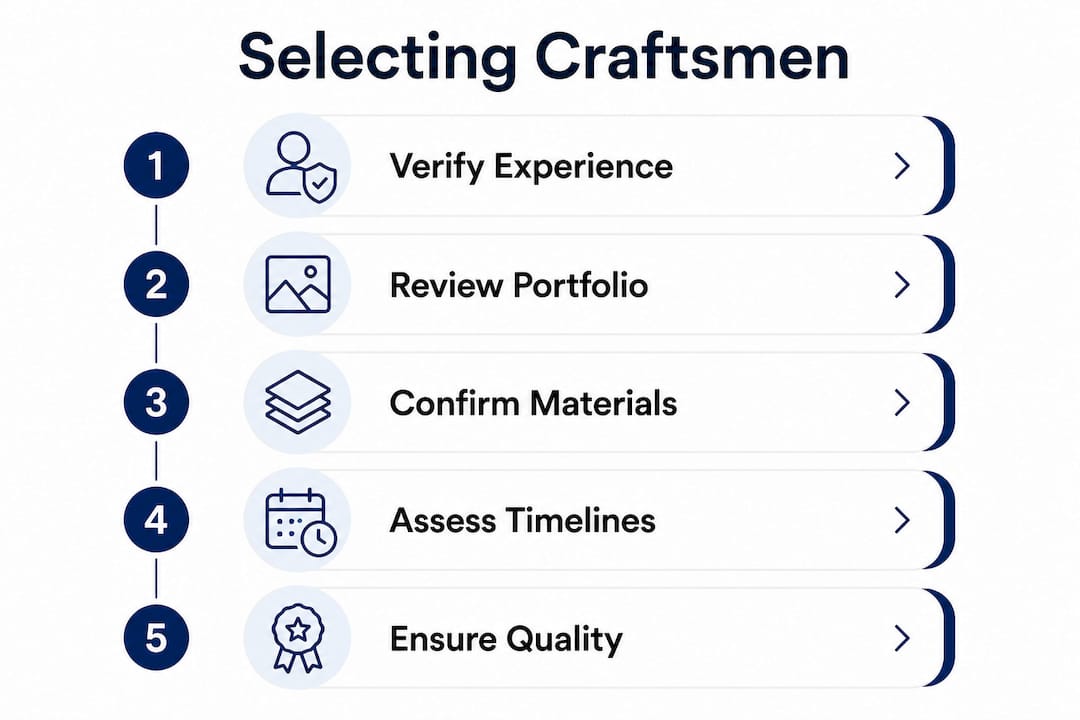
The craftsmen worth hiring share a short list of verifiable qualities. We look for demonstrated experience with custom luxury yacht projects, a portfolio that includes cabinetry, dash panels, and full interior restorations, and confirmed use of marine-grade materials throughout. Before you commit to anyone, verify these five criteria:
- Marine and luxury yacht experience: The craftsman should have a documented history with vessels of comparable size and complexity to yours, not just residential or commercial joinery work.
- Portfolio depth: Request examples covering custom cabinetry, helm panel fabrications, bulkhead restorations, and decking repairs. A narrow portfolio signals a narrow skill set.
- Marine-grade materials: Confirm they specify teak, marine plywood, honeycomb-backed panels, and 316 stainless steel hardware as standard, not as upgrades.
- Precision engineering: Ask whether they use 3D scanning or CAD modeling. 3D-scanned geometry ensures perfect fitting and compensates for hull curves that manual measurements routinely miss.
- Project management and aftercare: Clarify milestone schedules, communication protocols, and what happens if a component needs adjustment post-installation.
Table of Contents
- What kinds of bespoke woodwork projects should you expect?
- Which materials and finishes actually hold up at sea?
- How do master craftsmen engineer for the marine environment?
- Expert insights from Baranofyachts on choosing the right craftsman
- Baranofyachts connects you with the craftsmanship your vessel deserves
- Key Takeaways
What kinds of bespoke woodwork projects should you expect?
Custom yacht woodwork spans a wider range of disciplines than most owners anticipate. Each project type carries its own engineering demands, and understanding them helps you evaluate whether a craftsman is genuinely qualified or simply confident.
- Custom cabinetry and built-ins: Galley storage, stateroom wardrobes, and salon casework must be built to exact vessel dimensions. Standard modular furniture designed for apartments introduces clearance problems and structural risk at sea.
- Interior restorations: Bulkhead paneling, overhead liners, and sole repairs require matching existing grain patterns and finishes so the restored sections read as original to the yacht.
- Dash and helm panel fabrications: These pieces blend precise engineering with visual design, housing electronics, switches, and instrumentation while maintaining a cohesive interior language.
- Specialty woodwork: Feature walls, bar surrounds, and bespoke furniture pieces demand both aesthetic judgment and structural discipline, particularly where weight and vibration are factors.
- Decking repairs and teak work: Deck and wet-zone applications require woods like teak, which resists deformation and waterlogging naturally due to its oil content, even without paint treatment.
Which materials and finishes actually hold up at sea?
Material selection is where many owners make costly mistakes. The marine environment subjects every surface to salt spray, UV radiation, humidity swings, and constant vibration. The right materials address all of these simultaneously, and the wrong ones fail faster than you expect.
- Marine plywood with premium veneers: Marine plywood cores with honeycomb panels reduce weight while preserving the visual warmth of hardwood. Solid timber in cabinetry adds undesirable weight that affects fuel efficiency and vessel stability.
- Teak for deck and wet zones: Teak’s natural oil content makes it resistant to deformation, insects, and moisture without additional treatment. Interior cabinetry, however, calls for engineered solutions rather than thick solid teak throughout.
- Fire-retardant laminates: High-grade marine plywood with fire-retardant laminates meets international flame-retardant standards, a safety requirement that goes beyond aesthetics.
- 316 stainless steel hardware: Its molybdenum content gives it strong resistance to chloride corrosion, making it the correct specification for all outdoor and marine hardware applications.
- UV-resistant and weather-resistant finishes: Topcoats must protect against UV degradation and moisture ingress while maintaining the visual quality expected in a luxury interior. Ask your craftsman to name the specific finish system they use and why.
Explore yacht building materials in depth to understand how material choices affect long-term performance and resale value.
How do master craftsmen engineer for the marine environment?
The difference between furniture-grade joinery and true marine joinery is engineering. A piece that looks perfect in a shop can rattle, warp, or fail entirely once it meets open water. The craftsmen we trust approach every project with the vessel’s motion, weight budget, and long-term serviceability in mind.
- Visual continuity: Woodwork in luxury vessels should function as a continuous visual language, with bulkheads, doors, and casework flowing with consistent grain and finish. This creates the calm, cohesive impression that defines a well-executed interior.
- 3D scanning and CAD modeling: Precision CAD modeling and CNC machining enable repeatable, exact marine panels for complex curved components. The geometry of a hull is never perfectly symmetrical, and craftsmen who skip digital measurement pay for it during installation.
- Anti-rattle and noise engineering: Anti-rattle components, positive-latching hardware, and soft-close systems keep furniture silent and secure in rough seas. This is a specialty discipline, not a standard feature of general carpentry.
- Weight discipline: Every material choice affects the vessel’s trim and fuel consumption. Craftsmen who understand material impact on vessel stability will propose engineered alternatives to solid hardwood wherever weight savings matter.
- Function before decoration: Common mistakes include favoring decoration over function and ignoring clearance allowances for a moving environment. Every drawer, door, and latch must work reliably when the boat is heeled or pitching.
For a deeper look at how hand-crafted details shape the long-term value of a luxury vessel, the distinction between decorative and functional craftsmanship becomes clear quickly.
Expert insights from Baranofyachts on choosing the right craftsman
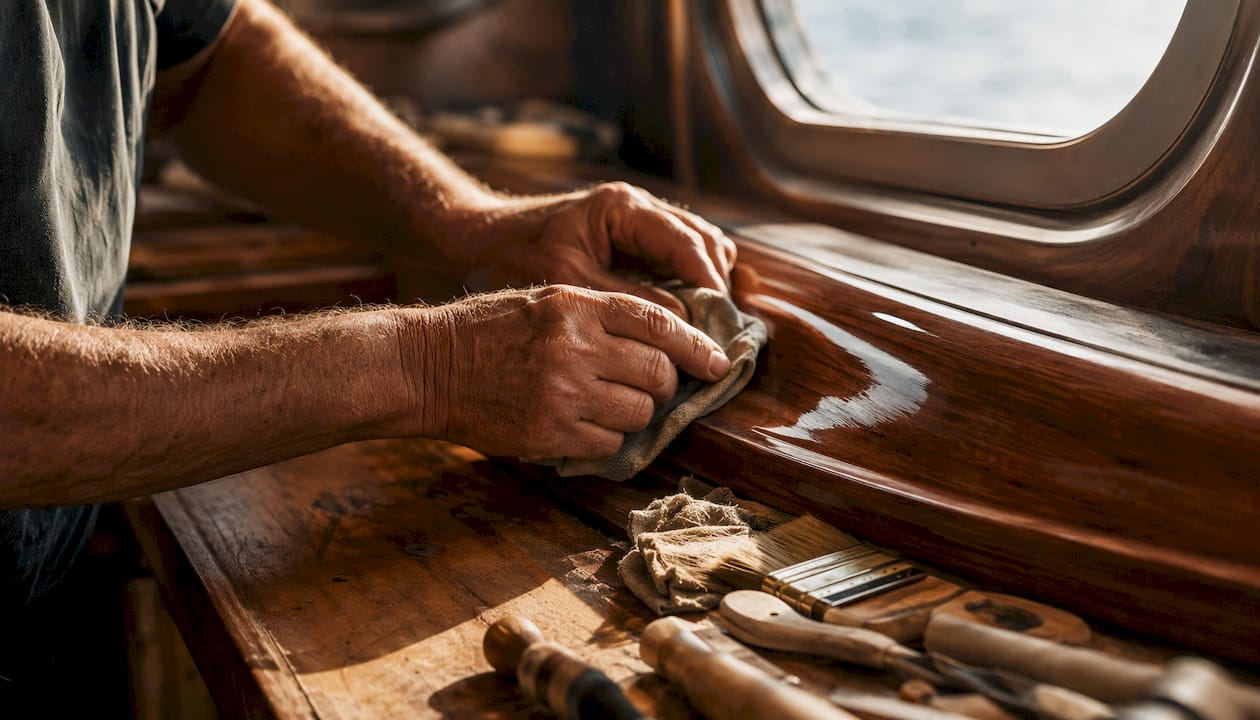
We have seen what separates a successful bespoke woodwork project from an expensive disappointment. The gap almost always comes down to the questions asked before any contract is signed.
Questions to ask every candidate:
- What are the three most complex one-off fabrications you have completed, and what made them difficult?
- How do you handle discontinued parts or unusual hull geometry?
- What is your process when a component does not fit correctly during installation?
- Who manages the project on-site, and how do you communicate progress?
Red flags to watch for:
- Vague answers about material specifications, particularly when marine-grade alternatives are not mentioned unprompted.
- No portfolio of completed yacht projects at a comparable scale to yours.
- Reluctance to provide a detailed milestone schedule with defined review points.
- Expertise in unusual geometry and discontinued parts is what sets master craftsmen apart. A shop that avoids complex one-off fabrication will struggle with the realities of a custom yacht interior.
Pricing factors: The true cost of luxury yacht woodwork lies in the engineering of demanding materials and the skilled labor required to work with them correctly. Complex veneer work, honeycomb-backed panels, and fire-tested materials all increase labor intensity. Expect pricing to reflect material complexity, project scope, and the craftsman’s experience with comparable vessels.
Project timelines: Custom cabinetry for a single stateroom typically runs several weeks from design approval to installation. Full interior restorations on larger vessels can extend across multiple months, particularly when 3D scanning, CAD review, and phased installation are part of the process. Build milestone reviews into the contract from the start.
Pro Tip: Insist on 3D scanning before any material is cut. It reduces fitting errors, shortens installation time, and eliminates the costly rework that comes from relying on manual measurements in a hull that has settled and shifted over time.
Baranofyachts’s project management approach treats every craftsman selection as part of a larger orchestration, where timing, communication, and quality assurance move together like a well-rehearsed process from concept through delivery.
Baranofyachts connects you with the craftsmanship your vessel deserves
Choosing the right craftsman for a bespoke yacht interior is one of the highest-stakes decisions in a custom build or refit. Baranofyachts brings the project management discipline and industry network to make that decision with confidence rather than guesswork.

We work with yacht owners and prospects at every stage, from early material and craftsman selection through final installation review, ensuring that every bespoke element meets the standards your vessel demands. Our client-centric approach means we stay involved throughout the process, not just at the contract stage. Whether you are planning a full interior restoration or commissioning a single feature piece, we provide the oversight that keeps timelines, budgets, and quality aligned. Read how artisan craftsmen and luxury yachts come together in practice, or contact Baranofyachts directly to discuss your project scope and get a clear path forward.
Key Takeaways
Selecting bespoke yacht woodwork craftsmen requires verified marine experience, documented portfolio depth, marine-grade materials, precision engineering methods, and clear project management from the first conversation.
| Point | Details |
|---|---|
| Verify marine experience first | Craftsmen must show documented work on luxury yachts of comparable size, not just residential joinery. |
| Insist on 3D scanning | 3D-scanned geometry eliminates fitting errors caused by hull curves that manual measurements miss. |
| Specify marine-grade materials | Marine plywood, teak, fire-retardant laminates, and 316 stainless steel hardware are the correct baseline specifications. |
| Engineer for motion and weight | Anti-rattle hardware, soft-close systems, and lightweight panel cores are functional requirements, not optional upgrades. |
| Baranofyachts project oversight | Baranofyachts manages craftsman selection, milestone reviews, and quality assurance from concept through delivery. |
Recommended
Sold Listings


Design Your Yacht
"*" indicates required fields
Maximus III - PNW
As you step aboard MAXIMUS III, the first impression is her scale.
At 120 feet with an 8-meter beam and 294 GT of interior volume, this 2025 Crescent Custom tri-deck immediately feels open, balanced, and estate-like. A timeless look while still feeling fresh from the shipyard.
Currently Available


Get your yacht value Estimate
"*" indicates required fields