
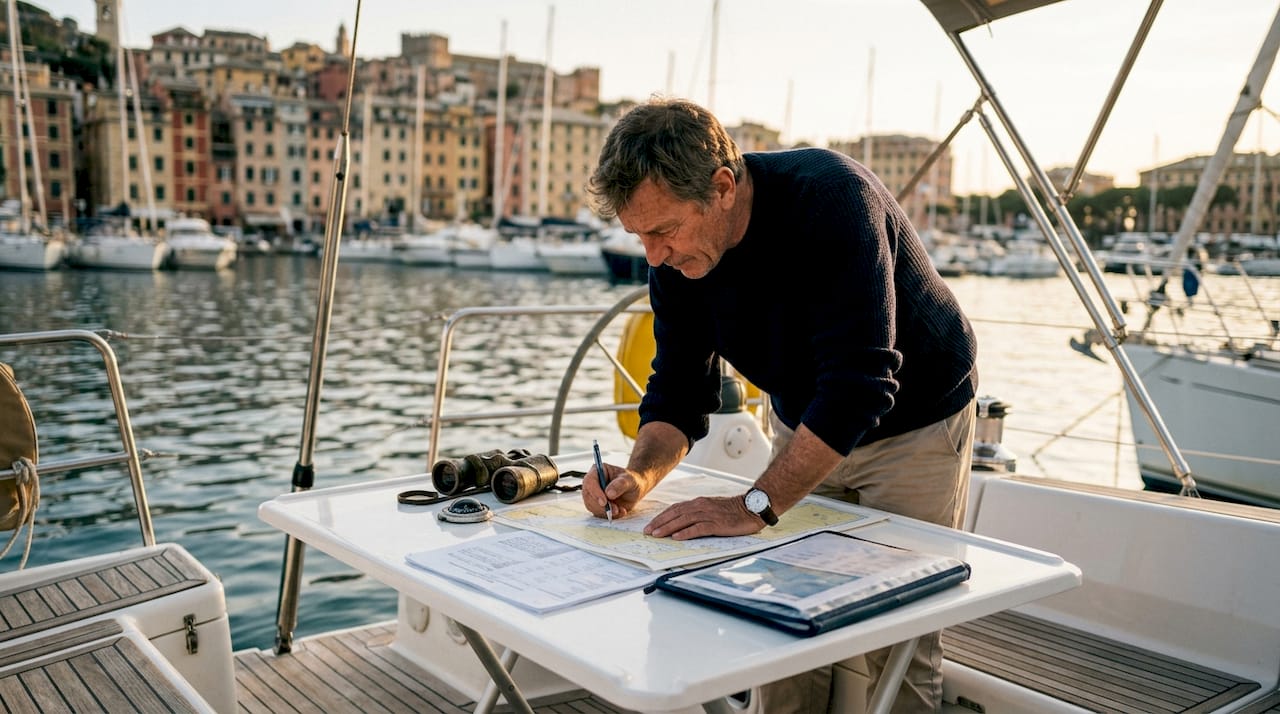
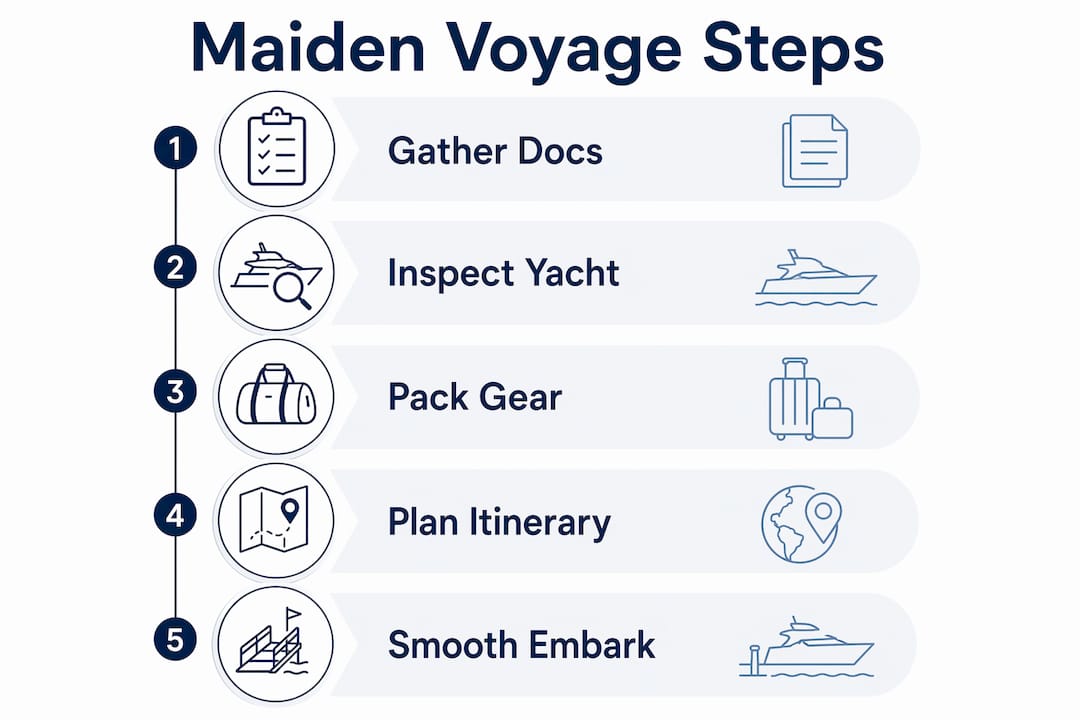
A maiden voyage is defined as the first official trip taken aboard a vessel, and how you prepare for it determines whether that experience is exhilarating or exhausting. Knowing how to prepare for a maiden voyage means covering four distinct layers: legal documentation, vessel readiness, personal gear, and itinerary planning. New yacht owners who skip any one of these layers face avoidable problems at sea. At Baranofyachts, we work with first-time owners every day, and the pattern is clear: thorough preparation before casting off is what separates a confident departure from a stressful one.
What essential documents and permits do you need before setting sail?
Documentation is the foundation of any sailing preparation guide. Without the right paperwork, you cannot legally depart many ports, and international waters add another layer of complexity.
Gather these documents before your departure date:
- Vessel registration: Your boat must be registered with the relevant maritime authority. In the United States, the U.S. Coast Guard handles federal documentation for vessels over five net tons used in commerce, while state agencies handle recreational registration.
- Sailing certification: The American Sailing Association’s ASA 104 certification covers bareboat cruising and is widely recognized as the minimum standard for skippering a keelboat offshore.
- Operator license: Some jurisdictions require a formal operator’s license. Check with the maritime authority of every port you plan to enter.
- Passports and visas: If your route crosses international waters, every person aboard needs a valid passport. Research visa requirements for each country at least 60 days in advance.
- Cruising permits: Many island nations and coastal regions require advance cruising permits. The Bahamas, for example, requires a cruising permit purchased upon entry.
- Insurance certificate: Carry proof of marine insurance. Many marinas require it before granting a berth.
Store all documents in a waterproof, zippered folder kept in the same location every trip. Laminate copies of the most critical papers as backups. Pre-booking ground transportation and accommodations near your departure port also removes one major logistical variable from embarkation day.
How to inspect and prepare your yacht for the maiden voyage
A thorough pre-departure checklist is the single best defense against common boating mistakes. Captains with decades of experience treat the pre-departure inspection as non-negotiable, not optional.
Work through this inspection sequence before every departure:
- Hull and deck: Walk the full perimeter of the vessel at the dock. Look for cracks, blistering, or any damage to through-hulls and seacocks. Check that all hatches seal properly.
- Rigging and sails: Inspect standing rigging for broken strands, corrosion, or loose turnbuckles. Check running rigging for chafe. Unfurl sails and look for tears, UV damage, or failed stitching at the seams.
- Steering system: Turn the wheel or tiller through its full range. Any stiffness, play, or grinding sound warrants investigation before departure.
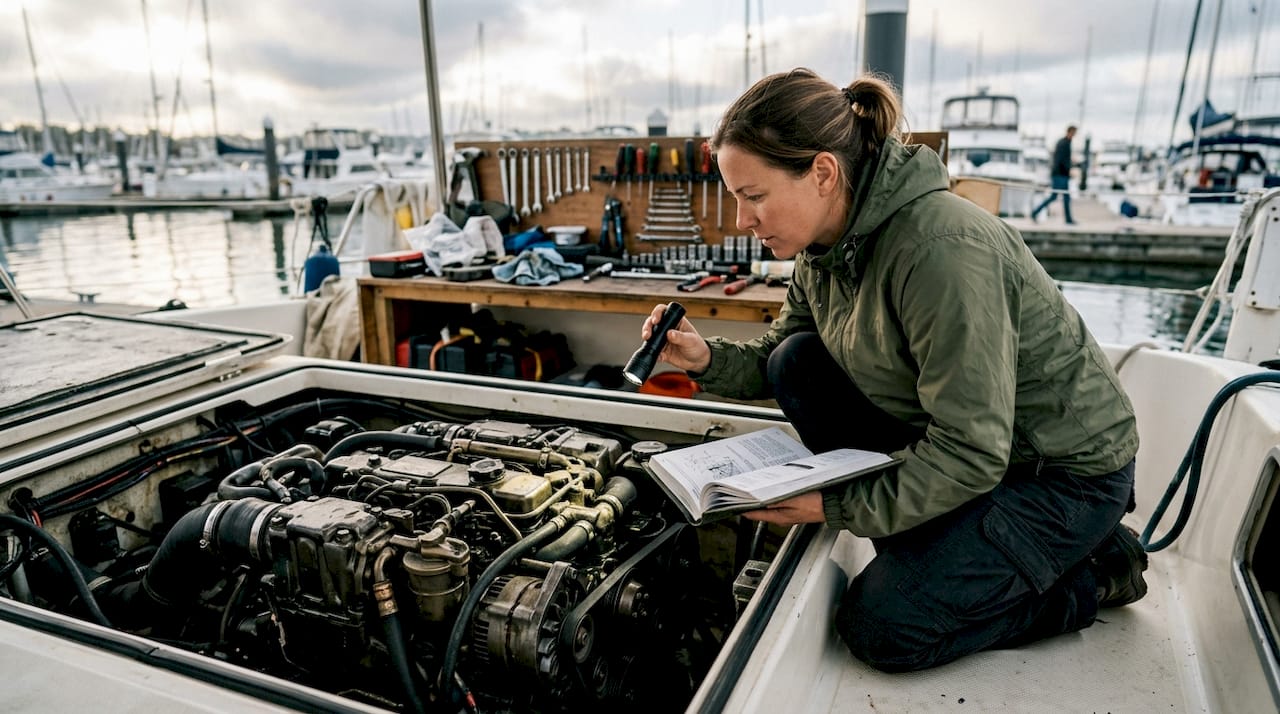
- Engine and mechanical systems: Start the engine and let it reach operating temperature. Check coolant, oil, and transmission fluid levels. Inspect belts and hoses for wear.
- Fuel planning: Apply the one-third fuel rule: one-third of your fuel for the outbound leg, one-third for the return, and one-third held in reserve. This rule prevents one of the most common and preventable emergencies at sea.
- Safety equipment: Confirm that life jackets are accessible and correctly sized for every person aboard. Check flare expiration dates, inspect the first aid kit, test the VHF radio on Channel 16, and verify the life raft service date.
- Navigation electronics: Power up your chartplotter, GPS, and AIS transponder. Cross-check your electronic charts against paper charts for the planned route.
- Bilge pumps: Test both automatic and manual bilge pumps. A functioning bilge system is a basic safety requirement, not a luxury feature.
Pro Tip: Walk the boat twice: once for mechanical systems and once specifically for safety gear. Combining both inspections into one pass leads to missed items.
For a deeper look at what a professional inspection covers, Baranofyachts has published a detailed resource on custom yacht inspections that applies directly to pre-voyage readiness.
What personal preparations and gear are crucial for your first sailing trip
Packing smart is as important as packing complete. Yacht storage is limited, and the wrong gear creates clutter that becomes a safety hazard underway.
Follow these personal preparation guidelines:
- Luggage: Soft-sided duffel bags under 70 liters are the standard for yacht storage. Hard-sided suitcases cannot compress to fit into lockers and berth spaces. This is a practical constraint, not a preference.
- Clothing layers: Conditions change fast on the water. Pack a moisture-wicking base layer, a mid-layer fleece, and a waterproof outer shell. Temperatures can drop 15 degrees Fahrenheit between noon and sunset offshore.
- Footwear: Wear light or white-soled shoes aboard at all times. Dark rubber soles leave permanent marks on teak and fiberglass decking. Many experienced sailors go barefoot once underway.
- Sun protection: UV exposure on the water is significantly more intense than on land due to reflection off the surface. Pack SPF 50 sunscreen, a wide-brim hat, and UV-blocking sunglasses rated for marine environments.
- Motion sickness: Take motion sickness medication 30 minutes before boarding for full effectiveness. Waiting until you feel sick means the medication cannot absorb in time. Natural alternatives like ginger chews and acupressure wristbands work well as supplements.
- Hydration and food: Drink water consistently before and during the trip. Eat a light, low-fat meal before departure. Heavy meals increase nausea risk in choppy conditions.
Pro Tip: Pack a small dry bag inside your duffel with your phone, wallet, and documents. If anything goes overboard or a hatch leaks, your critical items stay dry.
The psychological side of first-time sailing matters too. Expect the first hour underway to feel unfamiliar. The motion, the noise, and the list of the boat are all normal. Give yourself permission to find your footing before making any decisions.
How to plan your itinerary and schedule for flexibility and safety
A sailing itinerary is a framework, not a contract. The sea does not negotiate with rigid timetables, and the most experienced sailors treat their plans as starting points rather than fixed commitments.
Build your itinerary around these principles:
- Buffer days: Build in 1 to 2 buffer days per week of planned sailing. Weather windows close without warning, and mechanical issues rarely happen at convenient times. Buffer days convert potential crises into minor inconveniences.
- Alternative anchorages: Identify backup anchorages for every planned port of call. If your primary harbor is full, closed due to weather, or restricted, you need a fallback within a reasonable sailing distance.
- Weather study: Review forecasts from multiple sources, including NOAA marine forecasts and Windy, for at least five days before departure. Understand the seasonal patterns of your sailing region.
- Shore contacts: File a float plan with a trusted person ashore. Include your vessel name, departure point, planned route, expected arrival, and emergency contacts. Update them if your plans change.
The table below shows a sample weekly itinerary structure that builds in the flexibility experienced sailors recommend:
| Day | Activity | Buffer Purpose |
|---|---|---|
| Day 1 | Departure and first passage | Allows for late-start adjustments |
| Day 2–3 | Sailing to primary destination | Weather window flexibility |
| Day 4 | Rest day at anchorage | Mechanical check and crew recovery |
| Day 5–6 | Secondary destination or return leg | Alternate anchorage fallback |
| Day 7 | Buffer day | Absorbs any delay from prior days |
For expert guidance on building an adaptive plan, Baranofyachts offers a detailed resource on optimizing yacht itineraries that covers route selection and contingency planning in depth.
What are best practices for embarkation day to start your maiden voyage smoothly?
Embarkation day is where preparation either pays off or falls apart. The goal is to arrive calm, organized, and ready to focus on the vessel rather than logistics.
Follow this sequence on departure day:
- Arrive early: Arrive at the port at least one day before departure to absorb any travel disruptions. Flight delays, traffic, and transit issues are common. Arriving the night before removes that risk entirely.
- Carry essentials in a personal bag: Keep your documents, medication, phone charger, and a change of clothes in a carry-on bag separate from your main duffel. If your luggage is delayed, you can still depart.
- Orient immediately: Locate the muster station and familiarize yourself with the vessel layout as soon as you board. Knowing where safety equipment is stored reduces anxiety and saves critical time in an emergency.
- Conduct a safety briefing: Gather all crew and passengers for a formal briefing before departure. Cover man-overboard procedures, fire extinguisher locations, life jacket donning, and the VHF radio protocol.
- Verify lines and engine status: Confirm that dock lines are properly rigged for casting off. Run the engine one final time and check that all systems read normal before leaving the berth.
- Account for all persons aboard: Do a formal headcount before casting off. This is not a formality. It is a legal and safety requirement in most jurisdictions.
For those planning a charter experience as part of their first voyage, the luxury yacht tour planning guide from Qbic Travel offers practical context on what to expect from a professionally crewed departure.
Key Takeaways
Thorough maiden voyage preparation requires legal documentation, a systematic vessel inspection, smart personal packing, and a flexible itinerary built around buffer days and backup anchorages.
| Point | Details |
|---|---|
| Documentation first | Gather registration, certification, permits, and passports well before departure day. |
| Vessel inspection is non-negotiable | Check hull, rigging, engine, fuel, and all safety gear using a written checklist. |
| Pack soft and light | Use duffel bags under 70 liters; hard luggage does not fit yacht storage. |
| Build buffer days | Add 1 to 2 buffer days per week of sailing to absorb weather and mechanical delays. |
| Arrive one day early | Reaching the port the day before departure eliminates travel-disruption risk on embarkation day. |
What I’ve learned from watching first-time owners cast off
The most common mistake I see new yacht owners make is treating the maiden voyage like a vacation that happens to take place on a boat. It is not. It is a vessel operation that, done well, feels like a vacation.
The owners who enjoy their first voyage most are the ones who shift their mindset before they even step aboard. They stop thinking about the destination and start thinking about the process. They check the bilge before they check the sunset. They brief the crew before they pour the first drink. That discipline does not diminish the experience. It protects it.
The detail most first-timers overlook is the float plan. Filing a float plan with someone ashore takes ten minutes and costs nothing. It is the single most underused safety tool in recreational sailing. If something goes wrong and you cannot call for help, that document is what gets the right people looking in the right place.
My honest advice: embrace the learning curve. Your first voyage will not be perfect. Something will not work as planned. A line will jam, a forecast will shift, or a berth will be unavailable. The sailors who thrive are the ones who treat those moments as the actual education, not as failures. The checklist gets you to the water. Your attitude gets you home.
— Jason
Baranofyachts and the preparation behind every great voyage
New yacht owners deserve more than a generic checklist. They deserve a preparation process built around their specific vessel, route, and goals.

Baranofyachts works with first-time owners from the moment a vessel is delivered through the planning and execution of that first voyage. Our team provides vessel-specific readiness reviews, crew training resources, and itinerary planning support grounded in real maritime experience. For owners who want to understand what defines a truly well-prepared yacht, our guide to next-generation yacht design covers the systems and features that make a difference at sea. Contact Baranofyachts to discuss how we can support your first voyage from the dock to the open water.
FAQ
What documents do I need for my first sailing trip?
You need vessel registration, a sailing certification such as ASA 104, a marine insurance certificate, and valid passports for all persons aboard if crossing international waters. Some regions also require advance cruising permits.
How do I prevent motion sickness on a maiden voyage?
Take motion sickness medication at least 30 minutes before boarding, as waiting until symptoms appear is too late for the medication to work. Ginger chews and acupressure wristbands serve as effective natural supplements.
What is the one-third fuel rule?
The one-third fuel rule means reserving one-third of your fuel for the outbound leg, one-third for the return, and one-third as an emergency reserve. This rule prevents one of the most common and avoidable emergencies in recreational boating.
How flexible should my sailing itinerary be?
Build in 1 to 2 buffer days per week of planned sailing and identify at least one alternative anchorage for every primary port. A flexible itinerary treats weather and mechanical delays as expected variables, not surprises.
What type of luggage should I bring on a yacht?
Use soft-sided duffel bags under 70 liters. Hard-sided suitcases cannot compress to fit into yacht lockers and berth storage spaces, making them impractical for life aboard.
Recommended
Sold Listings


Design Your Yacht
"*" indicates required fields
Maximus III - PNW
As you step aboard MAXIMUS III, the first impression is her scale.
At 120 feet with an 8-meter beam and 294 GT of interior volume, this 2025 Crescent Custom tri-deck immediately feels open, balanced, and estate-like. A timeless look while still feeling fresh from the shipyard.
Currently Available


Get your yacht value Estimate
"*" indicates required fields