
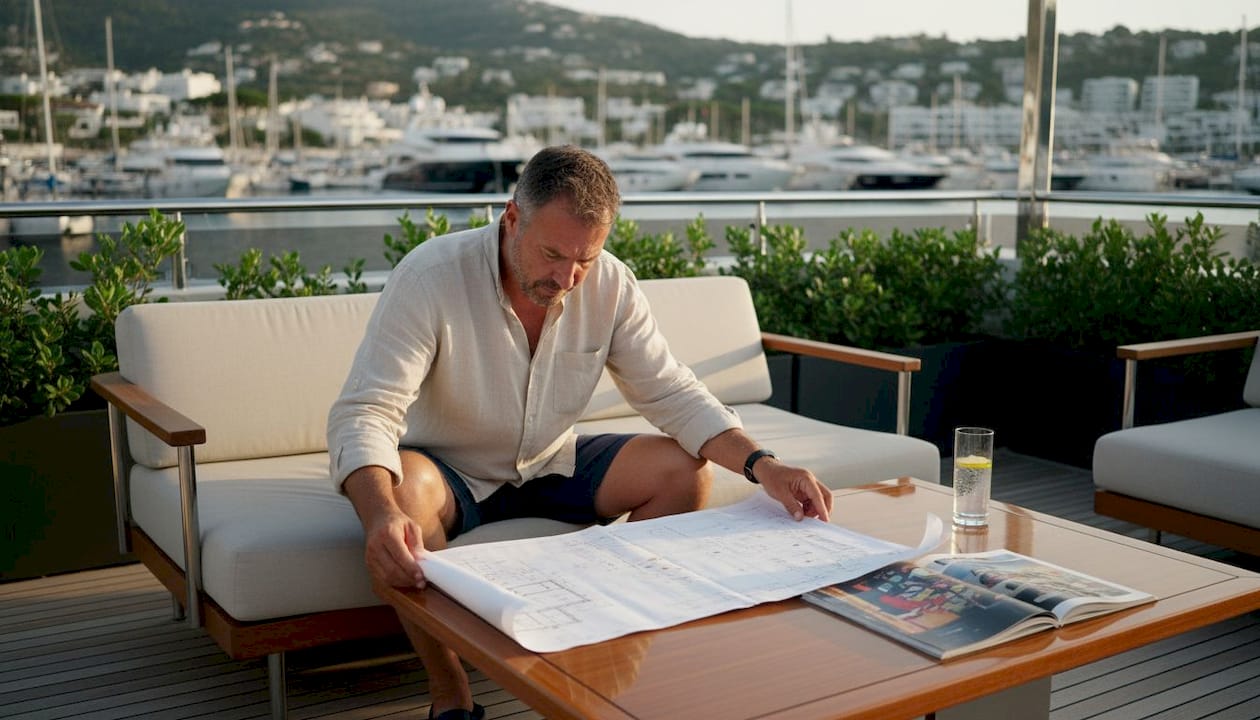
Commissioning custom yacht artwork is the process of creating original, personalized art pieces built specifically for your vessel’s environment, scale, and aesthetic identity. Unlike a print purchased off the wall, a bespoke commission integrates with your yacht’s interior architecture from the first design conversation. The materials, the scale, the color palette, and the mounting method all respond to your specific vessel. At Baranofyachts, we work with owners who understand that the art on board is not decoration. It is a statement of who you are and how you live at sea.
What preparations are essential before commissioning custom yacht artwork?
The single most important step in any bespoke art commission is timing. Bespoke artwork is ideally planned alongside yacht interior design from the earliest stages, so color palette and scale integrate into a cohesive space rather than being retrofitted later. Shipyards and interior designers who factor art into new builds and refits early avoid the costly rework that comes from late additions.
Before you speak to a single artist, you need answers to these foundational questions:
- Space dimensions: Yacht interiors are rarely perfectly square or symmetrical. 3D laser scanning ensures artwork fits precisely within the hull’s unique structural geometry, avoiding expensive rework after fabrication.
- Material compatibility: The marine environment subjects art to salt air, UV radiation, humidity, and constant vibration. Materials must be selected for durability, not just appearance.
- Color palette alignment: Pull your existing interior materials, upholstery samples, and joinery finishes before approaching an artist. The artwork must respond to what is already there.
- Refit or new build schedule: Understand your refit timeline before committing to a commission. A full vessel mosaic can take two to four weeks of installation time alone, and smaller pieces may be completed in days. Misaligning the art schedule with the build schedule creates delays across the entire project.
- Budget envelope: Establish your range before the first consultation. Costs vary widely depending on medium, scale, and complexity.
Pro Tip: Request a scaled drawing or digital render of your target wall or surface before approaching artists. Handing an artist accurate dimensions and a photo of the space from day one cuts the back-and-forth consultation phase by weeks.
The materials conversation deserves its own attention. Marine-grade substrates, flexible adhesives, tempered and laminated glass, and UV-resistant sealants are not optional upgrades. They are the baseline for any artwork that will survive years at sea. Discuss material specifications with your interior designer and shipyard before finalizing any artist brief.
How do you collaborate effectively with artists to create bespoke yacht art?
Selecting the right artist or studio is not about finding the most famous name. It is about finding someone who understands the marine context and has worked within it. High-quality yacht art commissions require consultation about vessel history and use premium materials like 24ct gold leaf, silver leaf, and crushed mother of pearl to achieve the kind of luminosity that catches light uniquely at sea. Artists who limit their client numbers to maintain quality standards are often the right choice for a commission of this caliber.
The collaboration process typically follows this sequence:
- Initial consultation: Share your vessel’s history, your personal aesthetic, and the specific space. Bring photos, material samples, and your scaled drawings. The more context you give, the more precisely the artist can respond.
- Concept development: The artist presents initial compositions, material proposals, and scale studies. This is the stage to push back, refine, and align the vision with your interior architecture.
- Material and technique sign-off: Confirm the exact materials, finishes, and mounting methods before fabrication begins. Changes after this point are expensive.
- Prototype or sample review: For mosaics, glasswork, or complex mixed-media pieces, request a physical sample of the material palette before full production.
- Fabrication and progress check-ins: Schedule regular updates during production. For longer commissions, a mid-point review prevents surprises at delivery.
- Installation coordination: Align the artist’s installation window with your shipyard’s schedule. The artisan craftsmen who install bespoke yacht art work best when they have unobstructed access and a clear sequence within the broader fit-out program.
Pro Tip: Ask your artist for references from previous marine commissions specifically. A painter with a strong gallery record but no yacht experience may not understand vibration tolerances, salt exposure, or the way light moves across a hull interior at different times of day.
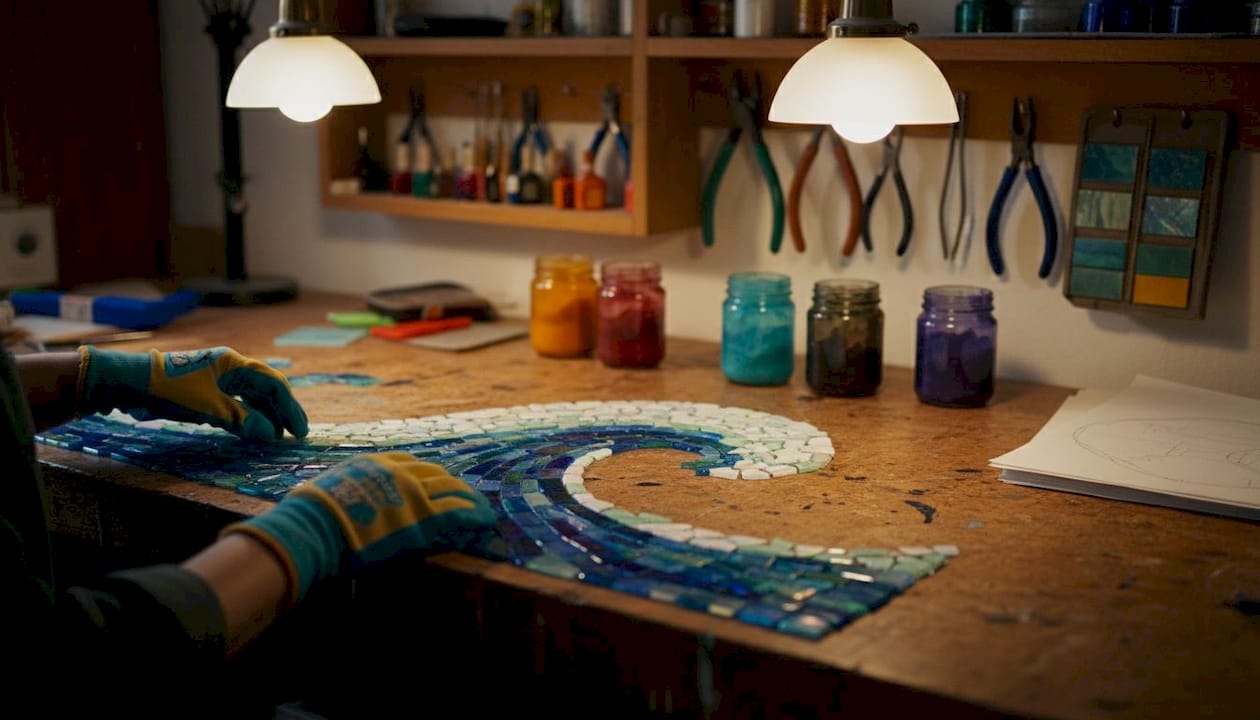
The most common commission types include original oil or acrylic paintings, hand-laid mosaics, custom glasswork panels, and helm design upgrades. Each medium carries its own technical requirements and its own collaboration rhythm.
What technical considerations ensure durability of yacht artwork?
Marine conditions are unforgiving. Salt exposure, humidity, UV radiation, and constant vibration create a stress environment that destroys conventional art materials over time. Yacht mosaics and decorative art must use flexible adhesives and proper backing systems to maintain structural integrity under these conditions. Vibration-proof bonding is not a luxury specification. It is a functional requirement.
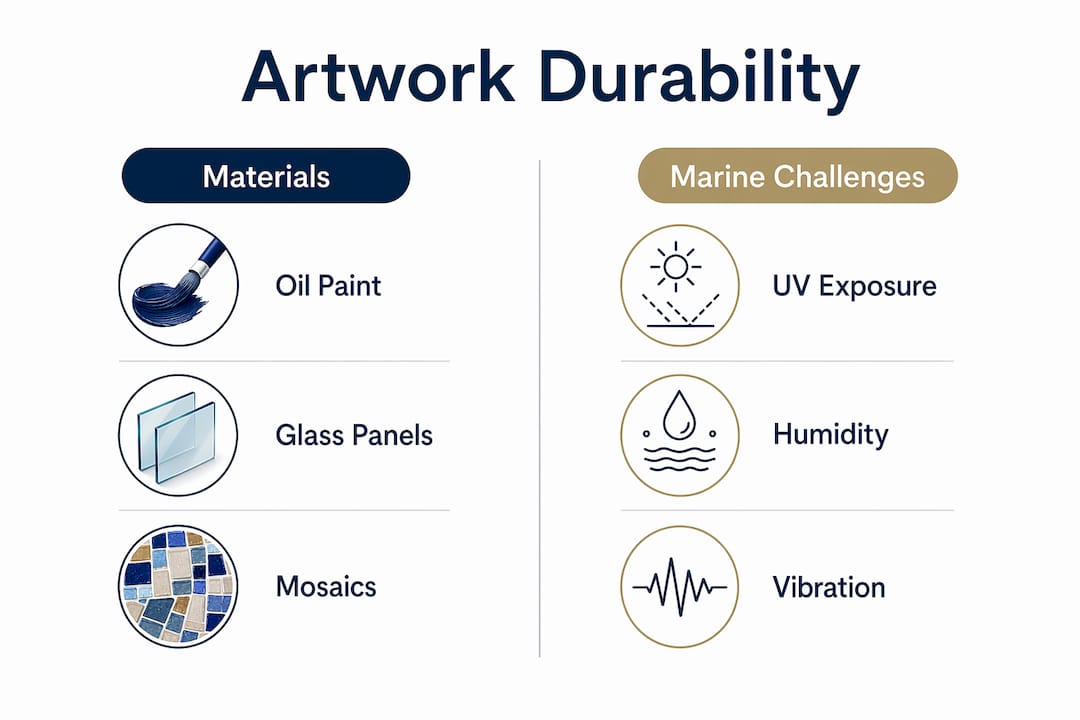
The table below summarizes the primary material categories and their marine performance characteristics:
| Artwork Type | Key Material Consideration | Marine Challenge Addressed |
|---|---|---|
| Oil and acrylic paintings | UV-resistant varnish, marine-grade framing | UV fading, humidity warping |
| Hand-laid mosaics | Flexible grout, vibration-proof adhesive | Vibration, thermal expansion |
| Custom glasswork panels | Tempered or laminated glass, chemical tempering | Impact, structural stress |
| Helm design upgrades | Thermal management systems, NMEA-certified installation | Overheating, electronic failure |
| Gold leaf and mixed media | Marine sealant, sealed substrate | Salt air oxidation, moisture |
Glass technology has advanced significantly in this area. Chemical and thermal tempering now enables large, curved, and structurally complex glass elements that maximize visual continuity across a hull interior. Glass that was once considered too fragile for certain applications can now be made virtually indestructible in the right configuration.
For commissioning custom yacht glasswork or commissioning custom yacht helm design specifically, the engineering requirements go deeper than aesthetics. Complex helm upgrades require significant behind-the-scenes engineering, including thermal management and ventilation systems. Installation must involve NMEA-certified technical collaboration to prevent overheating and component failure. The visual result may look effortless. The infrastructure behind it is not.
3D modeling and laser scanning are now standard practice for precision-fit commissions. Yacht hulls and interiors are rarely perfectly square, and accurate surveying is the only way to guarantee that a fabricated piece fits without costly modification on site. Owners who skip this step often discover the problem only at installation, when the shipyard schedule has no room for delays.
What is the typical timeline and budget for custom yacht artwork?
Timeline and budget vary more than most owners expect. The variables include artwork complexity, the artist’s production schedule, material lead times, and how well the commission aligns with the broader build or refit program.
For general planning purposes:
- Small original paintings: Days to a few weeks for production; installation is typically a half-day task.
- Full vessel mosaics: Two to four weeks for installation alone, with fabrication adding additional lead time depending on design complexity.
- Custom glasswork panels: Four to twelve weeks from design sign-off to delivery, depending on tempering and fabrication requirements.
- Helm design upgrades: Variable, but the engineering and certification requirements mean these commissions rarely move quickly. Budget eight to sixteen weeks from brief to installation for complex configurations.
On the cost side, the range is wide. Helm electronic upgrades start at approximately $25,000 for basic installations on smaller yachts and exceed $150,000 for custom superyacht configurations. Painting commissions and mosaic work are priced by scale, material, and artist reputation. A small original oil painting may cost a fraction of a mosaic covering an entire saloon wall.
Financial planning for art commissions follows the same logic as any other yacht subsystem. Build the budget before the brief, not after. Late-stage additions to a build or refit budget create pressure that leads to compromised material choices or rushed installation. The yacht customization process works best when art is treated as a line item from the start, not an afterthought funded from contingency.
What are the most common mistakes in commissioning yacht art?
The mistakes that derail bespoke yacht art commissions are predictable. Most of them come from late involvement, poor communication, or underestimating the marine environment.
- Involving the artist too late: Art commissioned after the interior fit-out is complete often fights the space rather than completing it. Bring artists into the conversation at the design brief stage.
- Ignoring marine-specific material requirements: Standard art materials fail at sea. Every specification, from adhesive to frame to sealant, must be rated for the marine environment.
- Unclear design communication: Vague briefs produce vague results. Provide scaled drawings, material samples, reference images, and a written description of the mood and function of the space.
- Skipping the prototype stage: For mosaics and glasswork especially, a physical sample review before full production prevents expensive surprises.
- Underestimating installation complexity: Hand-crafted yacht details require skilled installation teams with access to the vessel at the right point in the build sequence.
Pro Tip: Treat your art commission the way you treat any other yacht subsystem. Assign it a project manager, a timeline, a budget, and a clear sign-off process at each stage. The owners who get the best results are the ones who manage the commission with the same rigor they apply to the engineering.
Custom artwork also adds measurable value to the vessel. A yacht with a documented bespoke art program, using named artists and premium materials, commands stronger interest at resale and charter. The art is not just personal. It is an asset.
Key Takeaways
Commissioning custom yacht artwork requires early planning, marine-grade materials, and close collaboration between the owner, artist, and shipyard to produce work that lasts and integrates with the vessel’s identity.
| Point | Details |
|---|---|
| Start at the design stage | Integrate art commissions into the build or refit brief before interior fit-out begins. |
| Use marine-rated materials | Flexible adhesives, tempered glass, UV-resistant sealants, and vibration-proof backing are non-negotiable. |
| Scan before fabricating | 3D laser scanning prevents costly rework by accounting for hull asymmetry and interior geometry. |
| Budget before the brief | Establish your cost envelope early; helm upgrades alone range from $25,000 to over $150,000. |
| Manage it like a subsystem | Assign timelines, sign-off stages, and a project lead to every commission, regardless of scale. |
The case for treating yacht art as architecture
I have watched the yacht interior market shift decisively over the past decade. Owners who once accepted a curated selection of framed prints now arrive at the first design meeting with a clear vision for bespoke work. That shift is not about spending more. It is about understanding that the interior of a yacht is an architectural space, and the art within it should be designed for that space, not dropped into it.
What surprises most owners is how technical the process becomes once you move past the aesthetic conversation. The marine environment is genuinely hostile to conventional art materials. The owners who get the best results are the ones who treat the commission as an engineering problem as much as a creative one. They involve their shipyard early, they specify materials with the same rigor they apply to hull coatings, and they give their artists accurate dimensional data from the start.
The trend I find most interesting right now is the integration of owner-driven design challenges into new industry standards. When an owner pushes for a mullion-free glass wall or a helm surface that has never been fabricated before, the solution that emerges often becomes the benchmark for the next generation of builds. The best bespoke commissions do not just serve the owner. They advance the craft.
Approach your artwork as you approach the rest of your vessel: with patience, specificity, and a willingness to invest in quality that lasts.
— Jason
Baranofyachts and the art of bespoke yacht interiors
At Baranofyachts, we work with owners at every stage of the design and build process, including the art and interior program that makes a vessel truly personal.

Our team coordinates between artists, interior designers, and shipyard project managers to keep bespoke commissions on schedule and on specification. We understand that the design moves defining next-gen yachts in 2026 are increasingly driven by owner vision rather than catalog options. If you are planning a new build or a refit and want to integrate original artwork from the earliest design stage, we are ready to support that process from brief to installation. Contact Baranofyachts to begin the conversation.
FAQ
What is commissioning custom yacht artwork?
Commissioning custom yacht artwork is the process of working directly with an artist or studio to create original art pieces designed specifically for your vessel’s interior dimensions, materials, and aesthetic. The result is a one-of-a-kind work built for the marine environment.
How early should I involve an artist in a yacht build or refit?
Involve your artist at the interior design brief stage, before fit-out begins. Early integration ensures the artwork’s scale, color palette, and mounting requirements are built into the project from the start, avoiding costly rework later.
What materials work best for original yacht paintings and mosaics?
Marine-grade materials are the standard: UV-resistant varnishes, flexible grout, vibration-proof adhesives, and sealed substrates. Premium commissions also use 24ct gold leaf, silver leaf, and crushed mother of pearl for their unique light-catching properties at sea.
How long does a custom yacht art commission take?
Timelines range from a few days for small paintings to two to four weeks of installation alone for full vessel mosaics. Custom glasswork and helm design upgrades typically require eight to sixteen weeks from design sign-off to completed installation.
Does custom artwork increase a yacht’s resale value?
A documented bespoke art program using named artists and premium materials strengthens a vessel’s market position at resale and charter. Buyers and charterers recognize original work as a marker of quality and owner investment throughout the vessel.
Recommended
Sold Listings


Design Your Yacht
"*" indicates required fields
Maximus III - PNW
As you step aboard MAXIMUS III, the first impression is her scale.
At 120 feet with an 8-meter beam and 294 GT of interior volume, this 2025 Crescent Custom tri-deck immediately feels open, balanced, and estate-like. A timeless look while still feeling fresh from the shipyard.
Currently Available


Get your yacht value Estimate
"*" indicates required fields