
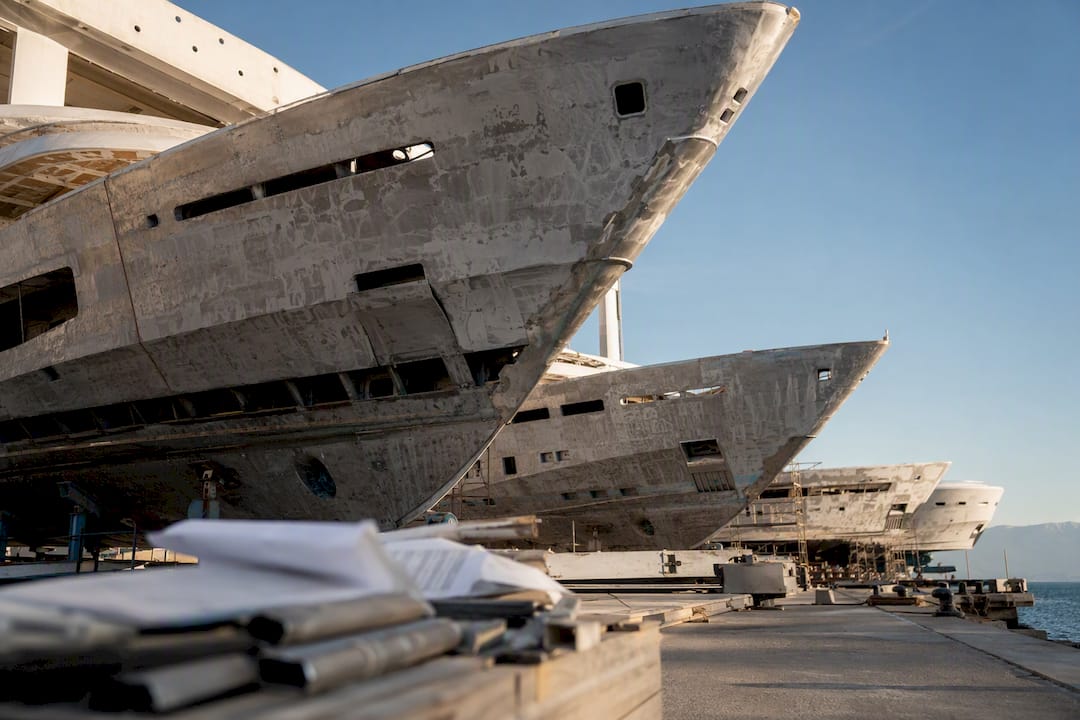
A build slot is your reserved position in a shipyard’s production schedule, the entry that guarantees your hull enters the queue for design and construction. Slot wait and construction time are two separate clocks: the wait for an opening at a top-tier yard typically runs 18 to 36 months, and the build itself usually adds another 42 to 48 months for a large custom yacht. Together, that puts most commit-to-delivery timelines at five to seven years.
That number surprises a lot of first-time buyers. The good news is that it’s a range, not a fixed sentence, and the position you occupy in that range depends heavily on how early and how decisively you act.
- Slot wait: 18 to 36 months before construction even begins
- Build time: 42 to 48 months for larger custom yachts
- Next step: talk to a buyer’s broker or project manager who can check live yard inventory and negotiate a realistic start date on your behalf
Key Takeaways
Securing a yacht build slot faster requires early broker engagement, flexible specifications, and firm milestone language written into the contract before signing.
| Point | Details |
|---|---|
| Slot wait and build are separate | Expect 18 to 36 months of slot wait plus 42 to 48 months of construction for large custom yachts. |
| Budget beyond the contract price | Surveys, documentation, outfitting, and owner-supplied items regularly add unplanned cost and weeks of delay. |
| Milestones protect your schedule | Negotiate deposit size and milestone payments to hold the yard accountable to its own timeline. |
| Cancellation terms deserve scrutiny | Deposits often become non-refundable once production starts, so review rescheduling clauses before signing. |
| Baranofyachts checks live availability | Baranofyachts manages brokerage and project oversight together, giving buyers one accountable partner from slot search through delivery. |
Table of Contents
- Understanding the Yacht Build Timeline From Slot to Delivery
- Why Are Yacht Build Slots So Limited?
- What Does a New Build Actually Cost, and How Does Scheduling Affect It?
- How to Secure a Build Slot Before It Closes
- What Happens If You Need to Cancel or Reschedule a Build Slot?
- The Truth About Build Slot Timing Nobody Tells You Upfront
- Ready to Check Live Build Slot Availability?
- Sources
Understanding the Yacht Build Timeline From Slot to Delivery
Every custom yacht project moves through the same broad sequence, even though the calendar varies by yard and hull size. Knowing where each phase begins and ends helps you set expectations with your family, your captain, and anyone else planning around the delivery date.
- Slot reservation. You sign a letter of intent or preliminary agreement that secures your place in the yard’s order book, often well before final design is locked.
- Contract and design (CAD). Naval architects and interior designers translate your brief into engineering drawings, a phase that can run several months to over a year for a fully bespoke layout.
- Production. Steel or composite work begins, followed by systems installation, propulsion, and interior fit-out. This is the longest single phase and the one most exposed to shipyard capacity constraints.
- Outfitting and sea trials. Furnishings, electronics, and finish work are completed, followed by open-water testing of every system.
- Commissioning and delivery. Final inspections, documentation, and handover close out the project.
Add slot wait and construction together and you get the 60 to 84 month commit-to-delivery window that’s become the industry benchmark for large custom builds.
Why Are Yacht Build Slots So Limited?
Capacity at the yards capable of building a serious custom superyacht is finite, and demand has outpaced it for years. A handful of builders control most of the world’s high-tonnage order books, and those books fill up fast when a design cycle catches on with buyers.
- Top-tier yards can only run so many hulls through their sheds at once, regardless of how much capital a buyer brings.
- Full customization multiplies labor hours, procurement lead times, and coordination complexity far beyond a semi-custom or production build.
- Market cycles matter too: a surge in orders after a strong economic run, or a supply-chain disruption affecting engines and electronics, can stretch already-long waits even further.
Order books at builders like Feadship illustrate the pattern well. Published reviews of the order book and delivery timing at that yard show slots booked years in advance, with some large-hull commitments extending into 2029 and beyond.
Pro Tip: If you have flexibility on hull size or a specific builder, ask your broker about yards with lighter order books right now. A slightly less famous name with an open slot can save you two or three years compared to waiting for a marquee builder.
What Does a New Build Actually Cost, and How Does Scheduling Affect It?
The contract price you negotiate with the yard is only one line item in a much larger budget. Buyers who plan around that number alone are almost always surprised by what comes next.
- Base contract price: covers hull, systems, and standard finish as specified in the build contract.
- Owner-supplied items (OSS): electronics, tenders, art, and personal furnishings the yard doesn’t include by default.
- Design and engineering fees: naval architecture and interior design work, often billed separately from construction.
- Surveys and documentation: independent marine surveys, flag-state registration, and classification society inspections.
- Transport and commissioning: delivery logistics and the final systems testing before handover.
Buyer guides consistently flag surveys, documentation, and outfitting as the categories most often left out of a first-pass budget, and commissioning time in particular tends to run longer than buyers expect.
Payment structure also shapes your schedule risk. Deposit size and milestone payments aren’t just financing mechanics. They’re how the yard allocates risk across the build and, in many cases, how it prioritizes whose hull gets attention when a bottleneck hits. A larger upfront deposit paired with clear milestone triggers gives you more leverage to hold the yard to its production schedule.
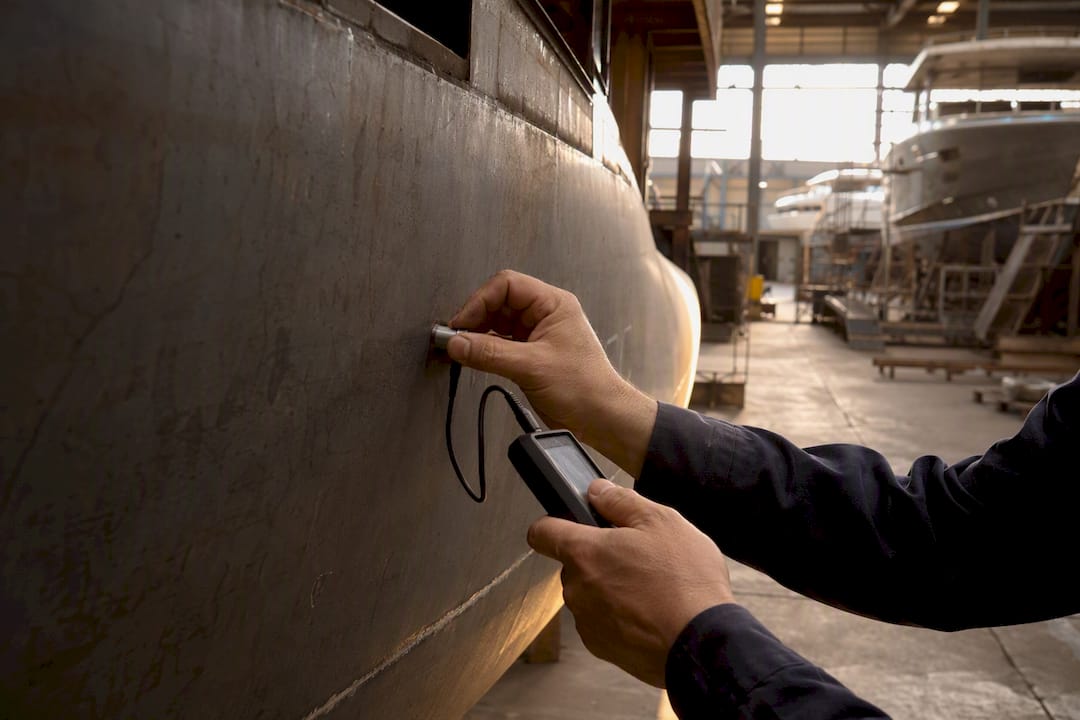
Financing and insurance add their own timing pressure. Lenders typically require an independent survey before releasing funds, and scheduling that survey around a busy yard’s availability can add weeks you didn’t plan for. For a full breakdown of where the money goes, our guide on yacht cost planning walks through each category in detail.
Statistic Callout: Total commit-to-delivery timelines for large custom yachts run 60 to 84 months when slot wait and construction are combined, a figure every budget and financing plan should be built around from day one.
How to Secure a Build Slot Before It Closes
Getting a slot isn’t passive. Buyers who move fastest tend to be the ones who’ve done their homework before they ever sit down with a yard.
- Engage a broker or project manager immediately. A specialist with active yard relationships can check real-time slot availability and often knows about openings before they’re publicly listed.
- Negotiate lead-time and milestone language up front. Ask for schedule guarantees, defined penalty clauses for yard delays, and clear milestone definitions tied to your payment schedule.
- Stay flexible on specification where it doesn’t matter to you. A yard with an open slot for a slightly different layout or hull configuration can save years compared to holding out for an exact match.
- Explore buying into an already-reserved slot. Some buyers exit contracts before delivery, and a brokerage with the right network can connect you to a slot that’s already past the longest part of the wait.
- Prepare your documents before you approach a yard. Proof of funds, a target LOA, a performance brief, and your high-level specification priorities all need to be ready so you can move the moment a slot opens.
Pro Tip: Yards move fastest with buyers who show up decided. Walking into a first meeting with your budget range, desired hull length, and must-have features already defined can shave weeks off the negotiation phase alone.
Reviewing a checklist like before building your yacht before that first conversation puts you in a much stronger negotiating position.
What Happens If You Need to Cancel or Reschedule a Build Slot?
Build contracts almost always include cancellation and rescheduling provisions, and the terms matter as much as the delivery date itself. Most yards structure deposits as non-refundable or partially refundable once construction milestones begin, which means the further into the build you cancel, the more capital you’re likely to lose.
Rescheduling is a different conversation than cancellation, and yards generally treat it with more flexibility, particularly if the request comes early. A delay requested before design finalization is far easier for a yard to absorb than one requested mid-production, when materials have been ordered and labor has been scheduled around your hull.
Where this gets complicated is ownership structure. Buyers who haven’t settled VAT, flag, and tax arrangements before signing sometimes find that a cancellation or resale mid-build creates far more legal complexity than expected, since the entity holding the contract has to be untangled alongside the yard negotiation.
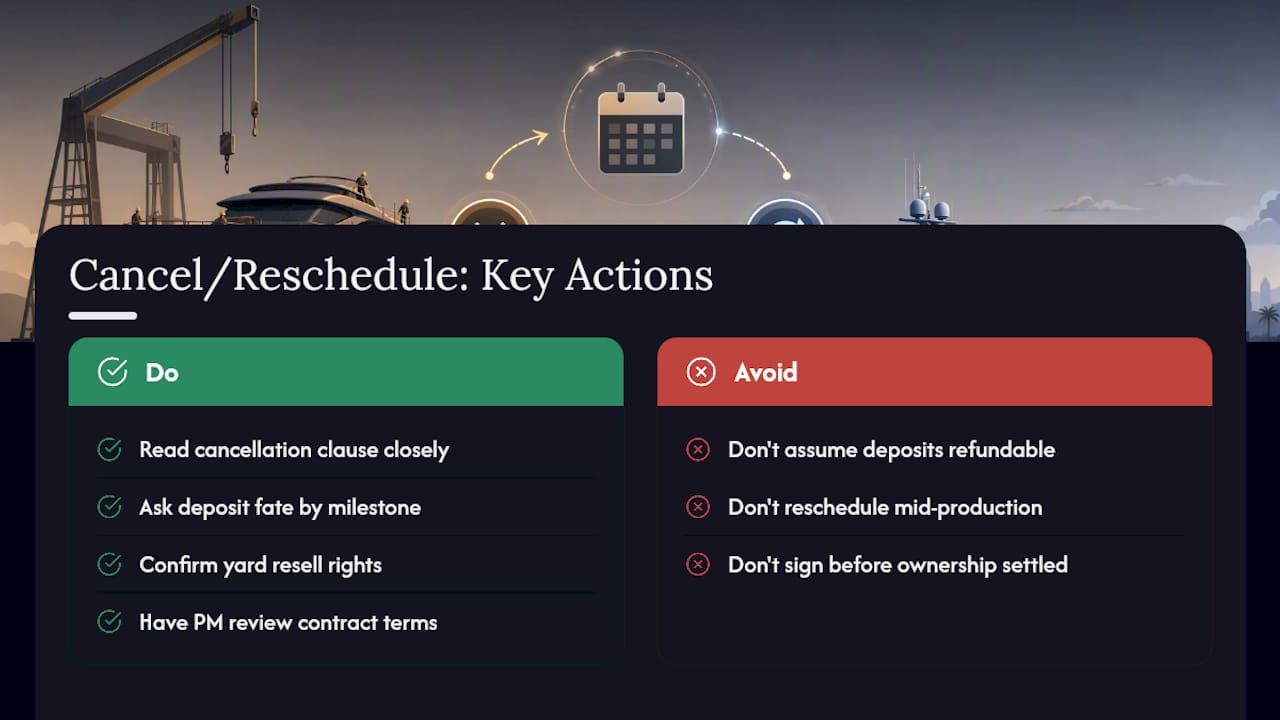
The practical takeaway: read the cancellation clause as closely as the delivery clause. Ask specifically what happens to your deposit at each milestone, whether the yard can resell your slot to another buyer, and what notice period is required to reschedule without penalty. A project manager who has negotiated these clauses before will know which terms are standard and which are negotiable, and that knowledge is worth more at contract signing than at any point afterward.
The Truth About Build Slot Timing Nobody Tells You Upfront
Most guidance on this topic treats slot wait and build time as fixed numbers you simply have to accept. That’s not quite right. The 60 to 84 month range is real, but it’s an average across a market where some buyers wait far longer because they approached the process passively, and others move faster because they treated the slot search as an active negotiation rather than a waiting game.
The conventional advice, pick a yard and get in line, undersells how much leverage a well-prepared buyer actually has. Flexibility on specification, a broker with live inventory knowledge, and firm milestone language in the contract routinely shave a year or more off the total timeline. What the research consistently supports is this: the buyers who get the shortest effective wait aren’t the ones with the biggest budgets. They’re the ones who engaged a project manager early enough to negotiate before the yard’s leverage hardened.
If there’s one thing to prioritize first, it’s this: don’t finalize your specification before you’ve had a real conversation about live slot availability. Sequence matters more than most buyers realize.
— Jason
Ready to Check Live Build Slot Availability?
Baranofyachts operates as both your brokerage and your project manager, which means the same team checking slot availability is the team holding the yard accountable once construction starts. That single point of accountability is the real advantage over piecing together a broker, a naval architect, and an independent project manager separately, because nothing falls through the gaps between them.

Our team handles the full arc: sourcing brokerage opportunities, managing custom-build projects from contract through commissioning, and staying on-site through sea trials and delivery. It’s worth noting that 68% of the luxury orders we facilitate are fully bespoke builds, so navigating long lead times and complex specifications is a routine part of how we operate, not an exception.
When you reach out, we start with three things: a live check of slot inventory across our yard relationships, a realistic timeline estimate based on your target hull size, and a budget alignment conversation so there are no surprises once the contract is signed. From there, our yacht construction management service carries you through every milestone.
If you’re ready to see what’s actually available right now, request a consultation and let’s find out where your build fits in the queue.
Sources
Recommended
Sold Listings


Design Your Yacht
"*" indicates required fields
Maximus III - PNW
As you step aboard MAXIMUS III, the first impression is her scale.
At 120 feet with an 8-meter beam and 294 GT of interior volume, this 2025 Crescent Custom tri-deck immediately feels open, balanced, and estate-like. A timeless look while still feeling fresh from the shipyard.
Currently Available


Get your yacht value Estimate
"*" indicates required fields