

Yacht careers are defined as professional roles aboard private and charter yachts, spanning positions from entry-level deckhand to captain, chef, engineer, and interior crew. The industry offers a rare combination of competitive salaries, global travel, and accelerated skill development that few other sectors match. The Canadian marine industry alone employs over 28,000 people across vessel operations and enforcement roles. That scale reflects a global maritime workforce far larger, with private yachting representing one of its fastest-growing and most sought-after segments. Whether you are new to the water or an experienced maritime professional, the path into luxury yacht employment is more structured than most people expect.
What types of yacht jobs exist?
Yacht jobs fall into four main departments: deck, interior, engineering, and management. Each has distinct entry requirements, daily responsibilities, and compensation structures.
Deck crew roles and what they involve
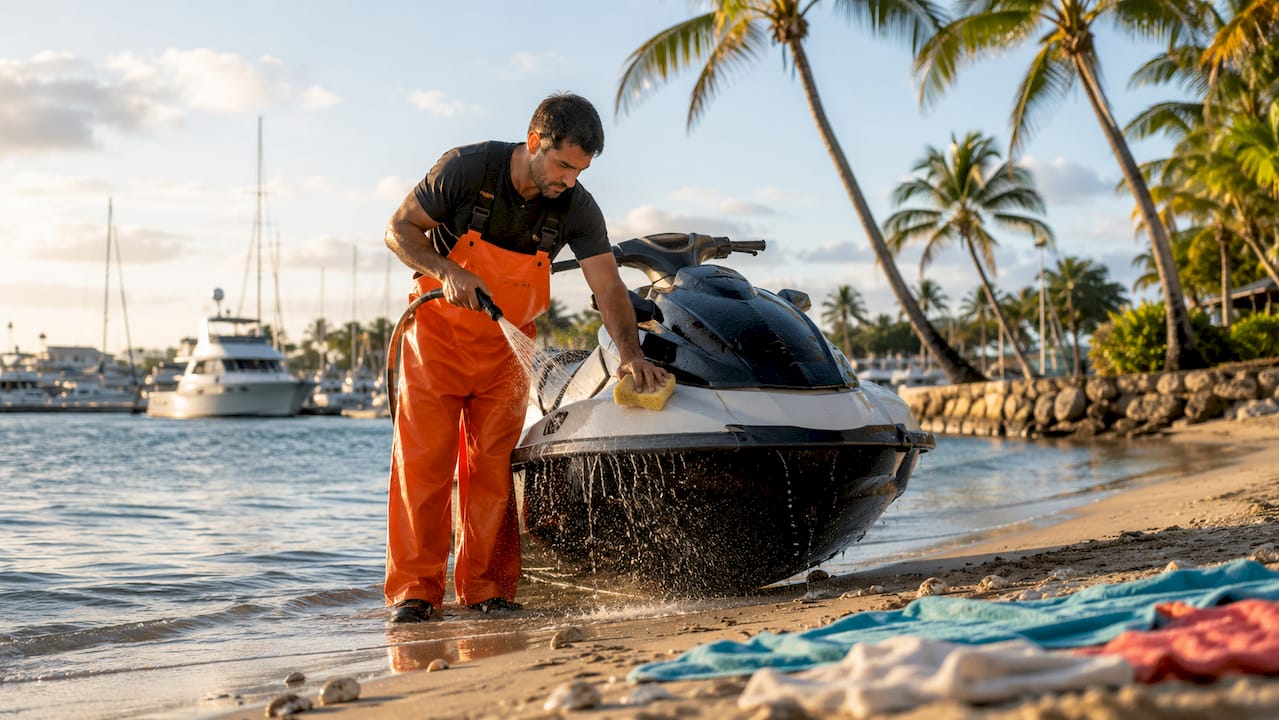
Deck crew handle navigation, vessel maintenance, water sports equipment, and guest safety. Entry-level deckhands typically need 1–2 years of experience and a valid US B1/B2 visa for vessels entering American waters. Entry-level deckhand positions on private motor yachts commonly offer around $4,500 per month with 3:1 rotation schedules as of April 2026. That rotation means three months on, one month off, which suits candidates who want extended time ashore between contracts.
Interior crew: stewardesses, chefs, and housekeepers
Interior crew manage the guest experience directly. Stewardesses handle cabin service, table settings, and guest relations. Chefs operate the galley and are responsible for provisioning, dietary planning, and meal execution at a standard that rivals Michelin-starred restaurants. Third Chef roles on 100m+ yachts often come with structured 2:2 time-for-time rotations, offering better work-life balance than deck positions. Housekeepers maintain the vessel’s interior to a standard that owners and charter guests expect from a five-star hotel.
Engineering and management positions
Engineers maintain propulsion systems, electrical subsystems, HVAC, and all mechanical components aboard. The role demands formal certifications and a high tolerance for problem-solving under pressure. Management positions, including captain, purser, and chief engineer, require years of documented sea time, formal qualifications, and strong leadership skills.
Pro Tip: Before applying to any management role, verify your sea time logs are complete and formatted to STCW standards. Gaps or informal records are the most common reason strong candidates get screened out.
Here is a comparison of the four main role categories:
| Role Category | Key Qualifications | Approximate Monthly Pay |
|---|---|---|
| Deckhand | STCW, B1/B2 visa, 1–2 years experience | $4,000–$5,500 |
| Interior Crew | STCW, food hygiene cert, hospitality background | $3,500–$5,000 |
| Engineer | STCW, ENG1 medical, OOW or Chief Engineer cert | $5,500–$9,000 |
| Captain | Master 500GT or higher, STCW, 5+ years command | $8,000–$20,000+ |
How does yacht crew hiring actually work?
The yacht hiring process operates differently from most industries. Most yacht crew hiring occurs through specialized recruitment agencies operating privately rather than through public job boards. This is what industry insiders call the “hidden job market,” and it is the single most important concept for any job seeker to understand.
Agencies like YPI CREW maintain proprietary candidate databases and match crew to vessels based on experience, personality fit, and availability. Captains and yacht managers rarely post publicly. They call their trusted recruiter, describe what they need, and expect a shortlist within days. If you are not in a recruiter’s database, you are invisible to that process.
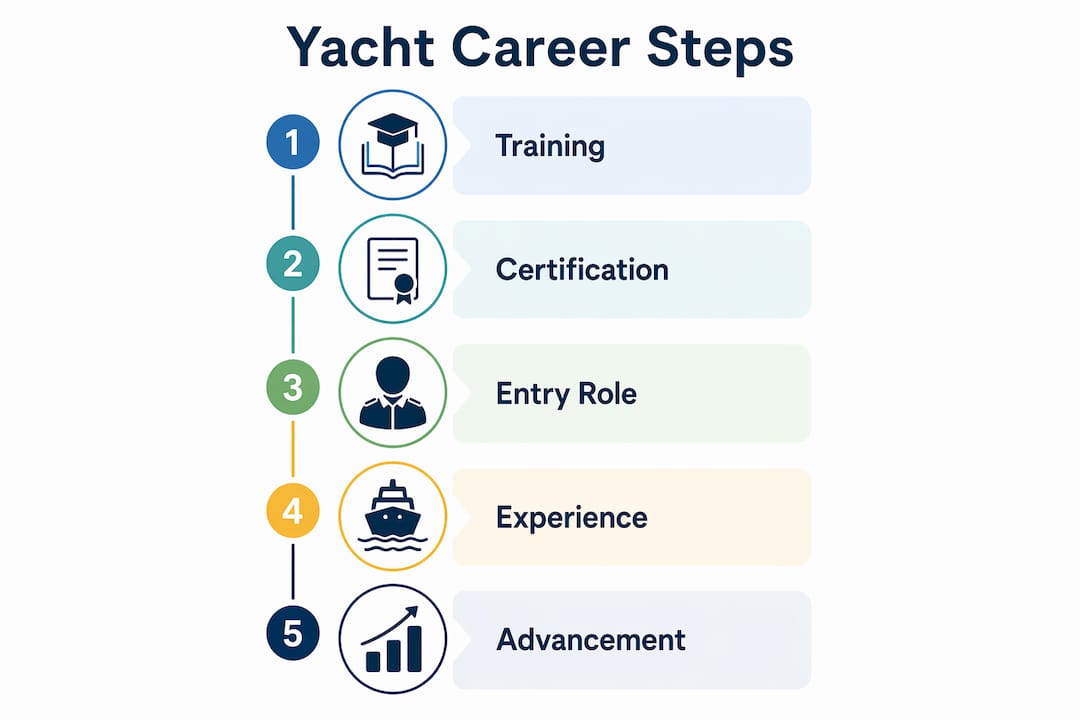
Steps to enter the yacht hiring pipeline
- Obtain your STCW Basic Safety Training certificate. This is the non-negotiable baseline for any crewed vessel role worldwide.
- Complete your ENG1 seafarer medical examination. Most agencies will not register you without it.
- Secure your US B1/B2 visa if you do not already hold one. Applicants lacking a B1/B2 visa face significant barriers securing roles on vessels that enter American waters. This is one of the most underestimated obstacles for new crew.
- Build a professional maritime CV. List sea time in hours, vessel types, and gross tonnage. Recruiters scan for these specifics in seconds.
- Register directly with specialist agencies. Submit your CV to firms like YPI CREW, Quay Group, and Saltwater Recruitment. Follow up personally within two weeks.
- Attend crew placement events in yachting hubs. Antibes, Fort Lauderdale, and Palma de Mallorca host regular dock-walking seasons where direct introductions still carry weight.
Recruiting specialists stress personalized engagement over casual online applications. Sending a generic email to a generic inbox produces almost no results. A direct, specific message to a named recruiter, referencing a specific vessel type or role, produces a very different outcome.
Pro Tip: Treat your recruiter relationship like a professional partnership. Update them every time your certifications change, every time you complete a contract, and every time your availability shifts. Recruiters place the candidates they know best.
What are current demand and salary trends?
The yacht industry is experiencing a measurable crew shortage across multiple departments. Maritime workforce development programs now include stipends and childcare support to ease entry barriers, reflecting how seriously the sector is taking recruitment gaps. This shift toward wrap-around support signals that the industry recognizes it cannot rely on passion alone to attract and retain qualified crew.
Salary expectations vary significantly by role, vessel size, and itinerary:
- Deckhands on private motor yachts earn approximately $4,000–$5,500 per month, with tips on charter vessels adding meaningfully to that figure.
- Chefs and stewardesses on superyachts (vessels over 40 meters) typically earn $5,000–$7,500 per month depending on experience and vessel prestige.
- Chief engineers on 60m+ vessels command $8,000–$12,000 per month, with senior captains on flagship vessels earning $20,000 or more.
- Rotation schedules range from the standard 3:1 for deck crew to 2:2 for senior roles on larger yachts, giving experienced crew up to six months off per year.
The contrast between private yachting and public maritime careers is worth understanding clearly. Public sector maritime careers offer more stability and structured professional development compared to private yachting’s project-based contracts. The U.S. Maritime Administration details benefits packages and advancement paths that private yachting simply does not replicate. For some professionals, that stability is the priority. For others, the flexibility and earning potential of luxury yacht employment outweigh the trade-off.
You can find a useful overview of how luxury yacht employment intersects with broader maritime trends in the Baranofyachts resource library.
How do you build and advance a yacht career?
Career progression in yachting follows a clear but demanding path. The crew who advance fastest combine formal certifications with hands-on experience on diverse vessel types.
The certifications every crew member needs include:
- STCW Basic Safety Training: The global baseline. No agency will register you without it.
- ENG1 Medical Certificate: Required for all professional seafarers under the Maritime Labour Convention.
- US B1/B2 Visa: Critical for any itinerary touching American ports.
- Schengen Visa: Required for extended work in European waters, particularly the Mediterranean.
- PDSD (Personal Development and Survival at Sea): Recommended for crew targeting larger vessels.
- Powerboat Level 2 or RYA Yachtmaster: Accelerates progression for deck crew targeting officer roles.
One of the most underrated accelerators in this industry is new build experience. Working on new build yachts demands high technical aptitude and stamina but accelerates career growth significantly. Crew who participate in a vessel’s commissioning phase demonstrate adaptability, technical depth, and the ability to perform under pressure. That experience stands out on any CV and opens doors to senior roles faster than standard charter contracts. You can explore how bespoke yacht building creates these specialized crew opportunities in detail.
Maritime recruitment is evolving with comprehensive training and wrap-around support programs addressing labor shortages. This means more structured pathways into the industry are available now than at any point in the past decade. Training academies in Fort Lauderdale, Antibes, and Southampton now offer bundled STCW and hospitality programs designed specifically for yacht crew entry.
Pro Tip: If you are targeting a senior role within five years, prioritize getting aboard a new build project even if the pay is lower than a charter vessel. The technical exposure and CV credibility are worth more than the short-term salary difference.
Understanding how crew management works from an owner’s perspective also gives you a meaningful edge. Crew who understand what owners and captains actually need from their team perform better in interviews and on the water.
Key takeaways
Yacht careers reward those who combine the right certifications with proactive recruiter relationships and a willingness to pursue hands-on experience, including new build projects, from the earliest stage of their career.
| Point | Details |
|---|---|
| Hidden job market is real | Most yacht roles are filled through private recruiter networks, not public job boards. |
| Visa compliance is non-negotiable | A missing B1/B2 visa eliminates candidates from a large share of available positions. |
| New build experience accelerates growth | Commissioning projects build CV credibility faster than standard charter contracts. |
| Salary scales with vessel size | Senior crew on 60m+ yachts earn significantly more than those on smaller vessels. |
| Public vs. private trade-offs matter | Public maritime careers offer stability; private yachting offers higher earning potential and flexibility. |
What most guides get wrong about breaking into yachting
I have watched a lot of people approach yacht careers the same way they would approach any other job search: post a resume online, wait, and hope. That approach produces almost nothing in this industry. The hidden job market is not a metaphor. It is the actual mechanism by which most positions are filled, and if you are not actively building relationships with recruiters and captains, you are competing for the small fraction of roles that make it to public listings.
The visa issue is the other thing that catches people off guard. I have seen genuinely qualified candidates lose opportunities because they assumed their passport was enough. The B1/B2 requirement is not bureaucratic noise. Vessels that enter US waters need crew who can legally be aboard in American jurisdiction, and that requirement is checked before an offer is made.
What I find most encouraging about this industry right now is the shift toward structured entry pathways. The Working Waterfront Coalition’s approach to stipend-supported training is a real signal that the sector wants to grow its talent base, not just poach from a shrinking pool of experienced crew. If you are early in your career, that infrastructure works in your favor.
The lifestyle dimension is real too, but it is not the reason to build a career here. The reason to build a career here is that the skill development is genuine, the compensation is competitive, and the progression from deckhand to officer to captain is a documented, achievable path. The travel is a benefit. The career is the point.
— Jason
How Baranofyachts supports your path in luxury yachting
At Baranofyachts, we work at the intersection of yacht ownership, custom builds, and the professional world that keeps these vessels operating at their best. Our expertise in project management and new build delivery means we understand exactly what owners expect from their crew, and what crew need to thrive aboard a vessel built to the highest specifications.
Whether you are exploring yacht ownership, considering a custom build, or simply want to understand how the luxury yachting world operates from the inside, we are here to guide you. Visit our yacht configuration tool to explore what a bespoke vessel looks like from concept to delivery, or connect with us directly to discuss how our expertise can support your goals in this industry.
FAQ
What certifications do you need to work on a yacht?
The STCW Basic Safety Training certificate and an ENG1 medical certificate are the minimum requirements for any professional yacht crew role. Most agencies also require a valid US B1/B2 visa for vessels operating in American waters.
How much do yacht crew earn per month?
Entry-level deckhands on private motor yachts earn approximately $4,500 per month, while senior captains on large superyachts can earn $20,000 or more. Salary scales with vessel size, role seniority, and whether the vessel operates on charter.
How do you find yacht job openings?
Most sailing job openings are filled through specialized recruitment agencies like YPI CREW and Quay Group rather than public job boards. Registering directly with these agencies and attending crew placement events in Fort Lauderdale or Antibes produces the best results.
What is a 3:1 rotation schedule on a yacht?
A 3:1 rotation means three months working aboard followed by one month off. This schedule is standard for deck crew on private motor yachts and gives crew predictable time ashore between contracts.
Is new build experience worth pursuing early in a yacht career?
New build experience is highly valued by recruiters because it demonstrates technical depth and adaptability under pressure. Crew who participate in a vessel’s commissioning phase advance to senior roles faster than those with only charter experience.
Recommended
Sold Listings
Design Your Yacht
"*" indicates required fields
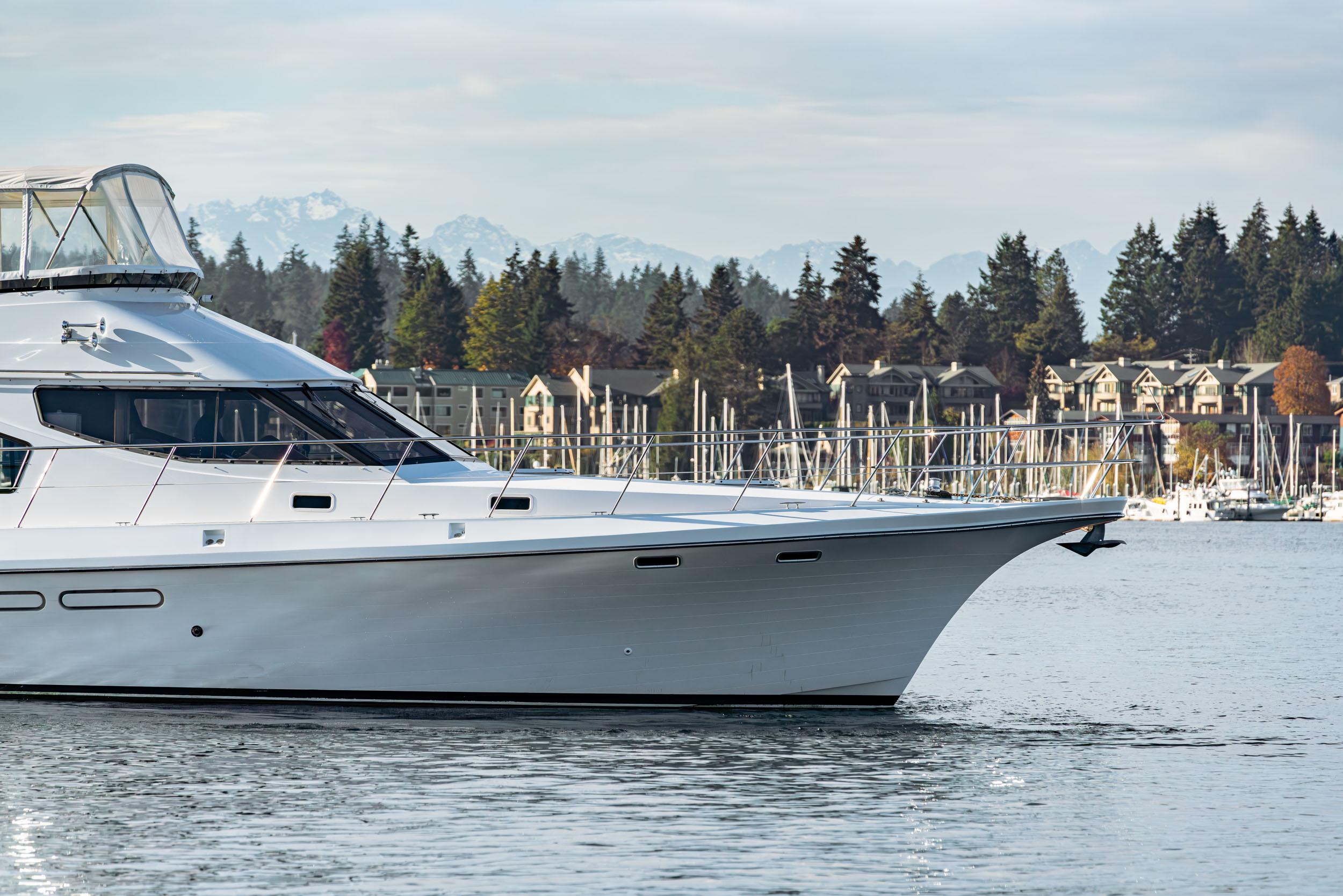
Maximus III - PNW
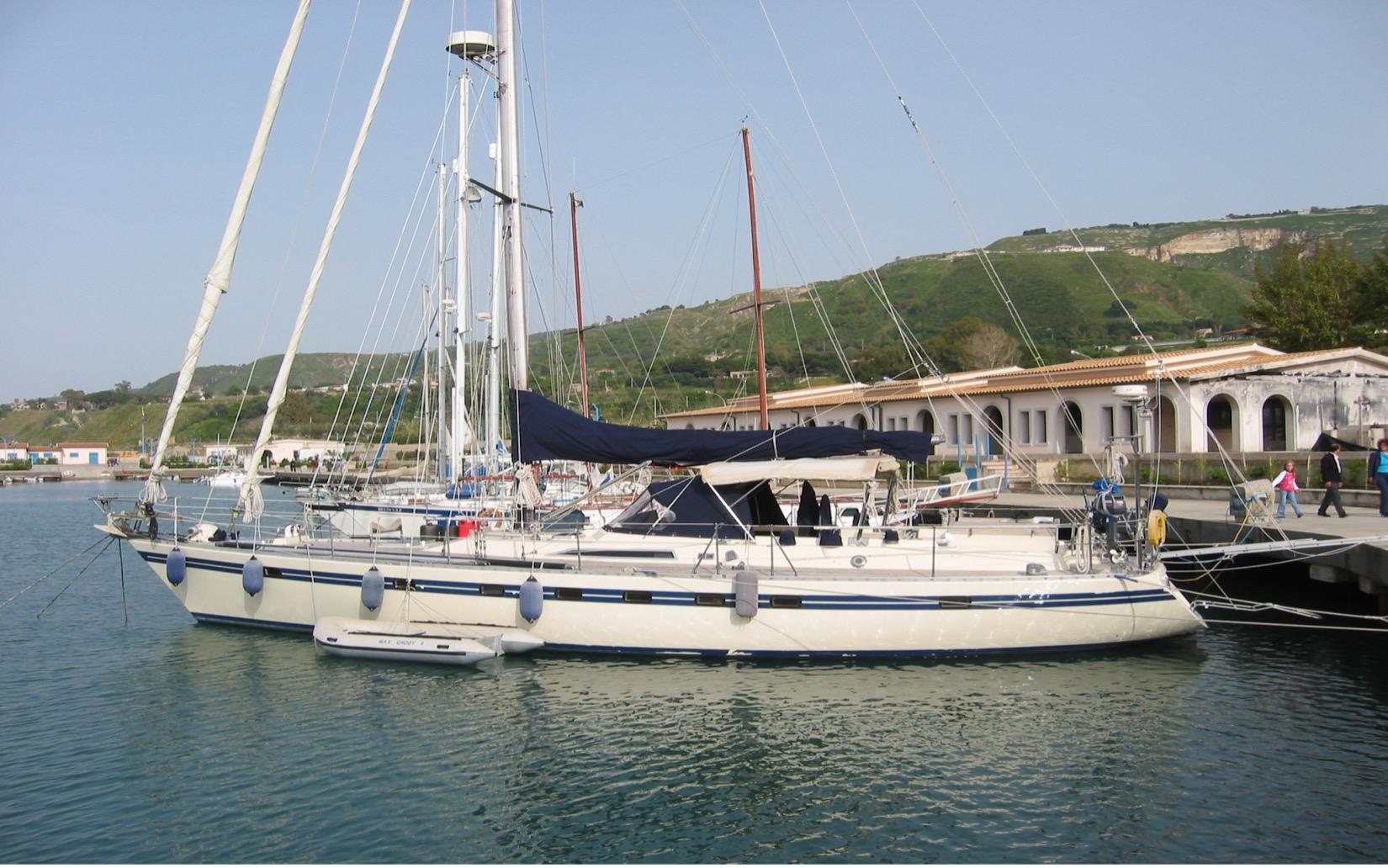
As you step aboard MAXIMUS III, the first impression is her scale.
At 120 feet with an 8-meter beam and 294 GT of interior volume, this 2025 Crescent Custom tri-deck immediately feels open, balanced, and estate-like. A timeless look while still feeling fresh from the shipyard.
Currently Available


Get your yacht value Estimate
"*" indicates required fields