
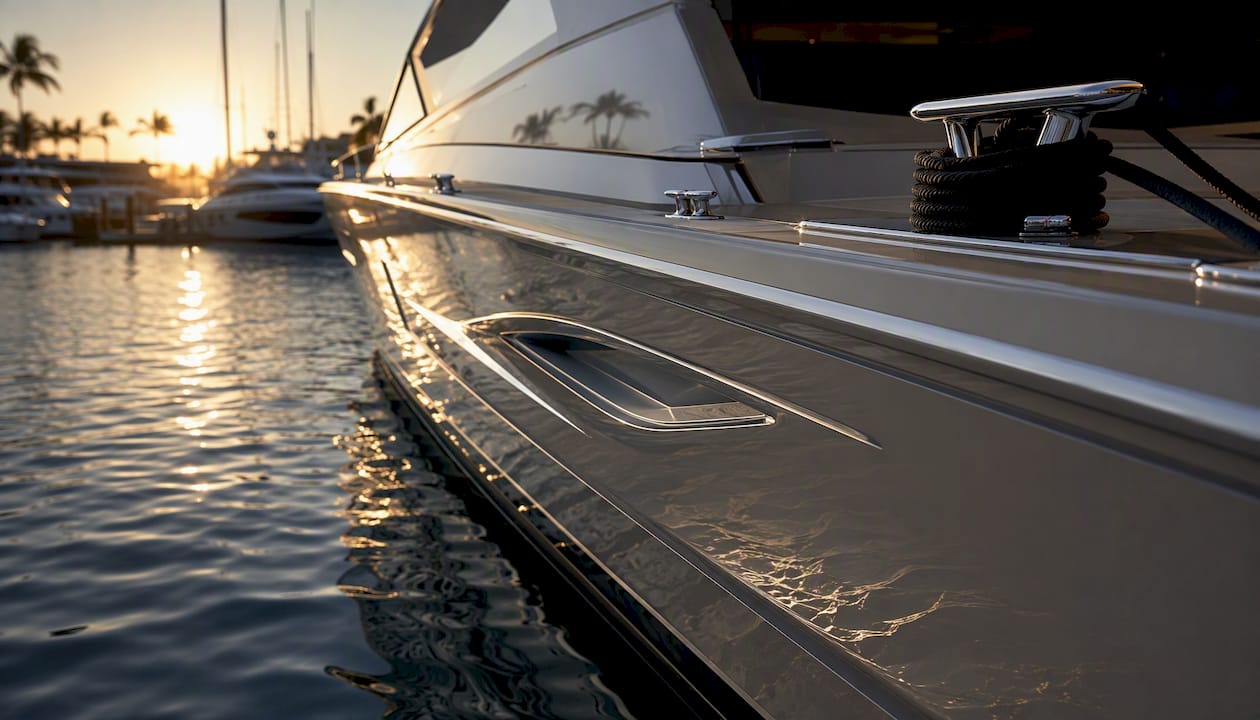
Boat hull types fall into three motion-based categories: displacement, planing, and semi-displacement. According to Lippert’s complete hull guide, these categories describe how a hull moves through water, and that single distinction drives nearly every performance trade-off you will encounter. For long-range cruising and fuel economy, a displacement hull is the right starting point. For speed, watersports, or coastal day trips, a planing hull delivers. Semi-displacement sits between the two, offering a practical balance for coastal cruisers and offshore passages where both efficiency and moderate speed matter. The U.S. Coast Guard (USCG) and NOAA both reference sea state and operating environment as the primary variables in safe vessel selection, which reinforces why hull category should be the first decision, not the last.
- Cruising and long-range passages: displacement hull
- Speed, watersports, and coastal day trips: planing hull
- Offshore passages with moderate speed needs: semi-displacement hull
- Shallow-water fishing and flats access: flat-bottom or shallow-V planing hull
- Rough offshore water: deep-V planing hull with a deadrise angle typical for offshore performance
Table of Contents
- What do common hull shapes mean for handling?
- Which design factors actually change how a hull performs?
- How do you choose the right hull for your needs?
- Which hull works best for each U.S. boating activity?
- What materials are used in boat hull construction?
- How does hull type affect maintenance requirements?
- How has hull design evolved over time?
- What safety considerations apply to each hull type?
- Key Takeaways
- What most buyers get wrong about hull selection
- Baranofyachts helps you match hull to mission
- Useful sources for further research
What do common hull shapes mean for handling?
Hull category tells you how a boat moves. Hull shape tells you how it feels doing it. The cross-section geometry, chine type, and running surface together determine stability, seakeeping, draft, and planing behavior.
Multi-hull designs
Catamarans and trimarans achieve stability through beam rather than ballast. Catamarans provide superior lateral stability and reduced heeling compared with traditional monohulls, making them a preferred platform for stable cruising, liveaboard use, and family passages. Pontoon boats apply the same twin-hull principle to recreational platforms, prioritizing deck space and load capacity over speed. The trade-off for all multi-hulls is beam: they require more marina space and can be challenging to maneuver in tight quarters.
Cross-section sketch callout: Commission one diagram per shape (flat, round-bilge, shallow-V, deep-V, catamaran) with labeled features: deadrise angle, chine location, keel line, and waterline. These visuals are among the most-cited elements in hull-type educational content.
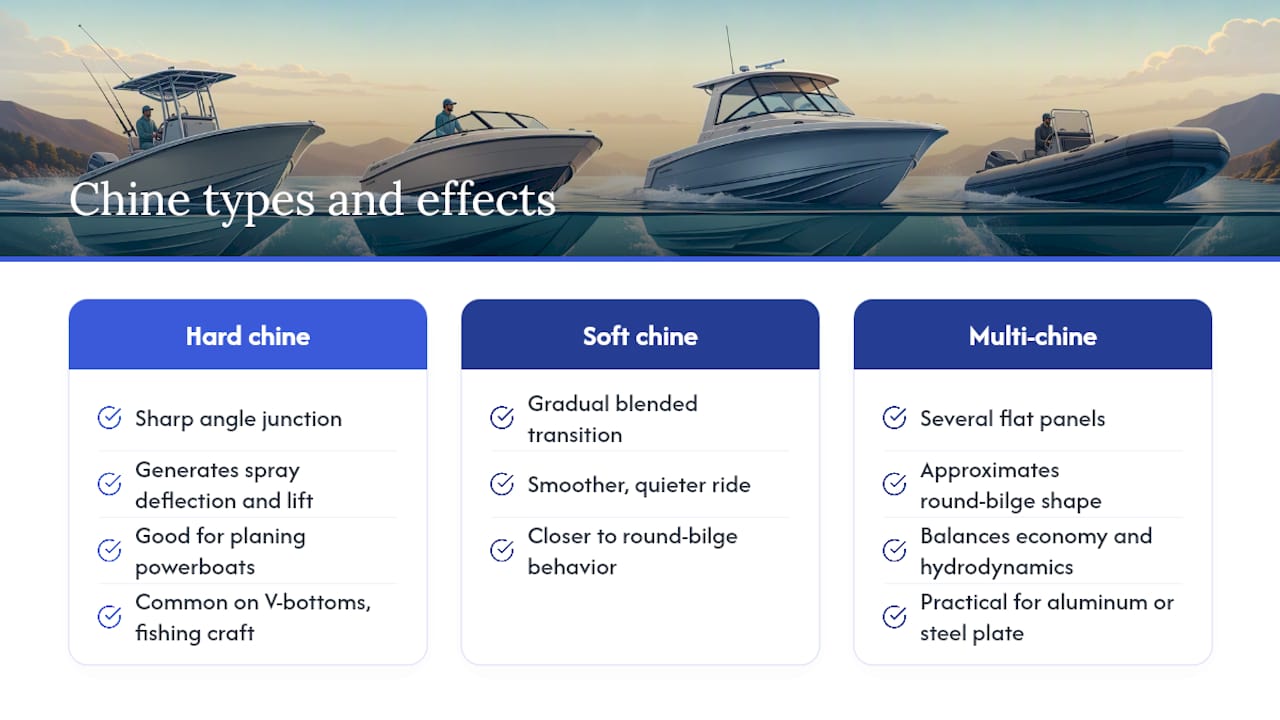
Chine types and their practical effects
Chines are the longitudinal lines where the hull bottom meets the topsides. Hard chines create a sharp angle that generates spray deflection and lift during planing, making them common on V-bottom powerboats and aluminum fishing craft. Soft chines blend the transition gradually, producing a smoother, quieter ride closer to round-bilge behavior. Multi-chine hulls approximate a round-bilge form using several flat panels, balancing construction economy with hydrodynamic performance. For hull fabrication using aluminum or steel plate work, multi-chine geometry is often the most practical approach to achieving a near-round-bilge shape without the tooling cost of a fully curved mold.
Which design factors actually change how a hull performs?
Shape names are a starting point. The numbers behind them are what let you compare two boats objectively.
Deadrise is the most important single number for a powerboat buyer. Shallow deadrise (6°–12°) means fast planing and a smooth ride in calm water but a punishing one in chop. Moderate deadrise (12°–18°) balances both. Deep-V geometry at 20°–24°+ is the standard for offshore performance, where wave entry comfort outweighs the slight planing efficiency penalty. Builders specify deadrise, chine geometry, and transom pad characteristics early in the design brief because these parameters determine required engine horsepower, planing behavior, and seakeeping performance from the outset.
Hull speed applies directly to displacement and semi-displacement designs. The formula is 1.34 × √LWL (feet). A 36-foot waterline yields a hull speed of about 8 knots. Pushing a displacement hull past that figure is possible but expensive in fuel and hard on machinery. Understanding this limit helps you evaluate whether a listed vessel’s engine package is appropriately matched to its hull form. For a deeper look at how displacement affects operational decisions, why yacht displacement matters is worth reviewing before you evaluate any listing.
Keel type matters most for sailboats and long-range cruising yachts. A full keel offers directional stability and protects the running gear but increases draft and reduces maneuverability. A fin keel reduces wetted area and improves upwind performance at the cost of some directional stability. A centerboard or daggerboard allows draft adjustment, which is valuable for shoal-water cruising grounds like the Chesapeake Bay or the Bahamas.
Beam controls transverse stability and interior volume. A wider beam increases initial stability and deck space but can increase resistance at speed and make the boat feel “wall-like” in beam seas. For PWC and small planing craft, hull rocker adds another variable: the curvature of the running surface fore-to-aft affects how the hull transitions onto plane and how it tracks at speed.
Trade-off rules to keep in mind:
- More deadrise = better seakeeping, slower planing, more power needed
- Wider beam = more stability and volume, potentially more resistance
- Longer waterline = higher hull speed (displacement) or better wave entry (planing)
- Shallower draft = more access, less tracking stability, reduced keel protection
- Heavier displacement = more range efficiency, slower acceleration, higher fuel burn at speed
How do you choose the right hull for your needs?
The right hull choice starts with one question: where will this boat spend most of its time? Operating environment, not top speed, should drive the decision.
| Best for | Typical speed | Stability | Seakeeping | Draft | Load capacity | Fuel/power profile |
|---|---|---|---|---|---|---|
| Shallow lakes, rivers, flats | Low–moderate planing | High initial | Poor in chop | Very shallow | High | Low power, efficient |
| Offshore fishing, rough water | High planing | Moderate | Excellent | Moderate | Moderate | High power demand |
| Long-range cruising | Displacement (8 kts) | High secondary | Excellent | Moderate–deep | High | Low fuel burn |
| Coastal day trips, watersports | Moderate–high planing | Moderate | Good–moderate | Moderate | Moderate | Moderate power |
| Stable family cruising, liveaboard | Displacement or semi | Very high (catamaran) | Good–excellent | Moderate | Very high | Moderate |
Numbered checklist for evaluating a hull:
- Define your primary operating area (protected inland, coastal, offshore, bluewater).
- Set a realistic average cruising speed, not a top-speed target.
- Calculate your typical passenger and gear load, then check it against the vessel’s rated capacity.
- Confirm draft against the shallowest water you regularly navigate.
- Assess your maintenance tolerance and budget for the hull material and bottom paint schedule.
- Ask the broker or builder for the transom deadrise figure and the recommended power range.
- Request the hull speed calculation or planing threshold for the specific design.
Questions to ask a broker or yard:
- What is the transom deadrise, and how does it change forward?
- Is this a hard-chine, soft-chine, or multi-chine design, and what does that mean for the ride?
- What engine horsepower range did the naval architect specify, and why?
- What bottom paint system does the builder recommend for the intended operating area?
- How does hull weight affect planing threshold and fuel consumption at cruise?
Red flags to watch for:
- Deadrise figure not disclosed or “approximate” at the transom
- Engine package significantly over or under the designer’s specified range
- Planing hull carrying excessive fixed weight (generator, watermaker, full tanks) without a revised power assessment
- No documentation of the hull’s construction material or laminate schedule
Which hull works best for each U.S. boating activity?
Matching hull to activity is where the technical knowledge becomes practical. Here is a direct mapping for the most common U.S. boating scenarios.
-
Shallow inland fishing and flats (Gulf Coast, Florida, Chesapeake): Flat-bottom or very shallow-V aluminum skiff. Minimal draft is the priority; seakeeping is secondary on protected water. Jon boats and purpose-built flats skiffs dominate this category for good reason.
-
Family lake boating: Pontoon or modified-V bowrider. Pontoons offer maximum deck space and load capacity on calm inland water. A modified-V bowrider handles light chop better and gives more speed range for towing.
-
Watersports and wakeboarding: Modified-V or dedicated wake boat hull with a relatively flat transom section for a clean, consistent wake. Speed range of 18–24 MPH is typical for wakeboarding; hull weight and ballast placement shape wake quality more than deadrise alone.
-
Coastal day trips (protected bays, inlets, nearshore): Shallow-to-moderate-V center console or express cruiser. Deadrise in the 15°–18° range handles the short, steep chop common in U.S. coastal inlets without sacrificing planing efficiency.
-
Offshore bluewater fishing and cruising: Deep-V hull with deadrise of 20–24 degrees or more. This geometry is non-negotiable for sustained offshore comfort in the Gulf Stream or open Atlantic. Boats in this category typically plane at 15–16 MPH and cruise efficiently at 25–35 MPH depending on power.
-
Long-range economical cruising (Great Loop, coastal passages, bluewater voyaging): Displacement or semi-displacement hull. Displacement designs deliver the best fuel efficiency for steady long-distance passages, and their predictable motion reduces crew fatigue on multi-day runs. Trawler yachts and full-displacement cruising yachts are the standard choice for this mission.
What materials are used in boat hull construction?
Hull material determines weight, maintenance burden, longevity, and repair cost. The choice is rarely about performance alone.
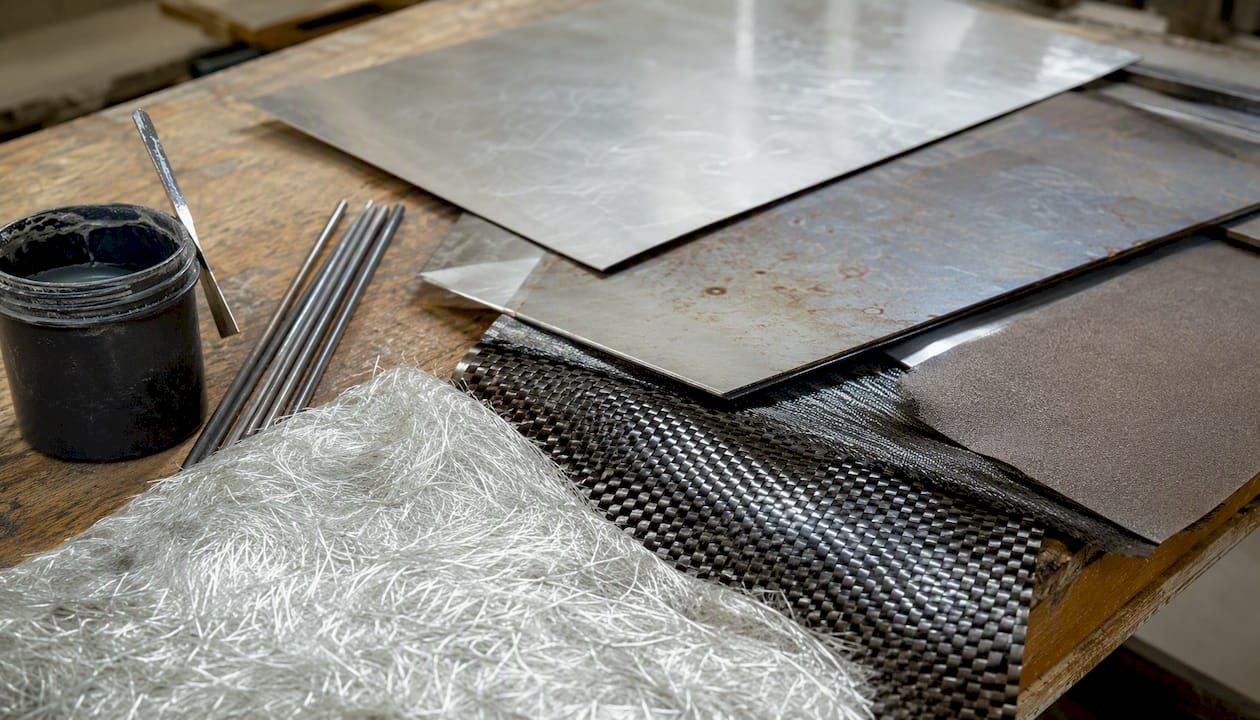
Fiberglass (GRP) is the dominant material for production powerboats and sailboats in the U.S. market. It is relatively light, corrosion-resistant, and easy to repair. Gelcoat surfaces protect the laminate and provide color, but they require periodic oxidation treatment and bottom painting in saltwater. Fiberglass hulls can develop osmotic blistering below the waterline if the laminate absorbs water over time, which makes proper barrier coating important during construction and refit.
Aluminum is the preferred material for commercial vessels, workboats, and many high-performance sport fishing boats. It is lighter than steel, highly corrosion-resistant in saltwater with proper anodizing or paint, and weldable for custom shapes. Aluminum hulls are common in flat-bottom and multi-chine designs because the material suits plate construction well. The trade-off is galvanic corrosion risk when aluminum contacts dissimilar metals, which requires careful attention to through-hull fittings and bonding systems.
Steel offers exceptional strength and impact resistance, making it the standard for commercial ships and long-range bluewater cruising yachts where grounding or ice contact is a realistic risk. Steel is heavier than aluminum or fiberglass, which pushes displacement up and hull speed down. Rust prevention through proper surface preparation, epoxy primer, and antifouling paint is a continuous maintenance commitment.
Carbon fiber and advanced composites are used in high-performance racing yachts, superyachts, and custom builds where weight reduction justifies the cost premium. Carbon fiber laminates can be 30–40% lighter than equivalent fiberglass structures, which translates directly into speed, range, or payload capacity. For a detailed breakdown of how material selection affects weight, maintenance, and longevity in luxury builds, the hull material selection guide covers the full decision framework.
Wood remains relevant for traditional builds, restorations, and custom one-off projects. Modern epoxy-saturated wood construction (cold-molded or strip-planked) produces a strong, light hull with excellent aesthetics, but it demands skilled craftsmanship and consistent maintenance to prevent moisture intrusion.
How does hull type affect maintenance requirements?
Maintenance needs vary significantly by hull material and hull form, and underestimating them is one of the most common ownership mistakes.
Fiberglass planing hulls in saltwater need annual bottom paint application and periodic gelcoat polishing. Deep-V hulls with running pads and strakes accumulate barnacle growth in specific areas that flat-bottom hulls do not, so bottom paint coverage must account for the full wetted surface geometry. Osmotic blister repair, when needed, requires grinding, drying, and barrier coating, a multi-week haul-out process.
Aluminum hulls need vigilant attention to the bonding and cathodic protection system. Zinc or aluminum anodes must be inspected and replaced regularly, and any paint failure that exposes bare aluminum in saltwater accelerates corrosion. The upside is that aluminum does not blister and rarely needs the same frequency of bottom paint application as fiberglass in low-fouling environments.
Displacement and semi-displacement hulls, which spend more time at slow speeds with greater wetted area, typically accumulate marine growth faster than planing hulls that regularly run at speed. This means more frequent haulouts or the use of premium antifouling paint systems. Keel-to-hull joints on ballasted sailboats require periodic inspection for weeping or cracking, particularly after grounding events.
For luxury and custom builds, key yacht building materials and their long-term maintenance implications are worth reviewing before committing to a construction specification.
How has hull design evolved over time?
The history of hull design is essentially a history of matching available materials and propulsion technology to the demands of the sea.
Early working vessels relied on round-bilge displacement forms because they were the only shapes that could be built from wood planking and still hold water. The transition to steam power in the 19th century allowed heavier iron and steel hulls, which made full-displacement commercial ships practical at scale. Planing hull theory emerged in the early 20th century as lightweight gasoline engines became available, and the first true planing powerboats appeared in racing contexts before filtering into recreational use.
The post-World War II fiberglass revolution transformed production boatbuilding. Molds allowed consistent replication of complex hull shapes at low per-unit cost, which made V-hull and modified-V designs accessible to the mass market. The 1960s and 1970s saw the deep-V hull, developed by naval architect Ray Hunt, become the standard for offshore performance boats, a position it still holds.
Modern computational fluid dynamics (CFD) software has allowed naval architects to optimize hull forms with a precision that was impossible with physical tank testing alone. Hybrid hull forms, stepped hulls that trap air under the running surface to reduce drag, and asymmetric catamaran hulls are all products of this computational era. Carbon fiber and infused composite construction have pushed weight reduction further, enabling semi-displacement superyachts that cruise at speeds previously associated only with planing hulls.
What safety considerations apply to each hull type?
Hull type has direct implications for stability, capsize resistance, and safe operating limits. The USCG’s capacity plate requirements for recreational vessels reflect these differences, and understanding them helps you operate within the design envelope.
Flat-bottom hulls have high initial stability but low secondary stability. They feel solid at rest but can capsize quickly if overloaded or caught broadside in unexpected chop. The USCG recommends staying within the posted capacity limits and avoiding operation in conditions beyond the vessel’s rated sea state.
Deep-V hulls are more forgiving in rough water but require adequate speed to maintain their designed stability characteristics. At rest or at very low speeds, a deep-V hull rolls more freely than a flat-bottom design, which can be disorienting for passengers unaccustomed to it. Proper weight distribution, particularly keeping heavy gear low and centered, is critical.
Multi-hull vessels, particularly catamarans, have very high initial stability but can capsize in extreme conditions and are difficult to right once inverted. This characteristic makes them safe in normal operating conditions but demands respect for weather windows on offshore passages. The USCG and NOAA both publish guidance on safe operating conditions by vessel type, and consulting those resources before an offshore passage is standard practice.
Displacement and semi-displacement yachts generally have the most predictable motion and the highest secondary stability, particularly when ballasted. Their lower speed limits also mean they are less likely to be caught in dangerous sea states by outrunning their own judgment. For readers planning offshore passages, offshore yacht delivery considerations cover the operational planning that complements hull selection.
This article provides general information on hull design and safety principles. Always consult the USCG, a qualified naval architect, or a licensed marine surveyor for guidance specific to your vessel and intended operating area.
Key Takeaways
The most important decision in hull selection is matching the hull’s motion category and deadrise to your primary operating environment, not your top-speed ambition.
| Point | Details |
|---|---|
| Three motion categories | Displacement, planing, and semi-displacement each define speed limits, fuel efficiency, and seakeeping behavior. |
| Deadrise is the key number | Deep-V offshore hulls run 20°–24°+ deadrise; shallow-V and flat-bottom designs suit calm, protected water. |
| Hull speed limits displacement designs | Use 1.34 × √LWL (feet) to calculate the practical speed ceiling before power demands spike. |
| Material drives maintenance | Fiberglass, aluminum, steel, and composites each carry distinct maintenance schedules and repair costs. |
| Baranofyachts for expert selection | Baranofyachts provides brokerage, custom build, and project management services to match hull to mission precisely. |
What most buyers get wrong about hull selection
The most common mistake we see in brokerage conversations is buyers leading with speed targets instead of operating environment. A client will arrive having researched top-speed figures for a deep-V express cruiser, only to discover that their primary use case, weekend family trips on a shallow tidal river, calls for a modified-V or even a semi-displacement design with a draft under three feet.
Hull choice also has real resale implications that most buyers do not consider at the time of purchase. Modified-V and semi-displacement hulls tend to appeal to a broader buyer pool because they balance speed and seakeeping without demanding the fuel budget of a true offshore performance boat. Owners who prioritize resale value and broad utility often find these hull forms hold their market position better than highly specialized designs.
The signals we listen for in a design conversation are straightforward: intended use, the shallowest water the owner will regularly navigate, maintenance tolerance, and whether the owner plans to keep the vessel for five years or twenty. Those four answers narrow the hull category, shape, and material choices faster than any spec sheet comparison. When the mission is genuinely complex, a bespoke hull solution designed from the keel up is often the most cost-effective long-term decision, not the most expensive one.
Baranofyachts helps you match hull to mission
When hull selection is the foundation of a multi-year ownership experience, the right guidance at the outset saves far more than it costs. Baranofyachts works with clients across brokerage, custom yacht builds, and full project management to ensure the hull form, material, and construction specification align precisely with how and where you intend to use the vessel.

Whether you are evaluating an existing listing, planning a new build from the keel up, or considering a refit to upgrade an existing hull’s performance, our team brings the same conductor’s-eye oversight to every phase. We coordinate naval architects, yards, and material specialists so that deadrise, chine geometry, and power matching are resolved before a single panel is cut. For buyers ready to move from research to decision, our boat brokerage services are the practical next step. Contact Baranofyachts to arrange a consultation and begin matching your hull to your mission.
Useful sources for further research
The following resources offer authoritative technical and regulatory depth for readers who want to go beyond this overview.
- Complete Guide to Boat Hull Types
- Types of Boat Hulls: The Complete Guide | Lippert
- Types of Sailboats | Sea Tow
- Hull (watercraft) – Wikipedia
- Boat Hull Types and Shapes – Drive a Boat USA
- Boat Hull Types, Designs & Explainations | BOATERexam.com®
- Hull Designs – The Foundation of a Boat’s Performance – Yamaha Outboards
- What Is a Displacement Hull Yacht: Design and Benefits
Recommended
Sold Listings


Design Your Yacht
"*" indicates required fields
Maximus III - PNW
As you step aboard MAXIMUS III, the first impression is her scale.
At 120 feet with an 8-meter beam and 294 GT of interior volume, this 2025 Crescent Custom tri-deck immediately feels open, balanced, and estate-like. A timeless look while still feeling fresh from the shipyard.
Currently Available


Get your yacht value Estimate
"*" indicates required fields