

How location shapes yacht asset value from day one
Where your yacht lives is not a detail. It is one of the most consequential financial decisions you will make as an owner, shaping depreciation curves, operating costs, buyer confidence, and ultimately the price you realize at resale. The geographic influence on yacht value operates through several interlocking mechanisms, and understanding them gives you a meaningful edge whether you are acquiring, holding, or positioning a vessel for sale.
Location affects yacht asset pricing through the following direct channels:
- Climate and environment: Salinity, UV exposure, and temperature cycles accelerate or slow hull and interior wear, directly altering depreciation rates.
- Operational costs: Dockage fees vary dramatically by region, with Mediterranean marinas averaging $120/ft/month versus roughly $35/ft/month in the Caribbean, compressing or expanding net ownership economics.
- Regulatory and flag state regime: Registries such as the Cayman Islands and Marshall Islands carry buyer confidence premiums that translate into measurable price differences at resale.
- Maintenance and refit access: Proximity to specialized refit centers determines how efficiently you can preserve compliance and condition.
- Market demand and seasonality: Active charter markets and concentrated buyer pools in prime hubs sustain higher resale pricing and shorter days on market.
Each of these factors compounds over time. A vessel that starts life in an unfavorable location, under a problematic registry, with limited refit access, can lose value at a rate that no amount of cosmetic upkeep will fully reverse.
How yacht depreciation actually works, and why location accelerates it
Yacht depreciation is the progressive loss of asset value driven by aging, accumulated use, and physical condition. Unlike real estate, a yacht has no land component to anchor its floor value, so condition and environment carry proportionally more weight in the valuation equation.
Environmental conditions at the berth are a primary driver of material degradation. Salinity and temperature accelerate corrosion in metal fittings, osmotic blistering in GRP hulls, and UV fading in gelcoat and teak. A vessel berthed year-round in a high-salinity, high-UV environment such as the Red Sea or the Gulf of Mexico will typically require more frequent antifouling, more aggressive topside maintenance, and earlier replacement of deck hardware than an equivalent vessel kept in a temperate northern European climate.
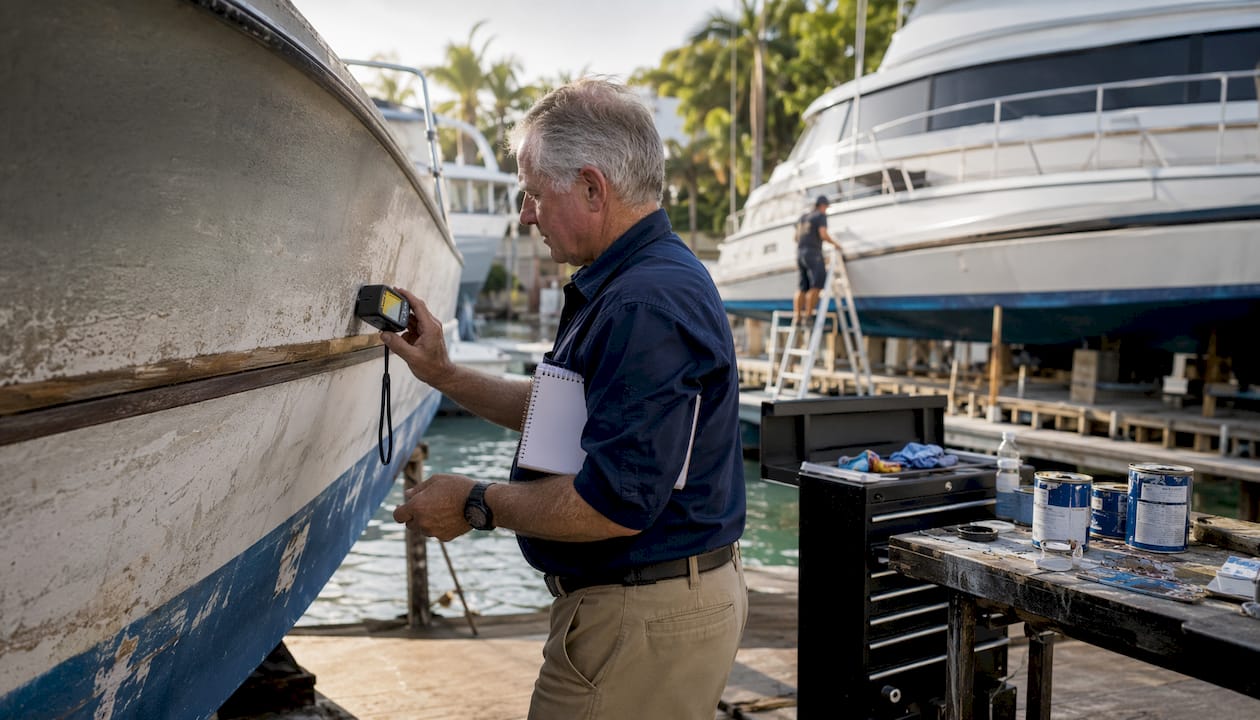
Storage type compounds this further. A yacht on a dry stack in Fort Lauderdale, lifted clear of the water between uses, avoids continuous hull immersion and the biofouling and osmosis cycles that come with it. Marina-berthed vessels in warm, nutrient-rich waters face those cycles constantly. The difference in hull condition after five years of ownership can be visible to any experienced surveyor, and surveyors translate visible condition directly into price recommendations.
The depreciation curve for motor yachts is steepest in the first few years, then flattens for well-maintained vessels. Location determines where on that curve a given yacht sits relative to its peers. A vessel that has spent its life in a well-managed Mediterranean marina with access to quality yards will typically hold value better than an identical model that has been anchored in a remote tropical location with no nearby service infrastructure.
What specific location factors drive yacht valuation by region
Geography shapes yacht asset pricing through a layered set of variables, some obvious and some easy to overlook until they appear on a survey report or a buyer’s counteroffer.
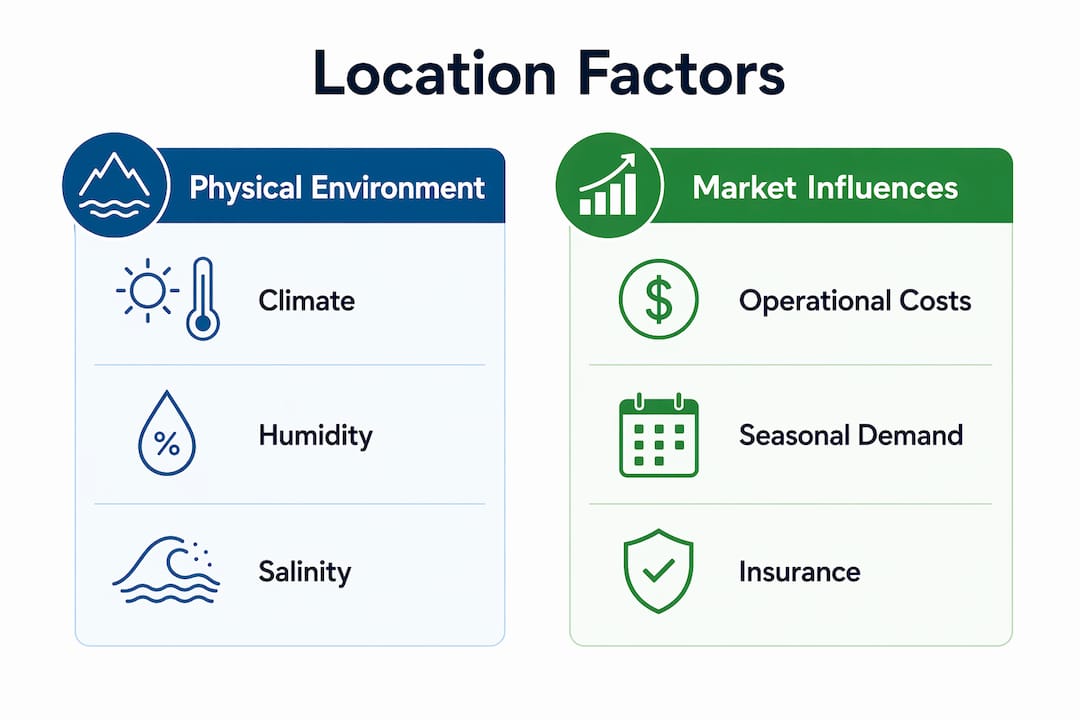
Climate and physical environment sit at the foundation. High humidity accelerates mold growth in soft furnishings and woodwork. Tropical UV loads fade exterior paint and degrade rubber seals faster than temperate climates. Tidal ranges and current patterns affect how hard a vessel works at its mooring lines and fenders, contributing to hull and deck wear over time.
Operational costs vary enough by region to materially affect net asset value. Beyond dockage, fuel costs 30–40% more in Europe than in the Caribbean on a per-liter basis. EU VAT compliance for non-EU owners operating in Mediterranean waters can represent a significant liability of the vessel’s value if mishandled. These costs do not directly reduce the vessel’s appraised value, but they shape buyer appetite and negotiating leverage.
Seasonal demand is a less-discussed but real factor. The Mediterranean’s summer season generates intense charter demand driven by event-driven tourism, which supports both charter income and resale pricing. Buyers in active charter markets are often willing to pay more because they can model a return on the asset, not just a cost of ownership.
Pro Tip: Position your vessel in a region where charter income potential is strong before listing it for sale. A documented charter history from a premium market like the French Riviera or the Balearics adds a yield narrative to the listing, which broadens the buyer pool and supports asking price.
Key location factors that directly influence valuation:
- Access to certified refit yards with environmental compliance capabilities
- Proximity to active brokerage markets and qualified buyer concentrations
- Local insurance cost environment, particularly in hurricane-prone zones where premiums rise sharply
- Marina infrastructure quality, including security, technical support, and berth availability
- Flag state registration environment and the ease of maintaining compliance from that location
Insurance costs deserve particular attention. Yachts based in hurricane-prone regions such as the Gulf of Mexico or the Eastern Caribbean during storm season face elevated premiums that reduce net ownership economics. Some underwriters require vessels to transit out of named-storm zones during peak season, adding repositioning costs and operational complexity that buyers factor into their offers.
Why proximity to refit centers is a value preservation tool
Regular maintenance and periodic refits are not optional for owners who care about asset value. They are the mechanism by which a yacht’s condition stays competitive with newer inventory entering the market. Location determines how efficiently and cost-effectively you can execute that maintenance cycle.
Yachts near effective refit centers can complete modernization projects more efficiently, preserving value as environmental regulations tighten. This is particularly relevant in 2026, when emissions standards and waste management requirements are evolving across European and U.S. waters. A vessel that cannot demonstrate compliance with current standards faces a discount at sale, regardless of its cosmetic condition.
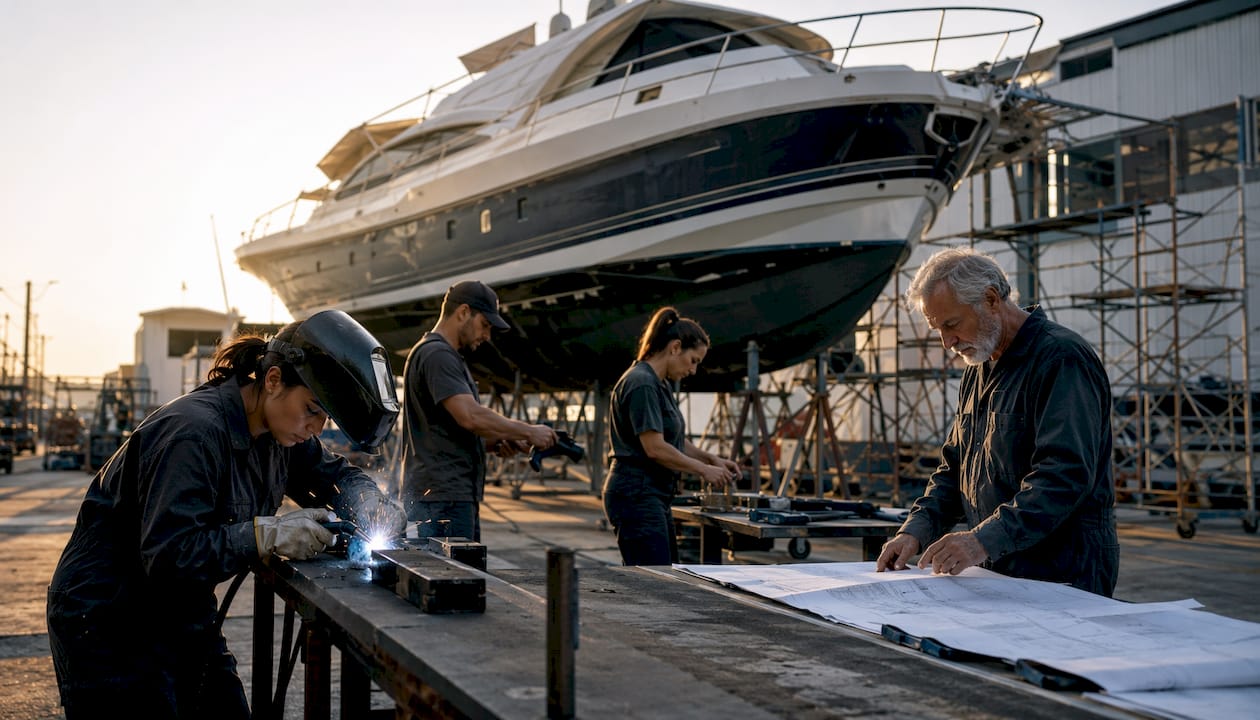
The value case for refitting is well established. Comprehensive refits covering interior, mechanical systems, and paintwork support a 10–20% premium over unrefitted examples at resale. That premium is only accessible if the refit was executed to a standard that surveyors and buyers recognize, which generally means using accredited yards with documented quality processes.
Geographic benefits of being near a strong refit ecosystem include:
- Faster turnaround on regulatory compliance upgrades, reducing time off-charter
- Access to specialist subcontractors for electronics, paint systems, and naval architecture
- Competitive pricing from multiple yards in proximity, preventing monopoly pricing
- Easier coordination of refit timelines with survey schedules and seasonal repositioning
The Mediterranean’s refit hubs, particularly in Palma de Mallorca, La Ciotat, and the Ligurian coast, have built ecosystems where a vessel can move from survey to compliance upgrade to cosmetic refit within a single season. U.S. owners benefit from comparable infrastructure in Fort Lauderdale and the Puget Sound region, where yacht classification and survey services are concentrated alongside major refit yards.
How flag state compliance and registry location shape resale price
Flag state selection is one of the most direct ways that location affects yacht asset pricing, and it is frequently underestimated by first-time owners. The registry under which a vessel operates signals regulatory rigor, commercial familiarity, and operational history to every buyer and their broker.
Vessels flagged under preferred registries like the Cayman Islands and Marshall Islands maintain higher resale values because buyers trust the regulatory framework behind those flags. Both registries are recognized by the Paris and Tokyo Memoranda of Understanding on Port State Control, meaning vessels under these flags face consistent, predictable inspection standards. That predictability has a dollar value at the negotiating table.
| Flag State Factor | Effect on Resale Value |
|---|---|
| Clean, active Cayman Islands registration | Commands a premium; preferred by institutional buyers |
| Clean Marshall Islands registration | Strong buyer confidence; recognized commercial framework |
| Lapsed registration or outstanding deficiencies | Depresses price; buyers factor in remediation costs |
| Unresolved port state control detentions | Significant discount; triggers due diligence delays |
| Clean Lloyd’s or DNV GL classification | Premium over lapsed or conditional class records |
Unresolved flag state compliance can lower a sale price by margins that dwarf the cost of maintaining clean registration in the first place. Buyers who discover a flag state deficiency during due diligence will either walk away or use it as leverage for a price reduction well beyond the actual remediation cost. The uncertainty premium they demand is almost always larger than the underlying problem.
Environmental and safety compliance requirements are also tightening across major yachting jurisdictions. Vessels that have been based in regions with less rigorous enforcement may have deferred compliance work that becomes visible the moment a serious buyer commissions a survey. Staying current with flag state requirements, particularly on MARPOL waste management and SOLAS safety equipment standards, protects both the vessel’s operational status and its market value. For owners considering offshore registration, the choice of registry is as much a financial decision as a legal one.
How location shapes resale demand, buyer behavior, and final pricing
Buyer behavior in the yacht market is acutely sensitive to where a vessel is located and what that location implies about its history, condition, and operational burden. A vessel listed in Monaco carries different associations than the same model listed in a secondary market with thin buyer traffic.
Vessels listed for more than 12–18 months become stigmatized in the market. Buyers assume a structural issue or an unrealistic seller, and long-listed vessels in regions with thin buyer pools often negotiate significant discounts. Location affects days on market directly: a vessel in a prime hub like Fort Lauderdale, Antibes, or Palma de Mallorca benefits from concentrated broker networks, qualified buyer traffic, and active survey infrastructure that accelerates transaction velocity.
The Mediterranean accounts for €4.7 billion in annual superyacht operational expenditure, reflecting the depth of infrastructure and buyer interest concentrated in that region. That concentration supports sustained values and faster sales for well-presented vessels.
Key buyer considerations tied directly to vessel location:
- Mooring convenience: Buyers in the U.S. market weight proximity to home ports and Bahamas cruising grounds heavily, as seen in Palm Beach’s sustained demand for well-maintained vessels.
- Regulatory burden: A vessel already compliant with the buyer’s intended operating region commands a premium over one requiring repositioning and compliance work.
- Charter market access: Buyers who intend to charter the vessel will pay more for a location with proven charter demand and an established management infrastructure.
- Economic and tax climate: Florida’s favorable tax treatment for yacht ownership contributes to Palm Beach’s strength as a resale market, attracting buyers who value low friction alongside the vessel itself.
The 2026 yachting market shows more inventory and longer days on market than the pandemic-era peak, which means location’s role in differentiating listings has grown. Vessels in prime locations with clean compliance records and documented refit histories are holding value; vessels in secondary markets with deferred maintenance are facing the full weight of buyer negotiating leverage.
Key Takeaways
Location is the single most underestimated variable in yacht asset pricing, shaping depreciation, operating costs, compliance burden, and buyer demand simultaneously.
| Point | Details |
|---|---|
| Climate drives depreciation | High salinity, UV, and humidity accelerate material wear, increasing maintenance costs and reducing long-term value. |
| Dockage costs vary sharply | Mediterranean marinas average $120/ft/month versus $35/ft/month in the Caribbean, directly affecting net ownership economics. |
| Flag state compliance pays | Clean Cayman Islands or Marshall Islands registration commands a resale premium; lapsed registrations trigger buyer discounts. |
| Refits near quality yards add 10–20% | Comprehensive refits covering interior, mechanical, and paintwork support a 10–20% premium over unrefitted vessels at resale. |
| Prime hubs reduce days on market | Vessels listed in active brokerage centers like Fort Lauderdale or Antibes sell faster and at firmer prices than those in thin markets. |
At Baranofyachts, we work with owners and prospective buyers to align vessel location, registry, and refit strategy with long-term asset goals. Whether you are evaluating a new build, planning a repositioning, or preparing a vessel for sale, our team brings the project management discipline and partnership network to protect your investment at every stage. Explore our perspective on next-gen yacht design and how location-aware ownership decisions are shaping the 2026 market.

Recommended
Sold Listings


Design Your Yacht
"*" indicates required fields
Maximus III - PNW
As you step aboard MAXIMUS III, the first impression is her scale.
At 120 feet with an 8-meter beam and 294 GT of interior volume, this 2025 Crescent Custom tri-deck immediately feels open, balanced, and estate-like. A timeless look while still feeling fresh from the shipyard.
Currently Available


Get your yacht value Estimate
"*" indicates required fields