
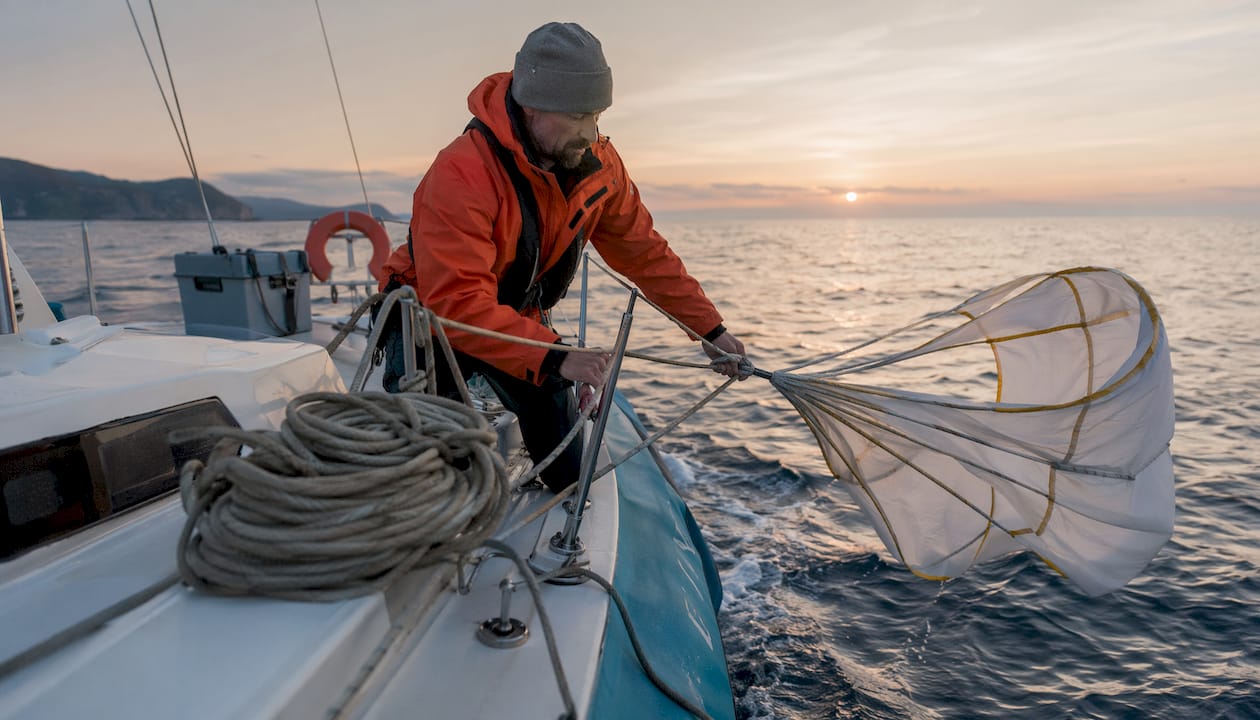
A yacht sea anchor is defined as a parachute-like drag device deployed from the bow to stabilize a vessel by creating massive underwater resistance, significantly reducing drift and holding the bow into wind and waves. Also called a parachute anchor or drift anchor, this piece of yacht safety equipment has saved vessels and crews in conditions where engines fail and weather turns severe. Sea anchors reduce vessel drift speed by 90–95% in open ocean. That single figure explains why experienced offshore sailors treat this device as non-negotiable safety gear, not an optional accessory.
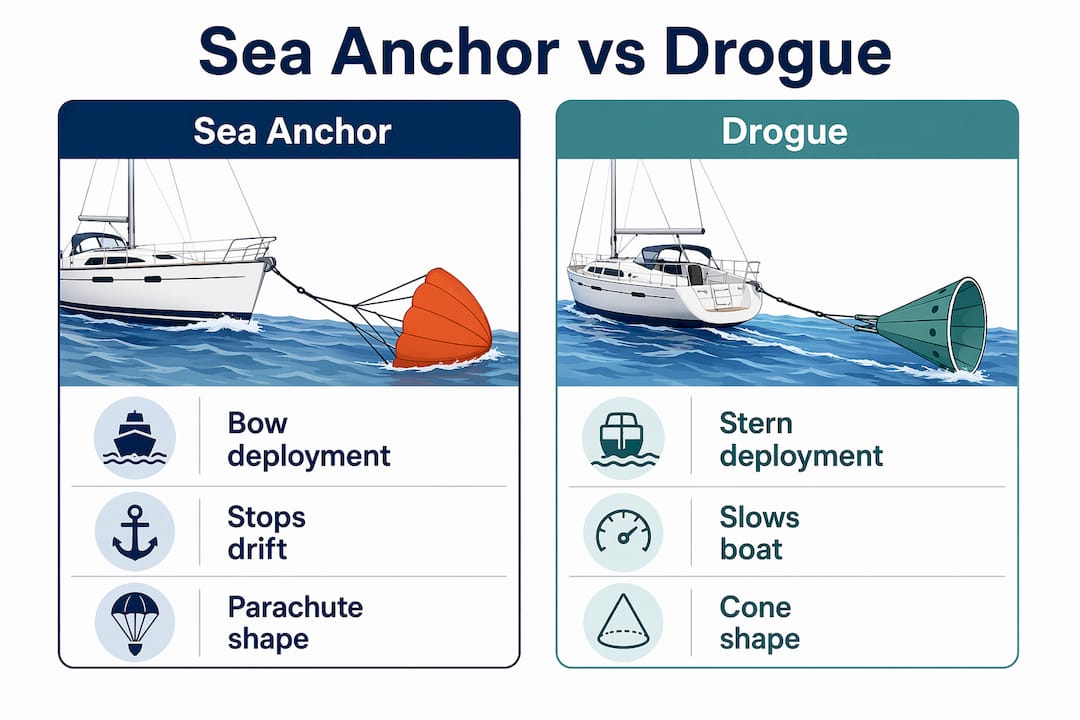
What is a yacht sea anchor and how does it differ from a drogue?
A sea anchor and a drogue are not the same device. Confusing them is one of the most common and dangerous mistakes sailors make in heavy weather.
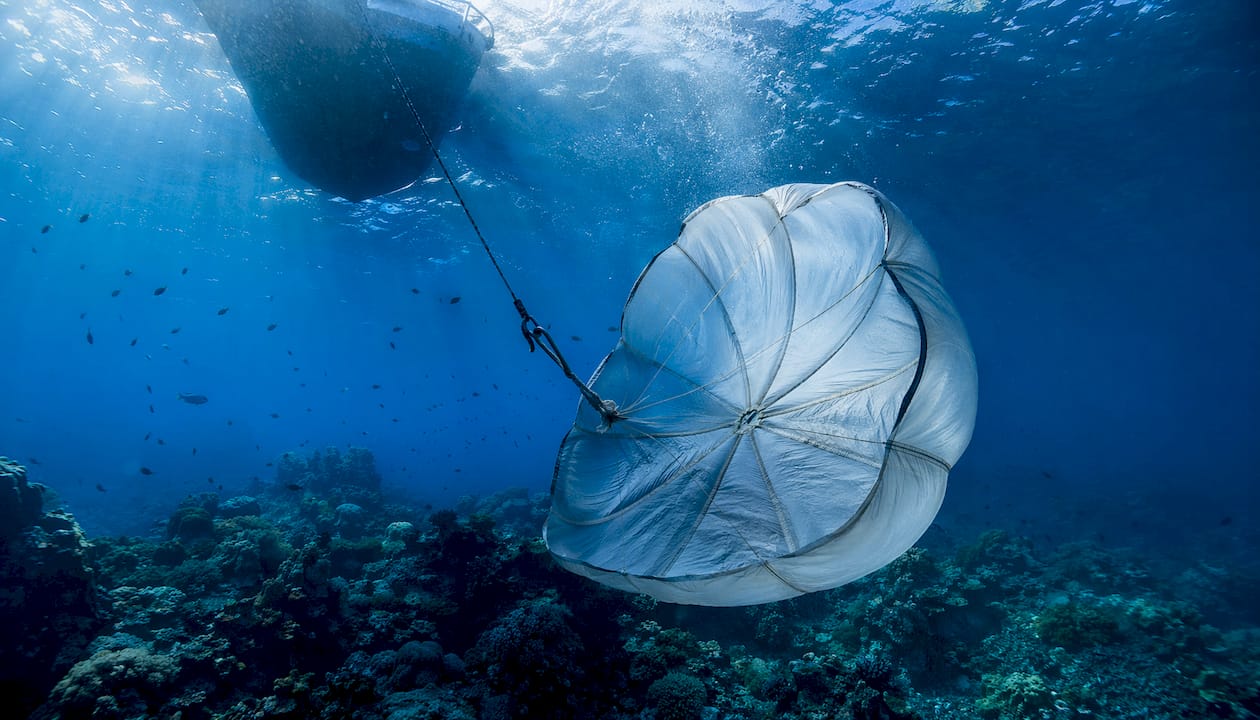
A sea anchor deploys from the bow on a long rode. It opens underwater like a parachute, creating drag that holds the bow pointed directly into oncoming wind and waves. The vessel sits nearly stationary, weathering the storm with minimal forward or backward movement. Sea anchors stabilize from the bow, while drogues deploy from the stern to maintain steerage and reduce dangerous surfing down wave faces.
A drogue is a smaller, cone-shaped device. It does not stop the boat. It slows the boat while the vessel continues moving forward or downwind, giving the helm enough resistance to maintain steering control. Drogues are the right tool when you need controlled motion. Sea anchors are the right tool when you need to stop.
Misapplication of these devices can cause loss of control. Deploying a drogue from the bow, or a sea anchor from the stern, produces unpredictable and potentially dangerous vessel behavior.
| Feature | Sea anchor | Drogue |
|---|---|---|
| Deployment point | Bow | Stern |
| Primary function | Stop drift, hold bow to wind | Slow vessel, maintain steerage |
| Shape | Parachute or cone (large) | Cone or series drogue (smaller) |
| Best conditions | Storm survival, engine failure | Running downwind in heavy seas |
| Vessel movement | Near stationary | Controlled forward motion |
Pro Tip: Always label your sea anchor and drogue bags clearly and store them in separate, accessible locations. In a real emergency, you will not have time to read instructions or guess which device is which.
How to deploy a sea anchor on a yacht: step-by-step
Deployment technique determines whether your sea anchor performs as designed or becomes a tangled liability. Proper deployment includes size selection, hardware inspection, line management, deck clearing, and clear crew communication.
Follow this sequence every time:
-
Select the correct size. Match the sea anchor diameter to your vessel’s displacement. An undersized device will not generate enough drag to hold the bow. Manufacturers publish sizing charts based on displacement tonnage. Use them.
-
Inspect all hardware before deployment. Check the rode for chafe, the shackles for corrosion, and the bow cleat for structural integrity. Load-bearing system design must account for dynamic storm forces proportional to yacht displacement. A cleat that holds fine in calm water can fail catastrophically under cyclical wave loads.
-
Attach the trip line first. A trip line runs from the apex of the parachute back to the vessel. Without a trip line, recovering a heavy, submerged parachute in rough seas can be physically impossible. Rig it before you deploy, not after.
-
Clear the foredeck. Remove any loose lines, fenders, or gear that could tangle with the rode during payout. One fouled line can collapse the parachute before it opens.
-
Assign crew roles. One person manages the rode payout. One person monitors the bow cleat and chafe gear. The helm maintains a steady heading into the wind during deployment. Uncoordinated crew action is the leading cause of deployment failures.
-
Pay out the rode slowly. Feed the line hand over hand with control. Do not throw the entire coil overboard at once. Allow the parachute to open fully before cleating off the rode.
-
Confirm bow orientation. Once the device is fully deployed and loaded, the bow should swing and hold into the wind. If the vessel yaws repeatedly, check that the rode length is sufficient. A longer rode reduces yawing on most hull types.
Pro Tip: Practice this sequence in calm conditions at least once per season. Wet-run trials build crew muscle memory and reveal hardware weaknesses before a real emergency forces the issue. Seasonal hardware inspection prevents the kind of failures that only show up under load.
How does yacht design affect sea anchor performance?
Hull form, keel type, and displacement all directly influence how well a sea anchor holds a yacht in position. Hull design affects sea anchor performance significantly. Some yachts exhibit unsafe yaw or oscillation despite properly sized and rigged equipment.
Deep keel yachts with heavy displacement tend to hold a stable bow orientation. The keel acts as a lateral resistance plane, resisting the sideways forces that cause yawing. Wide, shallow-draft hulls and lightweight performance designs are more prone to oscillating side to side, which reduces the effectiveness of the sea anchor and increases load cycling on the rode and cleat.
The rode material matters as much as the device itself. High-modulus nylon rode is the standard for sea anchor systems because it absorbs shock loads through stretch. Polyester or Dyneema lines are too stiff. They transmit every wave impact directly to the cleat and shackle, accelerating hardware fatigue.
| Yacht type | Hull characteristic | Sea anchor consideration |
|---|---|---|
| Heavy displacement cruiser | Deep keel, high ballast ratio | Stable bow hold, standard nylon rode |
| Fin keel performance yacht | Moderate draft, lighter hull | Some yawing likely; longer rode helps |
| Wide-beam catamaran | Shallow draft, broad beam | High yaw risk; specialized bridle system required |
| Centerboard cruiser | Variable draft | Centerboard position affects lateral resistance |
Reinforced bow cleats and stainless steel bow rollers are not optional on any yacht that carries a sea anchor. The forces generated by a fully loaded parachute anchor in storm conditions exceed what standard production hardware is rated to handle on many vessels. Upgrading hardware during a custom build or refit is far simpler than doing it at sea.
When should you deploy a sea anchor on a yacht?
A sea anchor is the right tool in specific, well-defined scenarios. Deploying it in the wrong conditions creates new problems rather than solving existing ones.
Deploy a sea anchor when:
- A storm makes forward progress impossible or dangerous
- Engine failure leaves you without propulsion in open water
- Crew exhaustion requires the vessel to heave to safely for an extended period
- You need to hold position while waiting for rescue or weather to pass
- Conditions create a broaching or capsizing risk that active sailing cannot manage
Sea anchor deployment is vital for emergencies like engine failures or storms, keeping the vessel bow to waves and avoiding broaching or capsizing hazards. The device does not just slow the boat. It actively orients the bow, which is the most critical factor in surviving breaking seas.
“A sea anchor is not a passive piece of gear. It is an active safety system that requires the right conditions, the right hardware, and a crew that knows exactly what to do. Deploy it correctly and it can hold your vessel through conditions that would otherwise be unsurvivable. Deploy it incorrectly and it becomes another problem to manage.”
Avoid deploying a sea anchor when:
- You are in shallow water where the rode could touch bottom
- Strong tidal currents conflict with wind direction, creating dangerous vessel behavior
- Reef or coastal hazards are within drift range
- You need steerage to avoid a collision
Using a sea anchor in shallow, reef-filled, or coastal waters can increase risk by limiting steering and causing dangerous positioning. Situational awareness before deployment is not optional. Knowing when not to deploy is as important as knowing how.
For sailors planning offshore passages, safe navigation practices include pre-passage planning that identifies sea anchor deployment windows and exclusion zones along the route.
Key Takeaways
A sea anchor is a bow-deployed parachute device that holds a yacht’s bow into wind and waves, reducing drift by 90–95% and preventing broaching in storm conditions.
| Point | Details |
|---|---|
| Sea anchor vs drogue | Sea anchors deploy from the bow to stop drift; drogues deploy from the stern to maintain steerage. |
| Deployment sequence | Size selection, hardware inspection, trip line rigging, deck clearing, and coordinated crew roles all precede payout. |
| Hull design matters | Deep keel yachts hold bow orientation best; wide, shallow hulls require longer rodes and may still yaw. |
| Rode material is critical | High-modulus nylon absorbs shock loads; stiff lines like Dyneema transfer wave impacts directly to hardware. |
| Know when not to deploy | Shallow water, reefs, and strong tidal currents make sea anchor deployment more dangerous than helpful. |
What I’ve learned about sea anchors that most guides skip
Most articles on sea anchors treat the device as a standalone solution. My experience working with yacht owners and captains tells a different story.
The sea anchor is only as reliable as the hardware it connects to. I have seen well-maintained parachute anchors fail to hold because the bow cleat was a standard production fitting rated for dockside loads, not storm forces. The device worked perfectly. The boat’s hardware did not. That distinction matters enormously when you are specifying or commissioning a yacht.
The second thing most guides understate is crew training. Seasonal wet-run trials and hardware inspection maintain readiness. A crew that has deployed a sea anchor once in calm conditions will perform that task ten times better in a real emergency. Confidence under pressure comes from repetition, not from reading a manual.
Sea anchors have no moving parts. That simplicity is their greatest strength. But simplicity breeds complacency. Sailors who trust the device without checking the rode, the shackle pins, and the trip line before each offshore passage are taking a risk they do not need to take. The yacht aftercare discipline that keeps a vessel looking pristine applies equally to the safety systems stored below decks.
My honest recommendation: treat your sea anchor system as a complete assembly, not a single item. The parachute, the rode, the swivel, the shackles, the bow cleat, and the trip line are one system. Any weak link in that chain negates the performance of every other component.
— Jason
Baranofyachts and the safety systems built into every build
Safety equipment like sea anchors performs best when the yacht it protects was designed with that equipment in mind.

At Baranofyachts, we work with owners from the earliest design stage to specify reinforced bow hardware, appropriate cleat ratings, and rode storage solutions that make deployment fast and reliable. A sea anchor rigged to an undersized cleat on a production hull is a liability. The same device on a yacht built with storm survival in mind is a genuine lifesaver. Our next-generation yacht design approach integrates safety systems at the structural level, not as afterthoughts. If you are planning a custom build or evaluating a yacht for offshore use, we are ready to walk you through every specification that affects safety at sea.
FAQ
What is the difference between a sea anchor and a drogue?
A sea anchor deploys from the bow to stop drift and hold the vessel bow-to-wind. A drogue deploys from the stern to slow the vessel while maintaining steerage during downwind runs in heavy weather.
How do I choose the right sea anchor size for my yacht?
Match the sea anchor diameter to your vessel’s displacement using the manufacturer’s sizing chart. An undersized device will not generate enough drag to hold the bow in storm conditions.
Can I use a sea anchor in shallow water?
Deploying a sea anchor in shallow, reef-filled, or coastal waters increases risk by limiting steering and causing dangerous vessel positioning. Sea anchors are designed for open-water use where depth and current allow safe deployment.
What rode material works best with a sea anchor?
High-modulus nylon is the standard choice because it absorbs shock loads through stretch. Stiff lines like polyester or Dyneema transfer wave impacts directly to hardware, accelerating cleat and shackle fatigue under storm conditions.
How often should I inspect my sea anchor system?
Inspect the full system, including the rode, shackles, trip line, and bow cleat, before every offshore passage. Conduct a wet-run deployment trial at least once per season to confirm hardware integrity and crew readiness.
Recommended
Sold Listings


Design Your Yacht
"*" indicates required fields
Maximus III - PNW
As you step aboard MAXIMUS III, the first impression is her scale.
At 120 feet with an 8-meter beam and 294 GT of interior volume, this 2025 Crescent Custom tri-deck immediately feels open, balanced, and estate-like. A timeless look while still feeling fresh from the shipyard.
Currently Available


Get your yacht value Estimate
"*" indicates required fields