

A yacht refit in the United States typically runs $50,000–$150,000 for a small cruiser (30–40 ft), $150,000–$600,000 for a mid-size vessel (40–60 ft), and $300,000–$1,500,000 or more for a large yacht in the 60–100 ft range. Superyacht refits often reach multi-million dollar costs depending on scope, condition, and systems work required. Owner forums often use a per-foot figure as a rough rule of thumb for comprehensive refits, but this varies significantly with vessel age and discovered work scope.
Before you accept any headline quote, commission a scoped yard brief and a current hull and propulsion survey. That single step, coordinated through a resource like Baranof Yacht Sales or verified against American Bureau of Shipping (ABS) survey standards, consistently separates realistic budgets from the low initial quotes that hide significant exposure points.
At a glance:
- 30–40 ft: $50,000–$150,000 (basic to full refit)
- 40–60 ft: $150,000–$600,000 (cosmetic to full systems)
- 60–100 ft: $300,000–$1,500,000+ (medium to major)
- 100 ft+/superyacht: $1,500,000–$10,000,000+ (scope-dependent)
- Budget a 20–35% contingency on any opened-up project
Key Takeaways
Yacht refit cost is driven by vessel size, condition, and scope far more than by length alone.
| Point | Details |
|---|---|
| Size-based cost ranges | Small cruisers (30–40 ft) run $50k–$150k; mid-size (40–60 ft) $150k–$600k; large yachts (60–100 ft) $300k–$1,500,000+ |
| Contingency is non-negotiable | Opened-up projects routinely run 30–50% over initial quotes; budget 25–50% contingency for condition-unknown vessels. |
| Survey before any quote | A pre-yard hull and propulsion survey exposes hidden costs before they become change orders. |
| Custom vs. standard choices | Go custom on joinery and soft goods; go standard on electronics and safety systems to control cost and serviceability. |
| Baranofyachts project management | Owner-side representation with scoped briefs, milestone payments, and survey coordination keeps refits within 10–20% of budget. |
Table of Contents
- What does a yacht refit cost by size and scope?
- What are the real line items driving your refit budget?
- What does a refit timeline look like from survey to sea trials?
- What hidden costs push refits over budget?
- How do you get accurate quotes and compare them fairly?
- What do real refit budgets look like in practice?
- How professional project management reduces refit overruns
- What insurance coverage do you need during a refit?
- What financing options are available for a yacht refit?
- What do safety and environmental compliance requirements cost?
- Custom vs. standard refit options: what does the choice actually cost you?
- How does yacht age and condition affect your refit budget?
- When to refit and when to sell: an editorial perspective
- Baranofyachts: scoped refit management that protects your investment
- Sources
What does a yacht refit cost by size and scope?
The ranges below reflect U.S. market pricing across three scope levels. “Basic cosmetic” covers paint, upholstery, and minor hardware. “Full interior and systems” adds electrical, plumbing, and joinery. “Engine and propulsion” represents a re-power or full mechanical overhaul layered on top of the other work.
| LOA Band | Basic Cosmetic | Full Interior & Systems | Engine/Propulsion Added |
|---|---|---|---|
| 30–40 ft | $50,000–$150,000 | $50,000–$150,000 | $150,000–$250,000 |
| 40–60 ft | $80,000–$200,000 | $200,000–$450,000 | $350,000–$600,000 |
| 60–100 ft | $200,000–$500,000 | $300,000–$1,500,000+ | $300,000–$1,500,000+ |
| 100 ft+ | $300,000–$1,500,000+ | $1,500,000–$10,000,000+ | $1,500,000–$10,000,000+ |
For a 40-ft vessel, a full refit at $200,000 works out to $5,000 per foot. At 60 ft with a more complex systems package, the same per-foot figure can reach $10,000–$15,000 or higher once propulsion and electrical integration are included. The per-foot anchor is useful for a first sanity check, but condition and scope drive the final number far more than length alone.
Published benchmarks for 30–60 ft yachts show that refurbishment budgets commonly exceed initial estimates by 20–30%, and full refits for larger yachts frequently reach $600,000–$1,500,000 or more. For multi-year refit tiers, the scaling is steep: a 5-year refit on a 50-meter yacht can run $1,500,000–$3,000,000, while a 20-year structural refit on the same vessel can reach $8,000,000–$14,000,000.
Regional U.S. price influences matter. Florida yards, particularly in Fort Lauderdale and the Treasure Coast, carry high demand and competitive labor rates but strong parts availability. The Gulf Coast offers lower labor costs but fewer specialist subcontractors for complex systems work. Northeast yards (Maine, Rhode Island, Connecticut) command premium rates for skilled craftsmen and have shorter working seasons. West Coast yards in San Diego and Seattle are competitive for aluminum and steel vessels but can carry longer lead times for European-sourced components.
Contingency planning:
- Known, fully scoped projects: budget 10–25% contingency
- Opened-up or condition-unknown vessels: budget 25–50% above the initial quote
- Owner-supplied items (AV, art, tenders, gym equipment) typically add 20–40% on top of yard quotes for larger projects
What are the real line items driving your refit budget?
Understanding where money actually goes is the fastest way to read a quote critically. The categories below carry the widest ranges in U.S. yards, and the reasons for that width are almost always access, removal complexity, and what gets discovered once panels come off.
- Hull painting (small cruiser): $15,000–$60,000; (large yacht): $80,000–$300,000+. For superyachts, Boat International reports painting costs between €300,000 and €1,000,000, with roughly 70% of that total going to preparation work before a drop of paint is applied. Daan Balk of Balk Shipyard notes that hardware removal, caulking cuts, seal removal, and controlled-environment shed work are the dominant labor drivers, not the paint itself.
- Interior joinery and upholstery: $20,000–$150,000 for a 40–60 ft vessel. Built-in joinery costs significantly more than loose furniture because hidden services (cabling, piping, fan coils) are typically routed behind fixed cabinetry. Superyacht furniture replacement costs vary widely depending on complexity, often reaching substantial amounts.
- Engine re-power or overhaul: $30,000–$120,000 for a twin-diesel 40–60 ft yacht; $150,000–$500,000+ for larger vessels with generator sets and watermakers included.
- Electrical systems and LED retrofit: $15,000–$80,000 for a mid-size yacht; superyacht LED retrofits are reported at €150,000–€500,000.
- Electronics and navigation: $10,000–$60,000 for a full chartplotter, radar, AIS, and communications suite on a 40–60 ft vessel.
- Teak deck replacement: $25,000–$100,000 for a 40–60 ft yacht; $150,000–$400,000+ for a large yacht with complex deck geometry.
- Rigging (standing and running): $8,000–$40,000 for a sailing yacht in the 40–60 ft range.
- Haul-out, dry-dock, and commissioning: $5,000–$30,000 for a mid-size yacht; $30,000–$150,000+ for a large vessel requiring extended dry-dock time and surveyor attendance.
Labor vs. materials typically splits 60/40 to 70/30 in favor of labor on complex systems work. The hidden prep costs, including hardware removal, fairing, staging, environmental controls, and waste disposal, often double a simple visible estimate. A quote that shows $40,000 for a paint job on a 50-ft hull is almost certainly excluding the $25,000–$35,000 in prep labor that makes the paint last.
Pro Tip: Ask every yard to break out preparation labor as a separate line item on any paint or structural quote. If they bundle it into a single “paint” figure, you cannot compare quotes accurately or identify where the cost is actually sitting.
What does a refit timeline look like from survey to sea trials?
Translating scope into schedule is where many owners underestimate carry costs: mooring fees, crew salaries, insurance premiums, and lost charter revenue accumulate every week a vessel sits in the yard.
- Pre-refit survey and scoping (2–4 weeks). Commission a hull and propulsion survey, pull engine logs and maintenance records, and produce a written scope of work. This stage sets the budget ceiling and exposes provisional sums before the yard period starts.
- Procurement and yard slot booking (4–12 weeks). Long-lead items, particularly custom joinery, European electronics, and specialty coatings, must be ordered before the vessel arrives. Booking a yard slot in Florida during peak winter season can require 3–6 months of lead time.
- Haul-out and dry-work (1–8 weeks depending on scope). Hull inspection, osmosis treatment, antifouling, and any structural work happen here. Discoveries at this stage are the primary driver of contingency spend.
- Mechanical and structural work (2–12 weeks). Engine work, tank replacements, and structural repairs proceed in parallel where yard layout allows.
- Interior and finishing (2–16 weeks). Joinery, upholstery, electrical finishing, and systems commissioning. Owner selections that arrive late are the single most common cause of interior delays.
- Commissioning and sea trials (1–3 weeks). Systems integration testing, surveyor attendance (required for ABS or USCG compliance items), and owner acceptance.
For a well-planned refit, typical durations break down as follows:
| Refit Scope | Typical Duration | Primary Schedule Risk |
|---|---|---|
| Minor cosmetic | 2–6 weeks | Owner selections, parts availability |
| Medium (systems + interior) | 2–4 months | Open-up discoveries, subcontractor sequencing |
| Major (structural + propulsion) | 6–12+ months | Survey findings, class attendance, long-lead items |

Seasonal timing shapes cost as well as schedule. Northeast yards compress into a May–October window, which creates slot scarcity for anything beyond a minor refit.
What hidden costs push refits over budget?
Industry practice and practitioner archives show that refit projects routinely run 30–50% over original quoted scope on opened-up vessels. That pattern is not random. It follows a predictable set of drivers that a prepared owner can anticipate.
The primary cost drivers:
- Condition discovered after opening up. Corrosion behind liners, osmotic blistering below the waterline, fatigued structural members, and seized through-hulls are invisible until panels come off. A vessel that surveys well from the outside can carry $50,000–$200,000 in hidden remediation work.
- Systems integration complexity. Adding a new generator, watermaker, or HVAC unit rarely touches only that system. Electrical load calculations, fuel plumbing, exhaust routing, and structural penetrations create knock-on effects across multiple packages.
- Survey and class requirements. ABS, USCG, or flag-state compliance items discovered during the refit period are non-negotiable additions to scope. They cannot be deferred without affecting certification.
- Owner-driven scope creep. The most common and most controllable driver. A decision to upgrade the galley while the interior is open, or to add a watermaker while the engine room is accessible, is rational in isolation but compounds cost and schedule.
- Long-lead procurement failures. A custom portlight or a specific electronics unit with a 16-week lead time can hold an entire interior package if it was not ordered before the yard period started.
Industry note: Well-managed projects, with clear provisional sums, defined acceptance criteria, and owner-side representation, more often land within 10–20% of the original quote. Unmanaged projects on the same vessel type routinely run 30–50% over.
Pro Tip: Insist that every yard quote separates “fixed price” items from “provisional sums.” A provisional sum is an estimate for work whose full scope cannot be confirmed until access is gained. Knowing which items are provisional before you sign tells you exactly where your contingency will be spent.
How do you get accurate quotes and compare them fairly?
Getting three quotes that are genuinely comparable requires more preparation than most owners invest. A clear pre-yard scope and complete vessel records materially reduce budget noise and prevent low initial quotes that hide exposure points.
Pre-quote preparation checklist:
- Pull the last two survey reports and all engine service records.
- Commission targeted inspections: hull thickness survey, engine compression and oil analysis, tank integrity check, and rigging inspection for sailing yachts.
- Write a redelivery standard: define what “done” looks like in measurable terms (paint gloss level, engine hours at delivery, systems commissioning criteria).
- List all owner-supplied items and their confirmed lead times before sending the scope to yards.
- Define decision authority: who can approve change orders, and up to what value, without owner sign-off.
What to require in every yard quote:
- Explicit included and excluded items (never accept “as discussed”)
- Provisional sums called out separately with their assumed access conditions
- Storage, crane, and travel lift costs itemized (these are often excluded from headline quotes)
- Surveyor and class attendance costs, if applicable
- Commissioning criteria and milestone payment schedule tied to verified deliverables
Comparing quotes across yards requires the same scope document, the same material specifications, and the same acceptance tests sent to every yard. A quote built on “equivalent” materials is not comparable to one specifying the exact product. Use a simple owner budget template structured as follows:
Understanding how shipyard capability affects cost and schedule is as important as the headline quote. A yard with in-house electrical and joinery teams will carry lower coordination risk than one that subcontracts every trade.
What do real refit budgets look like in practice?
Three representative examples ground the ranges in actual budget structures. These are composite illustrations based on owner-forum ranges and trade-published itemized costs, not individual client records.
Example 1: 35-ft cosmetic refit (owner-forum range)
- Hull antifouling and topsides polish: $8,000–$15,000
- Upholstery replacement (cockpit and saloon): $6,000–$12,000
- Deck hardware service and rebed: $4,000–$8,000
- Electronics update (chartplotter, VHF): $5,000–$10,000
- Total: $23,000–$45,000
Owner-forum memories tend to understate prep labor and haul-out costs. The same project quoted by a yard typically runs $35,000–$65,000 once travel lift, pressure washing, and environmental disposal are included.
Example 2: 50-ft medium refit (sample budget)
- Hull paint (full prep and two-part topcoat): $45,000–$80,000
- Interior joinery and upholstery refresh: $30,000–$60,000
- Twin-diesel service and impeller/heat exchanger replacement: $20,000–$40,000
- Electrical panel and LED lighting upgrade: $15,000–$30,000
- Teak cockpit replacement: $25,000–$50,000
- Haul-out, dry-dock, and commissioning: $12,000–$20,000
- Subtotal: $147,000–$280,000
- Contingency (25%): $37,000–$70,000
- All-in estimate: $184,000–$350,000
Example 3: 70-ft large yacht refit (trade-published range)
- Full hull paint (prep-heavy, heated shed): $120,000–$250,000
- Interior refit (built-in joinery, soft goods, AV): $150,000–$350,000
- Engine re-power (twin main engines + generator): $200,000–$450,000
- Full electrical systems integration: $80,000–$150,000
- Systems commissioning with surveyor attendance: $30,000–$60,000
- Subtotal: $580,000–$1,260,000
- Contingency (30%): $174,000–$378,000
- All-in estimate: $754,000–$1,638,000
One cautionary pattern appears repeatedly in owner forums: a 55-ft vessel purchased for $350,000 enters a “quick” refit quoted at $80,000. After opening up the engine room and discovering corroded fuel tanks, fatigued shaft seals, and delaminated hull sections, the final invoice reaches $210,000. The initial quote was not dishonest; it simply could not account for what was hidden. That is precisely why a pre-yard survey is non-negotiable, not optional.
How professional project management reduces refit overruns
It is almost always the quality of owner-side representation and the discipline of the pre-yard process.
Baranofyachts approaches refit project management with the same structured methodology we apply to new builds: a scoped specification before any yard engagement, procurement lead planning that eliminates last-minute substitutions, milestone-based payments tied to verified deliverables, and third-party survey attendance at critical hold points.
Owner-side project management checklist:
- Written scope of work with redelivery standard before the yard period opens
- Confirmed lead times for all owner-supplied and long-lead yard-supplied items
- Provisional sums identified and contingency allocated per item
- Milestone payment schedule with defined acceptance criteria at each gate
- Independent surveyor attendance at haul-out, structural opening, and commissioning
- Weekly reporting cadence with photographic progress records
Pro Tip: Ask any project manager or yard representative you are interviewing to show you a sample milestone payment schedule and a sample change-order log from a previous project. How they track and communicate changes tells you more about their process than any reference call.
For owners coordinating their own refit, our guide to coordinating yacht renovation covers the owner-side responsibilities in detail, including how to structure your decision authority and manage subcontractor sequencing.
What insurance coverage do you need during a refit?
Standard yacht insurance policies often exclude or limit coverage during a haul-out or yard period. Before your vessel enters the yard, review your policy for three specific provisions: the “in-care, custody, and control” exclusion (which can remove yard liability from your insurer’s scope), the agreed-value vs. actual-cash-value basis during yard periods, and the geographic limits of your policy if the vessel is being relocated for the refit.
Most U.S. marine insurers offer a “refit rider” or “lay-up endorsement” that adjusts the premium downward while the vessel is out of the water but maintains hull and liability coverage. Confirm that your policy covers third-party liability for yard workers aboard the vessel, as some policies transfer that exposure to the yard’s own insurance without explicitly notifying the owner.
For larger projects, consider requiring the yard to name you as an additional insured on their general liability and marine contractor’s policy. This is standard practice on commercial projects and provides a direct claim path if yard negligence causes damage during the refit period. Operational cost structures during a vessel’s active period follow a similar logic of separating owner-covered from operator-covered expenses.
What financing options are available for a yacht refit?
Refit financing in the U.S. follows three primary structures, each with a different cost profile.
Marine mortgage or vessel equity loan. If the vessel carries equity above its existing loan balance, a marine lender can extend a secured loan against that equity. Interest rates for marine mortgages typically run 1–2 percentage points above conventional home equity rates, and terms range from 5 to 15 years. The advantage is a lower monthly payment spread over a longer term; the cost is total interest paid over the life of the loan.
Unsecured personal or business loan. For refits under $150,000, an unsecured loan through a bank or credit union avoids the documentation burden of a marine mortgage. For corporate owners, a business line of credit can fund refit work and carry tax implications worth reviewing with a qualified advisor.
Yard payment plans and milestone financing. Some larger U.S. yards offer internal financing or work with marine lending partners to structure milestone-based payment schedules. This approach aligns payments with verified progress, which reduces the owner’s exposure to a yard that draws funds ahead of completed work. The cost is typically embedded in the yard’s pricing rather than stated as an interest rate, so compare the total project cost, not just the monthly payment.
One practical consideration: financing a refit on a vessel you plan to sell within three years rarely produces a positive return. The refit cost is unlikely to be fully recovered in the resale price, and the financing cost compounds the gap. If the refit is driven by safety, compliance, or charter revenue, the calculus changes, but the math is worth running before committing to a loan.
What do safety and environmental compliance requirements cost?
U.S. Coast Guard (USCG) and flag-state compliance requirements add costs that cannot be deferred or negotiated. For vessels operating commercially or chartering under USCG Subchapter T or Subchapter K, a refit that touches propulsion, electrical systems, or structural elements typically triggers a USCG inspection and may require third-party plan approval.
Common compliance cost items include:
- EPIRB and life raft recertification: $500–$2,500 per unit, required on a fixed schedule regardless of refit scope
- Fire suppression system inspection and recharge: $1,500–$8,000 depending on system type and vessel size
- Bilge water treatment compliance (MARPOL/EPA): $5,000–$25,000 for vessels adding or upgrading holding tanks and overboard discharge systems
- ABS or classification society survey attendance: $3,000–$15,000 per survey event for larger vessels
- Antifouling paint compliance: Several U.S. states, including California and Washington, restrict copper-based antifouling paints. Switching to a compliant product adds $2,000–$15,000 in material and application cost depending on vessel size.
Environmental regulations around yard waste, solvent disposal, and blasting media containment also add to haul-out costs in states with strict environmental enforcement. Florida and California yards typically pass these compliance costs through as itemized charges; ask for them explicitly when reviewing quotes.
Custom vs. standard refit options: what does the choice actually cost you?
The cost gap between a custom refit and a standard one is real, but it is not always where owners expect it.
A custom galley built to exact owner dimensions costs more than a modular galley system, but it also fits the space precisely and integrates hidden services without compromise.
Standard electronics packages, by contrast, often cost less and perform better than custom-integrated systems because the manufacturer has already solved the integration problem. Specifying a Garmin or Furuno chartplotter suite from a standard package is faster, cheaper, and easier to service than a custom-integrated multi-brand system requiring a specialist integrator.
The practical rule: go custom where fit, finish, and long-term satisfaction depend on it (joinery, soft goods, structural modifications). Go standard where performance and serviceability matter more than aesthetics (electronics, propulsion controls, safety systems). Mixing the two strategically is where experienced project oversight adds the most value, because the decision has downstream cost implications for installation, commissioning, and future maintenance.
How does yacht age and condition affect your refit budget?
Age alone is a weak predictor. Maintenance history, build quality, and the presence of corrosion or osmosis are the variables that actually determine budget.
Vessels built before 1990 often carry wiring standards, plumbing materials (polybutylene, lead solder), and structural adhesives that require full replacement rather than repair when touched. Opening a single system on a pre-1990 vessel frequently exposes adjacent systems that cannot be left in place once access is gained. That cascade effect is the primary reason older vessels carry higher contingency requirements.
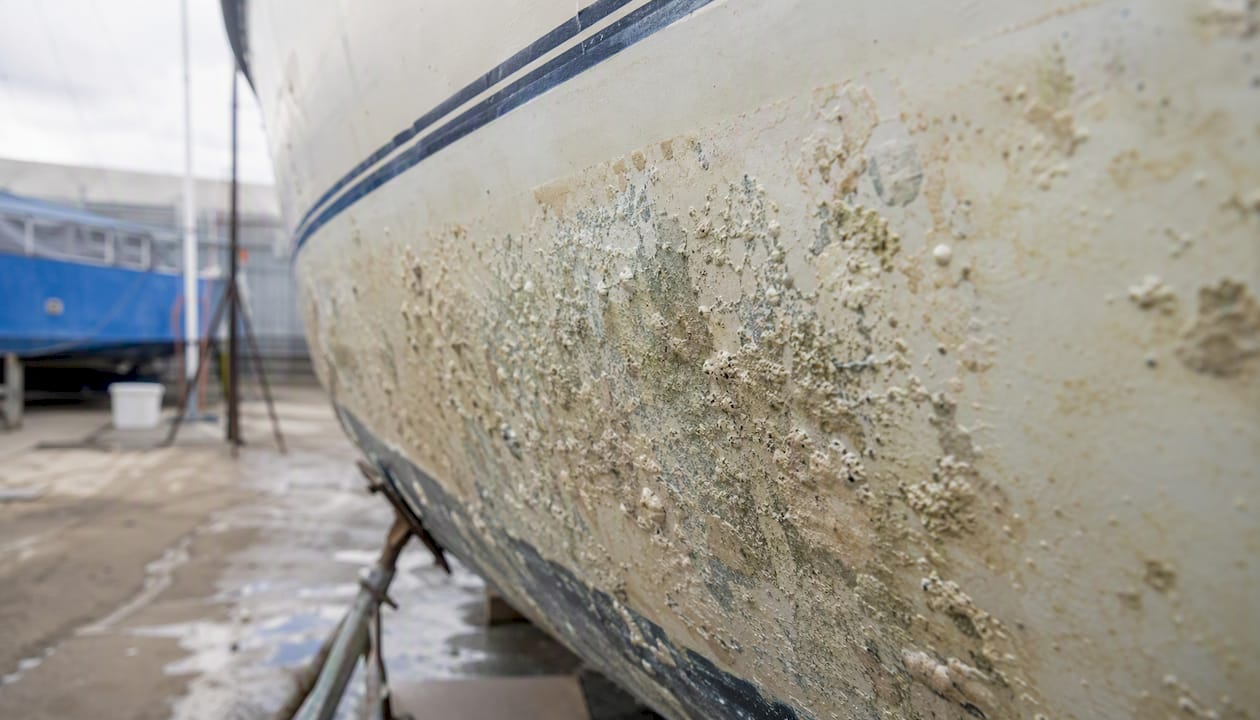
Osmotic blistering in GRP hulls is a specific age-related cost driver. Treatment ranges from $5,000–$15,000 for a minor case on a 40-ft hull to $40,000–$100,000 for a severe case requiring full epoxy barrier coat application after extended drying. A pre-purchase or pre-refit osmosis survey is one of the highest-return inspections an owner can commission.
Build quality also matters. A production vessel from a volume builder will typically carry lower refit costs than a custom or semi-custom vessel of the same age, because standard parts are available off the shelf and yard familiarity with the platform reduces diagnostic time. Custom vessels often require bespoke fabrication for components that are no longer available from the original builder.
When to refit and when to sell: an editorial perspective
The refit-versus-sell decision is one of the most consequential choices a yacht owner makes, and the conventional wisdom gets it wrong more often than it should.
At that threshold, the refit cost is unlikely to be recovered in resale value, and you are effectively paying to improve an asset you could replace with a better-condition equivalent for a similar total outlay.
But the rule has important caveats. If the vessel is strategically irreplaceable, whether because of a specific build configuration, a sentimental history, or a charter certificate that would be costly to replicate, the financial calculus shifts. Similarly, if you intend to own the vessel for another 10–15 years, the amortized cost of a major refit looks very different than if you plan to sell in three years.
The factors worth weighing carefully:
- Remaining ownership horizon. A 10-year ownership plan justifies a larger refit investment than a 3-year plan.
- Availability of comparable replacements. If the market offers a well-maintained equivalent at a price close to your post-refit value, selling is rational. If your vessel is genuinely hard to replace, the premium for keeping it is defensible.
- Charter revenue. A vessel generating consistent charter income has a different refit ROI than a private-use yacht. Downtime during refit is a direct revenue cost.
- Crew continuity. For larger vessels with established crew, a refit preserves institutional knowledge. A new vessel means a new familiarization period.
Quick decision checklist:
- Get a current market appraisal of the vessel as-is.
- Get a scoped refit estimate from a qualified yard.
- If the refit estimate exceeds 30% of the as-is value, model the sell-and-repurchase scenario before committing.
- Factor in transaction costs on both sides (brokerage, survey, delivery, registration).
- Weigh the ownership horizon and any strategic irreplaceability factors.
The owners who regret a refit most often are those who invested heavily in a vessel they sold two years later. The owners who regret selling most often are those who underestimated how hard it is to find a comparable replacement at the right price.
Baranofyachts: scoped refit management that protects your investment
The single sharpest risk in any refit is the gap between what a yard quotes and what the project actually costs. Baranofyachts closes that gap through owner-side project management that begins before the yard period opens and stays engaged through commissioning and sea trials.

Our process covers the full refit cycle: scoped refit briefs that expose provisional sums before you sign anything, procurement oversight that eliminates last-minute substitutions and lead-time failures, milestone-based payment structures that tie cash releases to verified progress, and independent survey coordination at every critical hold point. For owners considering whether to refit or sell, we provide resale value advisory that puts the decision in its full market context, drawing on our active brokerage practice and current listings data.
The result is a refit that stays closer to its original scope, with fewer surprises and a clear record of every decision and expenditure. To request a scoped refit brief or an initial project management proposal, contact our team directly. We will review your vessel’s current survey status, identify the highest-risk line items, and give you a realistic framework before you commit to a yard.
Sources
- Superyacht refit guide: How much does a refit cost?
- Yacht Refit Cost: What Really Drives the Budget
- Yacht Refit Costs in 2026: What a 5, 10, and 20-Year Refit
- Superyacht refit cost: when to refit, when to sell | The First Owner’s Reference
Recommended
Sold Listings


Design Your Yacht
"*" indicates required fields
Maximus III - PNW
As you step aboard MAXIMUS III, the first impression is her scale.
At 120 feet with an 8-meter beam and 294 GT of interior volume, this 2025 Crescent Custom tri-deck immediately feels open, balanced, and estate-like. A timeless look while still feeling fresh from the shipyard.
Currently Available


Get your yacht value Estimate
"*" indicates required fields