
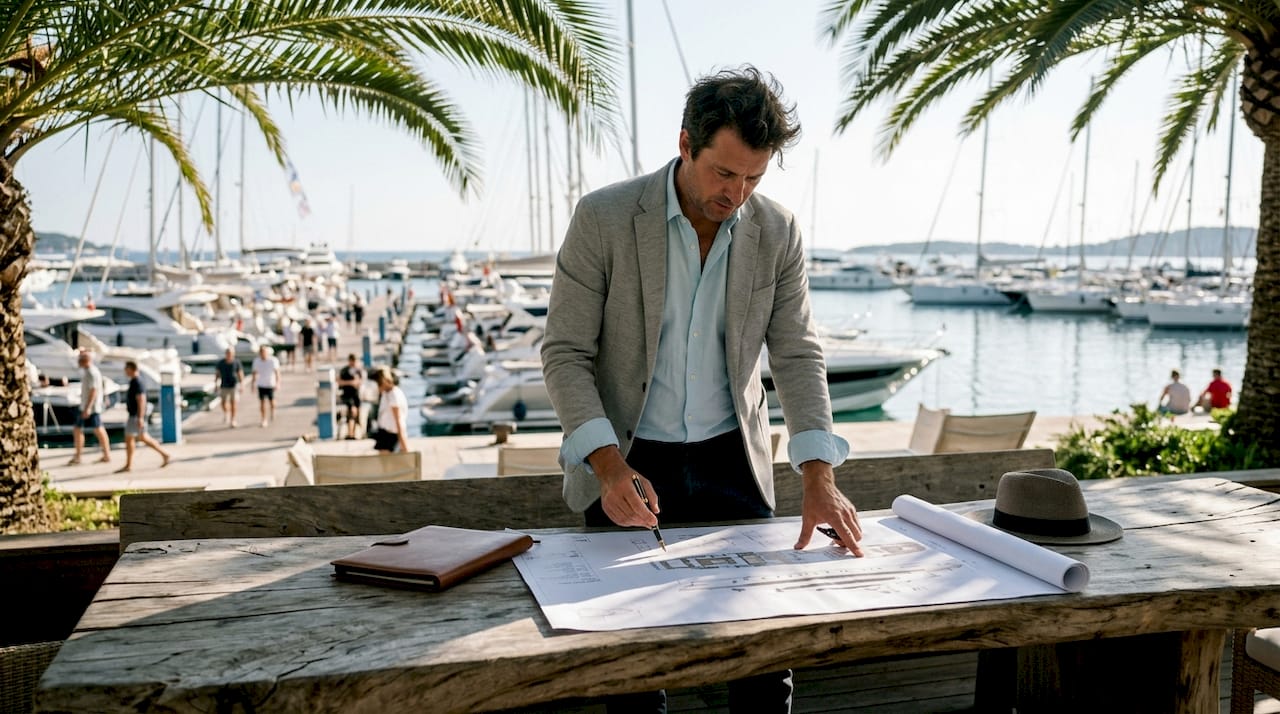
Exterior styling is the defining factor that shapes both the look and the life of a yacht, directly influencing aesthetic appeal, onboard functionality, and long-term market value. The industry term for this discipline is naval exterior design, and it covers everything from hull geometry and glazing strategy to livery color and deck layout. Understanding why exterior styling matters for yachts means recognizing that every visual decision carries a functional consequence. 2026 industry standards now prioritize exterior styling that supports life onboard by maximizing spatial comfort alongside aesthetics. That shift tells you something important: the best-looking yachts and the most livable ones are increasingly the same vessel.
Why exterior styling matters for yachts: usability and onboard experience
Exterior styling and onboard usability are not separate concerns. They are the same decision made at different scales. A hull profile that looks elegant from the dock also determines how much headroom you have below and how much natural light enters the saloon. Continuous glazing strategies connect interior and exterior spaces visually, making a 45-meter vessel feel open rather than enclosed. Open social areas on the main deck strengthen your connection to the sea, a feature now recognized in award-winning designs.
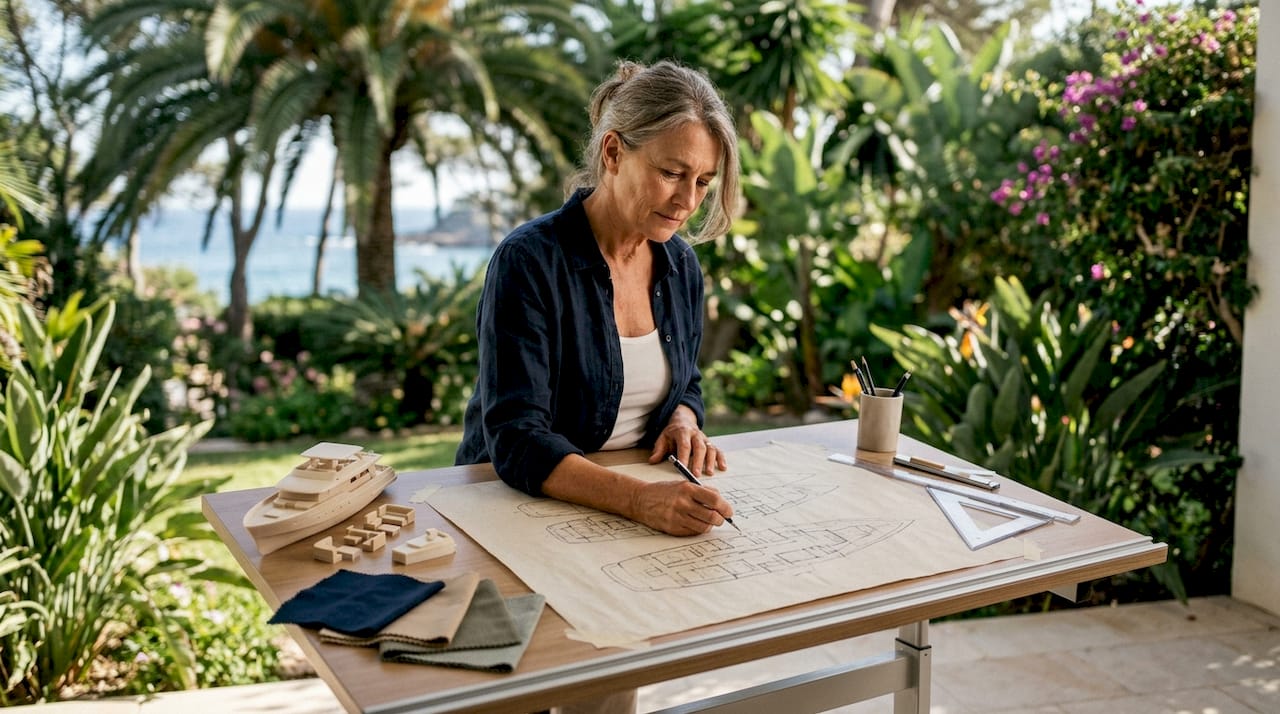
The General Arrangement, or GA, is the spatial blueprint that precedes any styling decision. Practitioners emphasize the GA before styling to ensure logical onboard movement and avoid usability failures. A yacht must look stunning and function well. Spatial logic is the foundation of successful exterior styling, not an afterthought applied once the renderings look right.
Material and finish choices carry technical weight beyond their visual contribution. Livery colors and surface finishes affect temperature exposure on deck, an often-overlooked factor in thermal management and material durability. A dark hull absorbs significantly more solar radiation than a light one, raising deck surface temperatures and affecting crew and guest comfort during warm-weather cruising.
Key exterior features that directly improve usability include:
- Folding bulwarks that extend usable deck space and redefine the interior-exterior relationship when at anchor
- Integrated shade structures built into the superstructure profile rather than added as afterthoughts
- Wide side decks with adequate clearances for safe movement underway
- Flush deck hatches that preserve visual lines while providing access to subsystems below
Pro Tip: When reviewing a new build proposal, ask your designer to walk you through the GA before discussing exterior aesthetics. If the spatial flow does not work on paper, no amount of styling will fix it at sea.
What psychological and emotional roles do yacht exterior aesthetics play?
Exterior styling is not purely visual. It structures experience, shapes memory, and anchors identity. Stefano Vafiadis, a recognized figure in superyacht design, describes this as the “architecture of emotion”: design that organizes space and experience before it communicates image. That framing matters for owners because it shifts the question from “does this look good?” to “does this feel right every time I step aboard?”
Classic and nostalgic styling has returned as a serious design response to modern life. Nostalgic yacht design helps owners find emotional comfort and familiarity amid digital overload, enhancing long-term satisfaction. Classic styling evokes permanence and positive memories. That is not sentimentality. It is a calculated design choice that pays dividends in owner wellbeing over years of use.
“Classic styling evokes permanence and positive memories, becoming a sophisticated design response to fast-paced modern life. Owners who choose familiar, timeless forms report stronger emotional bonds with their vessels and greater long-term satisfaction with their purchase.”
The psychological benefits of thoughtful exterior aesthetics include:
- Familiarity and comfort: Recognizable design cues reduce cognitive load and create a sense of arrival every time you board
- Identity expression: The exterior communicates your values and taste to guests before they step foot on deck
- Emotional continuity: A well-chosen style ages gracefully, reinforcing your connection to the vessel rather than triggering regret
- Wellbeing at sea: Proportions, natural light, and color palette affect mood in ways that accumulate over a season
The ergonomic design principles that govern interior comfort extend to the exterior. How a vessel sits in the water, how its sheer line meets the horizon, and how its color reads at dusk all contribute to the emotional experience of ownership.
In what ways does exterior design influence yacht market value?
Exterior styling quality is a direct input to resale value. True luxury in yacht design is a structure of decisions ensuring coherence and continuity, not excess or statements, and it sustains value over time. Successful design removes conflict and feels inevitable. It strengthens with familiarity rather than fading after the first season.
Design coherence is the hallmark buyers and brokers look for when assessing a pre-owned vessel. A yacht whose exterior styling was applied as decoration rather than integrated from the GA outward tends to show its age faster. Mismatched proportions, dated graphics, or surface treatments that have degraded unevenly all signal poor original design discipline. That signal costs you at resale.
The numbered factors that connect exterior styling to investment value are:
- Award recognition signals market expectations. Yachts recognized in industry awards for exterior design command stronger buyer interest and media attention, both of which support price.
- Design restraint extends appeal. Quiet, well-proportioned styling does not go out of fashion the way trend-chasing designs do.
- Reduced conflict means lower maintenance costs. When styling and structure are integrated from the start, there are fewer knock-on effects from modifications or wear.
- Owner narratives drive secondary market perception. Buyers read owner accounts. A vessel with a strong, coherent exterior identity generates better stories and stronger emotional bids.
The 2026 yacht market rewards vessels where exterior styling and spatial comfort were treated as a single discipline from the first design brief. Buyers at every price point have become more sophisticated, and they can identify the difference between genuine design coherence and surface-level decoration.
What are current trends shaping exterior styling in luxury yachts?
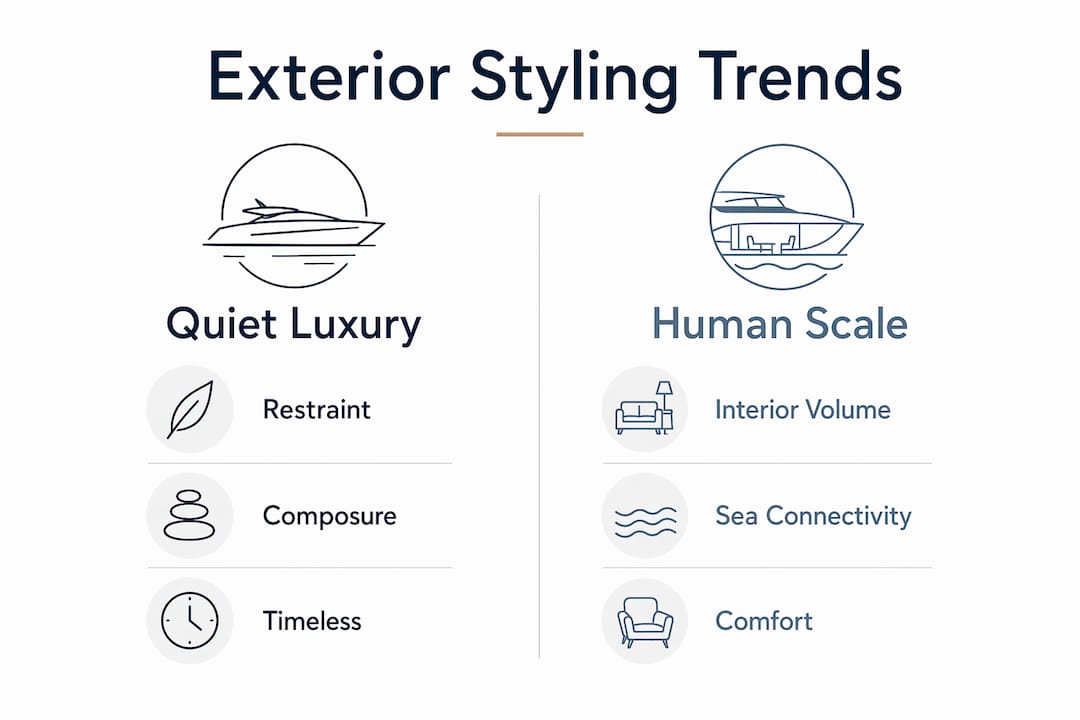
The dominant signal in 2026 exterior styling is quiet luxury. Ultra-large yachts communicate status through composure, favoring restrained geometry and glazing strategies over aggressive visual statements. This is not minimalism for its own sake. It reflects a mature understanding that lasting luxury does not need to announce itself.
The practical innovations driving this shift are worth understanding in detail:
| Trend | Design feature | Owner benefit |
|---|---|---|
| Quiet luxury | Restrained hull geometry | Timeless appeal, stronger resale |
| Interior-exterior flow | Continuous glazing bands | More natural light, open feel |
| Space expansion | Folding bulwarks | More usable deck at anchor |
| Livery engineering | Functional color selection | Better thermal comfort on deck |
| Human-scale design | GA-led spatial planning | Easier movement, better usability |
Sub-40m owners now favor designs that enhance interior volume and sea connectivity, reflecting a shift to human-scale design principles that also apply to 70m-plus vessels. That convergence is significant. It means the same design thinking that makes a smaller yacht livable is now shaping the brief for the largest builds in the world.
Exterior graphics and wrap design have also evolved as a distinct discipline within yacht styling. Current boat wrap trends show owners moving toward cleaner, more architectural graphic treatments that complement hull geometry rather than compete with it. The exterior graphic is now treated as part of the livery system, not a separate afterthought.
Winners of 2026 yacht design awards blend spatial comfort with aesthetic elegance and operational efficiency. That combination is the new standard. Styling that does not support operational performance is no longer considered complete design.
Pro Tip: When evaluating exterior styling options for a new build or refit, ask how each choice affects deck temperature, glazing solar gain, and GA flow. The answers reveal whether you are working with a designer or a renderer.
Key Takeaways
Exterior styling is the single discipline that connects a yacht’s visual identity, onboard livability, and long-term investment value into one coherent system.
| Point | Details |
|---|---|
| GA comes before styling | Spatial logic must be resolved before exterior aesthetics are finalized to avoid usability failures. |
| Styling affects thermal comfort | Livery color and surface finish choices directly influence deck temperature and material durability. |
| Emotional design builds loyalty | Classic and nostalgic styling creates lasting owner satisfaction by evoking familiarity and permanence. |
| Coherence protects resale value | Integrated, restrained design ages better and commands stronger buyer interest at resale. |
| Quiet luxury defines 2026 | Award-winning yachts now favor composure and spatial comfort over visual statements. |
What I’ve learned about styling that most buyers overlook
Owners often arrive at a design brief focused on the wrong question. They ask, “What should my yacht look like?” when the more productive question is, “How should my yacht feel to live on?” Those two questions lead to very different briefs, and the second one produces better yachts.
The market shift toward quiet luxury is not a trend in the fashion sense. It is a correction. For years, exterior styling was treated as a marketing exercise, a way to generate renderings that sold the build. The result was a generation of vessels that photographed beautifully and frustrated their owners within two seasons. The GA was an afterthought. The livery was chosen for press impact. The glazing was sized for visual drama rather than thermal performance.
What I find genuinely encouraging about 2026 design standards is that they reward the opposite approach. The yachts earning recognition now are the ones where the designer started with how people move, where they sit, what they see from the helm, and how the deck heats up in the afternoon. The exterior styling followed from those answers. That sequence produces vessels that strengthen with familiarity rather than fading after the first charter season.
My advice to any owner entering a new build or major refit: treat exterior styling as a functional discipline first and an aesthetic one second. The visual result will be better for it, and so will your experience every time you cast off.
— Jason
How Baranofyachts supports your exterior styling decisions
At Baranofyachts, we work with owners from the first design brief through to delivery, and exterior styling decisions are among the most consequential we help clients navigate.

Our project oversight process ensures that styling choices are evaluated against GA requirements, thermal performance, and long-term value before they are locked into the build. We have seen what happens when those checks are skipped, and we have also seen the satisfaction owners feel when every exterior decision was made with purpose. If you are ready to understand how next-gen design moves translate into a vessel you will love for decades, we are here to walk you through it. You can also configure your ideal yacht with our team to see how styling, layout, and performance come together in a single brief.
FAQ
Why does exterior styling matter beyond looks on a yacht?
Exterior styling directly affects onboard usability, thermal comfort, and spatial flow. Design decisions like hull geometry, glazing placement, and livery color all carry functional consequences that shape the daily experience of ownership.
How does exterior design affect yacht resale value?
Coherent, restrained exterior styling ages better and signals design discipline to buyers. Yachts where styling was integrated from the General Arrangement outward tend to hold their appeal and command stronger resale interest than those where aesthetics were applied as decoration.
What is the General Arrangement and why does it matter for styling?
The General Arrangement is the spatial blueprint that maps movement, deck areas, and volume before any styling is applied. Practitioners prioritize the GA first because spatial logic is the foundation of successful exterior design.
What does “quiet luxury” mean in yacht exterior design?
Quiet luxury refers to restrained hull geometry, composed proportions, and glazing strategies that communicate quality through calm rather than visual noise. It is the defining exterior styling direction recognized in 2026 yacht design awards.
Can exterior graphics and wraps be part of a cohesive styling strategy?
Yes. Modern exterior boat graphics are treated as part of the livery system, designed to complement hull geometry and reinforce the vessel’s overall visual identity rather than compete with it.
Recommended
Sold Listings


Design Your Yacht
"*" indicates required fields
Maximus III - PNW
As you step aboard MAXIMUS III, the first impression is her scale.
At 120 feet with an 8-meter beam and 294 GT of interior volume, this 2025 Crescent Custom tri-deck immediately feels open, balanced, and estate-like. A timeless look while still feeling fresh from the shipyard.
Currently Available


Get your yacht value Estimate
"*" indicates required fields