
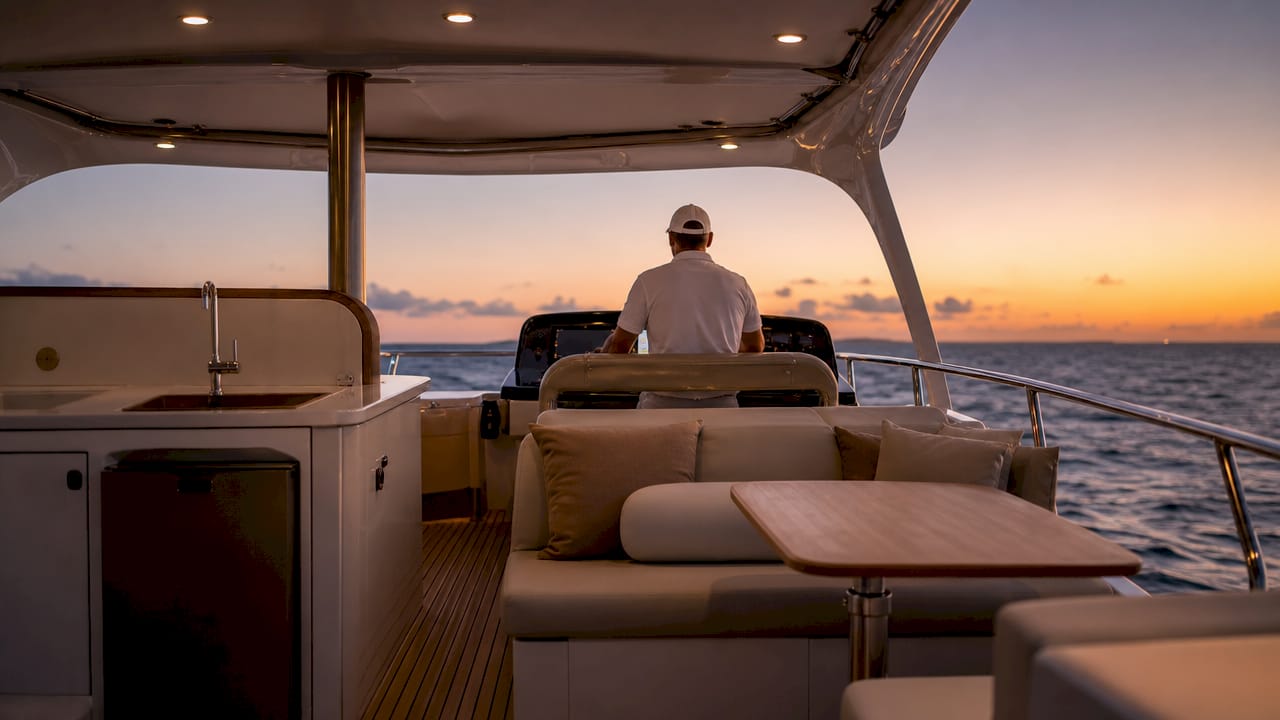
A yacht flybridge is defined as an elevated, open deck positioned above the main cabin, fitted with a secondary helm station and dedicated social space. On a mid-size motor yacht, a flybridge typically offers seating for 8–12 guests across roughly 60 m² of usable deck. On larger superyachts, that figure grows to over 120 m². The flybridge is the most used outdoor space on most motor yachts, functioning as both a navigation platform and the primary social hub for owners and guests alike.
What is a yacht flybridge and how does it work?
A flybridge is the raised deck that sits directly above the wheelhouse or main saloon on a motor yacht. The term comes from the nautical phrase “flying bridge,” which originally described any elevated, open helm position. Today, the flybridge yacht definition covers a full deck level complete with a working helm, seating, and a range of leisure amenities.
The helm station on a flybridge gives the captain a commanding, unobstructed view in every direction. This matters most when maneuvering in tight marinas, navigating shallow coastal waters, or managing a busy anchorage. The interior helm station remains available for rough weather or night passages, making the two stations complementary rather than redundant.
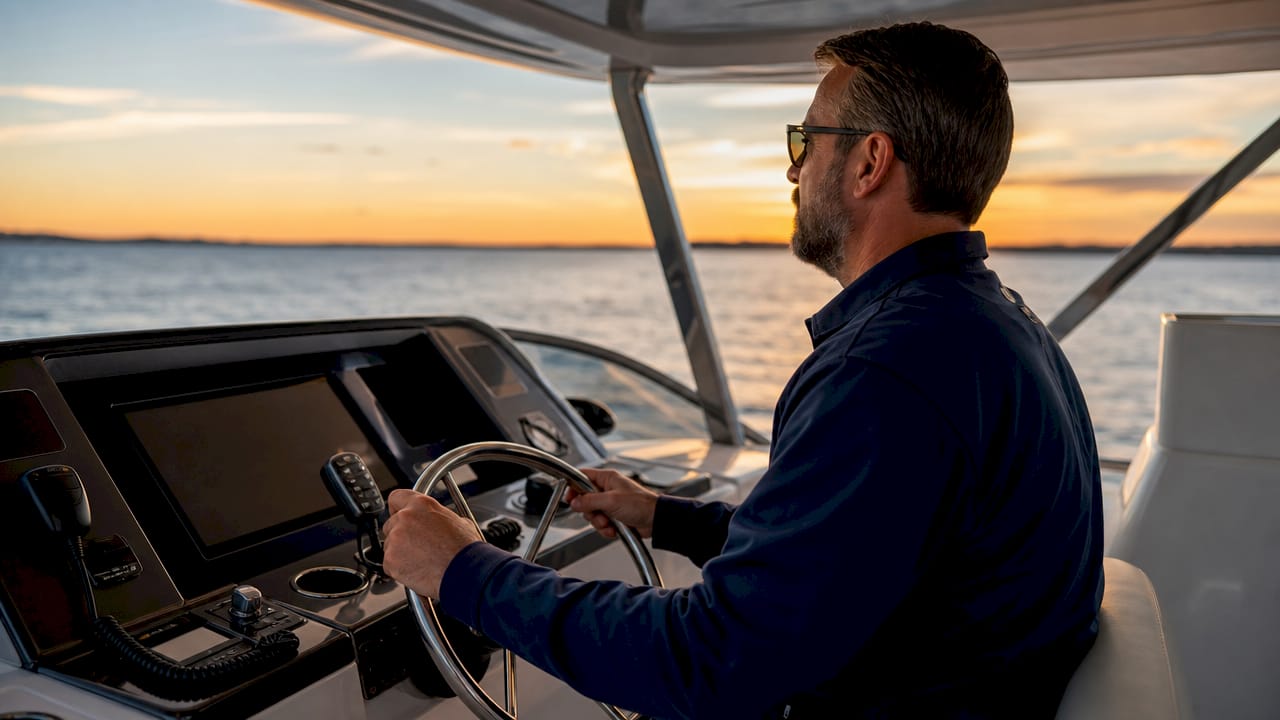
Flybridge yachts appeal to owners who want elevated open-air experiences and panoramic views. That combination of practicality and recreation is what separates the flybridge from a simple sun deck. The deck does real navigational work while also hosting the most memorable moments of any voyage.
What are the main features and amenities found on a yacht flybridge?
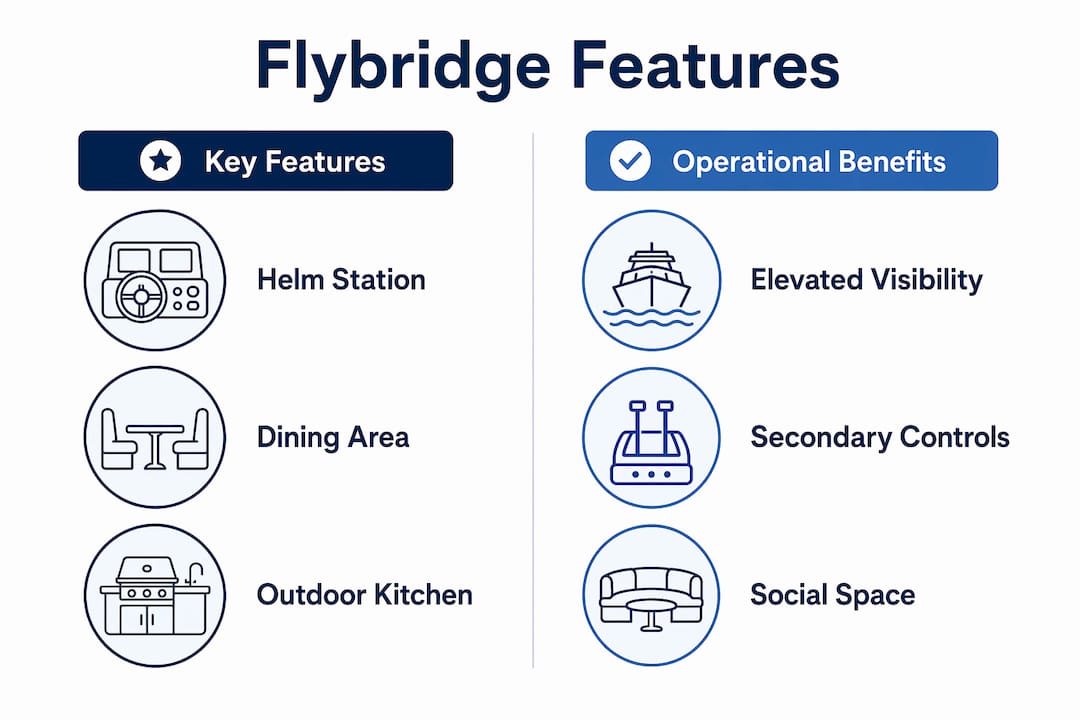
The flybridge is designed to do two things at once: run the boat and entertain guests. Most mid-size flybridge yachts achieve this by dividing the deck into a forward helm zone and a rear social zone. The layout varies by builder and owner preference, but the core components are consistent across the category.
Common flybridge amenities include:
- Helm station with full navigation electronics, engine controls, and communication systems
- Wet bar or outdoor galley with refrigeration, ice makers, and prep surfaces
- Sunpads and loungers positioned to capture the best light and views
- Dining area with a fixed or folding table seating 6–10 guests
- Jacuzzi or plunge pool on larger builds, typically positioned aft or amidships
- High-fidelity audio and entertainment systems integrated into the deck structure
Modern flybridge design prioritizes social interaction by incorporating outdoor kitchens, audio systems, and dining zones that create a distinct social hub. This shift reflects how owners actually use their yachts: the flybridge is where guests gather, meals are served, and sunsets are watched.
Weather protection is a critical design variable. Retractable louvers or side curtains can double the usable days of a flybridge by improving comfort in wind or rain. Hardtops provide permanent shade and can house lighting, speakers, and climate systems. Biminis offer a lighter, more flexible option for seasonal use.
Pro Tip: When evaluating a flybridge layout, assess the flow between the helm, bar, and dining area before focusing on total square footage. A poorly partitioned deck can make even a large flybridge feel cramped and hard to use.
What operational advantages does a flybridge provide?
The flybridge helm station is functionally superior for navigating congested marinas and shallow coastal waters. The elevation places the captain 3–5 meters above the waterline, which transforms situational awareness. Obstacles, other vessels, dock lines, and depth changes are all visible well before they become problems.
Key operational advantages of a flybridge helm include:
- 360-degree visibility with no blind spots created by the superstructure
- Direct sightlines to the bow and stern for precise docking without relying on cameras alone
- Proximity to guests so the captain can communicate naturally without leaving the helm
- Fresh air and natural light that reduce fatigue on long passages in calm conditions
A secondary helm on the flybridge provides operational redundancy and is a clear advantage in challenging waters and busy marinas. If the interior helm develops a technical fault, the flybridge station keeps the vessel fully operational. That redundancy is not a luxury on a serious offshore yacht. It is a safety requirement.
Flybridge helm stations provide 360-degree elevated visibility that improves navigation in tight marinas and shallow waters compared to interior helms. That visibility advantage is most pronounced on motor yachts between 15 and 35 meters, where the flybridge sits high enough to see over the bow but low enough to avoid significant windage issues at speed.
The interior helm complements the flybridge station for all-weather use. Heavy rain, strong winds, or night passages call for the enclosed station. Experienced captains treat the two helms as a system, not as alternatives.
How does a flybridge compare to other upper deck options?
Not every upper deck on a yacht is a flybridge. The terminology matters, especially when you are evaluating a purchase or commissioning a custom build. Confusing a flybridge with a sun deck or a sportsbridge leads to mismatched expectations and, sometimes, costly redesigns.
| Deck type | Primary function | Helm station | Typical yacht size |
|---|---|---|---|
| Flybridge | Navigation and social use | Yes | 12m–40m motor yachts |
| Sun deck | Leisure and sunbathing | No | 30m+ superyachts |
| Sportsbridge | Navigation focus, minimal social space | Yes | Sportfishing and express yachts |
| Sky lounge | Enclosed social and entertainment space | Sometimes | 40m+ superyachts |
On large yachts over 40 meters, the flybridge is often a mid-deck helm and lounge rather than the topmost leisure deck. The topmost deck on a superyacht is usually called the sun deck or sky lounge. This distinction is critical when setting buyer expectations during a purchase or build consultation.
Sportsbridges share the elevated helm position with flybridges but sacrifice social space for navigation efficiency. They are common on sportfishing yachts and express cruisers where speed and visibility matter more than entertaining capacity. A flybridge prioritizes the balance between the two.
Builder terminology also varies. Some yards use “flybridge” to describe any upper helm deck regardless of social amenity level. Others reserve the term for decks that meet a minimum standard of guest comfort. When working with Baranofyachts on a custom build or purchase, we clarify these distinctions early in the yacht design concept phase to prevent specification mismatches.
How do climate and lifestyle shape flybridge design?
Climate is the single biggest driver of flybridge use patterns. Flybridge spaces are used as the primary social hub for up to 9 months per year in sunny climates like the Mediterranean. That figure drops sharply in northern European or Pacific Northwest waters, where weather protection becomes the dominant design priority.
Owners who cruise warm-water destinations consistently prioritize the flybridge over the interior saloon for meals, socializing, and relaxation. This shapes how the deck is designed from the ground up:
- Outdoor kitchens with grills, prep stations, and refrigeration replace simple wet bars
- Shade structures including hardtops with integrated lighting and fans extend usable hours
- Entertainment systems with weatherproof speakers and screens support evening gatherings
- Jacuzzis or plunge pools become practical additions rather than pure luxury items
Flybridge yachts are popular among owners who value elevated open-air experiences and panoramic views, blending practicality with recreational use. That popularity is highest in markets where outdoor living is a year-round expectation rather than a seasonal bonus.
Matching your flybridge design to your intended cruise itinerary is a discipline that separates well-specified yachts from ones that feel wrong the moment they reach their home waters. A yacht built for the Aegean needs different weather protection than one destined for the Caribbean or the Pacific.
Pro Tip: If you plan to charter your yacht, weight the flybridge toward dining and entertainment capacity. Charter guests spend more time on the flybridge than any other deck, and a well-configured social space directly supports charter revenue and guest satisfaction.
Key takeaways
A yacht flybridge is the most functionally versatile deck on a motor yacht, combining an elevated helm station with the primary social and entertainment space for guests.
| Point | Details |
|---|---|
| Core definition | A flybridge is an elevated open deck with a secondary helm station above the main cabin. |
| Social capacity | Mid-size flybridge decks seat 8–12 guests across roughly 60 m² of usable space. |
| Operational value | The elevated helm provides 360-degree visibility, improving safety in marinas and shallow waters. |
| Climate drives use | In warm climates like the Mediterranean, the flybridge serves as the primary social hub for up to 9 months per year. |
| Layout over size | Flow between helm, bar, and dining zones matters more than total square footage for real-world usability. |
Why buyers consistently underestimate the flybridge
The most common mistake I see buyers make is treating the flybridge as a bonus feature rather than the functional heart of the yacht. They spend hours evaluating cabin layouts and engine specs, then spend 20 minutes on the deck that will define 80 percent of their time aboard.
The second mistake is conflating size with quality. A poorly designed flybridge with suboptimal space partitioning reduces functionality despite having large square footage. I have walked decks over 100 m² that felt unusable because the helm, bar, and dining zones were stacked in a line with no natural flow between them. Conversely, a well-designed 60 m² flybridge on a 24-meter yacht can host a dinner for 10 with room to spare.
The third issue is weather protection. Buyers in warm-water markets often skip hardtops or retractable systems to save cost or preserve sightlines. Then they find the deck unusable by midday in July because there is nowhere to escape the sun. Weather protection is not optional. It is what separates a flybridge you use every day from one you abandon by noon.
My advice: spend at least half your sea trial time on the flybridge. Test the helm visibility, walk the social zones, sit at the dining table, and stand at the bar. If the layout does not feel natural after 30 minutes, it will not improve over a two-week charter. The next-generation yacht designs getting the most attention in 2026 treat the flybridge as the centerpiece of the entire vessel, not an afterthought above the wheelhouse.
— Jason
Baranofyachts and the flybridge features that matter most
Choosing a yacht with the right flybridge configuration requires more than reading a spec sheet. The deck’s layout, weather protection, helm ergonomics, and social flow all interact in ways that only become clear when you know what to look for.

At Baranofyachts, we work with buyers at every stage of that evaluation, from initial research through sea trials and final purchase. Our team brings direct experience with custom flybridge builds across a wide range of yacht sizes and use cases. Whether you are comparing existing listings or planning a new build, we help you define the flybridge specification that matches your cruising style, guest expectations, and home waters. Contact Baranofyachts to start a conversation about the features that will matter most to you on the water.
FAQ
What is the difference between a flybridge and a sun deck?
A flybridge includes a working helm station and serves both navigational and social functions. A sun deck is a purely leisure space with no helm, typically found on superyachts over 40 meters as the topmost deck.
How big is a typical yacht flybridge?
A mid-size motor yacht flybridge offers roughly 60 m² of social space with seating for 8–12 guests. On larger superyachts, the flybridge deck can exceed 120 m².
Why do captains prefer the flybridge helm for docking?
The flybridge helm provides 360-degree elevated visibility with clear sightlines to the bow and stern. That height advantage makes precise maneuvering in tight marinas and shallow waters significantly easier than from an interior helm.
Can a flybridge be used in bad weather?
A flybridge with a hardtop, retractable louvers, or side curtains remains usable in light rain and moderate wind. For heavy weather or night passages, the enclosed interior helm station is the correct operating position.
Does every motor yacht have a flybridge?
No. Express cruisers and sportfishing yachts often use a sportsbridge or enclosed pilothouse instead. The flybridge configuration is most common on motor yachts between 12 and 40 meters designed for cruising and entertaining.
Recommended
Sold Listings


Design Your Yacht
"*" indicates required fields
Maximus III - PNW
As you step aboard MAXIMUS III, the first impression is her scale.
At 120 feet with an 8-meter beam and 294 GT of interior volume, this 2025 Crescent Custom tri-deck immediately feels open, balanced, and estate-like. A timeless look while still feeling fresh from the shipyard.
Currently Available


Get your yacht value Estimate
"*" indicates required fields