
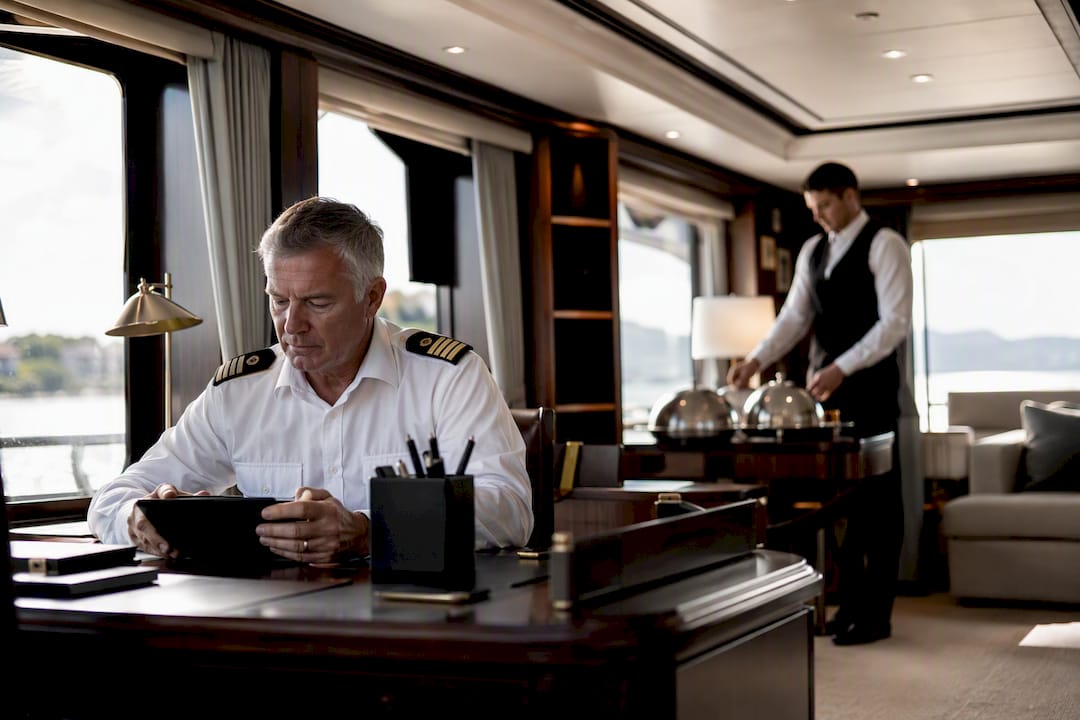
Implementing guest experience protocols on a yacht comes down to six operational areas, each with a single named owner: pre-arrival guest profiling, SOPs and crew training, personalization and F&B, concierge and excursion coordination, privacy and confidentiality, and post-charter measurement.
- Pre-arrival profiling — owned by the chief steward/purser
- SOPs and training — owned by the captain
- Personalization and F&B — owned by the chief steward, with the chef
- Concierge and excursions — owned by the concierge, executed by the first officer
- Privacy and confidentiality — owned by the captain
- Measurement and debrief — owned by the captain and chief steward jointly
Set the checklists up this week. A focused one to two days of crew alignment turns these six areas into a repeatable rhythm rather than a binder nobody opens.
Key Takeaways
Guest experience protocols work when personalization and privacy carry equal weight, and every task has one named owner responsible for it.
| Point | Details |
|---|---|
| Send preference sheets early | Collect dietary, medical, and lifestyle detail four to six weeks before embarkation. |
| Rehearse before the season | Run one to two days of hands-on drills so SOPs become habit, not paperwork. |
| Build in a provisioning buffer | Order specialty items early and keep a 15 to 20 percent buffer for late guest changes. |
| Treat privacy as core service | Use vendor NDAs and discreet arrival plans alongside bespoke menus and amenities. |
| Baranof supports execution | Baranof Yacht Sales helps owners align crew training and outfitting with these protocols during new builds and refits. |
Table of Contents
- Protocol at a Glance: What to Set Up and Why
- Pre-Arrival: Guest Profiles, Preference Sheets, and Confidentiality Timeline
- Operationalize Service: SOPs, Steward/Ess Manual, and Pre-Charter Briefings
- Personalization, Amenities, and Food and Beverage Protocols
- Excursions, Concierge Handoffs, and Vendor Vetting
- Privacy and Confidentiality Protocols That Match Luxury Service Standards
- Service Rhythms, Shift Handovers, and Radio Etiquette
- Measure Success: Debriefs, KPIs, and a Guest Feedback Loop
- Host Perspective: Why Crew Buy-In Matters
- How Baranof Yacht Sales Supports Implementation
- Frequently Asked Questions
- Sources
Protocol at a Glance: What to Set Up and Why
Modern luxury guest experience runs on two pillars: personalization and privacy. Guests expect crew to anticipate preferences before they voice them, and they expect that intimacy handled with total discretion. Professional charter yachts operate on documented service protocols and preference sheets sent two to four weeks out, which is the backbone everything else in this guide builds on.
The six steps, with their deliverables:
- Guest profiling → a completed preference sheet with medical, dietary, and lifestyle detail
- SOPs and training → a steward/ess manual plus a run-through schedule
- Personalization and F&B → a provisioning plan tied to specific preferences
- Concierge coordination → a handoff checklist covering permits and transport
- Privacy protocols → signed vendor NDAs and a discreet-arrival plan
- Measurement → a debrief agenda and a short list of KPIs
The timeline runs in three phases:
- Prep (booking through 48 hours before embarkation) — captain and chief steward build profiles, brief vendors, confirm provisioning
- Day-of (embarkation through evening handovers) — full crew executes SOPs, concierge confirms logistics
- Post-charter (48 to 72 hours after departure) — captain and chief steward run the debrief and log lessons
Pre-Arrival: Guest Profiles, Preference Sheets, and Confidentiality Timeline
Collecting the right information at the right moment separates a smooth charter from one full of small, avoidable missteps. The chief steward or purser owns this process from first contact through final confirmation.
A workable pre-arrival checklist looks like this:
- At booking: confirm party size, cabin assignments, and travel dates
- At four to six weeks out: send the preference sheet, per the detailed preference templates approach that gives provisioning teams time to source specialty items
- At 48 to 72 hours out: lock final headcounts, transfer times, and any last-minute medical updates
The preference sheet itself should capture dietary restrictions down to medical-grade allergy detail, preferred beverage brands, activity levels, children’s needs, milestone dates like anniversaries, and cabin comfort settings such as pillow firmness and temperature.
Confidentiality starts the moment this data lands in the crew’s hands. Restrict access to the chief steward and captain, store profiles off any shared or guest-facing device, and route vendor NDAs through the captain before a single outside contractor sees the itinerary.
Operationalize Service: SOPs, Steward/Ess Manual, and Pre-Charter Briefings
An SOP that lives only in someone’s head disappears the moment that crew member leaves. A complete steward/ess training manual needs to cover owner preferences, service standards, inventory protocols, and event procedures, and it needs an owner: typically the chief steward, with the captain signing off.
Core SOP checklist items to document:
- Arrival and departure flow, including greeting order and luggage handling
- Cabin turndown timing and standards
- Meal service styles for each mealtime and setting
- Radio etiquette, including which channels stay guest-free
- Night watch handover procedures
The pre-charter briefing should run 15 to 30 minutes and cover crew roles for the trip, APA authority and who can authorize spending, any special guest needs flagged in the preference sheet, and emergency contact points. Captains should run this briefing alongside a full systems check at least 48 hours before embarkation.
Training works only with practice behind it. Schedule hands-on run-throughs before the season starts, then shorter refreshers between charters.
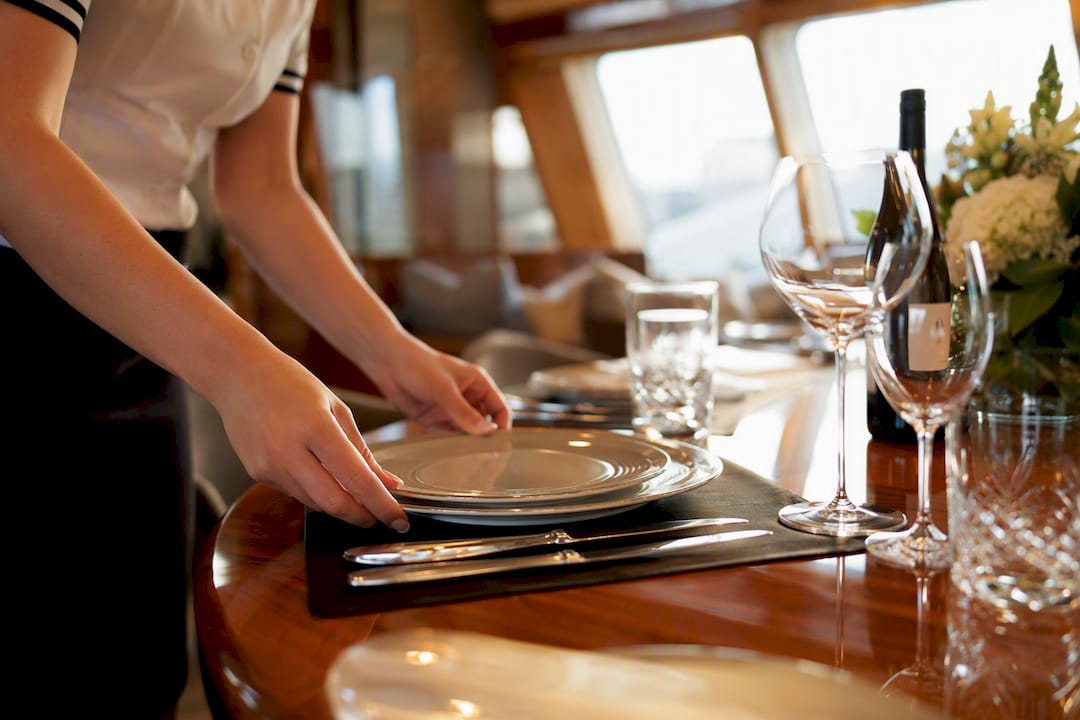
Pro Tip: Run one full mock service, plated courses and turndown included, with the crew playing guests. Mistakes surface in rehearsal, not in front of a paying charter party.
Personalization, Amenities, and Food and Beverage Protocols
The preference sheet only earns its keep once it turns into something a guest can see, smell, or taste. Welcome amenities should map directly to captured data: a signature fragrance in the primary cabin, a curated gift tied to a stated hobby, and age-appropriate kits waiting in a child’s cabin.
F&B provisioning runs on its own clock. Order specialty ingredients and rare wines as early as possible, dry goods about a week out, and perishables 48 to 72 hours before boarding. Build in a 15 to 20 percent buffer to absorb late guest changes without a scramble.
- Confirm allergy substitutions with the chef in writing, not verbally
- Log any last-minute guest changes directly into the preference sheet, timestamped
- Keep a short list of backup vendors for rare items in case a primary source falls through
Pro Tip: Photograph the finished welcome setup in each cabin before guests board. It becomes your reference for repeat charters and catches errors before anyone notices them.
Baranof Yachts’s personalization and amenity resources walk through how owners translate preference data into consistent onboard moments across builds.
Excursions, Concierge Handoffs, and Vendor Vetting
Excursions feel effortless only when the concierge and crew hand off information cleanly. The strongest concierge teams build the guest profile well before embarkation and function as a force multiplier, clearing permits and sourcing local access faster than crew working alone.
The handoff checklist should include:
- Confirmed permits and any local authorization requirements
- Tender operations timing and transfer logistics
- Medical considerations relevant to the planned activity
- Guest transport details from berth to venue and back
Vendor vetting matters just as much as the excursion itself. Verify insurance coverage, check references, run background checks on anyone with direct guest contact, and confirm confidentiality expectations in writing before booking.
The first officer typically confirms weather windows, the captain signs off on permits, and any last-minute changes route through the concierge to guests and back to crew in a single message, not three.
Pro Tip: Ask concierge partners for a written confidentiality clause specific to that excursion, not a blanket agreement signed once at the start of the season. Partners like Next View Tours build this coordination into their standard excursion planning.
Privacy and Confidentiality Protocols That Match Luxury Service Standards
For many high-net-worth guests, privacy functions as the ultimate luxury, on equal footing with a bespoke menu or a curated excursion. Vendor NDAs, discreet transfers, and secure communication channels belong in the protocol, not as an afterthought.
Vendor NDA clauses should cover:
- No public disclosure of the charter, guest identities, or itinerary
- Photo and social media restrictions during and after the charter
- Clear data handling and destruction terms
A low-visibility arrival checklist includes discreet transfer vehicles, a berth selection that limits public sightlines, and a single confirmed communication channel between shore staff and crew.
- Restrict itinerary access to the captain and chief steward
- Use encrypted messaging for anything involving guest names or schedules
- Purge sensitive files from shared devices within 72 hours of departure
Service Rhythms, Shift Handovers, and Radio Etiquette
A charter runs on a daily rhythm, and every role has its beat. Mornings mean cabin checks and breakfast staging; midday covers activity support and lunch service; evenings bring turndown and dinner, with the night watch taking over after.
- Morning brief: chief steward reviews the day’s guest schedule with interior crew
- Midday touchpoint: captain and first officer confirm afternoon logistics and weather
- Evening handover: outgoing shift briefs incoming shift on outstanding requests
A handover one-sheet should note current guest status, any open requests, and APA balance highlights so nothing slips between shifts.
- Keep radio traffic on a dedicated crew channel, never guest-facing frequencies
- Drop to low volume or hand signals near guest areas during service
- Reserve one channel exclusively for emergency overrides
Measure Success: Debriefs, KPIs, and a Guest Feedback Loop
A protocol without a feedback loop just repeats its own mistakes. Run a debrief within 48 to 72 hours of departure with the captain, chief steward, concierge, and owner representative, logging immediate fixes as you go.
- Track rebook rate and repeat-guest preference capture each charter
- Log APA variance and incident count, reviewed monthly across the season
- Send a timed follow-up sequence, captain’s notes plus curated photos, within a week of departure
Host Perspective: Why Crew Buy-In Matters
Crews that rehearse together stop guessing and start anticipating. Hospitality on yachts depends on invisible, choreographed teamwork, and that only happens when SOPs become habit through practice, not paperwork left in a drawer. A structured crew training workflow makes that habit stick season after season.
How Baranof Yacht Sales Supports Implementation
Baranof Yacht Sales gives owners and captains a faster path to consistent guest delivery than building these systems from scratch. Beyond brokerage and custom builds, our team supports crew management workflows that keep training and SOP adoption on schedule during outfitting and delivery, project management for interior layouts that make service flow work in practice, and introductions across our concierge partner network for provisioning and excursion planning.

If you’re planning a new build or refit and want the guest experience protocol built into the vessel’s design and crew plan from day one, review our luxury yacht tour planning guide and reach out to schedule a consultation with our project team.
Frequently Asked Questions
What is the fastest way to start implementing guest experience protocols?
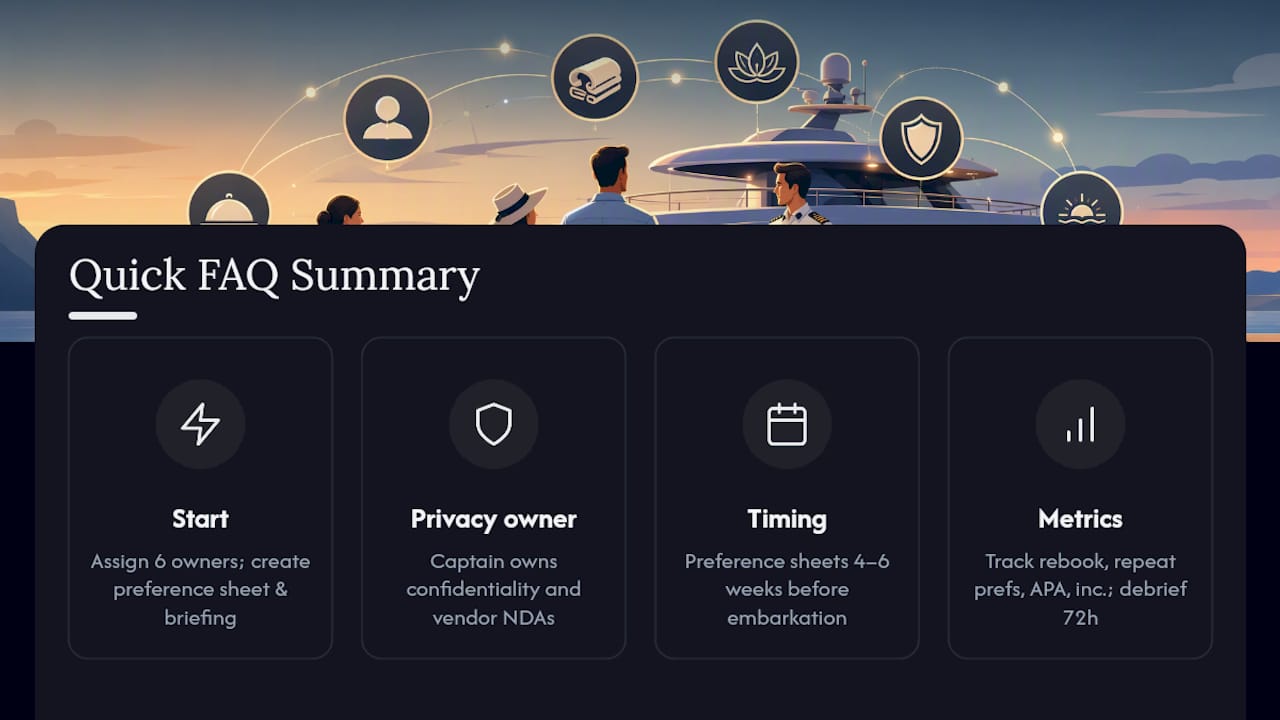
Assign the six protocol areas to named owners this week, then build the preference sheet template and pre-charter briefing agenda first. Those two documents drive everything else.
Who should own guest privacy protocols on a charter yacht?
The captain typically owns confidentiality and vendor NDAs, since access control and discreet logistics fall under overall vessel operations rather than interior service.
How far in advance should preference sheets go out?
Four to six weeks before embarkation gives provisioning teams enough lead time for specialty ingredients, rare wines, and any medical or dietary accommodations.
How do you measure whether guest experience protocols are working?
Track rebook rate, repeat-guest preference capture, APA variance, and incident count each charter, and review them at a post-charter debrief within 72 hours.
Sources
- Mastering Guest Service: The Small Details That Make a Big Impression – ACREW
- How yacht concierge services elevate the luxury experience | Yatco Blog
- How to Manage a Yacht Charter: A Captain’s Complete Operations Guide | Scyllastar
- Luxury Yacht Charter Operations: Service Standards & Guest Experience — Yachtpedia
Recommended
Sold Listings


Design Your Yacht
"*" indicates required fields
Maximus III - PNW
As you step aboard MAXIMUS III, the first impression is her scale.
At 120 feet with an 8-meter beam and 294 GT of interior volume, this 2025 Crescent Custom tri-deck immediately feels open, balanced, and estate-like. A timeless look while still feeling fresh from the shipyard.
Currently Available


Get your yacht value Estimate
"*" indicates required fields