
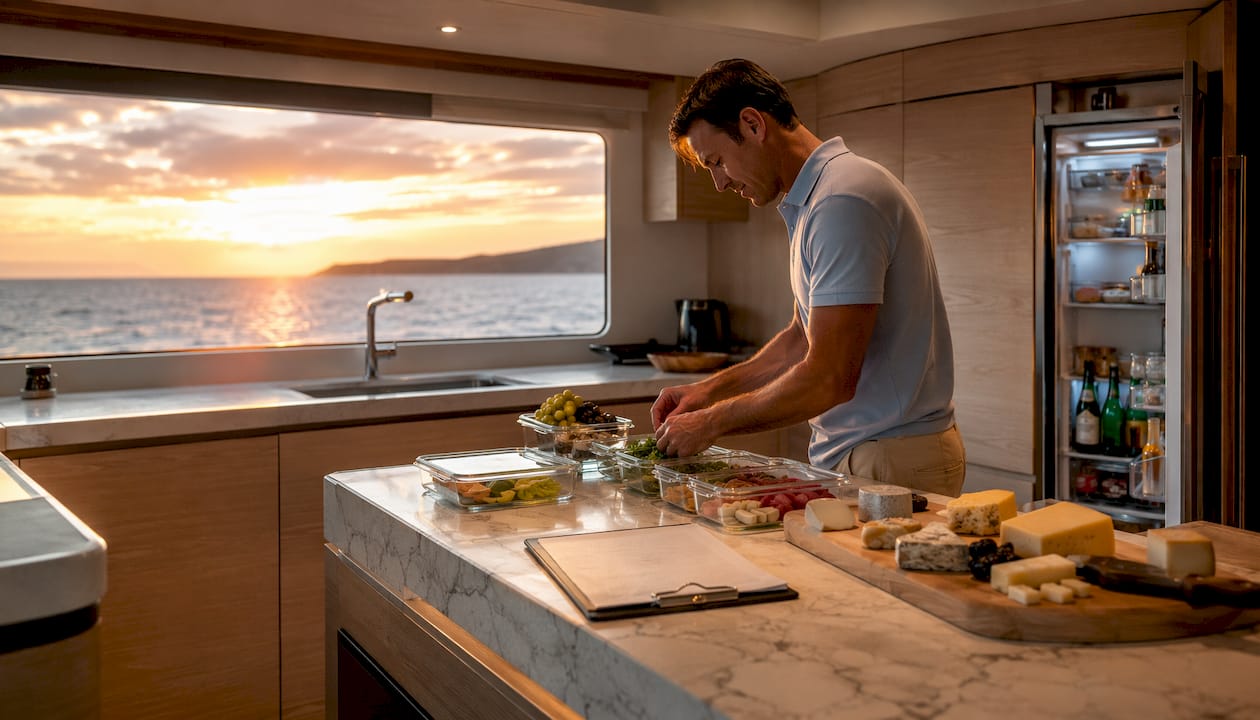
What is yacht provisions management?
Yacht provisions management is the systematic supply process of sourcing, organizing, storing, and delivering every item a yacht needs to operate and to keep guests and crew comfortable at sea. It goes well beyond grocery shopping. Think vintage Champagne, A5 Wagyu, eco-friendly cleaning products, fine china, and bespoke wellness amenities, all coordinated across multiple suppliers, time zones, and customs jurisdictions before a single line is cast off.
The scope covers both charter and private yacht contexts, and the standards are uncompromising in each:
- Food and beverages: Fresh produce, proteins, dairy, pantry staples, specialty gourmet items, wines, spirits, and non-alcoholic options
- Cleaning and household supplies: Environmentally responsible detergents, laundry essentials, and surface cleaners
- Linens and tableware: Fine china, crystal glassware, serving utensils, and guest linens
- Galley equipment and consumables: Cookware, storage containers, and kitchen tools
- Specialty and luxury items: Rare vintages, truffles, caviar, artisanal cheeses, and bespoke wellness products
- Safety and operational supplies: First aid items, batteries, spare parts, and emergency provisions
Regulatory compliance runs through all of it. Food safety standards, allergen documentation, and customs paperwork for bonded stores are not optional extras; they are built into every provisioning cycle. On a well-run yacht, provisioning effectiveness is invisible to guests. Ingredients are always there, nothing runs out mid-passage, and waste stays minimal.
What do yacht provisions actually include?
The breadth of a full provisioning order surprises most people outside the industry. Provisions encompass far more than food and drink, extending to every category of supply that sustains onboard life and hospitality.
- Fresh produce: Fruits, vegetables, and herbs sourced as close to departure as possible
- Proteins: Premium meats, fresh seafood, and specialty cuts such as hand-dived scallops or vacuum-packed Wagyu
- Dairy and dry goods: Cheeses, eggs, pantry staples, pasta, rice, and long-life items for passage reserves
- Beverages: Wines by the case, premium spirits, craft cocktails, juices, sparkling water, and crew beverages
- Gourmet specialty items: Truffles in season, caviar, artisanal cheeses, and rare imports requested by guests
- Cleaning supplies: Eco-friendly detergents, dishwashing products, and laundry essentials
- Linens and tableware: Guest-facing items that directly shape the perceived quality of service
- Galley equipment: Cookware, storage containers, temperature-monitoring devices, and vacuum sealers
- Guest amenities: Flowers for cabin arrangements, personal care products, and celebration items
Yacht size and itinerary length shape which categories dominate a given order. A superyacht with walk-in freezers and deep dry storage can carry bulk provisions for extended passages. A smaller sailing yacht relies on frequent port resupply and carries only what fits. Guest preferences, often captured through a detailed preference sheet, determine the specific brands, dietary accommodations, and luxury tier of every category. Crew meals require their own planning; neglecting them creates morale problems and operational friction.
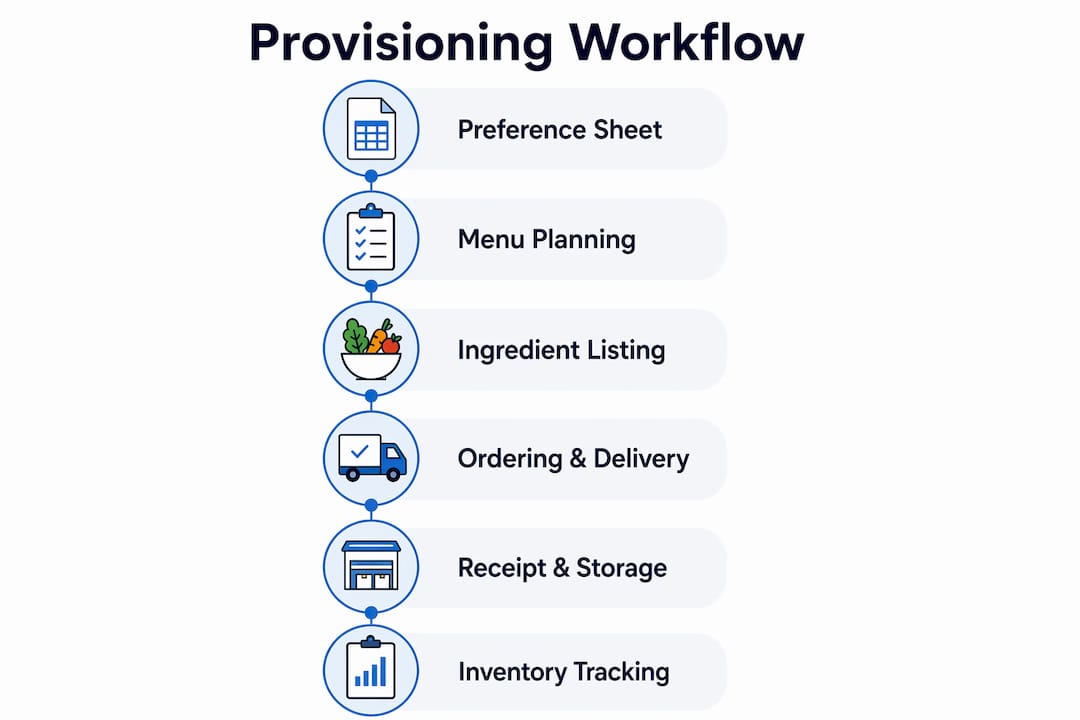
How does the provisioning workflow actually run?
The provisioning process follows a disciplined sequence, and timing is everything. The guest preference sheet is the foundation. Submitted ideally 21 days before embarkation, it gives the chef and captain enough lead time to source rare items, confirm allergen requirements, and build a meal plan that reflects every guest’s expectations.
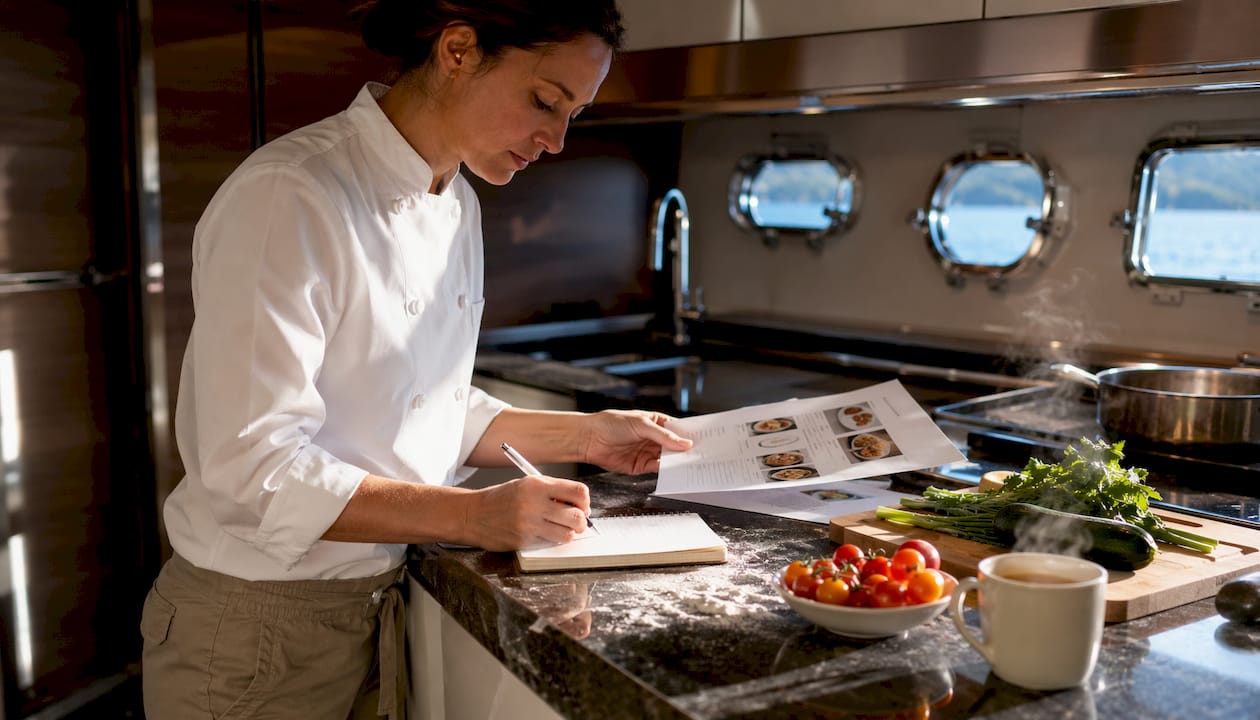
From there, the chef works from menus backwards: plan each day’s meals, then extract precise ingredient lists grouped by category. Cold chain management drives the order sequence, matching each category to onboard storage capabilities before a single purchase order goes out.
| Phase | Timing | Key Activities |
|---|---|---|
| Preference sheet collection | 21 days before departure | Dietary needs, allergens, alcohol preferences, special requests |
| Menu planning and inventory assessment | 21 days before departure | Build meal plan, extract ingredient lists, assess storage capacity |
| Dry goods and non-perishables order | — | Pantry staples, canned goods, beverages, cleaning supplies |
| Frozen and specialty items | 7 days before departure | Proteins, frozen meals, rare imports, bonded alcohol |
| Fresh produce and perishables | 72 hours before departure | Fruits, vegetables, fresh seafood, dairy |
| Delivery, inspection, and storage | Day of or day before embarkation | Temperature checks, quality inspection, FIFO storage, date labeling |
Every delivery gets checked against the order. Chilled and frozen items have temperatures recorded on receipt. Anything below standard gets rejected. Storage follows the FIFO principle, meaning first in, first out, so older stock moves before new arrivals. Contingency planning runs alongside all of it: a passage provision includes reserves for weather delays or itinerary changes, because once offshore, there are no emergency runs to a marina shop.
Why does yacht provisioning cost more than ordinary supply management?
Provisioning a yacht at charter or superyacht standards carries costs that reflect genuine complexity, not inflated margins. Provisioning costs vary widely depending on the yacht’s tier and guest expectations, reflecting the complexity and quality levels involved. Provisioning costs for a week-long charter with multiple guests can be substantial, reflecting the comprehensive nature of yacht provisioning.
Several factors drive that cost:
- Ingredient quality: Premium proteins, vintage wines, and specialty gourmet items carry prices that reflect their sourcing, not just their weight
- Logistics complexity: Multi-country supplier coordination, customs paperwork for bonded stores, and cold chain delivery to remote anchorages all add cost
- Perishability risk: Fresh produce, proteins, and dairy have narrow windows; waste from poor planning is a direct budget loss
- Regulatory compliance: Food safety documentation, allergen management, and import restrictions require time and expertise
- Bespoke requests: A guest who wants a specific Champagne house or a particular single-malt Scotch may require sourcing from specialist importers on short notice
- Destination premiums: Provisioning in remote or high-demand locations during peak season commands higher prices from local suppliers
Skilled provisioning prevents the most expensive outcome of all: emergency procurement. A last-minute purchase from a marina chandlery or a resort hotel kitchen costs multiples of what a planned order would have. Budget discipline and provisioning expertise are inseparable.
Why does effective provisions management matter so much?
Good provisioning is the foundation every other aspect of a voyage is built on. When it works, guests experience it as effortless luxury. When it fails, the consequences cascade quickly.
Provisioning failures lead to emergency purchases at inflated prices, disappointed guests, and a budget blown well before the charter season ends. Crew morale suffers when their own meals are an afterthought. A chef who cannot source the ingredients they need cannot deliver the culinary standard the yacht’s reputation depends on.
The regulatory dimension carries its own weight. Allergen management is a genuine safety issue, not a preference. Missing a guest’s severe nut allergy after provisioning is already complete creates serious risk. Food safety compliance, proper temperature logging, and correct storage separation between raw proteins and ready-to-eat items are professional standards, not optional courtesies.
Provisioning transparency also protects the owner and captain financially. On charter yachts, the Advanced Provisioning Allowance (APA) covers all provisioning costs, and honest captains pass through supplier invoices at cost. Clear documentation and accurate reconciliation at disembarkation protect everyone involved. For luxury yacht management, provisioning discipline is one of the clearest indicators of overall operational quality.
Best practices that separate professional provisioning from guesswork
The most experienced yacht chefs describe great provisioning as invisible: the right ingredients are always available, nothing runs out, and waste stays minimal. Getting there requires discipline at every stage.
- Collect preference sheets early. Twenty-one days before departure is the professional standard; seven days is too late to source rare items or arrange specialty imports.
- Use phased purchasing for long voyages. Buy the bulk of supplies initially, assess usage and storage after the first few days, then replenish as needed. This prevents storage overcrowding and reduces spoilage.
- Pack freezers in rigid containers. Freezing meals in rigid boxes creates flat, stackable blocks that maximize limited marine freezer capacity and preserve cold chain integrity. Record temperatures immediately on delivery.
- Follow FIFO storage without exception. New stock goes behind existing stock. Date-label everything. A single unlabeled item in a busy galley fridge is a food safety risk.
- Source locally where possible. Local sourcing improves freshness, reduces delivery costs, shortens supply chains, and supports sustainable practices. Mediterranean markets, Caribbean local suppliers, and regional fishmongers consistently outperform imported alternatives on freshness.
- Maintain master provision templates. A template built from previous trips saves hours of re-planning and ensures staples are never forgotten during the hectic pre-charter phase.
- Monitor inventory continuously. Brief the stewardess on what is available and what is reserved. Photograph storage layouts when fully stocked as a reference for restocking and for new crew joining.
- Build a passage box. A dedicated store of long-life essentials, including canned goods, pasta, rice, UHT milk, and coffee, acts as a safety net if provisions run short on extended passages.
Pro Tip: Diversify your supplier base at every regular port. A single supplier who fails you the day before departure has no backup. Maintain relationships with at least two reliable options per category, and know that unopened high-end alcohol can often be returned to suppliers for credit during final APA reconciliation, protecting the charterer’s budget.
Common mistakes that undermine provisioning, and how to avoid them
Even experienced crews fall into patterns that cost time, money, and guest satisfaction. Recognizing these mistakes is the first step to eliminating them.
Ordering too much fresh produce too early. Fresh items procured more than 72 hours before embarkation risk spoilage before they are ever used. Plan fresh items for the first days of a voyage, then transition to frozen and preserved items as the trip progresses.
Skimming the preference sheet. Discovering a guest’s severe nut allergy after provisioning is complete is a serious safety failure, not just an inconvenience. Read every preference sheet in full, flag allergens immediately, and confirm with the broker if anything is ambiguous.
Forgetting crew meals. Crew eat three meals a day throughout the charter. Treating crew provisioning as an afterthought creates resentment, affects performance, and often results in expensive last-minute purchases.
Relying on a single supplier. If your primary provisioning contact fails to deliver, you need backup options ready. Supplier diversification is not a luxury; it is operational insurance.
Skipping date labels in storage. Unlabeled items lead to waste from expired products and create food safety risks. Every item that enters storage gets a date label, without exception.
Ignoring import restrictions. Many countries prohibit importing fresh meat, dairy, or produce across borders. Plan to source these locally and carry only shelf-stable items between jurisdictions. Customs paperwork for bonded alcohol requires advance preparation.
What tools and technology support modern provisions management?
The provisioning process has become considerably more organized with digital tools, and the best-run yachts use a layered approach.
Digital inventory management platforms allow chefs and chief stewardesses to track stock levels in real time, set reorder thresholds, and maintain running consumption logs across a charter season. Spreadsheet-based systems remain common on smaller yachts, but dedicated yacht inventory management software reduces manual error and speeds up the pre-charter planning cycle.
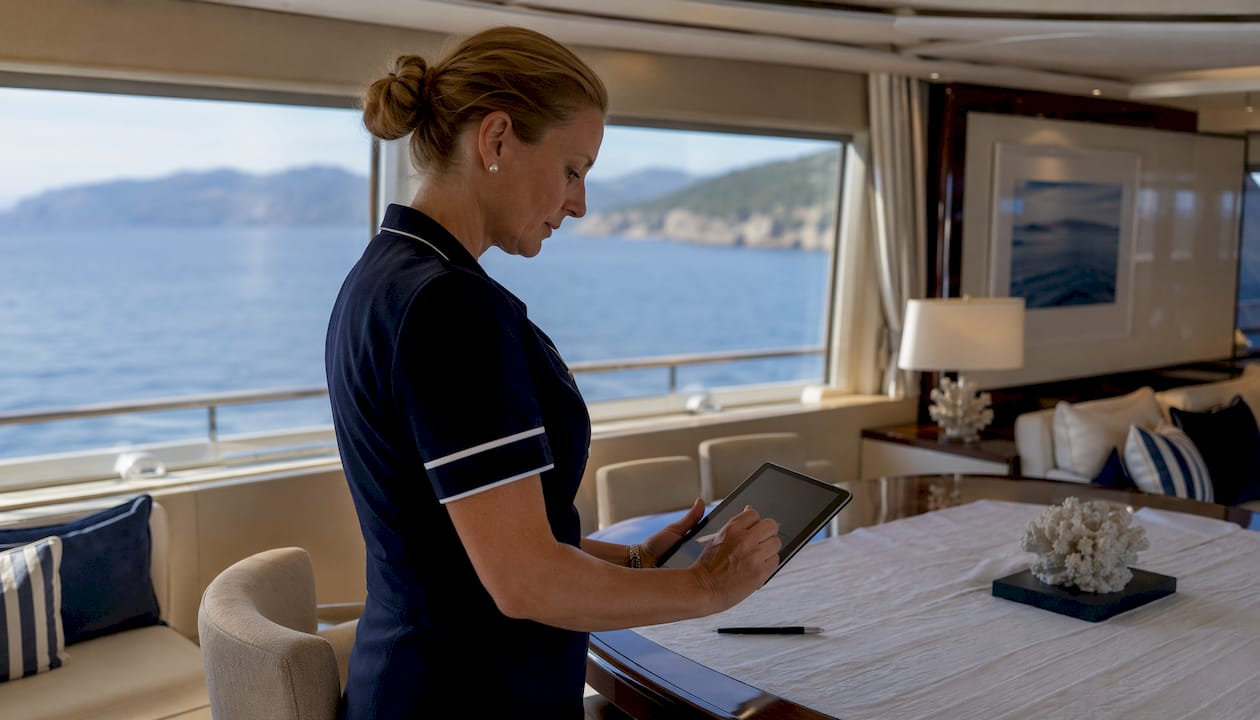
Online provisioning services have transformed sourcing logistics. Most reputable provisioning companies now allow crews to browse, order, pay, and schedule delivery directly to the dock before arrival at the marina. All they typically need is the charter company name, the vessel name, and arrival dates. This capability is now available across major yachting destinations worldwide.
Temperature monitoring devices, including Bluetooth thermometers placed inside freezers, allow crews to check cold chain integrity without opening the unit. Immediate temperature recording on delivery is a professional standard for chilled and frozen items.
Vacuum sealers extend the shelf life of proteins significantly, up to several weeks refrigerated and months frozen, and protect against freezer burn on long passages.
Preference sheet management systems used by brokers and charter management companies digitize guest requests, flag allergens automatically, and route the completed sheet to the chef well in advance of the 21-day sourcing window.
Stowage planning tools, even a simple photographed layout of a fully stocked galley, serve as a reference for restocking and for new crew joining mid-season. The photograph costs nothing and saves hours of confusion.
How to customize provisions based on yacht size, trip length, and guest preferences
No two provisioning orders look alike, and that variability is by design. The right approach depends on three intersecting factors: the vessel’s storage capacity, the duration of the voyage, and the specific preferences of everyone aboard.
Yacht size determines the physical limits of what is possible. A superyacht with walk-in freezers, deep dry storage, and a full galley can carry bulk provisions for extended passages without resupply. A 22-meter sailing yacht works within tighter constraints, making frequent smaller orders at each port more practical than bulk buying. Storage capacity assessment happens before any order is placed.
Trip duration shapes the provisioning strategy from the ground up. For short charters of 3–5 days, fresh produce can dominate the order because turnover is fast. For passages of two weeks or more, the balance shifts toward frozen proteins, preserved goods, and long-life staples, with fresh items reserved for the first few days. Passage provisioning also adds a contingency reserve, typically calculated for the planned duration plus additional days to account for weather delays or itinerary changes.
Guest preferences are where provisioning becomes genuinely bespoke. A detailed preference sheet captures dietary restrictions, allergens, favorite meals, alcohol preferences down to specific Champagne houses and whisky brands, and special occasion requests. For customizing the luxury experience at the highest level, the chef sources rare imports, seasonal specialties, and celebration items that reflect each guest’s tastes precisely. Crew preferences matter too; a well-fed, well-provisioned crew performs better and stays longer.
The most effective provisioning adapts all three variables simultaneously, treating each voyage as its own logistical composition rather than a repeat of the last.
Key Takeaways
Yacht provisions management is the systematic, multi-category process of sourcing, storing, and delivering all supplies a yacht needs, and its quality determines the success of every voyage.
| Point | Details |
|---|---|
| Start with the preference sheet | Collect guest preferences 21 days before departure to allow time for sourcing rare items and confirming allergens. |
| Work from menus backwards | Plan meals first, then extract ingredient lists grouped by category to prevent waste and emergency orders. |
| Time fresh produce carefully | Procure perishables 72 hours before embarkation to maximize freshness and minimize spoilage risk. |
| Budget for real complexity | Crew provisioning typically costs €30–50 per person per day, while charter guest provisioning ranges from €80–200+ per person per day, reflecting the specialized nature of provisioning. |
| Use phased purchasing on long voyages | Buy the bulk of supplies initially, then assess and replenish to avoid storage overcrowding and spoilage. |
Recommended
Sold Listings


Design Your Yacht
"*" indicates required fields
Maximus III - PNW
As you step aboard MAXIMUS III, the first impression is her scale.
At 120 feet with an 8-meter beam and 294 GT of interior volume, this 2025 Crescent Custom tri-deck immediately feels open, balanced, and estate-like. A timeless look while still feeling fresh from the shipyard.
Currently Available


Get your yacht value Estimate
"*" indicates required fields