
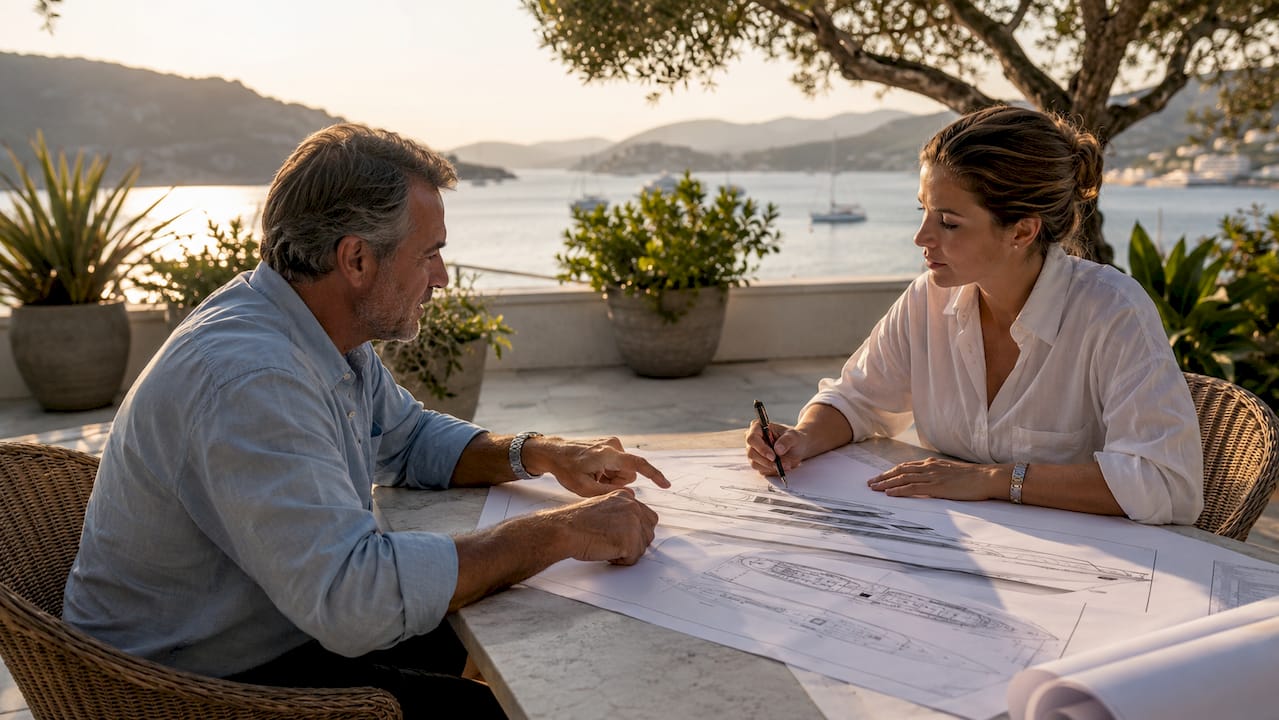
The yacht design concept phase is the initial stage of the yacht design process where a vessel’s major characteristics, spatial layout, hull form, and technical feasibility are defined before any detailed engineering begins. Known formally in naval architecture as concept design, this phase produces the foundational documents that every subsequent stage depends on. Without a well-executed concept phase, even the most experienced shipyard cannot deliver a yacht that truly matches your vision. At Baranofyachts, we treat this phase as the most consequential investment you will make in your entire build or refit project.
What is a yacht design concept phase and what does it produce?
The yacht design concept phase is the stage where designers translate an owner’s vision into measurable, buildable parameters. Major characteristics finalized here include hull shape, deck layout, engine positioning, and the general arrangement of interior spaces. These decisions define the yacht’s identity and performance profile. Changing them after this phase carries exponential cost and schedule consequences.
Core deliverables from concept design
Designers produce 2D sketches, general arrangements, and early visual representations that define the base characteristics of the yacht. Specifically, the deliverable set includes:
- Hand sketches and 2D layout plans showing spatial organization across all decks
- Section views and side profiles establishing hull proportions and freeboard
- General arrangement drawings defining cabin configurations, galley placement, and circulation paths
- Preliminary 3D CAD models representing exterior styling and volumetric massing
- Early performance and weight calculations confirming the design is physically achievable
Concept design also includes rough performance estimates and weight calculations that balance aesthetics, space planning, and functionality against the owner’s stated goals. These outputs become the reference documents for feasibility studies, cost estimation, and final styling decisions throughout the project.
Pro Tip: Request a written design brief before your first concept meeting. A brief that captures your operational profile, guest capacity, range requirements, and aesthetic preferences gives the design team a concrete target rather than an open-ended conversation.
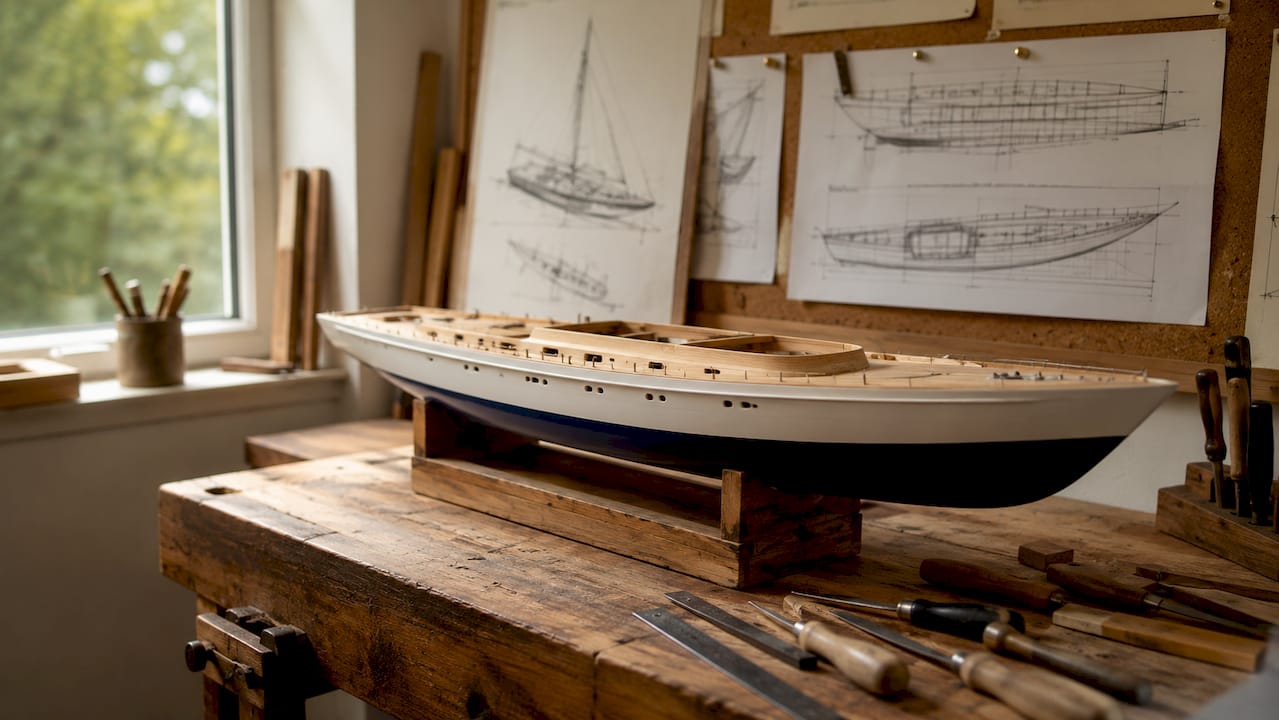
Why is the concept phase critical for risk mitigation?
The concept phase is the primary risk mitigation tool in yacht design. Validating technical feasibility early prevents costly overruns by confirming the design aligns with budget and operational goals before any commitment to engineering or construction. Think of it as the conductor’s downbeat: everything that follows depends on getting this moment right.
“The concept phase sets the baseline for ergonomics, safety, and compliance evaluations, which must be integrated early to avoid redesign.” — CATRAN Naval Architects
The financial logic is straightforward. A design change at the concept stage costs a fraction of what the same change costs during detailed engineering, and a fraction of a percent of what it costs during construction. Changes beyond the concept phase in 3D CAD and engineering stages lead to exponential cost and delay. The knock-on effects ripple through structural calculations, systems routing, regulatory submissions, and supplier lead times simultaneously.
Specific risks the concept phase addresses include:
- Budget misalignment: Early cost modeling confirms whether the owner’s program fits the available budget before the design team invests hundreds of hours in detailed work
- Regulatory non-compliance: Classification society requirements from Lloyd’s Register, Bureau Veritas, or RINA must be considered at the layout stage, not retrofitted later
- Operational mismatch: A yacht designed for Mediterranean day charters has fundamentally different fuel capacity, crew quarters, and tender storage requirements than one built for transatlantic passages
- Structural incompatibility: Hull form and engine positioning must be resolved together; separating these decisions creates structural conflicts that are expensive to reconcile
Understanding yacht project oversight becomes especially relevant here, because the concept phase is where project managers establish the baseline against which all future progress is measured.
How does the concept phase compare with basic and detailed design?
The yacht design process progresses from concept to basic to detailed design, with each stage adding technical precision and narrowing the scope for change. Understanding these distinctions helps owners and professionals allocate attention and budget appropriately at each juncture.
| Phase | Primary objective | Key deliverables | Client involvement |
|---|---|---|---|
| Concept design | Define vision, feasibility, and major characteristics | 2D sketches, general arrangements, early 3D models, cost estimates | High: owner drives decisions |
| Basic design | Refine structure, systems, and regulatory compliance | Structural drawings, systems schematics, classification submissions | Moderate: review and approval |
| Detailed design | Produce construction-ready specifications | Full engineering drawings, CNC files, material specs, wiring diagrams | Low: technical execution phase |
The concept phase is owner-driven by design. Your input on how you want to use the yacht, who will crew it, and what experience you want to deliver to guests shapes every spatial and technical decision. Basic design then takes those decisions and subjects them to structural analysis, systems integration, and classification society review. Detailed design converts approved plans into the precise instructions a shipyard needs to cut, weld, and fit.
Advanced CAD and 3D modeling tools bridge concept and basic design by allowing designers to iterate quickly on exterior styling and volume distribution before committing to structural calculations. This technology enables precise decision-making and genuine client collaboration, because owners can evaluate a photorealistic exterior rendering long before the hull is laid.
Pro Tip: Ask your design team to produce a cost sensitivity analysis alongside the concept deliverables. This document shows how changes to length overall, beam, or displacement affect the project budget, giving you a clear picture of the financial consequences of each design decision.
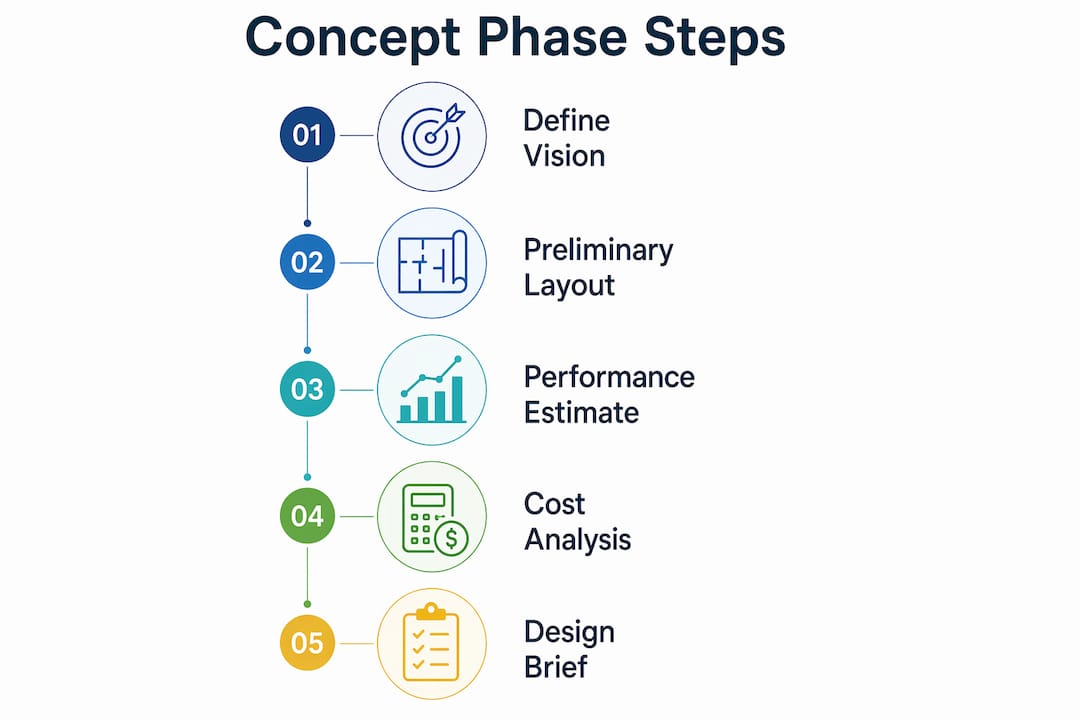
What practical steps lead to a successful concept phase?
A successful concept phase requires deliberate preparation from the owner’s side, not just technical skill from the design team. Clear communication between owner and design team avoids costly late-stage changes and aligns expectations with technical capabilities from the outset.
Here are the steps that consistently produce strong concept phase outcomes:
-
Define your operational profile in writing. Specify cruising grounds, typical voyage duration, maximum guest count, crew size, and any special requirements such as dive equipment storage, helicopter landing capability, or zero-speed stabilization. Vague briefs produce vague concepts.
-
Engage a naval architect early, not after you have a sketch. Naval architects from firms specializing in custom superyacht design bring structural and hydrodynamic knowledge that shapes the concept from the first line drawn. Bringing them in after an exterior designer has already produced renderings creates conflicts that cost time and money to resolve.
-
Establish a realistic budget range before design begins. Concept design validates the blueprint before engineering and construction, providing early cost estimation. That process only works if the design team knows the financial envelope they are working within.
-
Prioritize ergonomics and safety alongside aesthetics. Interior volume, headroom clearances, and crew circulation paths are far easier to address at the concept stage than after structural framing is complete. The same applies to safety equipment placement and liferaft embarkation stations.
-
Plan for iteration. The concept phase is not a single presentation followed by approval. Expect two to four rounds of refinement as the design team tests different hull forms, deck configurations, and interior arrangements against your brief. This iteration is where the best concepts emerge.
-
Review materials implications early. Choices between aluminum, steel, carbon fiber, and composite construction affect weight, range, maintenance requirements, and cost. Reading about yacht building materials before your first concept meeting gives you the vocabulary to have a productive conversation with your design team.
Pro Tip: Before committing to a concept, commission a yacht feasibility study. This independent analysis confirms that your program, budget, and timeline are mutually achievable, and it gives you a defensible basis for the decisions you make in concept design.
Common pitfalls to avoid include requesting major layout changes after the general arrangement is approved, treating the concept phase as a formality before the “real” design work begins, and selecting an exterior styling direction without first confirming it is compatible with the structural and systems requirements of the vessel.
Key takeaways
The yacht design concept phase is the single most consequential stage in any new build or refit, because decisions made here define every technical, financial, and operational parameter that follows.
| Point | Details |
|---|---|
| Concept phase defines the vessel | Hull form, deck layout, engine position, and spatial arrangement are all locked in at this stage. |
| Early changes are affordable | Revisions during concept cost a fraction of what the same changes cost in engineering or construction. |
| Deliverables guide all later work | 2D drawings, general arrangements, and early 3D models become the reference for feasibility and costing. |
| Owner input is highest here | Client involvement is most impactful during concept design, before technical execution narrows options. |
| Regulatory and ergonomic factors belong here | Classification requirements and safety layouts must be integrated at concept stage to avoid redesign. |
Why the concept phase deserves more time than most owners give it
Most owners I work with arrive at the concept phase with a strong visual idea and a desire to move quickly. That instinct is understandable. You have been thinking about this yacht for years, and the concept phase feels like a preliminary hurdle before the exciting work begins. My experience tells me the opposite is true.
The concept phase is where the most consequential thinking happens. I have seen projects where owners approved a general arrangement in two weeks, only to discover six months into basic design that the engine room clearances required by the chosen propulsion system made the aft cabin layout physically impossible. Resolving that conflict cost more in redesign fees and schedule delay than the entire concept phase would have cost if done thoroughly.
What I find most overlooked is the ergonomics dimension. Owners focus on aesthetics and performance. Design teams focus on structure and systems. Nobody naturally champions the experience of moving through the vessel at sea, in rough weather, at night. Headroom at the companionway, handrail placement on the side decks, the relationship between the helm station and the chart table: these details live in the concept phase, and they are the details that determine whether you love or merely tolerate your yacht after delivery.
My recommendation is to treat the concept phase as a genuine design collaboration, not a procurement transaction. Bring your captain into the process. Walk through the general arrangement with your interior designer before it is approved. Ask your naval architect to explain why the hull form was chosen, not just what it looks like. The steps to take before building your yacht are worth reviewing before your first concept meeting, because preparation at this stage pays dividends for the entire project.
— Jason
How Baranofyachts supports your concept phase and custom build
At Baranofyachts, we work with owners and industry professionals from the earliest stages of concept development through to delivery and beyond. Our team brings project management discipline to the concept phase, coordinating between naval architects, exterior designers, interior designers, and classification societies so that your vision is tested against technical and financial reality before a single engineering hour is committed.

Whether you are planning a new build or a major refit, the concept phase decisions you make today will shape every aspect of your yacht’s performance, comfort, and value. We invite you to explore our custom yacht configuration service to see how early-stage decisions translate into a vessel built precisely around your requirements. For a fully personalized approach, our bespoke customization program walks you through every design decision with expert guidance at each step.
FAQ
What is the yacht design concept phase?
The yacht design concept phase is the first formal stage of the yacht design process, where the vessel’s hull form, deck layout, spatial arrangement, and technical feasibility are defined through 2D drawings, general arrangements, and early 3D models.
How long does the concept phase typically take?
The concept phase for a custom superyacht typically runs four to twelve weeks, depending on vessel complexity and the number of design iterations required to align the owner’s brief with technical and financial constraints.
What is the difference between concept design and basic design?
Concept design establishes the yacht’s major characteristics and feasibility, while basic design refines structural details, systems integration, and regulatory compliance submissions to classification societies such as Lloyd’s Register or Bureau Veritas.
Can I change the layout after the concept phase is approved?
Changes beyond the concept phase lead to exponential cost and schedule delays, because modifications to hull form or layout require revisions across structural calculations, systems routing, and regulatory submissions simultaneously.
What professionals should be involved in the concept phase?
A naval architect, exterior designer, and experienced project manager should all be engaged during the concept phase, with the owner’s captain consulted on operational requirements to produce a brief that reflects real-world use conditions.
Recommended
Sold Listings


Design Your Yacht
"*" indicates required fields
Maximus III - PNW
As you step aboard MAXIMUS III, the first impression is her scale.
At 120 feet with an 8-meter beam and 294 GT of interior volume, this 2025 Crescent Custom tri-deck immediately feels open, balanced, and estate-like. A timeless look while still feeling fresh from the shipyard.
Currently Available


Get your yacht value Estimate
"*" indicates required fields