

Yacht manufacturers are companies that design, engineer, and construct luxury vessels ranging from 30-foot sport cruisers to 200-foot superyachts, with each builder offering a distinct combination of build philosophy, material expertise, and customization depth. Knowing the differences among builders like Sunseeker, Benetti, Abeking & Rasmussen, and Gulf Craft is not a matter of preference alone. It directly determines how much creative control you hold, how long your build takes, and what your vessel will cost to maintain over a decade. This guide covers build approaches, customization processes, key materials, environmental standards, and the full acquisition process so you can evaluate your options with precision.
How do yacht manufacturers differ in build approach and portfolios?
Yacht manufacturers divide broadly into three build categories: fully bespoke builders, semi-custom platform builders, and series production yards. Each category carries real trade-offs in cost, timeline, and creative latitude.
Fully bespoke builders like Abeking & Rasmussen and Benetti construct each vessel from a blank design brief. Every structural decision, from hull geometry to systems routing, is made specifically for that owner. This approach delivers maximum personalization but typically extends lead times to three to five years and requires the buyer to engage deeply with naval architects and interior designers from day one.
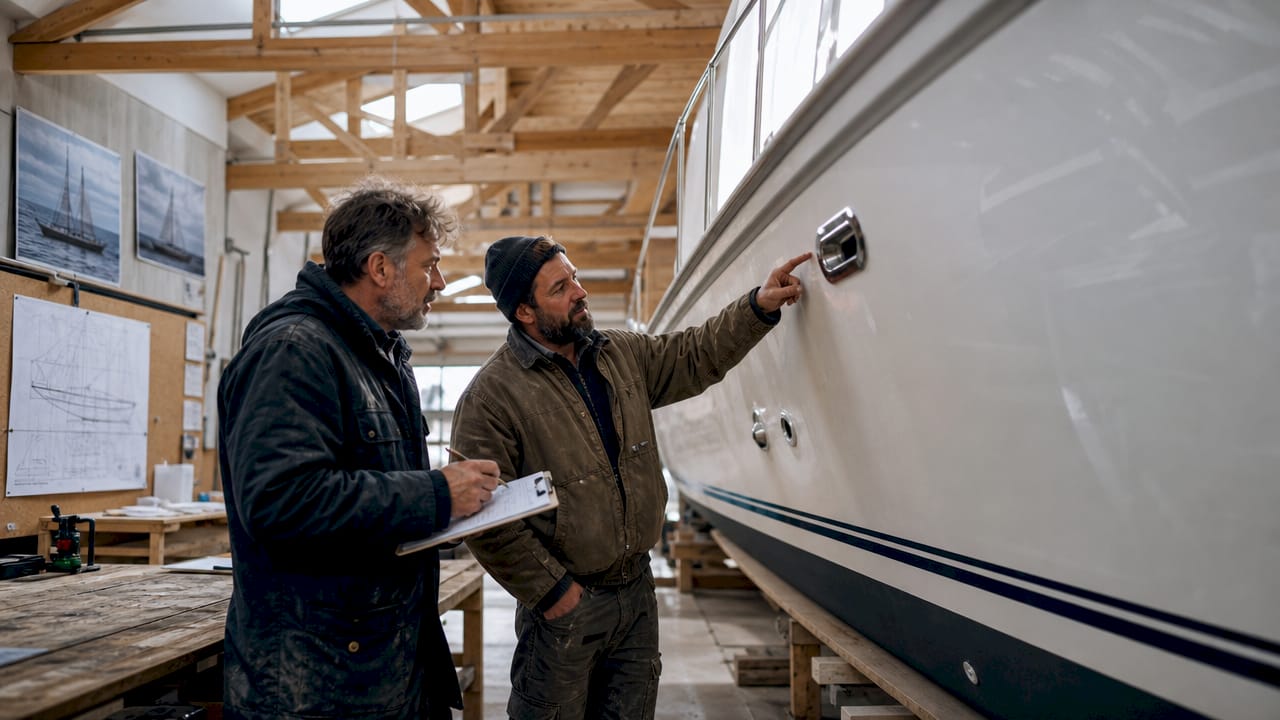
Platform-based builders offer a pre-engineered hull and structural package that owners then customize above the waterline. Abeking & Rasmussen’s ARUBY platform is a clear example: the 70-meter concept uses a pre-engineered structure that lets owners skip months of foundational planning while retaining full interior design freedom. This approach compresses delivery timelines without sacrificing the luxury finish buyers expect.
Multi-brand manufacturers like Gulf Craft operate across the widest range of buyers. Gulf Craft has built over 4,800 yachts since 1982, with brands spanning 27 to 175 feet including Majesty Yachts and Nomad Yachts. That breadth means a single manufacturer group can serve a first-time buyer at 40 feet and a corporate fleet operator at 175 feet, which matters when you are evaluating long-term relationships with a yard.
| Build Type | Example Builder | Key Benefit | Trade-off |
|---|---|---|---|
| Fully bespoke | Abeking & Rasmussen, Benetti | Maximum personalization | 3 to 5 year lead time |
| Semi-custom platform | ARUBY (Abeking & Rasmussen) | Shorter delivery, interior freedom | Less structural flexibility |
| Series production | Sunseeker, Princess Yachts | Faster delivery, proven design | Limited configuration options |
| Multi-brand portfolio | Gulf Craft | Range of sizes and price points | Less specialization per model |
Pro Tip: When comparing builders, request a full portfolio review rather than focusing only on their flagship model. A yard that builds well at 50 meters may not have the same precision at 30 meters, and vice versa. Reviewing completed projects across their full size range reveals far more about consistent quality than any brochure.
What customization options do yacht builders offer?
Customization in yacht building splits into two distinct categories: design space decisions and engineering space decisions. Understanding this distinction protects you from costly surprises mid-build.
Design space decisions cover layout configuration, interior styling, material finishes, furniture specification, and aesthetic choices. These remain flexible for a longer period in the build process and are where most buyers focus their creative energy. Engineering space decisions cover hull structure, propulsion system placement, fuel tank sizing, electrical load planning, and systems integration. These must be frozen early in the project because structural and systems milestones create hard boundaries that interior changes cannot cross without triggering expensive redesign work.
The practical implication is this: if you decide at month eight of a build that you want a larger master stateroom, but the structural bulkheads and HVAC ducting were finalized at month four, that change carries knock-on effects across multiple subsystems. Builders like Van der Valk and Steeler Yachts are transparent about these milestones, which is one reason experienced buyers prioritize yards with clear project milestone documentation.
Steeler Yachts’ ACE series illustrates what genuine material and configuration freedom looks like. The ACE series spans 18 to 34 meters, built entirely in aluminum, with configurable open or fully enclosed flybridge options. Aluminum construction allows structural modifications that composite hulls resist, making it a preferred material for buyers who want to push layout boundaries.
Key customization decisions to lock in early:
- Propulsion type (diesel, diesel-electric, pod drives, or hybrid)
- Hull material (aluminum, steel, or composite)
- Fuel capacity and range requirements
- Number and configuration of staterooms
- Tender garage dimensions and access type
- Electrical load budget for onboard systems
Pro Tip: Ask your builder for a written milestone schedule that identifies every engineering freeze point before you sign the build contract. Knowing exactly when your last opportunity to change a bulkhead position or systems layout occurs gives you a structured window for decisions rather than a stressful scramble.
What materials and technologies define modern yacht construction?
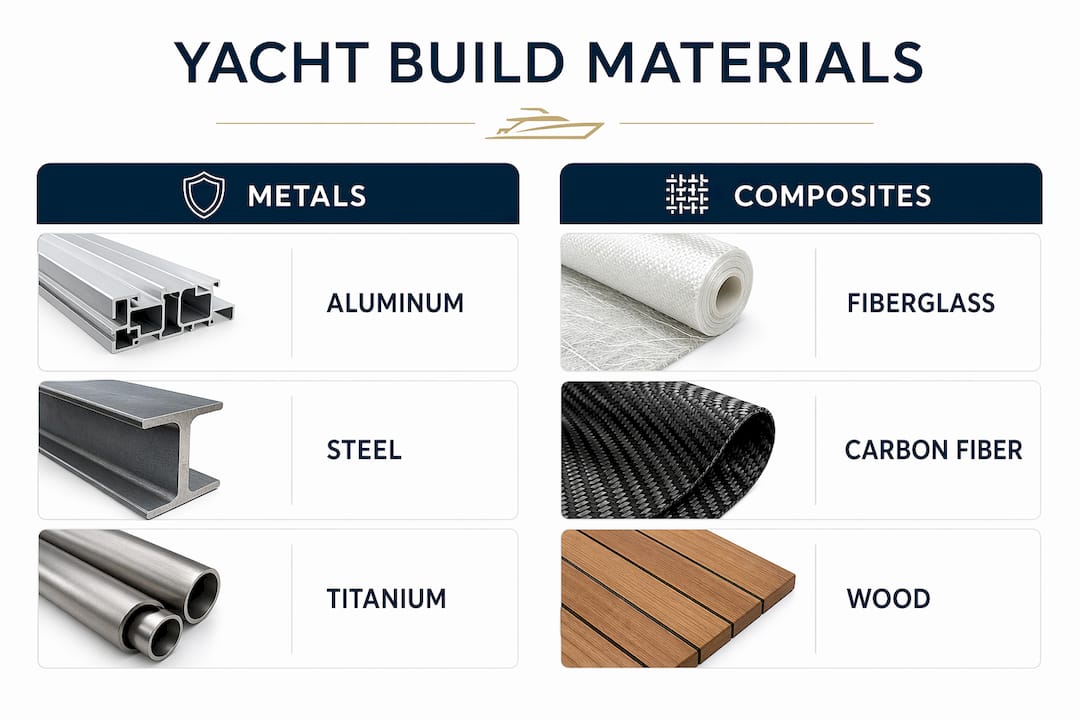
Hull material is the single most consequential construction decision a buyer makes, because it governs performance, maintenance cost, repair complexity, and the degree of structural customization available throughout the build.
Aluminum is the material of choice for performance-oriented and fully custom builds. It is lighter than steel, corrosion-resistant in saltwater when properly treated, and structurally adaptable. Builders like Steeler Yachts use aluminum across their entire ACE series precisely because it supports the kind of layout flexibility that discerning buyers demand. The trade-off is higher initial material cost and the need for skilled welders with aluminum-specific certification.
Steel remains standard for displacement superyachts above 50 meters where structural mass is less of a performance concern and hull longevity in demanding sea states takes priority. Composite materials, including fiberglass and carbon fiber, dominate the production and semi-custom market below 40 meters. Carbon fiber reduces weight significantly but increases build cost and limits field repair options in remote cruising areas.
| Material | Best Application | Weight | Maintenance Complexity |
|---|---|---|---|
| Aluminum | Custom and performance builds | Low | Moderate |
| Steel | Large displacement superyachts | High | Low to moderate |
| Composite (fiberglass) | Series production under 40m | Low to moderate | Low |
| Carbon fiber | Performance and racing yachts | Very low | High |
Propulsion technology has advanced considerably. Diesel-electric systems, pod drives from manufacturers like Rolls-Royce and Volvo Penta, and battery storage integration are now standard considerations on any new build above 30 meters. The ARUBY platform incorporates these technologies as part of its pre-engineered package, which is one reason it compresses planning time so effectively.
Environmental accountability is also now a measurable standard rather than a marketing claim. ISO/TS 23099 is the first science-based specification to benchmark operational energy and emission performance for yachts over 30 meters, produced through a five-year joint industry effort. Buyers evaluating builders on sustainability grounds should request explicit references to this standard rather than accepting bespoke metrics that cannot be independently verified. You can explore how yacht building materials affect long-term performance and ownership cost in more depth.
How does the pre-purchase survey and acquisition process work?
The acquisition process for a brokerage yacht runs 12 to 24 weeks from accepted offer to closing. Most of the critical due diligence work happens in the first ten weeks, and compressing this phase to save time is the most common and most expensive mistake buyers make.
The pre-purchase survey follows three phases:
- Haul-out inspection. The vessel is lifted from the water for a full examination of the hull exterior, running gear, propeller shafts, rudders, anodes, and any underwater fittings. This phase identifies structural damage, osmotic blistering, and corrosion that is invisible from the waterline.
- Afloat systems check. With the vessel back in the water, a surveyor tests all onboard systems including propulsion, electrical, plumbing, navigation, safety equipment, and climate control. This phase reveals deferred maintenance, non-compliant installations, and systems that function on paper but fail under load.
- Sea trial. The vessel operates under realistic conditions to verify propulsion performance, handling characteristics, and systems behavior at sea. A yacht sea trial is not a formality. It is the only test that replicates actual ownership conditions.
For a 40-meter yacht, this three-phase survey typically spans four to seven days afloat plus haul-out time, with total survey costs running between $25,000 and $60,000. That figure represents a fraction of one percent of the vessel’s value and is non-negotiable due diligence.
The surveyor you appoint must be independent. Buyers who accept broker-recommended or seller-recommended surveyors introduce a conflict of interest that can suppress findings. Class society certificates and seller-provided documentation do not substitute for an independent survey. They confirm the vessel met a standard at a point in time. They do not reveal what has changed since. A thorough independent yacht survey also covers paint condition, mechanical systems, and interior fabric, areas that class surveys routinely exclude.
Registration flag and regulatory code decisions also belong in this phase. Yachts operating commercially under charter must comply with MCA or REG Yacht Code requirements, which affect crew certification, safety equipment standards, and structural specifications. Confirming compliance before closing prevents costly retrofits after the sale.
Key takeaways
Choosing the right yacht manufacturer requires matching build philosophy, material expertise, and acquisition process discipline to your specific ownership goals.
| Point | Details |
|---|---|
| Match build type to your timeline | Fully bespoke builds take 3 to 5 years; platform-based builds like ARUBY compress that significantly. |
| Freeze engineering decisions early | Structural and systems milestones create hard limits on interior changes; commit to these before design work begins. |
| Verify materials against use case | Aluminum suits custom and performance builds; steel suits large displacement vessels; composite suits series production. |
| Budget for an independent survey | A three-phase survey for a 40m yacht costs $25,000 to $60,000 and is the most important due diligence investment. |
| Use ISO/TS 23099 as your sustainability benchmark | Reject bespoke environmental metrics from builders; request references to this verified external standard instead. |
What I’ve learned about choosing a builder that brochures won’t tell you
I’ve watched buyers spend months comparing builder brochures and attending yacht shows, then make their final decision based on the prestige of a name rather than the substance of a yard’s process. That approach consistently produces regret.
The builders who deliver the best outcomes are not always the most famous names. They are the yards with clear milestone documentation, transparent change-order policies, and after-sales support networks that extend beyond the warranty period. When we evaluate a builder at Baranofyachts, we look at their subsystems integration record, their track record on delivery dates, and the quality of their commissioning documentation. A yard that hands over a vessel with incomplete systems manuals is telling you something important about how they managed the build.
The other pattern I see repeatedly is buyers rushing the survey phase because they are emotionally committed to a vessel. An independent surveyor who finds $400,000 in deferred maintenance is not a problem. That surveyor is the most valuable person in the transaction. The problem is the buyer who dismisses those findings to avoid renegotiating. Patience in the acquisition phase is not hesitation. It is precision.
My practical advice: evaluate at least three builders across different build categories before committing. Ask each yard for references from owners who are two to three years into ownership, not just delivery. And treat your project manager, whether internal to the yard or independent, as the conductor of a complex orchestra. Every subsystem, every supplier, every regulatory milestone needs one person holding the score.
— Jason
How Baranofyachts supports your build and acquisition journey

Baranofyachts brings together custom build expertise, independent project management, and brokerage support under one roof, so you are never navigating the complexity of a luxury yacht acquisition alone. Whether you are evaluating fully bespoke construction, comparing semi-custom platforms, or preparing for a pre-purchase survey on a brokerage vessel, our team provides the structured guidance that turns a complex process into a confident decision. We work with a curated network of builders, surveyors, and flag state specialists to protect your interests from concept through to delivery. Start by using our yacht configuration tool to define your ideal specifications, or explore why a professional broker makes every stage of acquisition more precise and less risky.
FAQ
What is the difference between a bespoke and semi-custom yacht build?
A bespoke build starts from a blank design brief with every structural and aesthetic decision made for a single owner, while a semi-custom build uses a pre-engineered platform for the hull and structure, allowing full interior customization. Semi-custom platforms like Abeking & Rasmussen’s ARUBY reduce lead times by eliminating months of foundational engineering work.
How long does it take to buy a brokerage superyacht?
The acquisition process for a brokerage yacht typically runs 12 to 24 weeks from accepted offer to closing, with the most critical due diligence work concentrated in the first ten weeks. Rushing this phase to accelerate closing is the most common and costly mistake buyers make.
Why does hull material matter when comparing yacht manufacturers?
Hull material governs performance, maintenance cost, repair complexity, and the degree of structural customization available during and after the build. Aluminum suits performance and custom builds, steel suits large displacement superyachts, and composite materials dominate series production under 40 meters.
What does an independent pre-purchase survey cover?
An independent survey covers three phases: haul-out inspection of the hull and underwater gear, an afloat systems check of all onboard mechanical and electrical systems, and a sea trial under realistic operating conditions. For a 40 to 50-meter yacht, this process costs between $25,000 and $60,000 and should always be conducted by a surveyor with no connection to the broker or seller.
What is ISO/TS 23099 and why should buyers care?
ISO/TS 23099 is the first science-based standard for benchmarking operational energy and emission performance on yachts over 30 meters, developed through a five-year industry collaboration. Buyers evaluating builder sustainability claims should request explicit references to this standard rather than accepting proprietary or marketing-specific environmental metrics.
Recommended
Sold Listings


Design Your Yacht
"*" indicates required fields
Maximus III - PNW
As you step aboard MAXIMUS III, the first impression is her scale.
At 120 feet with an 8-meter beam and 294 GT of interior volume, this 2025 Crescent Custom tri-deck immediately feels open, balanced, and estate-like. A timeless look while still feeling fresh from the shipyard.
Currently Available


Get your yacht value Estimate
"*" indicates required fields