
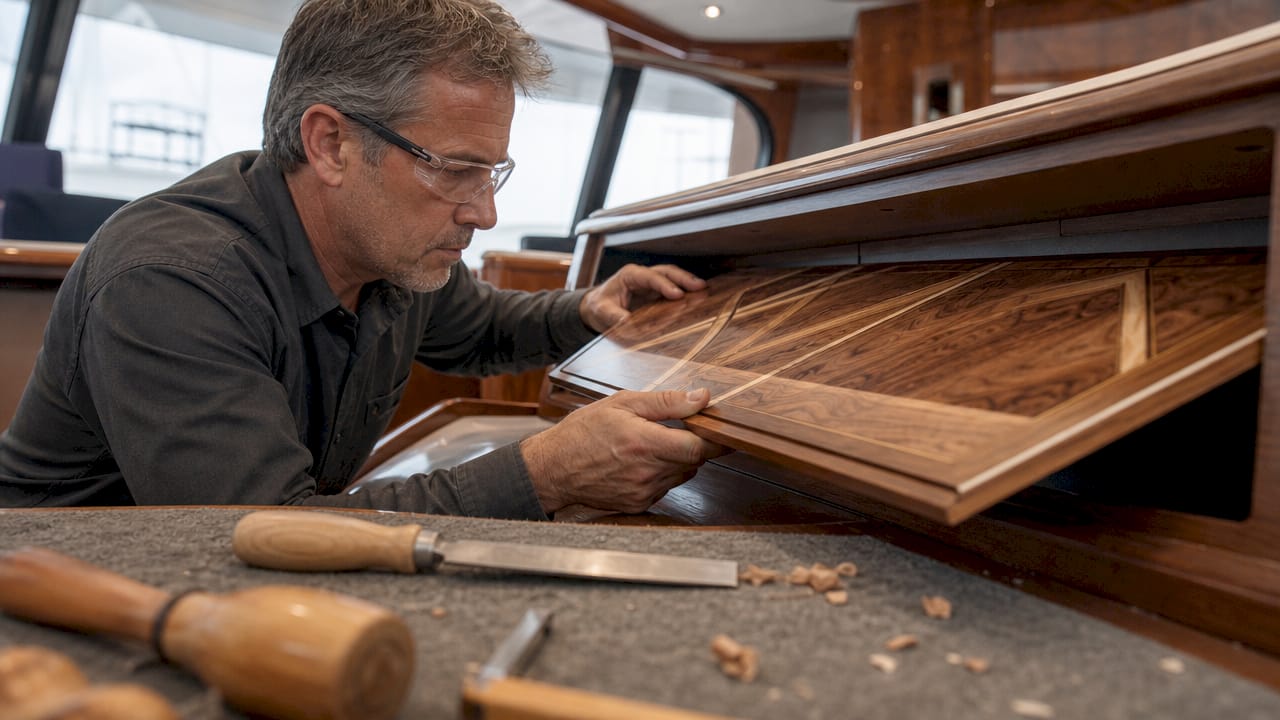
Hand-crafted yacht details are defined as meticulously executed construction and design decisions that directly shape a yacht’s quality, longevity, and owner experience. These bespoke elements separate a truly luxury vessel from a production boat built to a price point. Understanding why hand-crafted yacht details matter means recognizing that every joinery reveal, hardware fitting, and timber selection carries functional weight, not just aesthetic intent. At Baranofyachts, we work with owners who have learned this distinction firsthand, and the difference it makes over a decade of ownership is significant.
Why hand-crafted yacht details matter for quality and durability
The technical case for handcrafted construction begins with material behavior. Wood expands and contracts with humidity. Engineered stone shifts under constant vessel movement. A craftsman who understands these forces accounts for them at the point of fabrication, building in tolerances that prevent cracking, delamination, and hardware failure over time. A production line worker following a template cannot make those judgment calls in real time.
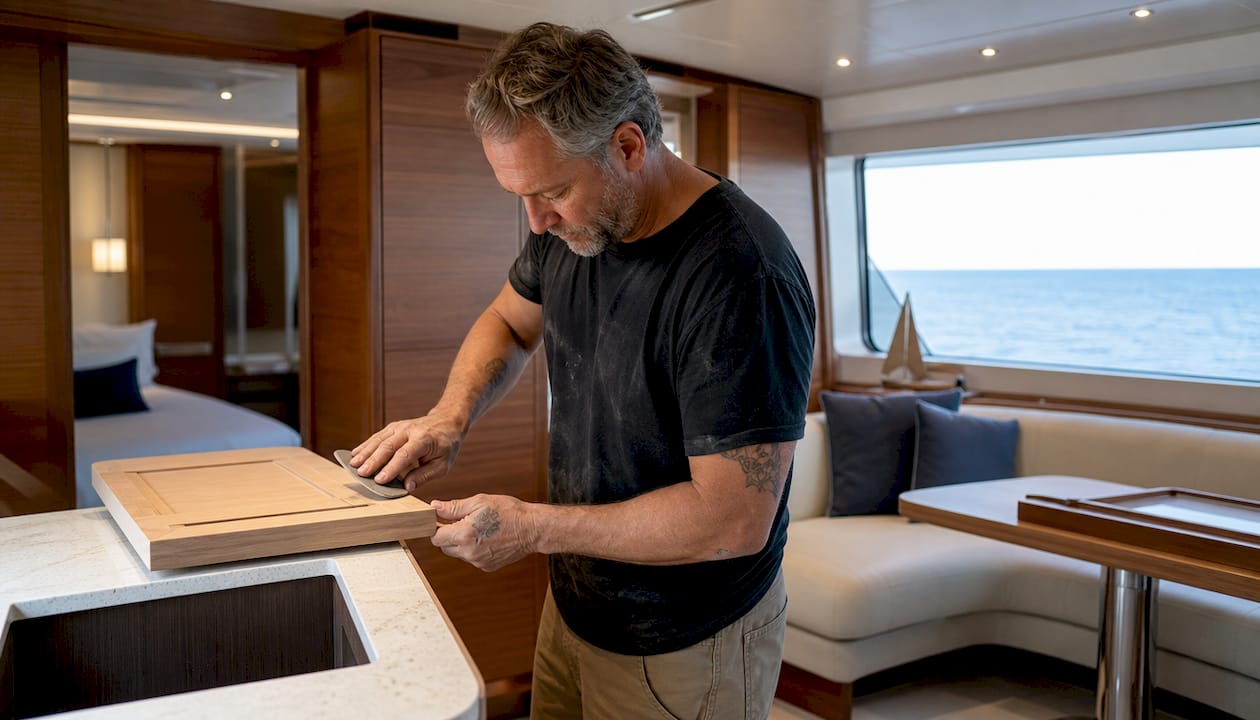
The clearest proof of craftsmanship quality shows up in the details most owners never consciously notice. Consistent reveal widths between cabinet doors. Hardware that opens with the same resistance after five years at sea. Seam alignment that holds true after repeated thermal cycling. These are the signals of true craftsmanship that distinguish a yacht built to last from one built to photograph well at a boat show.
Mass production optimizes for speed and repeatability. Handcrafted construction optimizes for fit, function, and material integrity. The two goals are not compatible at the highest level of yacht building. Spirit Yachts demonstrates this balance well: their hybrid manufacturing approach uses CNC machining for non-visible structural components while reserving hand construction for the hull and all visible surfaces. The result is consistency where it matters for engineering, and craftsmanship where it matters for quality and longevity.
- Seam and reveal alignment prevents water ingress points in cabinetry and joinery
- Hand-fitted hardware eliminates micro-movement that causes wear in mass-produced fittings
- Material-specific tolerances built by skilled craftsmen prevent wood and stone failure under marine conditions
- Hand-laid composite work in hulls produces fewer voids and stronger laminate bonds than automated processes
Pro Tip: When evaluating a yacht’s build quality, open every cabinet door and drawer. Consistent resistance, gap width, and alignment across the entire interior tells you more about craftsmanship standards than any brochure specification.
How does customization shape owner comfort at sea?
Personalization transforms a technically advanced vessel into a place you actually want to live aboard. Custom interiors built around daily routines ensure the yacht functions as a home rather than a showroom, and that distinction becomes critical during extended passages or long-term liveaboard use. The difference between a galley designed for your cooking habits and one designed for a generic owner is the difference between a tool and a home.
The elements that matter most for long-term comfort are rarely the ones featured in marketing photography. They are the practical decisions made during the design phase:
- Storage placement matched to how the owner actually uses the vessel, not a standard layout template
- Lighting zones designed for reading, entertaining, and navigation rather than a single ambient setting
- Ergonomic berth and seating dimensions sized to the owner’s body rather than an industry average
- Galley workflow organized around the owner’s provisioning and cooking habits
- Helm station configuration tailored to the captain’s sight lines, reach, and instrument preferences
Each of these decisions requires a craftsman and designer working in direct conversation with the owner. No production builder can replicate that process. The result is a vessel that feels immediately right, where nothing requires adaptation or workaround. Baranofyachts approaches every custom yacht build with this principle at the center: the owner’s lifestyle defines the specification, not the other way around.
Customization also future-proofs the vessel. Owners whose needs evolve, whether adding crew, changing cruising grounds, or shifting from racing to long-range passage making, can build that flexibility into the original design. A bespoke interior accommodates those changes far more gracefully than a standard layout ever could.
What makes handcrafted yacht aesthetics timeless?
Great craftsmanship produces visual calm. When every reveal is consistent, every surface transition is deliberate, and every material choice is coherent, the eye moves through a space without friction. That quality is what separates a luxury interior that ages gracefully from one that looks dated within a decade. Consistent alignment and smooth finishes create a tactile and visual quality that no amount of expensive material can substitute for.
The integration of exotic woods, natural stone, and hand-formed metals requires a craftsman who understands how these materials interact over time. Teak and holly sole work that is hand-fitted to the hull’s curve will not gap or lift the way a pre-cut panel will. A carved timber basin, as recognized in the BOAT Artistry and Craft Awards 2026, demonstrates that functional elements can carry the same artistic weight as purely decorative ones.
| Craftsmanship element | Aesthetic impact | Long-term benefit |
|---|---|---|
| Consistent reveal widths | Creates visual rhythm and calm | Prevents gaps from forming as materials age |
| Hand-fitted sole panels | Seamless floor transitions | No lifting or warping under humidity cycles |
| Carved timber features | Unique, signature focal points | Maintains value as a one-of-a-kind element |
| Integrated hardware alignment | Clean, uninterrupted sightlines | Hardware functions smoothly for years |
| Material-matched joinery | Coherent interior language | Interior does not look assembled from parts |
The role of artisan craftsmen in producing this coherence cannot be replicated by software or automation. A CNC router can cut a panel to tolerance. It cannot decide how the grain of two adjacent pieces of walnut should align for visual continuity. That decision belongs to a craftsman with trained eyes and years of experience. Vintage and heritage vessels benefit from the same principle, as custom graphics and surface work on restored boats demonstrate how handcrafted surface decisions define the entire character of a vessel.
Do handcrafted yachts hold higher resale and investment value?
The market answers this question clearly. 68% of luxury yacht orders are bespoke, reflecting a strong and consistent owner preference for custom features. That preference is not purely emotional. Bespoke yachts command stronger resale positions because prospective buyers and charter clients recognize quality craftsmanship as a proxy for overall build integrity.
The investment case for handcrafted construction rests on three pillars:
- Lower long-term maintenance costs. Properly fitted joinery, hardware, and structural elements fail less often. Each repair avoided over a ten-year ownership period compounds into significant savings.
- Stronger resale premiums. Buyers in the brokerage market pay more for vessels with documented bespoke builds and identifiable craftsmanship quality. Strategies for maximizing yacht resale value consistently identify original craftsmanship as a top value driver.
- Corporate image enhancement. Owners who use their vessels for client entertainment or brand representation benefit directly from the prestige that bespoke craftsmanship signals. Yacht ownership enhances corporate image most effectively when the vessel itself reflects the owner’s standards of quality.
The perception of quality among charter clients also affects revenue. A charter guest who notices the precision of the joinery, the weight of the hardware, and the coherence of the interior design forms an immediate judgment about the vessel’s overall standard. That judgment translates directly into repeat bookings and referrals.
Key Takeaways
Hand-crafted yacht details define quality, comfort, and long-term value in ways that no production process can replicate.
| Point | Details |
|---|---|
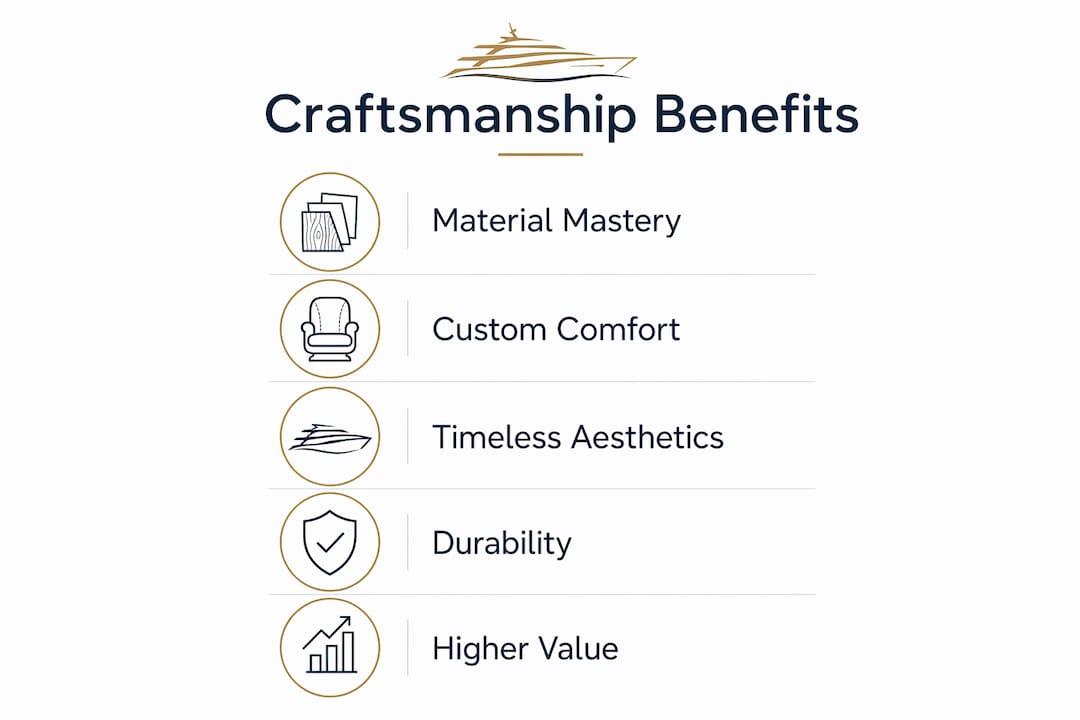
| Material behavior mastery | Skilled craftsmen build tolerances for wood expansion and stone movement, preventing long-term failure. |
| Customization drives comfort | Bespoke interiors matched to owner routines function as homes, not showrooms, for extended stays. |
| Aesthetics age better | Consistent reveals, aligned hardware, and coherent materials create interiors that hold their quality for decades. |
| Market preference is clear | 68% of luxury yacht orders are bespoke, confirming that buyers recognize and pay for craftsmanship quality. |
| Investment value is real | Lower maintenance costs, stronger resale premiums, and corporate prestige all follow from superior craftsmanship. |
Craftsmanship is not a luxury add-on. It is the specification.
After years of working with owners through the build and acquisition process, I have come to one firm conclusion: the owners who regret their yacht decisions almost always made them on specification sheets alone. They chose the vessel with the larger beam, the faster top speed, or the lower price per foot. They did not spend enough time evaluating the quality of what was actually built.
The owners who are most satisfied, years into ownership, are the ones who asked hard questions about joinery tolerances, material sourcing, and craftsman experience before signing a build contract. They understood that a yacht is not a car. You cannot replace the interior in three years when the finish starts to look tired. The craftsmanship decisions made at the build stage live with you for the life of the vessel.
Technology has changed what craftsmen can achieve, not whether craftsmanship matters. The best builders today use digital fabrication for structural precision and hand skills for everything the owner sees and touches. That combination, when executed well, produces yachts that perform like engineering projects and feel like works of art. I have seen it done right, and the difference is not subtle.
My practical advice: before committing to any build or purchase, spend time aboard the vessel or a comparable example from the same yard. Open the drawers. Run your hand along the joinery. Watch how the hardware moves. The answers are all there, if you know what to look for.
— Jason
Bespoke craftsmanship and what Baranofyachts brings to your build
Baranofyachts works with owners who understand that the details define the vessel. Our team brings the same conductor’s eye to craftsmanship evaluation that we apply to every stage of project management, from material specification through final delivery.

Whether you are commissioning a new build or evaluating an existing vessel, our expertise in artisan yacht craftsmanship gives you a clear framework for assessing what you are actually buying. We also guide clients through the full scope of bespoke yacht building, where 68% of luxury orders are custom for good reason. If you want to understand how design decisions translate into long-term ownership satisfaction, our team is ready to walk you through it.
FAQ
Why do hand-crafted yacht details matter more than standard builds?
Hand-crafted details account for material behavior, precise fitting, and owner-specific customization that production builds cannot replicate. These decisions directly affect durability, comfort, and resale value over the life of the vessel.
What are the clearest signs of quality craftsmanship on a yacht?
Consistent reveal widths, smooth hardware operation, and aligned joinery across the entire interior are the most reliable indicators of craftsmanship quality. These details signal that the builder applied the same standard throughout, not just in visible showcase areas.
How does bespoke craftsmanship affect yacht resale value?
Bespoke yachts hold stronger resale positions because buyers recognize craftsmanship quality as evidence of overall build integrity. Lower long-term maintenance costs and documented custom specifications both support higher asking prices in the brokerage market.
Does customization only affect aesthetics, or does it improve performance?
Customization improves both. Ergonomic helm stations, optimized storage placement, and tailored lighting all affect how efficiently the vessel operates and how comfortably the owner lives aboard during extended passages.
How do modern builders balance handcrafted quality with production efficiency?
Leading builders use CNC machining for structural and non-visible components while reserving hand construction for all surfaces the owner sees and touches. This approach maintains craftsmanship quality where it matters most without sacrificing structural consistency.
Recommended
Sold Listings


Design Your Yacht
"*" indicates required fields
Maximus III - PNW
As you step aboard MAXIMUS III, the first impression is her scale.
At 120 feet with an 8-meter beam and 294 GT of interior volume, this 2025 Crescent Custom tri-deck immediately feels open, balanced, and estate-like. A timeless look while still feeling fresh from the shipyard.
Currently Available


Get your yacht value Estimate
"*" indicates required fields