

Insurance planning for yachts is the process of securing customized marine insurance policies that protect your vessel’s full value, limit liability exposure, and keep you compliant with maritime regulations. The industry term for this discipline is marine insurance planning, and it covers everything from hull and machinery coverage to Protection and Indemnity (P&I) liability. Whether you own a 50-foot cruiser or a superyacht valued in the millions, the right policy structure determines whether a single incident becomes a manageable claim or a financial catastrophe. Working with a qualified marine broker is the single most important decision in this process.
What types of insurance coverage are essential for yachts?
Yacht insurance is not a single product. It is a layered system of policies, each addressing a distinct category of risk.
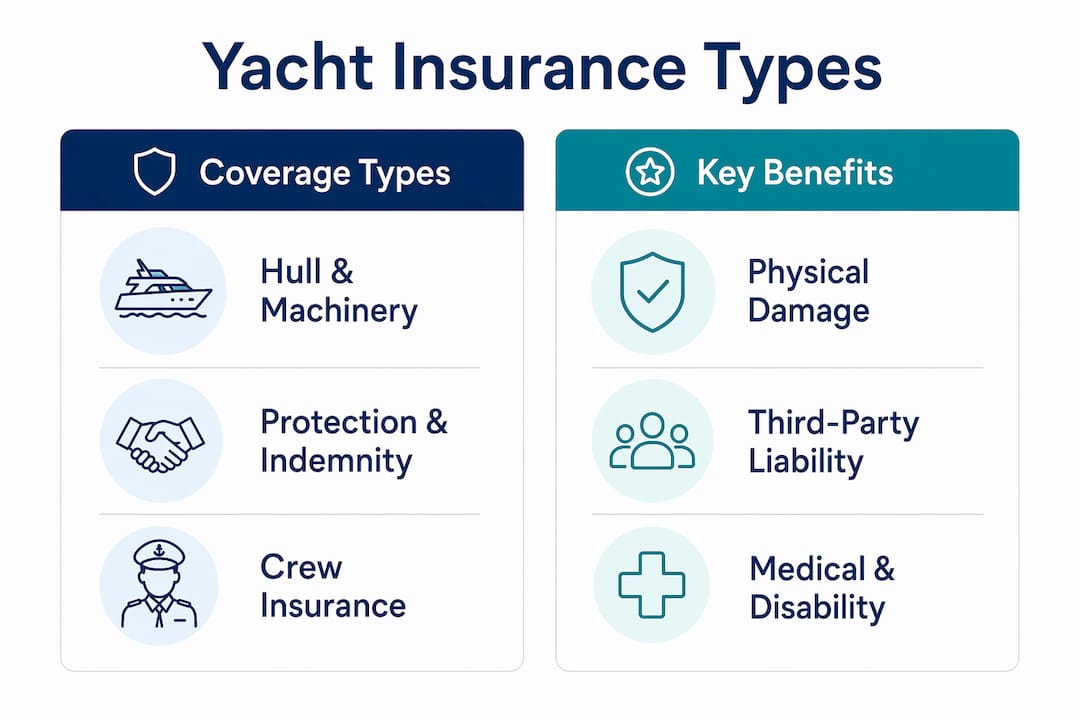
Hull and machinery (H&M) insurance covers physical damage to the vessel itself, including the hull, engines, onboard systems, and permanently installed equipment. This is the foundation of any yacht coverage plan. Without it, a collision, grounding, or fire leaves you absorbing the full repair cost out of pocket.
Protection and Indemnity (P&I) insurance covers third-party liability: bodily injury to guests, damage to other vessels, and pollution liability. For crewed yachts, maritime liability limits typically start at €5 million and can reach €100 million depending on vessel size. That range reflects the scale of potential legal exposure when a large yacht is involved in an incident near a marina or port.
Crew insurance is a separate and often mandatory requirement for yachts operating with paid crew. It covers medical expenses, disability, and repatriation costs for crew members. Skipping crew coverage on a commercially operated vessel creates both legal and financial exposure that no owner should accept.
Additional coverage options worth evaluating include:
- Towing and assistance coverage: Pays for emergency towing when the vessel is disabled at sea.
- Charter liability insurance: Required when the yacht generates commercial income from charter guests.
- Environmental liability coverage: Addresses fuel spill cleanup costs, which can be substantial in protected marine zones.
- Personal effects coverage: Protects owner and guest belongings aboard the vessel.
| Coverage Type | What It Protects | Key Benefit |
|---|---|---|
| Hull and machinery | Physical vessel and installed systems | Covers repair or replacement after damage |
| Protection and Indemnity | Third-party injury and property damage | Limits legal and financial liability |
| Crew insurance | Paid crew medical and disability costs | Meets legal crew welfare obligations |
| Charter liability | Commercial charter guest exposure | Required for income-generating charter use |
| Environmental liability | Fuel spill and pollution cleanup | Avoids regulatory fines and cleanup costs |
Pro Tip: Request a combined H&M and P&I quote from a single specialist underwriter. Bundling these two core policies often produces better terms than placing them separately with different carriers.
How do yacht insurance costs get determined?
Annual yacht insurance premiums typically range between 1% and 5% of the insured hull value, with 1.5% being the standard benchmark for most cruising vessels. That means a yacht insured at $1,000,000 carries an annual premium of roughly $15,000 at the standard rate. For superyachts valued above €10 million, market rates can fall as low as 0.28% to 1.20% annually, reflecting the professional crew and formal safety management systems that large vessels typically maintain.
Several factors move your premium up or down from that baseline:
- Insured hull value and vessel age: Older vessels with higher replacement costs attract higher rates.
- Navigation zone: Cruising in the Caribbean hurricane belt or Mediterranean during peak season increases risk. Restricting your navigation area to lower-risk zones reduces premiums.
- Operational use: Charter use raises premiums by 25% to 50% or more compared to private recreational use. Underwriters treat commercial charter as a fundamentally different risk profile.
- Owner and captain experience: Insurers heavily weigh captain certifications and operating history. A certified captain with a clean record secures better underwriting terms than an owner-operator with limited offshore experience.
- Claims history: A clean claims record is among the most valuable factors in maintaining competitive premiums over time. Even one significant claim can trigger a premium increase at renewal.
- Deductible level: Deductibles commonly range from 0.5% to 3% of insured value. Choosing a higher deductible lowers your annual premium but increases your out-of-pocket cost per claim.
Pro Tip: Run a side-by-side comparison of two deductible scenarios before binding coverage. Calculate how many claim-free years it takes for the premium savings to offset the higher deductible. For most owners, a mid-range deductible of 1% to 1.5% of hull value produces the best long-term balance.
What steps make for effective insurance planning for your yacht?
Effective marine insurance planning follows a clear sequence. Skipping steps early in the process creates coverage gaps that only surface when you file a claim.
-
Commission a professional yacht survey. Underwriters require a current condition and valuation survey for most vessels. A professional yacht survey establishes the agreed hull value and identifies any deficiencies that could affect coverage terms. Surveys are typically valid for three to five years.
-
Define your usage profile in writing. Document whether the yacht will be used privately, chartered commercially, raced, or cruised offshore. Underwriters ask these questions directly, and your answers shape every aspect of the policy.
-
Gather crew credentials. Collect captain’s licenses, offshore certifications, and operating experience records for all crew members. Stronger crew profiles produce better underwriting terms and lower premiums.
-
Request quotes from at least three specialist marine brokers. Specialized brokers are essential for securing superyacht coverage because the market is complex and underwriting nuances vary significantly between carriers. A generalist broker rarely has access to the same markets or negotiating leverage.
-
Choose an agreed value policy structure. An agreed value policy sets a fixed payout for total loss without depreciation, backed by your certified survey. This protects you from market value fluctuations at the worst possible moment.
-
Read the partial-loss provisions carefully. Partial-loss provisions can revert from agreed value to actual cash value during repairs, creating unexpected depreciation costs on replaced components. This is one of the most common and costly surprises in yacht claims. Negotiate this language before binding.
-
Create and document a hurricane or storm plan. A credible haul-out plan with a named facility and documented procedures unlocks premium discounts and reduces your risk of total loss. Carriers may cover up to 50% of preventative haul-out costs if you act before a storm watch is issued.
Pro Tip: Submit your hurricane plan to your broker in writing before hurricane season begins. Carriers treat documented plans differently from verbal assurances, and the discount difference can be meaningful.
How to manage ongoing insurance issues and claims
Maintaining good insurance standing requires the same discipline as the initial planning process. The most common reason claims get denied is non-disclosure at the time of policy inception.
Disclosure of vessel use, chartering activity, racing participation, and crew certification status is not optional. Underwriters examine these factors closely at both binding and claim time. Failing to disclose a charter arrangement or a crew change can void your policy entirely, leaving you with no coverage on a vessel worth millions.
Critical warning: Never assume your insurer knows about a change in vessel use, crew, or navigation zone. Notify your broker in writing any time these factors change. Verbal conversations do not create a record that protects you at claim time.
When a claim does occur, follow these steps without delay:
- Notify your broker immediately, even before the full scope of damage is known.
- Document everything on scene. Photographs, GPS coordinates, witness contacts, and weather records all support your claim.
- Do not authorize repairs until the insurer appoints a surveyor and approves the repair scope.
- Keep all receipts and contractor invoices from the moment of the incident forward.
- Coordinate crew injury claims separately if crew members are involved. Crew insurance and P&I claims often run through different carriers and require separate documentation.
Common mistakes that damage claims and raise future premiums include operating outside the agreed navigation zone, allowing unlicensed crew to operate the vessel, and delaying storm protocols until a hurricane warning is already active. Waiting too late to enact storm protocols limits available coverage. Carriers may cover a meaningful share of preventative haul-out costs only when the vessel is moved before a formal watch or warning is issued.
Key takeaways
Effective insurance planning for yachts requires layered coverage, accurate disclosure, and proactive management of both premiums and claims from the moment you take ownership.
| Point | Details |
|---|---|
| Layer your coverage | Combine hull and machinery, P&I, and crew insurance as a minimum baseline for any crewed yacht. |
| Use agreed value policies | Lock in a fixed payout at insured value to avoid depreciation surprises after a total loss. |
| Disclose everything | Non-disclosure of use, crew, or navigation zone can void your policy and deny your claim. |
| Document a storm plan | A written hurricane haul-out plan reduces premiums and preserves carrier cost-sharing on preventative moves. |
| Work with specialist brokers | Marine specialists access underwriting markets and negotiate terms that generalist brokers cannot reach. |
What I’ve learned from watching owners get insurance wrong
The most expensive mistake I see yacht owners make is treating insurance as a checkbox rather than a planning discipline. They buy a policy at closing, file it away, and never revisit it until something goes wrong. By then, the navigation zone has changed, the crew has turned over, and the charter income they started generating two seasons ago was never disclosed. The claim gets denied, and the owner is left holding a repair bill that would have been fully covered with one phone call to their broker.
The second mistake is choosing policy structure based on premium alone. Agreed value versus actual cash value is not a minor distinction. On a $2 million vessel, the difference between an agreed value payout and a depreciated actual cash value settlement after a total loss can easily reach six figures. That gap does not show up in the annual premium comparison. It shows up when you need the money most.
My honest recommendation is to treat your marine broker the same way you treat your yacht broker: as a long-term advisor, not a one-time transaction. The owners who maintain the best coverage at the best cost are the ones who call their broker before they make any change to their vessel, crew, or usage. That proactive habit costs nothing and protects everything.
— Jason
How Baranofyachts supports your yacht ownership journey
Baranofyachts works with luxury yacht owners and prospective buyers at every stage of ownership, from initial vessel configuration through delivery and beyond. We understand that protecting your investment starts well before you leave the dock. Our team connects clients with the specialist resources they need, including marine brokers, surveyors, and project managers who understand the full scope of luxury yacht risk. If you are planning your first yacht purchase or managing an existing fleet, our luxury yacht planning guide walks you through the ownership process with the same care we bring to every custom build. Explore how Baranofyachts can support your yacht management strategy and help you own with confidence.
FAQ
What is the average cost of yacht insurance?
Annual premiums typically range from 1% to 5% of the insured hull value, with 1.5% being the standard benchmark for most cruising vessels. Superyachts with professional crew and formal safety systems often qualify for rates below 1%.
What is the difference between agreed value and actual cash value?
An agreed value policy pays the full insured amount after a total loss without deducting for depreciation. An actual cash value policy pays the depreciated market value at the time of loss, which can be significantly lower than what you paid or insured the vessel for.
Does chartering my yacht affect my insurance premium?
Charter use raises premiums by 25% to 50% or more compared to private recreational use. Failing to disclose charter activity to your insurer can void your policy entirely.
Do I need separate crew insurance for my yacht?
Crewed yachts require crew insurance to cover medical expenses, disability, and repatriation costs for paid crew members. Liability limits for crewed yachts typically start at €5 million and scale with vessel size.
How does a hurricane plan reduce my insurance premium?
A documented haul-out plan submitted to your insurer before hurricane season demonstrates proactive risk management and qualifies the vessel for premium discounts. Carriers may also cover a portion of preventative haul-out costs when the vessel is moved before a formal storm watch is issued.
Recommended
Sold Listings
Design Your Yacht
"*" indicates required fields
Maximus III - PNW
As you step aboard MAXIMUS III, the first impression is her scale.
At 120 feet with an 8-meter beam and 294 GT of interior volume, this 2025 Crescent Custom tri-deck immediately feels open, balanced, and estate-like. A timeless look while still feeling fresh from the shipyard.
Currently Available


Get your yacht value Estimate
"*" indicates required fields