
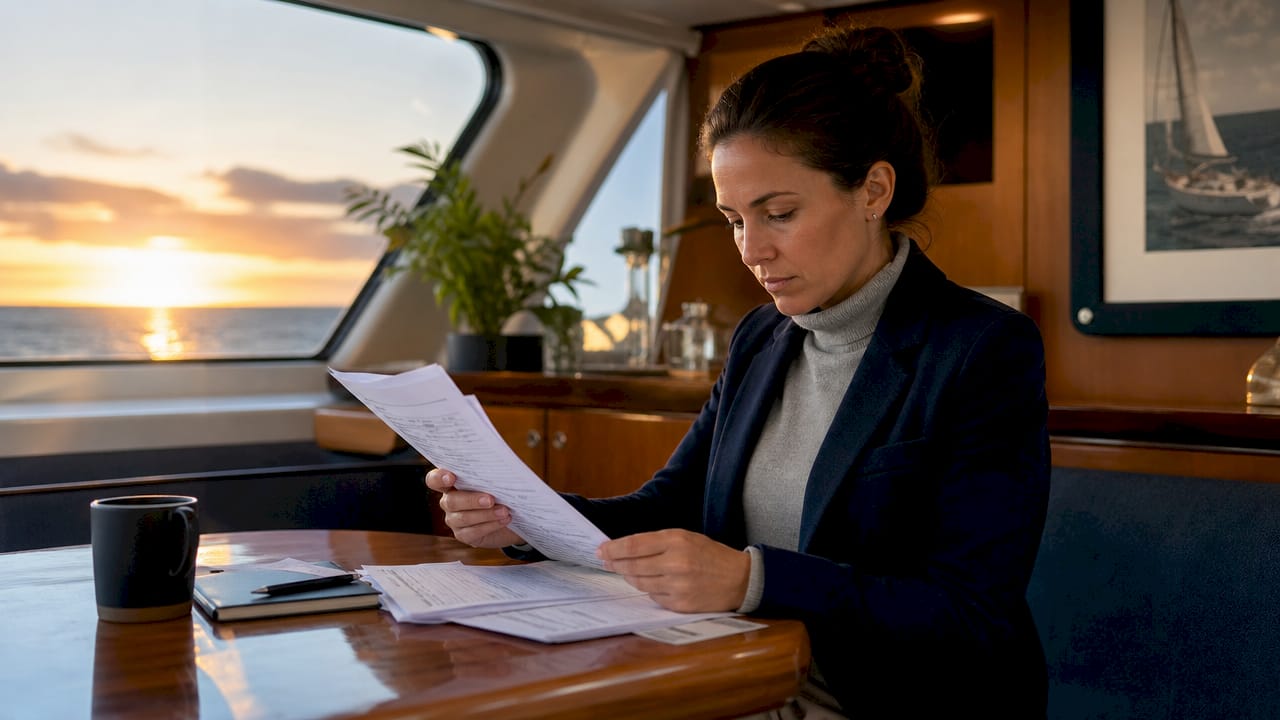
A structured crew training workflow for new yachts is the single most reliable predictor of operational safety and crew retention from day one. Without a defined process, trainers face compliance gaps, high turnover, and costly re-hiring cycles before a vessel ever reaches open water. The most effective yacht crew training programs combine role-specific certification requirements, digital compliance platforms like CrewNotice, and emotional competence frameworks developed by organizations like The Crew Coach. This guide walks through every stage of the process, from mandatory prerequisites to technology adoption, so you can build a training program that holds up under flag state inspection and keeps crew performing at their best.
What certifications are required in a crew training workflow for new yachts?
Every yacht crew training program begins with mandatory certifications that satisfy international maritime law. STCW Basic Safety Training is the non-negotiable baseline. The course runs 5 days and costs between £995 and $1,299, while a 13-week fast-track program runs approximately £12,000. That cost range reflects the difference between entry-level compliance and a career-ready crew member with broader operational skills.
Beyond STCW, role-specific requirements determine what each crew member must hold before boarding. A deckhand needs different endorsements than a chief steward or an engineer. The Maritime and Coastguard Agency (MCA) qualifications, flag state endorsements, and valid ENG1 medical certificates each apply to specific positions. Treating all crew as interchangeable on a compliance checklist is the fastest way to fail a port state control inspection.
The table below outlines the most common certifications and their purposes:
| Certification | Role Applicability | Purpose |
|---|---|---|
| STCW Basic Safety Training | All crew | Fire, first aid, survival, personal safety |
| ENG1 Medical Certificate | All crew | Confirms fitness for sea duty |
| MCA Officer of the Watch (OOW) | Deck officers | Navigation and watch-keeping authority |
| GMDSS Radio Operator License | Officers, radio operators | Emergency communications compliance |
| Flag State Endorsement | All certificated crew | Vessel-specific regulatory recognition |
| Crowd and Crisis Management | Passenger vessel crew | Emergency crowd control procedures |
Role-specific compliance verification checks crew against vessel and position criteria rather than a single generic list. This approach improves consistency across multiple vessels and crew rotations. For trainers managing fleets or new builds, that scalability is not optional. It is the only method that holds up when a vessel changes flag state or adds a new class of service.
Pro Tip: Build a separate compliance checklist for each position on the vessel before the first crew member is hired. A chief engineer’s matrix looks nothing like a junior stewardess’s, and conflating the two creates false confidence in your compliance status.
How to build a step-by-step yacht crew onboarding process
A well-executed yacht crew onboarding process follows a defined sequence. Skipping steps or reordering them introduces risk at every stage. New build project management programs typically span 5 days of structured training completed within a 12-month window. That timeline reflects the reality that new yacht commissioning involves parallel workstreams, not a single training event.
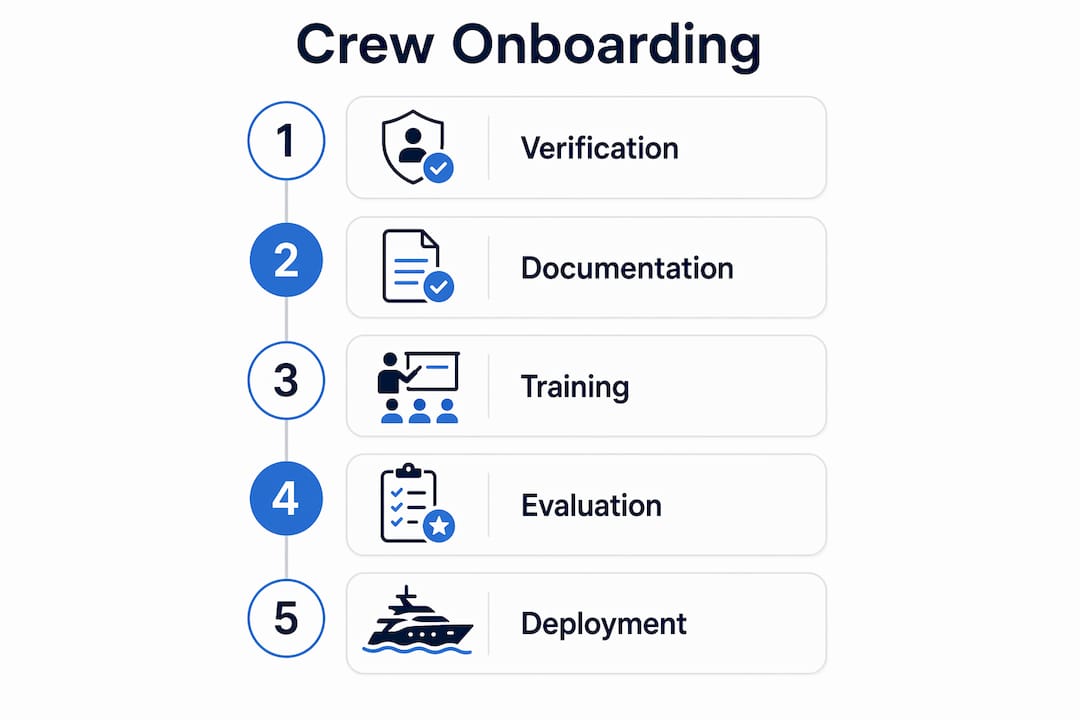
The following numbered workflow gives trainers a repeatable structure:
- Candidate verification. Collect all certificates before the crew member arrives onboard. Verify expiry dates, issuing authority, and flag state endorsements against the role-specific matrix.
- Data entry validation. Enter certificate details into your crew management system with strict accuracy. Errors at data entry cause false compliance approvals, which expose the vessel to inspection failures.
- Vessel familiarization. Walk each crew member through the specific systems, safety equipment, and emergency procedures for this vessel. Generic safety briefings do not satisfy MCA or flag state requirements for vessel-specific training.
- Role-specific module delivery. Assign training modules that match the crew member’s position. A bosun needs deck maintenance protocols and anchor watch procedures. A chef needs HACCP food safety compliance. These are not interchangeable.
- Acknowledgment and documentation. Require signed or timestamped acknowledgment for every training module completed. This creates the audit trail inspectors expect.
- Performance review at 30 days. Conduct a structured review that covers technical competence and interpersonal fit. Evidence-based onboarding includes recognition, professional development planning, and clear performance benchmarks.
- Ongoing refresher scheduling. Set calendar reminders for certificate renewals and schedule short refresher modules at regular intervals throughout the season.
The table below maps each workflow stage to its primary output:
| Workflow Stage | Key Output |
|---|---|
| Candidate verification | Confirmed compliance before boarding |
| Data entry validation | Accurate, audit-ready records |
| Vessel familiarization | Vessel-specific safety competence |
| Role-specific module delivery | Position-ready crew member |
| Acknowledgment and documentation | Timestamped compliance log |
| 30-day performance review | Retention and development plan |
| Refresher scheduling | Continuous compliance maintenance |
Pro Tip: Build a buffer period into your competency matrix. Certificate validity checks should account for contract length plus one additional month to cover standard crew relief delays. A certificate that expires mid-contract creates a compliance gap with no easy fix at sea.
What common challenges arise during training procedures for new yachts?
High crew turnover is the most expensive problem in the superyacht sector. Fifty percent of superyacht crew leave within their first year, and replacing a junior stewardess costs between €10,000 and €21,000. That figure covers recruitment, travel, re-training, and the productivity loss during the gap. A single poorly managed onboarding cycle can cost more than the training program itself.
The root cause is rarely technical incompetence. Hiring that focuses only on technical skills and ignores emotional competence is the primary driver of early departure. Crew who lack psychological safety, clear role expectations, or a sense of belonging leave before the season ends. Trainers who address only certifications and procedures miss the factor that actually determines whether a crew member stays.
Common mistakes and their remediation tactics include:
- Skipping vessel-specific familiarization. Generic safety briefings do not satisfy flag state requirements. Fix: build a vessel-specific checklist for every new build and update it after any system modification.
- Inconsistent data entry. A certificate entered with the wrong expiry date generates a false compliance approval. Fix: assign one person to verify every entry before it is saved.
- No structured 30-day review. Crew who receive no feedback in the first month disengage quickly. Fix: schedule the review before the crew member boards, not after problems appear.
- Treating refresher training as optional. Compliance gaps accumulate silently when refreshers are skipped. Fix: use a digital platform to automate reminders and delivery.
- Ignoring emotional fit during onboarding. Technical competence without interpersonal alignment produces conflict in confined quarters. Fix: integrate an emotional competence assessment into the pre-boarding interview process.
“Emotional competence is pivotal for retention. Technical skills alone are insufficient.” — The Crew Coach
Emotional competence frameworks reduce turnover by addressing psychological safety and role fit during hiring and onboarding. Trainers who build these frameworks into their programs report fewer early departures and stronger team cohesion. The investment in structured onboarding pays back within the first season.
What technologies improve efficiency in yacht crew training?
Digital platforms have changed how trainers deliver and document training procedures for new yachts. CrewNotice is the most discussed tool in this space. It tracks training acknowledgments with timestamped, audit-ready reporting that can be exported for flag state inspections. That single feature eliminates the paper-based logbook problem that has plagued yacht compliance for decades.
CrewNotice functions as a digital notice board that supplements rather than replaces physical boards onboard. The key advantage is the audit trail. When a port state control officer asks for proof that crew acknowledged a safety procedure, a timestamped digital log is far more defensible than a signature sheet that may have been completed in bulk. Short, on-demand refresher modules delivered through platforms like CrewNotice keep crew compliant without pulling them off operational duties.
AI-driven compliance tools add another layer of reliability. Compliance Links, developed by CrewPass, verifies documents against role-specific criteria automatically. This removes the human error that occurs when a trainer manually cross-references certificates against a position matrix for a 20-person crew. The comparison below shows where digital workflows outperform traditional methods:
| Training Method | Strengths | Weaknesses |
|---|---|---|
| Paper-based logbooks | Low cost, no technology required | No audit trail, prone to gaps and errors |
| Spreadsheet tracking | Flexible, familiar format | Manual updates, no automated alerts |
| Digital platforms (CrewNotice) | Timestamped logs, exportable reports | Requires consistent data entry discipline |
| AI compliance tools (Compliance Links) | Role-specific, scalable, automated | Dependent on accurate initial data upload |
The practical takeaway is that digital tools do not eliminate the need for disciplined data entry. They amplify whatever quality of data you feed them. A trainer who enters certificate details carelessly into CrewNotice or Compliance Links will get inaccurate compliance reports. The technology is only as reliable as the process behind it. Pair digital adoption with strict data entry protocols, and the combination produces audit-ready compliance records that hold up under any inspection.
Key takeaways
A structured crew training workflow for new yachts requires role-specific certification mapping, disciplined data entry, and digital compliance tools working together from day one.
| Point | Details |
|---|---|
| Role-specific certification mapping | Build a separate compliance matrix for each position before hiring begins. |
| Data entry discipline | Validate every certificate entry immediately to prevent false compliance approvals. |
| Digital compliance tools | Use platforms like CrewNotice for timestamped, audit-ready training records. |
| Emotional competence in onboarding | Address psychological safety and role fit to reduce costly first-year turnover. |
| Buffer periods in competency matrices | Add one month beyond contract length to cover crew relief delays and maintain continuous compliance. |
What I’ve learned about crew training that most guides won’t tell you
The technical side of crew training is the easy part. Certifications have clear requirements. Digital platforms have clear features. What trainers consistently underestimate is how much the first two weeks onboard shape whether a crew member stays for the season or leaves after three months.
We have seen programs that checked every compliance box and still lost half their crew before the first charter. The common thread was always the same: no one had thought carefully about what it felt like to join that vessel as a new crew member. The onboarding was transactional. Sign here, watch this video, report to your station. That approach produces technically compliant crew who feel no connection to the vessel or the team.
The trainers who get the best retention results treat the first 30 days as a relationship-building period, not just a compliance period. They schedule one-on-one check-ins. They explain the reasoning behind procedures, not just the procedures themselves. They create space for new crew to ask questions without feeling judged. None of that appears on a flag state checklist, but all of it shows up in your end-of-season turnover numbers.
My honest recommendation: pair your digital compliance workflow with a written onboarding narrative for each role. Not a manual. A narrative. One page that tells a new crew member what their first week will look like, who they will work with, and what success looks like at 30 days. That single document does more for retention than any refresher module. You can explore how crew management strategy connects to long-term vessel performance for a broader view of how these decisions compound over time.
— Jason
How Baranofyachts supports your crew training and yacht operations
Baranofyachts works with captains, trainers, and owners from the earliest stages of a new build through to full operational readiness. We understand that crew training is not a post-delivery afterthought. It is a project management discipline that runs in parallel with vessel commissioning, systems integration, and owner briefings.

Our team brings the same conductor’s eye to crew readiness that we apply to every other subsystem on a new build. We help clients think through role-specific training requirements, vessel familiarization timelines, and compliance documentation before the vessel ever leaves the yard. For owners and trainers who want a clear picture of what operational readiness looks like from day one, our luxury yacht planning guide covers crew scheduling and preparation in practical detail. We also maintain a comprehensive yacht careers resource for trainers who need a current reference on certifications, career paths, and training requirements across all crew positions.
FAQ
What is STCW Basic Safety Training and who needs it?
STCW Basic Safety Training is a mandatory 5-day certification covering fire fighting, first aid, survival techniques, and personal safety. Every crew member working on a commercial yacht must hold a valid STCW certificate before joining any vessel.
How long does a new yacht crew training program take?
New build project management training programs typically run 5 days of structured content completed within a 12-month window. Role-specific modules and vessel familiarization add additional time depending on the crew member’s position and the vessel’s complexity.
What causes high crew turnover on superyachts?
Fifty percent of superyacht crew leave within their first year, primarily because hiring focuses on technical skills while ignoring emotional competence and psychological fit. Structured onboarding that addresses both factors significantly reduces early departures.
What is the best digital tool for yacht crew compliance tracking?
CrewNotice is the most widely referenced platform for yacht training and compliance documentation. It delivers timestamped, audit-ready acknowledgment logs that can be exported directly for flag state and port state control inspections.
Why does data entry accuracy matter in crew compliance systems?
Incorrect certificate data entered into a compliance system generates false approvals, which can result in inspection failures and regulatory penalties. Every certificate entry must be validated at the point of upload to maintain reliable compliance records.
Recommended
Sold Listings


Design Your Yacht
"*" indicates required fields
Maximus III - PNW
As you step aboard MAXIMUS III, the first impression is her scale.
At 120 feet with an 8-meter beam and 294 GT of interior volume, this 2025 Crescent Custom tri-deck immediately feels open, balanced, and estate-like. A timeless look while still feeling fresh from the shipyard.
Currently Available


Get your yacht value Estimate
"*" indicates required fields