
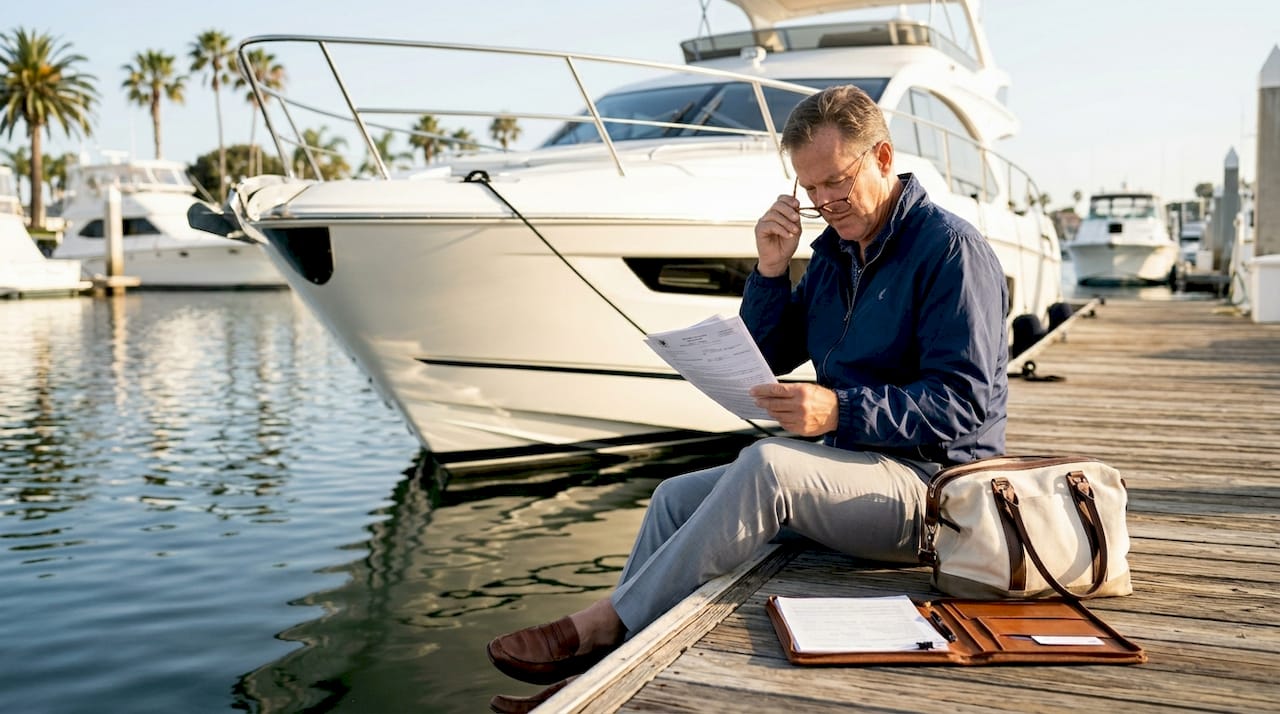
Yacht registration is one of the most consequential decisions you will make as a vessel owner, yet most people entering the market treat it as an afterthought. Understanding yacht registration goes far beyond filing paperwork with a maritime authority. Your choice of flag state determines your vessel’s legal nationality, shapes your tax exposure, dictates your operational flexibility in international waters, and directly affects your insurance coverage. We put this guide together to walk you through every layer of the process, from flag state selection and document compilation to costs, timelines, and the compliance obligations that follow you for the life of the vessel.
Table of Contents
- Key takeaways
- Understanding yacht registration as a legal framework
- Onshore vs. offshore flags: choosing the right registry
- The registration process step by step
- Costs, fees, and ongoing compliance
- Best practices and common pitfalls
- My perspective on getting registration right the first time
- How Baranofyachts guides you through ownership with confidence
- FAQ
Key takeaways
| Point | Details |
|---|---|
| Registration is a legal identity | Your flag state grants your yacht nationality, jurisdiction, and international legal standing under maritime law. |
| Flag selection is strategic | Choosing between onshore and offshore registries affects your tax obligations, crew rules, and port access. |
| Documentation drives timelines | Incomplete or inaccurate documents cause 80% of delays, so prepare paperwork well before you need it. |
| Costs extend beyond initial fees | Annual renewals, surveys, tonnage taxes, and resident agent fees make the true cost significantly higher than the filing fee alone. |
| Start at least 60 to 90 days early | Beginning the registration process well in advance prevents scheduling bottlenecks and protects your launch timeline. |
Understanding yacht registration as a legal framework
At its core, yacht registration is the process by which a vessel is formally recognized under the laws of a specific country, known as the flag state. That recognition is not symbolic. It confers legal nationality on the vessel, much like a passport confers nationality on a person, and it determines which country’s laws govern the yacht when it operates in international waters.
This framework is rooted in the United Nations Convention on the Law of the Sea, commonly referred to as UNCLOS, which requires every vessel operating on the high seas to be registered under the flag of one state. The flag state then bears responsibility for enforcing its maritime laws aboard that vessel, including safety standards, crew certification requirements, and environmental compliance.
From a practical standpoint, flag state registration affects several dimensions of ownership that most buyers do not initially consider:
- Legal jurisdiction: Disputes, accidents, and criminal matters aboard the vessel fall under the flag state’s legal system.
- Port access: Some ports require proof of valid registration before granting entry or granting commercial berthing rights.
- Insurance eligibility: Underwriters frequently require registration documentation before issuing hull and liability coverage.
- Financing: Lenders use registration records to establish mortgage priority and enforce security interests against the vessel.
Registration is the legal spine of vessel ownership. Every other document, contract, and operational right you hold as an owner connects back to it.
The flag state you choose also determines how your yacht is perceived by port state control authorities around the world. Flags with poor safety records attract more frequent inspections, which translates to real operational costs and delays at ports.
Onshore vs. offshore flags: choosing the right registry
Over 70% of yachts globally sail under a flag different from their owner’s home country. That statistic alone tells you something important: flag selection is a deliberate financial and operational strategy, not simply a matter of convenience.
Onshore registries, such as those of the United States, United Kingdom, and France, carry strong legal reputations and are often required for vessels operating commercially in domestic waters. They tend to come with more rigorous compliance requirements, including crew nationality rules and stricter survey schedules. For owners who primarily cruise domestically or who want the clearest legal standing in their home country, onshore registration is often the right call.
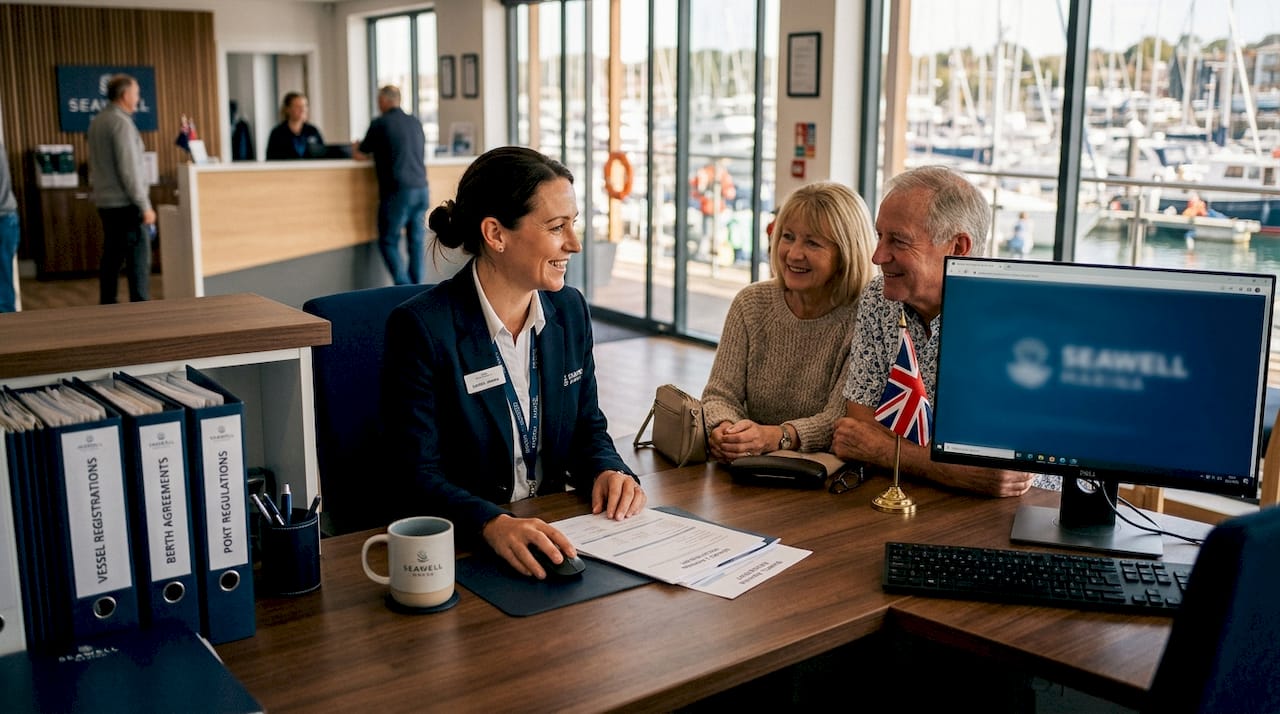
Offshore registries, including Malta, the Cayman Islands, the Marshall Islands, and Gibraltar, offer a different value proposition. They typically provide more flexibility around ownership structuring, confidentiality, and tax treatment. Malta, for example, imposes a tonnage tax rather than income or profit taxes on commercial yacht operations, which can represent meaningful savings at scale. The Cayman Islands registry is widely recognized and respected across major cruising regions, making it a popular choice for superyacht owners operating internationally.
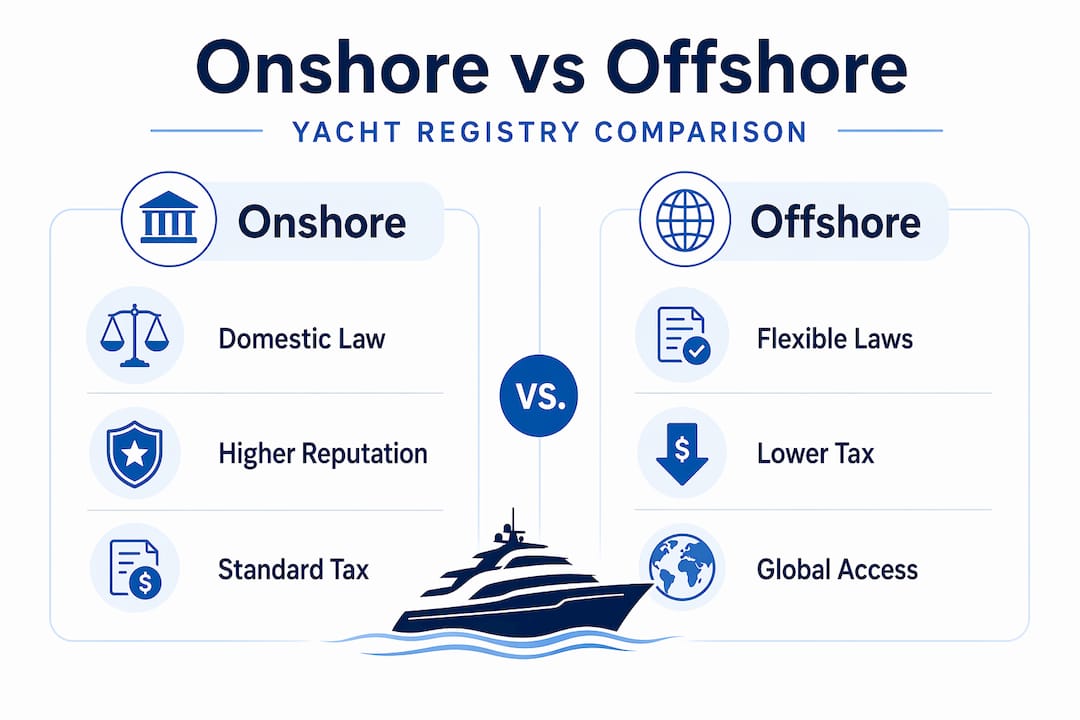
The comparison is not simply about taxes. Consider the following factors when selecting your flag state:
| Factor | Onshore registry | Offshore registry |
|---|---|---|
| Tax treatment | Subject to domestic tax law | Often tonnage tax or exemptions |
| Crew nationality rules | Often require domestic crew | Generally more flexible |
| Ownership confidentiality | Limited | Higher in many jurisdictions |
| Port state control risk | Lower for top-tier flags | Varies by jurisdiction |
| Commercial charter compliance | Jurisdiction-specific | Requires careful selection |
Reputable flags reduce the risk of detention and Port State Control inspections under the Paris Memorandum of Understanding, which is the framework that governs inspection risk scoring across European and North Atlantic ports. Selecting a flag with a strong safety record is not just about prestige. It has direct knock-on effects on how much time and money you spend managing inspections at port.
Pro Tip: Consult a maritime attorney before selecting your flag state. The right jurisdiction depends on where you will cruise, how you will use the yacht commercially, and how your ownership is structured. A decision made without that context can cost significantly more to unwind than the legal advice would have.
We also recommend exploring yacht flag benefits across jurisdictions before committing, since compliance requirements and tax treatment differ substantially from one registry to the next.
The registration process step by step
Understanding the yacht registration process in sequence helps you plan resources, gather documents, and set realistic expectations. Here is how registration typically unfolds in 2026:
-
Preliminary vetting (48 to 72 hours): You submit basic vessel and ownership information to the chosen registry for an initial eligibility check. This step identifies disqualifying issues early, before you invest in full document preparation. Preliminary vetting allows timely identification of problems that would otherwise surface only after costly submission.
-
Document compilation (two to four weeks): This is where most delays occur. You will need proof of ownership, a builder’s certificate or bill of sale, tonnage measurement certificates, AML (anti-money laundering) compliance documentation, and in some cases, corporate ownership structure records. All documents may require notarization and certified translation if they are not in the registry’s official language.
-
Surveyor inspection scheduling: Many registries require a physical inspection by an approved surveyor before finalizing registration. Scheduling inspections early is critical because surveyor availability is a common bottleneck, particularly in peak season. Waiting until after documents are submitted often extends the timeline by weeks.
-
Fee payment and processing (two to four weeks): Once documents and survey reports are accepted, you pay the applicable registration fees. Some registries, including Malta yacht registration, issue a provisional certificate within days of payment, which allows the vessel to operate legally while permanent documentation is processed.
-
Issuance of permanent registration certificate: The final certificate establishes your vessel’s official name, port of registry, call sign, and IMO number. Some qualified applicants receive this in as little as three days at faster registries.
Pro Tip: Begin the registration process 60 to 90 days before your intended launch or delivery date. This buffer absorbs document translation delays, survey scheduling gaps, and registry processing queues without pushing your timeline back.
Costs, fees, and ongoing compliance
Registration costs are rarely what they first appear to be. The initial filing fee is the visible number, but the true cost of maintaining a compliant registration compounds over time through renewals, surveys, and ancillary requirements.
Initial registration fees typically range from $1,000 to $10,000 depending on the jurisdiction and vessel size. For a commercial superyacht registered in Malta at 55 meters, first-year all-in costs run between €4,500 and €7,000, not counting tonnage tax and survey fees. Malta also charges pre-registration inspection fees that scale by vessel size: €500 for vessels under 24 meters, €1,500 for vessels under 500 gross tons, and €5,000 for vessels above 500 gross tons.
Beyond the initial filing, you should plan for these recurring and ancillary costs:
- Annual renewal fees: Most registries require annual payment to maintain active status, typically ranging from a few hundred to several thousand dollars depending on vessel tonnage.
- Mandatory surveys: Periodic condition surveys are required at intervals set by the flag state, and the cost varies by vessel size and survey type.
- Resident agent fees: Some offshore jurisdictions require you to maintain a locally registered representative, which adds an annual service fee.
- Radio license and MMSI allocation: Operating maritime radio equipment legally requires a separate radio license, which is tied to the vessel’s registration.
- Tonnage tax: Commercial yachts under certain flags pay ongoing tonnage taxes calculated on gross tonnage rather than revenue.
The compliance dimension matters just as much as the cost. Operating with expired registration voids insurance policies, exposes owners to port detentions, and creates legal liability in the event of an incident. Routine yacht aftercare planning should include registration renewal dates alongside maintenance schedules so that nothing slips through.
Best practices and common pitfalls
The difference between a smooth registration and a frustrating, months-long ordeal typically comes down to preparation and professional support. We have seen both scenarios play out, and the patterns are consistent.
Incomplete or inaccurate documentation causes 80% of registration rejections and delays. The most common culprits are missing notarizations, expired certificates of class, and ownership documents that do not match the legal entity submitting the application. Verify every document against the registry’s current checklist before submission.
Malta’s 2025 and 2026 reforms are worth noting specifically. Malta’s registration reforms now include digital submissions, a strict maximum vessel age of 20 years for new registrations, and modernized mortgage registration procedures. If you are considering Malta as your flag state with an older vessel, this age limit is a hard disqualifier that must be confirmed before you invest in the process.
Additional practices that protect your timeline and compliance status:
- Book your surveyor before submitting documents: Surveyor availability is tighter than most owners expect, particularly in spring and early summer.
- Confirm the genuine link requirement: International maritime law requires a substantive connection between the vessel and the flag state, typically established through ownership structure, management, or operations. Registering through an entity that satisfies this requirement is a legal necessity, not a formality.
- Use an authorized representative: Many registries designate approved agents who know the local submission standards, which reduces back-and-forth corrections.
- Set calendar reminders for every renewal date: Renewals that lapse even briefly can trigger re-inspection requirements and additional fees that far exceed the cost of timely renewal.
- Understand that a yacht broker’s expertise during acquisition extends to helping you navigate registration decisions, particularly around the interplay between purchase structure and flag eligibility.
My perspective on getting registration right the first time
I have watched more than a few yacht owners approach registration the way they approach a car purchase: pick a jurisdiction that sounds good, send over the documents, and assume it will sort itself out. It does not sort itself out. Flag choice has a long tail, and the decisions made at registration follow the vessel for years.
What I have come to believe is that the flag state decision should happen before the purchase contract is signed, not after. The ownership structure you need to satisfy genuine link requirements in Malta, for example, may differ from what you would use for a Cayman Islands registration. Setting up the wrong entity first and then unwinding it later is expensive and slow.
I have also noticed that regulatory change is accelerating. Digital transformation in registration is moving fast, which is broadly positive since it speeds up processing. But it also means requirements shift year to year. The Malta age limit introduced in 2025 caught some buyers off guard. Staying current with each flag state’s rules is not something you can do casually.
My honest advice: treat registration as part of the legal and financial architecture of ownership, not as administrative cleanup after the deal is done. Bring in a maritime attorney early, be deliberate about the connection between your ownership entity and your flag choice, and budget for the full compliance lifecycle, not just the first-year filing fee. Ownership satisfaction over the long term is built on that foundation.
— Jason
How Baranofyachts guides you through ownership with confidence

At Baranofyachts, we work with clients at every stage of the ownership journey, from concept and custom build through acquisition, configuration, and long-term management. Registration and legal structuring are topics we address directly with our clients during the acquisition process because they affect every downstream decision about how the vessel is financed, operated, and eventually sold.
If you are preparing to take ownership of a luxury yacht and want professional guidance that covers more than just the vessel itself, our team can connect you with the right resources. Start by exploring how we approach personalized yacht configuration to match your ownership goals, and reach out directly to discuss how our brokerage experience translates into real support through the registration process and beyond. When the details are handled well from the start, the time on the water is simply better.
FAQ
What does yacht registration actually establish legally?
Yacht registration grants your vessel a legal nationality under a specific flag state, which determines which country’s maritime laws apply on board, your port access rights, and your eligibility for insurance and financing.
How long does the yacht registration process take?
The process typically takes four to eight weeks total, with preliminary vetting requiring 48 to 72 hours and full documentation and processing requiring two to four weeks each. Starting 60 to 90 days before your launch date provides adequate buffer for delays.
What is the difference between onshore and offshore yacht registration?
Onshore registries are tied to the owner’s home country and carry domestic legal requirements, while offshore registries like Malta or the Cayman Islands offer greater flexibility in tax treatment, ownership structuring, and crew nationality rules.
Why do registration costs exceed the initial filing fee?
Beyond the initial fee of $1,000 to $10,000, owners pay for annual renewals, mandatory surveys, resident agent fees, radio licenses, and in some jurisdictions, ongoing tonnage taxes that accumulate year over year.
Can expired registration affect my insurance coverage?
Yes. Operating with an expired registration voids most hull and liability insurance policies and exposes the owner to port detentions, legal penalties, and uninsured financial liability in the event of an accident.
Recommended
Sold Listings


Design Your Yacht
"*" indicates required fields
Maximus III - PNW
As you step aboard MAXIMUS III, the first impression is her scale.
At 120 feet with an 8-meter beam and 294 GT of interior volume, this 2025 Crescent Custom tri-deck immediately feels open, balanced, and estate-like. A timeless look while still feeling fresh from the shipyard.
Currently Available


Get your yacht value Estimate
"*" indicates required fields